If you’ve ever found yourself cruising down North Avenue on your way to Camera Park in Glendale Heights, you might have noticed something odd about your photochromic glasses: they don’t darken inside the car. It’s a common and frustrating experience for drivers across the Chicagoland suburbs.
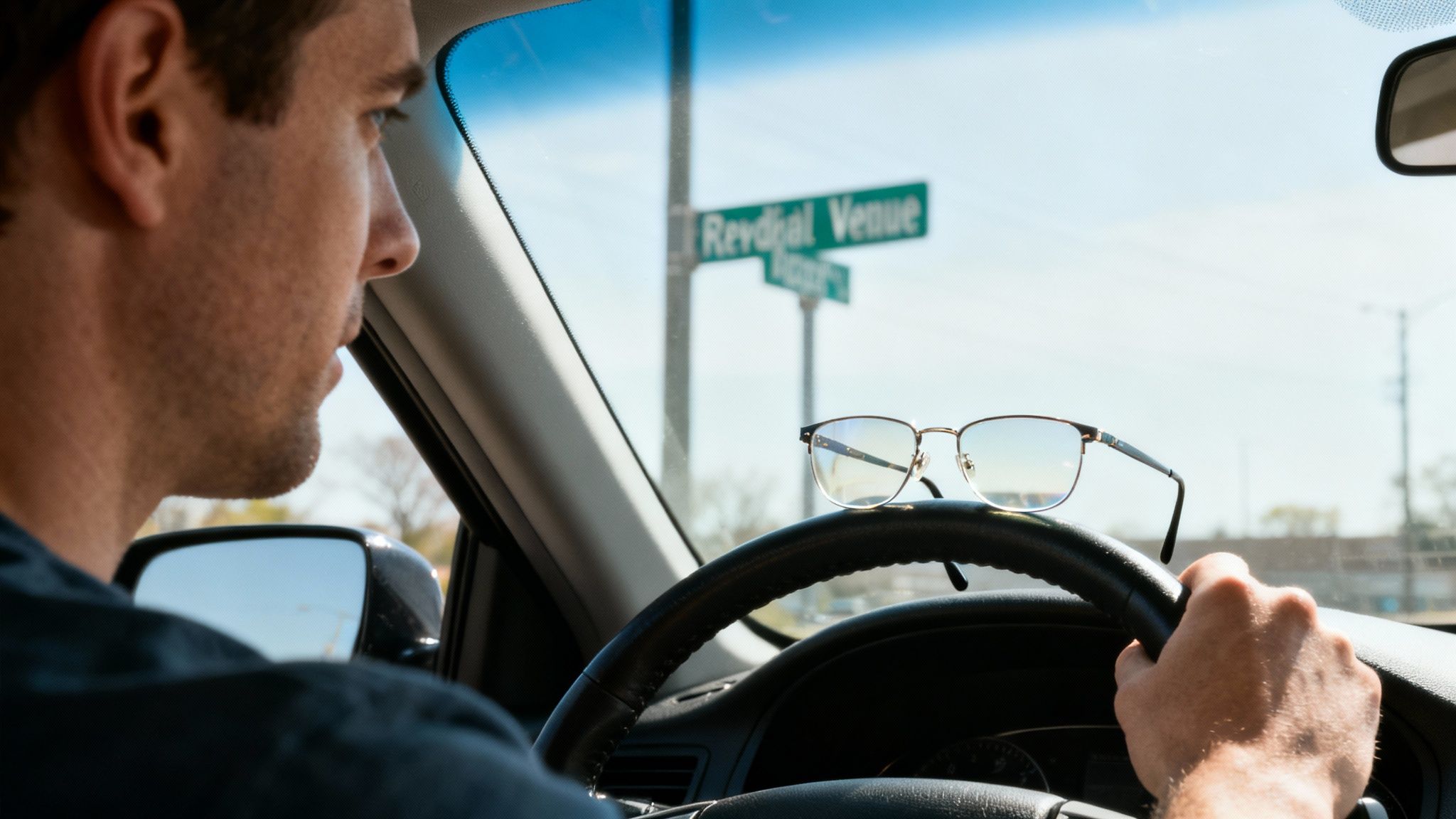
The simple answer is that most standard photochromic lenses do not work behind a windshield. Your car’s glass is specifically designed to block the very ultraviolet (UV) rays that your lenses need to activate. So, even when the sun is blindingly bright, your glasses will likely stay completely clear. This can be more than just an annoyance; it can be a real safety hazard when you’re hit with sudden, blinding glare on the road.
At iDoctor, the premier eye doctor in Glendale Heights, we help our clients find the perfect eyewear solutions for their lifestyle. Let's explore why this happens and what your best options are for safe, comfortable driving.
Why Your Lenses Might Not Work In The Car
Living in Glendale Heights, you know how intense the sun can get during a commute. You probably invested in photochromic lenses for their awesome convenience, hoping they’d transition seamlessly from your office to the outdoors. But there’s a catch—the technology has a specific trigger that your car actively blocks.
The magic in photochromic lenses comes from trillions of tiny molecules embedded in the material. When UV light hits them, these molecules change their shape and absorb visible light, causing the lens to darken. It's a brilliant, automatic reaction.
The problem is, modern car windshields are built with a layer of UV-protective laminate. This is great for protecting your skin and preventing your dashboard from cracking, but it’s bad news for your glasses.
Because your windshield blocks nearly 100% of UV rays, the molecules in standard photochromic lenses never get the signal to change. They stay in their default, clear state.
Understanding this limitation is the first step to finding a better solution. If you're curious about how they work in other situations, our guide on the pros and cons of photochromic lenses has a ton of useful info.
Lens Performance Inside A Car
Not all lenses are created equal when it comes to driving. Here’s a quick breakdown of how different options stack up when you’re behind the wheel.
| Lens Type | Darkens in Car? | Glare Reduction | Best Use Case |
|---|---|---|---|
| Standard Photochromic | No | Minimal | General indoor/outdoor use, but not for driving. |
| Specialized Photochromic | Yes (Partially) | Good | All-in-one convenience for frequent drivers. |
| Polarized Sunglasses | N/A (Always Dark) | Excellent | Dedicated daytime driving and high-glare areas. |
As you can see, standard photochromic lenses fall short for driving. Thankfully, specialized photochromic technology and dedicated polarized sunglasses offer much better performance and safety for your daily commute.
Why Your Lenses Stay Clear Behind The Wheel
Ever get into your car on a sunny day and wonder why your high-tech photochromic glasses suddenly stop working? They darken perfectly on your walk through Glendale Heights, but the moment you get behind the wheel, they go clear. It’s a common frustration, but it’s not a defect. It’s actually a fascinating clash between your glasses and your car’s windshield.
Think of the molecules in your lenses like microscopic, solar-powered machines. When direct UV light hits them, they instantly change shape, absorbing light and darkening the lens. That’s the magic that gives you that seamless transition from clear glasses indoors to protective shades outside.
The Windshield's Hidden Superpower
The problem starts with a feature built into every modern car: a UV-blocking windshield. It's not just a simple piece of glass. Your windshield is a sophisticated piece of laminated safety glass with a special interlayer, usually polyvinyl butyral (PVB). And this layer has a hidden superpower.
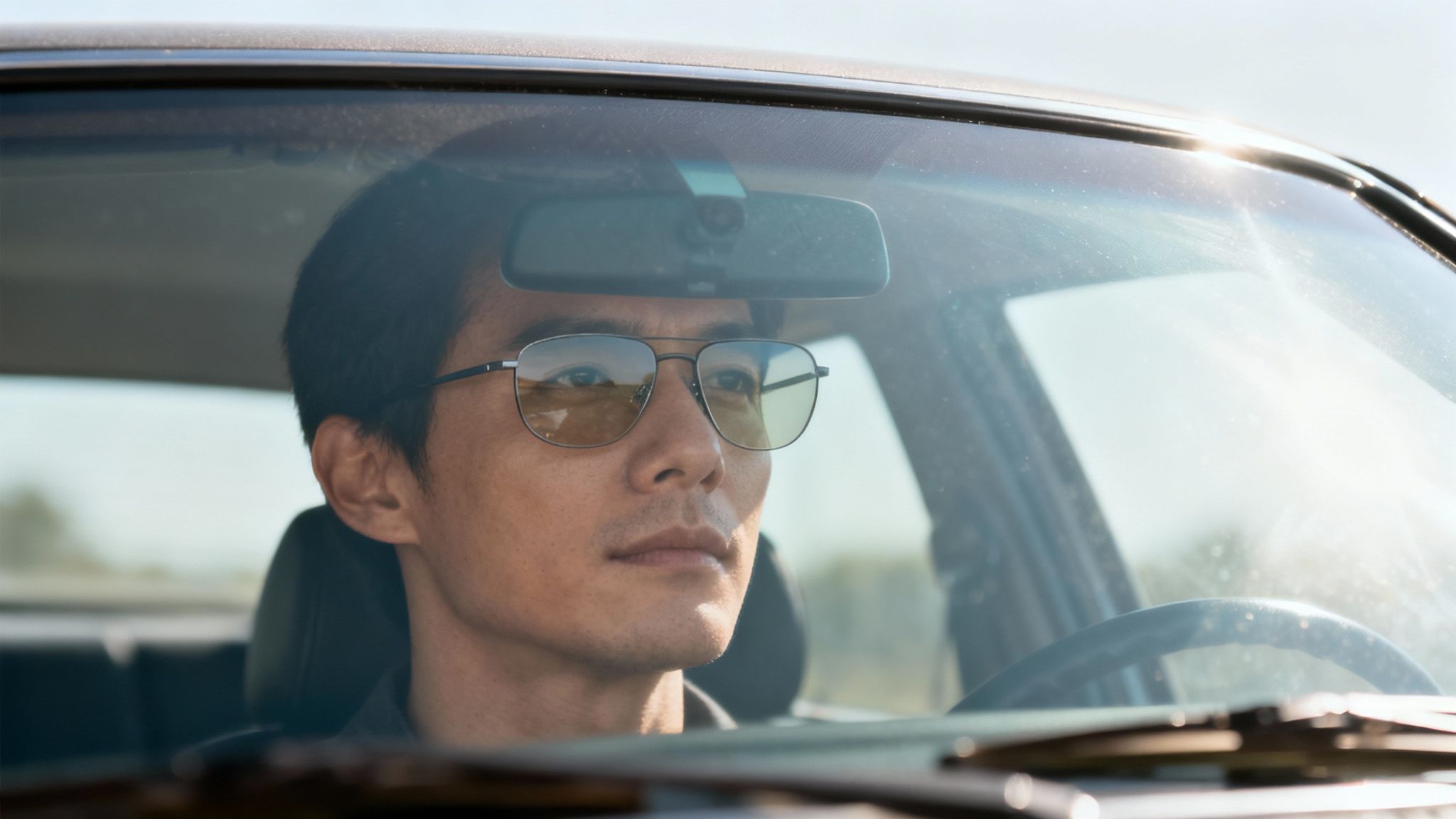
It’s specifically engineered to filter out almost all of the sun’s harmful UV radiation. In fact, most windshields block about 98 to 99 percent of UV rays. While this is great for protecting your skin and your car's dashboard from sun damage, it also cuts off the very fuel your photochromic lenses need to work. They’re left starved of the UV light that triggers their darkening reaction.
So, even on the brightest days, your standard photochromic lenses will remain frustratingly clear inside your car. They simply aren't getting the signal to darken.
What Does This Mean for Drivers?
This leaves you squinting into the sun and battling dangerous glare reflecting off the road and other cars. The glasses that are perfect for a walk to Camera Park just can’t offer the protection you need for a safe drive down Bloomingdale Road. The fundamental problem of glare goes completely unsolved.
The bottom line is simple: Your windshield acts like a powerful layer of sunscreen, and standard photochromic lenses can’t get the "sunburn" they need to darken.
This is a common headache for anyone who relies on a single pair of glasses for everything. It's also important not to mix this up with polarization, which is a completely different technology designed to combat glare head-on. If you’re curious about that, we break it all down in our guide explaining if transition lenses are also polarized.
The good news? Lens technology has come a long way. There are now specialized options designed to solve this exact problem, giving drivers some fantastic solutions.
Not All Transition Lenses Are Created Equal
It's a common mistake to think all light-adaptive lenses are basically the same. Many people even use the brand name "Transitions" as a catch-all term for any lens that darkens in the sun, but that’s not the whole story. The world of photochromic technology is surprisingly varied, especially when it comes to solving the unique problem drivers face every day.
For anyone who relies on a single pair of glasses for everything, having their lenses stay clear in the car is a major frustration. Thankfully, lens manufacturers have been hard at work developing advanced solutions to tackle this exact issue.
Beyond Standard UV Activation
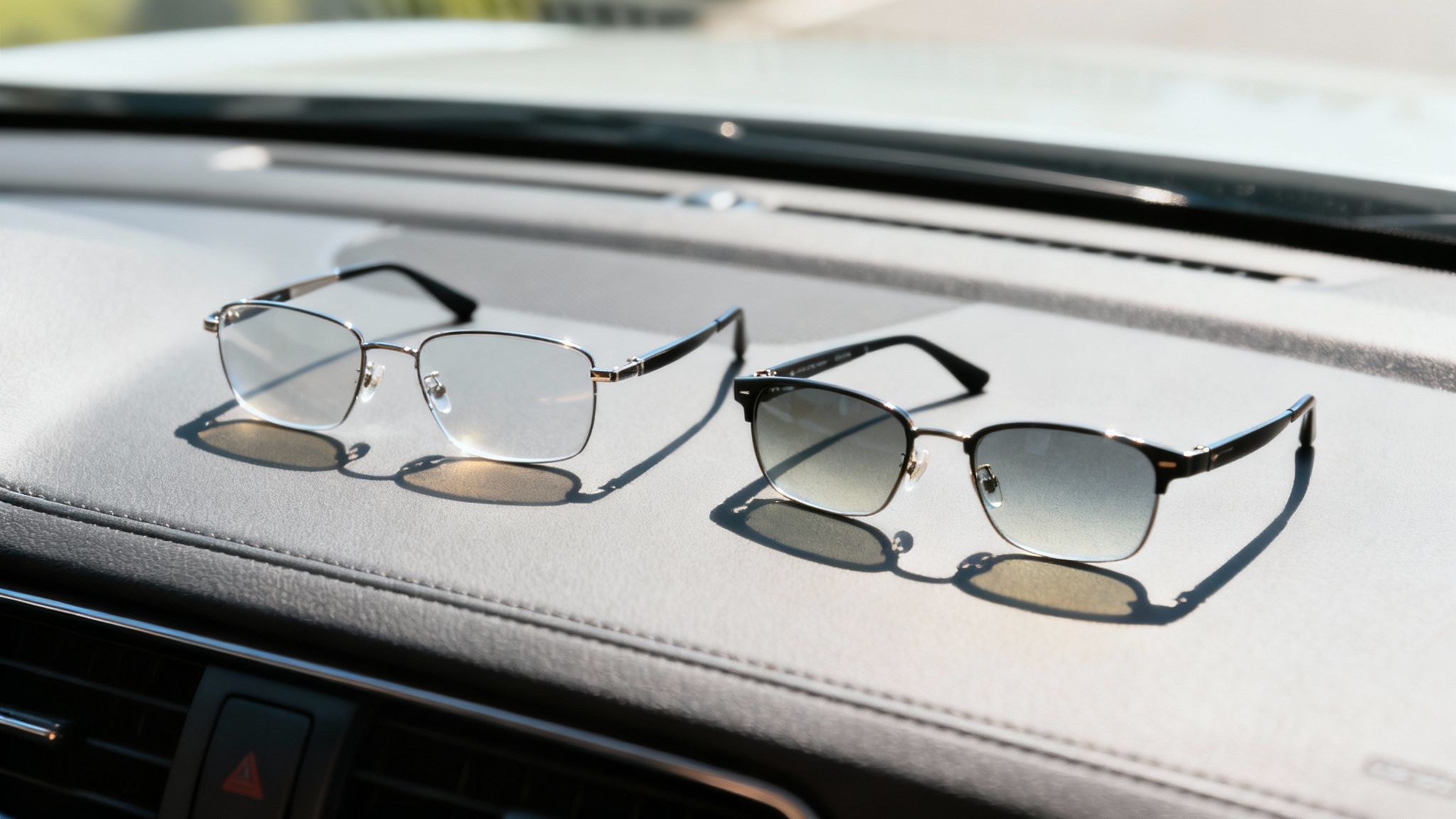
The secret is in what triggers the change. While your average photochromic lens relies entirely on UV light to work its magic, a new generation of lenses is engineered to react to both UV and visible light. This dual-action capability is a complete game-changer for anyone driving through Glendale Heights.
Because these smarter lenses can sense the bright, visible light flooding your car, they can finally get to a comfortable tint even when the windshield blocks UV rays. Think about driving down I-355 on a blazing sunny afternoon. A standard pair of photochromic glasses would leave you squinting, but specialized driving lenses would darken, cutting the glare and making your commute safer and a lot more comfortable.
Specialized Lenses for the Modern Driver
One of the most popular technologies in this category is Transitions® XTRActive®. These lenses were specifically created for people who are highly sensitive to light or spend a ton of time in bright conditions—including behind the wheel.
- In-Car Activation: They are designed to achieve a noticeable, comfortable tint inside a vehicle, which is a massive improvement over standard options.
- Extra Darkness Outdoors: In direct sunlight, they get even darker than regular photochromic lenses, giving you extra protection on the brightest days.
- Hint of Tint Indoors: To keep them ready to react, they maintain a very slight, barely-there tint even when you're inside.
This kind of technology offers a practical, all-in-one solution. And it’s not just a gimmick; consumer data shows these lenses meet a real need. In one survey of over 1,000 users, roughly 72% reported satisfaction with specialized photochromic lenses made for driving. You can learn more about the importance of the right driving glasses and how much they can improve safety.
This dual-activation technology is a huge step forward. It finally offers a workable solution for people who want their photochromic lenses to function in the car, bridging the gap between convenience and real-world practicality for daily commuters.
At iDoctor, we help clients find the perfect eyewear for their lifestyle all the time, whether they're looking for Tom Ford glasses near me or want to explore advanced lens options. To get a closer look at the different technologies out there, check out our guide on the best photochromic lenses for every situation.
Solving The Driver's Eyewear Dilemma
If you spend any time driving around Glendale Heights, you know that clear, comfortable vision isn't just a luxury—it's essential. The intense sunlight and blinding road glare we get aren't just annoying; they're a real hazard. This can cause serious eye strain, headaches, and dangerously slow down your reaction time. For drivers who wear photochromic lenses, this creates a frustrating problem.
Your everyday transition lenses are fantastic when you're walking outside, but their inability to darken inside a car leaves you high and dry. The core problem of glare remains completely unsolved. That's why having a dedicated driving solution is so important for navigating local roads safely, whether you're off to the Glendale Heights Sports Hub or just doing errands on Bloomingdale Road.
The Safety Question
So, are standard photochromic lenses actually a safety risk for drivers? The short answer is no, not directly. In their clear state, research shows they don't hinder your ability to drive. A 2019 clinical study actually found that photochromic contact lenses performed just as well as regular contacts for driving-related tasks. You can read the full study on driving performance here.
But that's not the full picture. The real issue isn't what the lenses do, but what they don't do. Because they don't darken, they offer absolutely zero protection from the blinding glare that makes driving on a sunny day so treacherous.
This is the central dilemma: standard photochromic lenses are technically safe for driving, but they are far from optimal. They leave your eyes completely exposed to fatiguing sunlight and dangerous reflections, forcing you to squint and struggle for a clear view.
Finding A Real Solution
This is where knowing your options really matters. For many drivers, a dedicated pair of polarized sunglasses is the gold standard. They are specifically designed to eliminate the harsh, reflective glare that bounces off flat surfaces like asphalt or the hood of the car in front of you. To dig deeper into how this works, take a look at our guide on polarized lenses vs. non-polarized lenses.
There are also specialized photochromic lenses designed to work in the car. These more advanced lenses are a fantastic all-in-one solution because they react to both UV and visible light, allowing them to get comfortably dark even behind a windshield.
Beyond just your eyewear, you can also modify your car to improve comfort. For instance, to cut down on glare and heat even further, you might consider professional window tinting for your vehicle.
Ultimately, solving the driver's eyewear dilemma comes down to choosing a solution that actively fights glare and keeps your vision comfortable. The right choice will ensure your eyes are protected and your focus stays right where it belongs: on the road ahead.
Your Best Eyewear Options For The Road
So, we've established that your everyday photochromic lenses likely won't darken in the car. What's the next step? Finding a reliable solution that keeps your vision sharp and your eyes comfortable on the road is crucial. Thankfully, drivers in Glendale Heights have several fantastic options, each with its own advantages.
Let's look at the best ways to tackle this common problem.
1. The Gold Standard: Polarized Sunglasses
When it comes to fighting intense daytime glare, nothing beats a dedicated pair of polarized sunglasses. Simple as that.
Think of road glare as a chaotic mess of horizontal light waves bouncing off the asphalt, the hood of the car in front of you, or puddles after a classic Chicagoland downpour. Polarized lenses contain a special, vertically-aligned filter that acts like a microscopic set of Venetian blinds. It simply blocks that blinding horizontal light from ever reaching your eyes.
The result is a view that’s dramatically clearer and more comfortable, cutting down on eye strain. They don't just make things darker; they selectively get rid of the most dangerous and distracting light. For many people, keeping a great pair of polarized sunglasses in the car is the most straightforward and effective solution.
Key Takeaway: Polarized lenses are specifically built to cancel out blinding road glare, making them the top choice for safety and comfort during daytime driving. They don't adapt to light, but their performance in bright sun is second to none.
2. The Smart Solution: Specialized Photochromic Lenses
What if you really, really love the idea of one pair of glasses for everything? You're in luck. Lens technology has come a long way, and advanced options like Transitions® XTRActive® were designed specifically with drivers in mind.
Unlike standard photochromic lenses that rely solely on UV light, these newer lenses have a dual-trigger system. They react to both UV and bright visible light.
This is the key. That sensitivity to visible light allows them to activate behind a UV-blocking windshield, achieving a comfortable, moderate tint while you're driving. They offer a fantastic all-in-one alternative for anyone who hates juggling multiple pairs of glasses. While they won't get quite as dark as a dedicated pair of polarized sunglasses, they deliver excellent glare reduction and unmatched convenience.
3. Other Practical Driving Solutions
Beyond those two heavy hitters, a few other smart solutions can work wonders, depending on your preferences and budget.
- Prescription Clip-On Sunglasses: This isn't your grandfather's clunky clip-on. Modern, custom-made clip-ons can instantly transform your favorite pair of designer eyeglasses in Glendale Heights into high-performance driving shades. They’re lightweight, easy to pop on and off, and can be made with polarized lenses for that crucial glare reduction.
- Anti-Reflective Coatings: An anti-reflective (AR) coating is a non-negotiable feature for any pair of driving glasses, tinted or not. It works wonders by minimizing those distracting reflections from oncoming headlights, streetlights, and even the glare from your own dashboard. This leads to sharper, clearer vision, especially at night.
- Fixed-Tint Prescription Sunglasses: If you prefer a consistent level of tint no matter the conditions, ordering a second pair of glasses with a permanent sun tint is an excellent choice. You can even combine a fixed tint with polarization to create the ultimate pair of driving sunglasses.
To help you sort through these choices, here’s a quick comparison of the top solutions for driving.
Choosing Your Ideal Driving Glasses
A detailed comparison of the top eyewear solutions to help you decide what's best for your needs on the road.
| Eyewear Solution | Pros | Cons | Ideal For |
|---|---|---|---|
| Polarized Sunglasses | Unmatched glare elimination; enhances contrast and clarity in bright sun. | A separate pair you have to carry; don't adapt to changing light. | Drivers who prioritize peak daytime performance and safety over convenience. |
| Transitions® XTRActive® | All-in-one convenience; activate in the car and darken outdoors; clear indoors. | Don't get as dark as dedicated sunglasses; may not be polarized. | The person who wants a single, hassle-free pair of glasses for all situations. |
| Polarized Clip-Ons | Cost-effective way to add polarization to existing glasses; easy to attach/remove. | Can be easier to lose or misplace; another item to manage. | Budget-conscious drivers who love their current frames but need glare protection. |
| Fixed-Tint Sunglasses | Consistent level of darkness; can be fully customized with polarization and coatings. | Not practical for wearing indoors or at night; requires a second pair. | Those who spend a lot of time driving and want a dedicated, high-performance option. |
Ultimately, the right choice really comes down to your lifestyle and what you value most. Do you lean towards the peak performance of polarized lenses, or does the seamless convenience of driver-friendly photochromics win you over? Here at iDoctor, our team can walk you through each option to find the perfect fit for your daily commute and weekend drives.
Find Your Perfect Driving Glasses In Glendale Heights
So, let's put it all together. Your standard photochromic lenses just aren't going to cut it behind the wheel, but that doesn't mean you're out of options. Far from it. Excellent solutions like dedicated polarized sunglasses and specialized driving lenses are out there, waiting to make your commute safer and more comfortable.
What's the right choice for you? Well, that really comes down to your individual vision needs and your day-to-day life. This is where getting some professional advice can be a game-changer.
We'd love for you to stop by iDoctor to explore these options in person. Our team can walk you through everything and help you find the perfect fit from our collection of designer frames, including beautiful styles from brands like Gucci, Cartier, and Oliver Peoples.
To help you think through the possibilities, check out this decision tree. It's a great way to see which path makes the most sense for your driving habits.
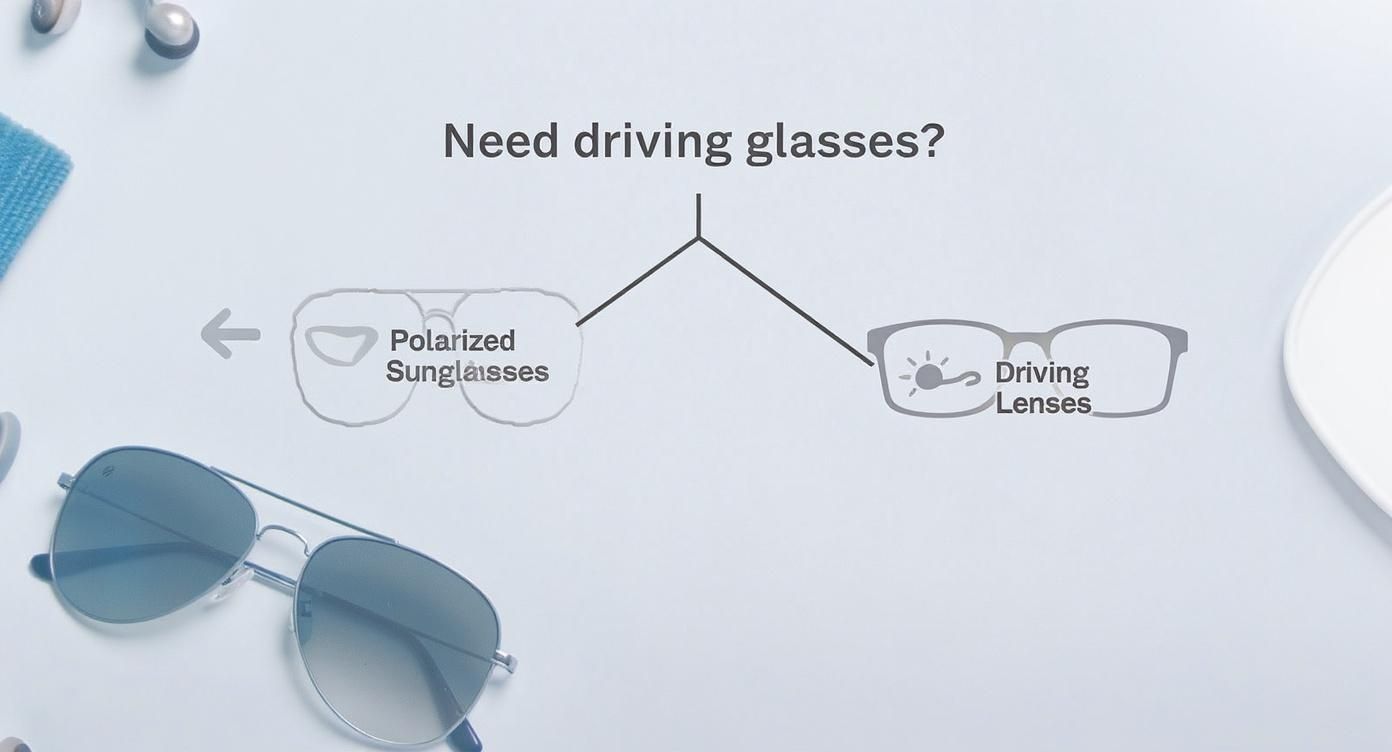
As you can see, the decision often boils down to a simple trade-off: do you prefer the unbeatable glare protection of a dedicated pair of sunglasses, or the all-in-one convenience of a single pair of glasses?
For our neighbors in Glendale Heights and Carol Stream, getting clear, comfortable vision on the road has never been more straightforward. We offer unique 30-minute detailed eye exams in Glendale Heights and accept all major vision insurance plans to make the process as simple as possible.
FAQ: Your Driving Eyewear Questions Answered
Here at our Glendale Heights boutique, our expert team gets a lot of questions about the best eyewear for driving. Here are answers to a few common ones.
1. Where can I get designer eyeglasses in Glendale Heights that are also good for driving?
At iDoctor, we specialize in combining luxury eyewear with high-performance lens technology. You can choose a stunning frame from top brands like Cartier, Tom Ford, or Gucci, and we can fit it with specialized driving lenses, such as polarized or Transitions® XTRActive® lenses. You don't have to choose between style and safety.
2. Are polarized or photochromic lenses better for driving on I-355?
For bright, sunny days on a major highway like I-355, polarized sunglasses are typically superior for cutting the intense, flat-road glare. However, if you want an all-in-one solution that works in all conditions, specialized photochromic lenses like Transitions® XTRActive® are a fantastic and convenient choice because they adapt to changing light. We can help you decide which is best for your commute.
3. Does iDoctor accept my vision insurance for driving glasses?
Yes! We proudly accept all major vision insurance plans to help make your perfect pair of driving glasses more accessible. Our team can help you understand and maximize your benefits for everything from eye exams to prescription sunglasses.
4. What is the best eye doctor in Glendale Heights for driving-specific eyewear?
As the best optometrist in Glendale Heights, iDoctor offers a unique combination of 30-minute detailed eye exams, a curated collection of luxury and affordable eyewear, and expertise in advanced lens technology. We provide personalized consultations to find the ideal driving solution for your specific needs and lifestyle.
Ready to find the perfect eyewear for your daily drive? The expert team at iDoctor is here to help our neighbors in Glendale Heights and the surrounding Chicagoland suburbs achieve clear, comfortable vision on the road. Schedule your detailed eye exam in Glendale Heights or visit our boutique today.