Yes, you can use eye drops with contacts, but there's a huge catch: you have to use the right kind. Only drops specifically formulated for contact lens wearers are safe. Grabbing the wrong bottle—like one for redness relief—can lead to irritation, cloudy lenses, and a whole lot of discomfort.
Your Quick Guide to Using Eye Drops with Contacts
If you wear contact lenses in Glendale Heights, you've probably asked whether it's okay to use eye drops for a bit of relief. The short answer is yes, but it’s crucial to understand which ones get the green light. For anyone commuting along Bloomingdale Road or enjoying a day at Camera Park, knowing how to keep your eyes comfortable is key.
Think of your contact lenses like tiny, delicate sponges sitting on your eyes. Using the wrong drops is like putting diesel in a regular car engine—it just doesn't work. Drops made for general redness relief often have preservatives and other chemicals that your soft contacts can soak up. When those chemicals get trapped between the lens and your eye, they can cause serious irritation and even damage the lens itself.
Safe vs Unsafe Eye Drops for Contact Lenses
To make it simple, here’s a quick-glance comparison to help you identify which eye drops are safe to use with your contacts in and which ones require you to remove your lenses first.
| Drop Type | Safe with Contacts? | Primary Purpose | Key Ingredient to Look For |
|---|---|---|---|
| Rewetting Drops | Yes | Moisturizing and rehydrating lenses | Ingredients like hyaluronate or glycerin |
| Artificial Tears (Preservative-Free) | Often Yes | Lubricating dry eyes | Check label for "preservative-free" |
| Redness Relief Drops | No | Constricting blood vessels to reduce red eye | Decongestants like naphazoline |
| Allergy Relief Drops | No | Reducing allergy symptoms | Antihistamines |
| Medicated/Prescription Drops | No | Treating eye conditions (e.g., glaucoma) | Active medicinal ingredients |
The key takeaway is to always look for drops labeled "for contact lenses" or "rewetting drops." When in doubt, take your contacts out.
Why Choosing the Right Drops Matters
Whether you're battling the dry winter air along North Avenue or dealing with seasonal sniffles from the nearby East Branch Forest Preserve, the right eye drops are a game-changer for comfort. It's a need that's growing fast.
The global market for contact lens-safe eye drops was valued at approximately $2.5 billion in 2025 and is projected to reach an estimated $3.8 billion by 2033. This surge shows just how many people are relying on contacts and need safe ways to keep their eyes comfortable.
This isn't just a random trend. More people are choosing contacts over glasses, and our understanding of what keeps eyes healthy has improved dramatically. As a result, companies are developing better, more compatible products all the time. You can find more detailed market growth insights if you're curious about the industry's expansion.
For anyone in Glendale Heights and the surrounding suburbs, knowing the difference between eye drops is the first, most important step toward comfortable, clear vision all day long.
Why Some Eye Drops Can Harm Your Contact Lenses
So, why can't you just grab any bottle of eye drops off the shelf? It comes down to the way your contact lenses are made. Think of your soft contacts as tiny, high-tech sponges sitting on your eyes. Their whole job is to stay hydrated and flexible, so they're designed to absorb your tears.
The catch is, they don't just absorb tears—they soak up everything you put in your eye. This is where things get tricky. While some drops are made to work with your lenses, others have ingredients that can build up inside the lens material and cause some serious issues.
The two biggest troublemakers you need to watch out for are preservatives and vasoconstrictors.
The Problem with Preservatives
Most standard eye drops, especially the ones in big multi-use bottles, have preservatives in them. These chemicals are there for a good reason: they stop bacteria from growing in the bottle once you've opened it. But what's good for the bottle isn't always good for your eye.
When you use drops with preservatives while wearing your contacts, those chemicals get absorbed by the lens and trapped against your cornea for hours. This prolonged contact is a recipe for trouble.
It can lead to:
- Chronic irritation and discomfort: A constant scratchy or dry feeling you can't shake.
- Redness and inflammation: The chemicals can easily aggravate the delicate tissues of your eye.
- Lens discoloration: Some preservatives can actually cause your soft lenses to turn yellow or cloudy over time.
The Risk of Redness-Reducing Drops
You've probably seen those drops that promise to "get the red out." They work by using chemicals called vasoconstrictors to temporarily shrink the blood vessels on the white part of your eye.
When your contact lens soaks up these vasoconstrictors, it holds the chemical against your eye way longer than intended. Instead of a quick fix, your cornea gets a steady dose, which can starve it of the oxygen and blood flow it needs to stay healthy. This often backfires, causing a "rebound effect" where your eyes become even redder after the drop wears off, tempting you to use more.
The most important thing you can do is stick to preservative-free formulas or drops that are specifically labeled "for rewetting contact lenses." These are made with gentle ingredients that won't get trapped in your lenses and cause irritation.
Understanding this simple science is the key to keeping your eyes comfortable and healthy. By steering clear of drops with harsh preservatives or vasoconstrictors, you’re looking out for your lenses and your long-term eye health. If you're ever unsure, getting personalized advice from an eye doctor in Glendale Heights is the best way to find the perfect, safest option for your eyes.
How to Choose the Right Rewetting Drops
Walking down the pharmacy aisle can feel like a pop quiz you didn't study for. With dozens of eye drop options staring back at you, it's easy to feel overwhelmed. But choosing the right rewetting drops for your contacts isn’t about just grabbing the first box you see—it's about finding the perfect partner for your eyes and your lenses.
A few key details can make this decision a whole lot simpler. The most important one to understand is viscosity, which is just a fancy term for the thickness of the liquid. Getting the viscosity right can be the difference between a few seconds of relief and all-day comfort.
Finding the Right Thickness for Your Needs
Think about the difference between water and honey. That’s essentially what we’re talking about with viscosity in eye drops. Each one has its own job to do.
-
Low-Viscosity (Thinner) Drops: These are watery and light. They give you a quick, refreshing burst of moisture without blurring your vision, which makes them perfect for a fast fix during a busy day.
-
High-Viscosity (Thicker) Drops: These feel more like a gel. They're designed to coat your eye and lens for a longer period, providing more sustained relief from dryness. The trade-off? They can make your vision a bit blurry for a minute or two, so they’re often best used right before bed.
It's no secret that dryness is a major hurdle for many contact lens wearers. In fact, studies show that contact lens dropout rates—people who just give up on lenses due to discomfort—can be as high as 27.4% in developed countries. The right eye drop is a simple but powerful tool to keep you comfortable and happy in your contacts. You can learn more about how the right accessories can improve contact lens comfort.
Decoding Labels and Ingredients
Beyond thickness, what’s in the bottle matters immensely. Your first and most important step is to look for drops that are clearly labeled "for use with soft contact lenses" or as "rewetting drops." That label is your green light, confirming the formula won’t damage your lenses.
Many of today's best drops also include advanced moisturizing ingredients designed to mimic your own natural tears. A great example is hyaluronic acid, a fantastic humectant that’s exceptional at holding onto water, keeping both your eye and your lens hydrated for hours. If persistent dryness is a problem for you, our guide on the best contacts for dry eyes is another great resource.
At the end of the day, the goal is simple: find a drop that feels good and works with your routine. Reading labels is a great start, but nothing beats personalized advice. A professional consultation for contact lenses in Glendale Heights right here at iDoctor means you’ll walk away with a recommendation tailored specifically to your lens type, your unique tear chemistry, and your daily life.
Applying Eye Drops Correctly with Contacts In
Okay, so you've picked out the right kind of eye drops. That’s half the battle. But just as crucial is knowing how to put them in correctly. The right technique makes all the difference, ensuring you get the relief you need without contaminating your lenses or wasting a single drop.
It’s a simple process that takes just a few seconds, but doing it right is a non-negotiable part of good eye hygiene. Let's walk through it.
A Step-by-Step Guide to Application
Getting this right every time is all about building a good habit. Here’s a simple, effective routine to follow whenever your eyes feel like they need a little boost.
- Start with Clean Hands: This is the number one rule. Before you even think about touching your eyes or the bottle, wash your hands thoroughly with soap and water. Dry them completely on a clean towel to avoid introducing any nasty bacteria.
- Prepare the Drop: Give the bottle a gentle shake if the instructions say to. Take off the cap and be careful where you put it—make sure it’s on a clean surface. Critically, never let the dropper tip touch anything, especially your fingers or your eye.
- Create a Pocket: Tilt your head back and look up toward the ceiling. Use one hand to gently pull down your lower eyelid. This creates a small space, a little pocket, that’s the perfect landing spot for the eye drop.
- Administer the Drop: Position the bottle directly over your eye and squeeze just one drop into that pocket you’ve made. Try your best not to let the tip of the bottle touch your eye or eyelashes.
- Close and Press: Once the drop is in, gently close your eye. Don't clamp it shut, as that will just squeeze the drop right out. Now for the pro tip: use your index finger to apply light pressure to the inner corner of your eye, right next to your nose, for about 30 seconds.
That last step has a name: punctal occlusion. It sounds technical, but all it does is block the tear duct for a moment. This simple trick keeps the moisturizing drop on the surface of your eye where it can do its job, instead of letting it drain away immediately.
For more helpful pointers on eye care and contact lens handling, take a look at our guide on how to put contacts in your eye.
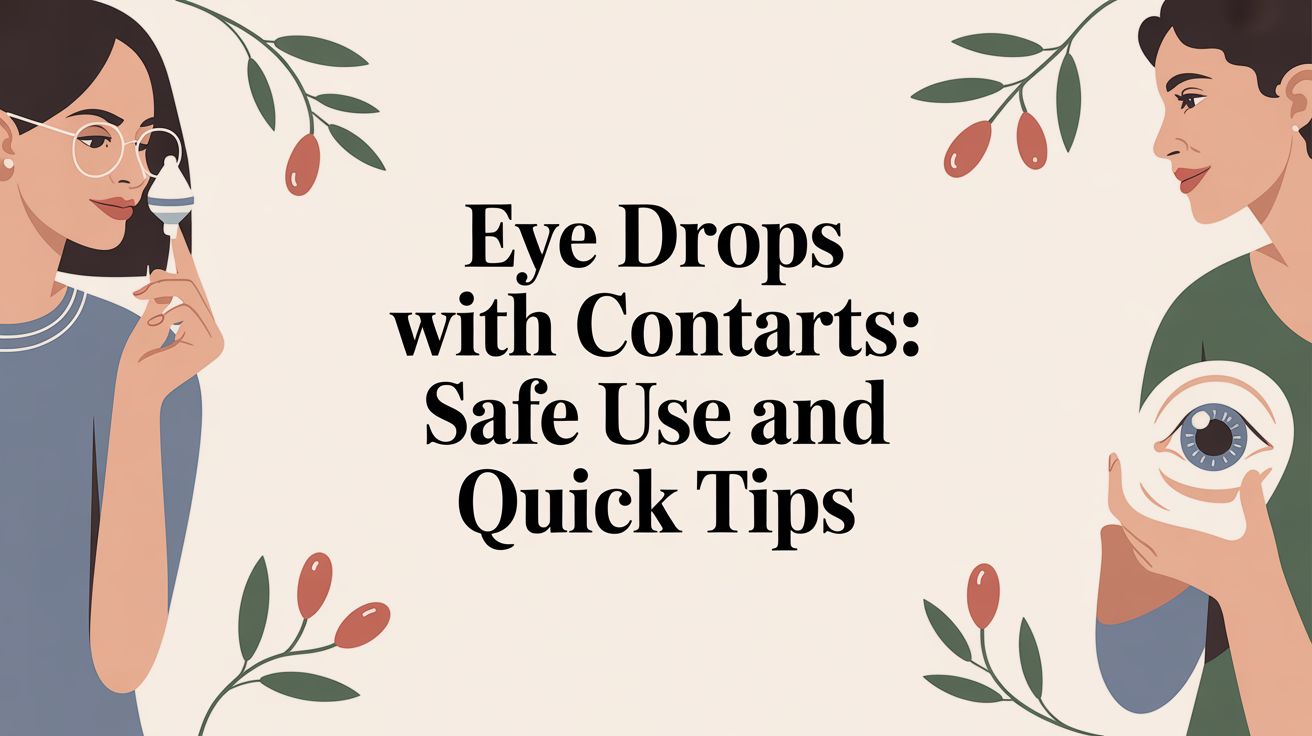
The infographic below breaks down what to look for when you're standing in the pharmacy aisle, trying to choose the right drops. It covers thickness, active ingredients, and the importance of reading the label.
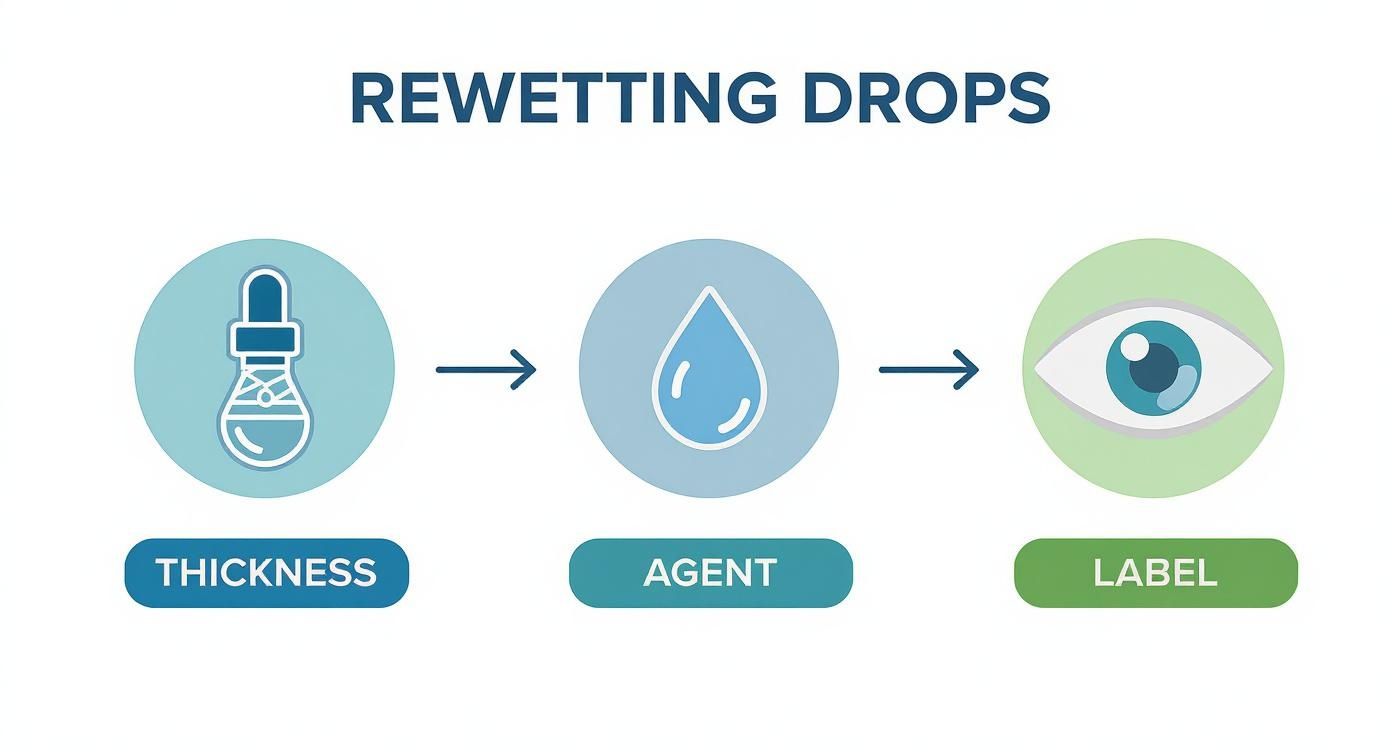
This visual is a great reminder that it’s not just about grabbing any bottle. You need to consider the viscosity (how thick it is), the moisturizing agents that actually provide relief, and what the label says about contact lens safety. Getting both the selection and the application right is the key to comfortable contact lens wear here in Glendale Heights.
When to Always Remove Your Contacts First
While rewetting drops are a contact lens wearer's best friend, some situations are non-negotiable: you have to take your lenses out first. Understanding this distinction is absolutely critical for keeping your eyes healthy. Think of it as a hard-and-fast rule of eye safety, not just a friendly suggestion.
The big one? Any type of medicated eye drop from your doctor. These aren't just for moisture; they're potent treatments for things like pink eye, glaucoma, or serious inflammation. The active ingredients in these drops are not meant to hang around on the surface of your eye.
When you leave your contacts in, the lens acts like a little sponge. It soaks up the medication and then slowly releases a concentrated dose right against your cornea. This can cause significant irritation, damage the lens, and interfere with your treatment.
Prescription and Medicated Drops
This rule isn't just for prescriptions. It also applies to most over-the-counter drops for allergies or redness, unless the bottle explicitly says it’s safe for contact lens wearers. Their formulas can be harsh on the delicate polymers that make up your lenses.
Using the wrong drops with your contacts in can lead to more than just discomfort—it can open the door to bigger problems. If you want to learn more, take a look at our guide on how to prevent common contact lens infections.
Proper eye drop use is a massive part of overall lens care. It's no surprise that North America holds about 35% of the global market share for contact lens eye drops. With so many of us relying on contacts daily, knowing the right way to care for them is essential.
The Golden Rule: When in doubt, take them out. After using any medicated or non-approved drops, wait at least 15 minutes before putting your contacts back in.
If you're ever standing in the pharmacy aisle feeling unsure about a product, the safest move is always to ask your optometrist. Your iDoctor team here in Glendale Heights is always happy to clear things up and make sure your eyes stay comfortable and healthy.
Your Partner for Healthy Eyes in Glendale Heights
Think of your contact lens care as the foundation for enjoying clear, comfortable vision while you're out and about in Glendale Heights—whether you're at Camera Park or hitting the links at Glendale Lakes Golf Club. We've gone over the essentials: stick to rewetting drops specifically made for contacts, understand why other drops can cause more harm than good, and always pop your lenses out before using medicated treatments.
But what happens if you're doing everything by the book and still dealing with that nagging dryness or irritation? If you find yourself reaching for rewetting drops more than a few times a day, that’s usually a red flag. It’s a sign that there's a deeper issue that needs a closer look.
When to See an Eye Doctor
Constant discomfort isn't a "normal" part of wearing contacts. It could be a simple mismatch—maybe your lens material isn't playing nice with your unique tear chemistry. Or, it could point to an underlying condition like dry eye syndrome. This is exactly when professional guidance is no longer optional; it's essential.
Trying to self-treat with over-the-counter drops without getting to the root of the problem is like putting a bandage on a wound that needs stitches. It might mask the issue for a bit, but the problem could get worse over time. A professional evaluation gives you clarity and a real, long-term solution.
We can't stress this enough: schedule one of our detailed eye exams in Glendale Heights. We use high-resolution imaging technology that lets us see precisely what’s going on with your tear film and the overall health of your eyes. This helps us pinpoint the problem and find a fix that actually lasts, whether that means switching you to specialized lenses or designing a personalized eye care routine just for you. For a better sense of what professional care involves, you can explore the wide range of optometry services available.
Your vision is far too precious for guesswork. Stop by our boutique on North Avenue or book an appointment with a trusted eye doctor in Glendale Heights to keep your eyes comfortable and healthy for the long haul.
Frequently Asked Questions
Can I use redness relief drops just once with my contacts in?
We strongly advise against using any redness-reducing drops with your lenses in, even for a one-time fix. The chemicals can get absorbed by your soft contacts and cause prolonged irritation or "rebound redness" when the effect wears off. It's always safest to remove your contacts, wait 15 minutes after using the drops, and then put them back in. If red eyes are a frequent problem, it's best to see an optometrist to find the cause.
What are the best eye drops for end-of-day dryness in Glendale Heights?
End-of-day dryness is a very common issue for contact lens wearers in our area. The best immediate solution is typically a preservative-free rewetting drop made specifically for contacts. However, the ideal drop varies from person to person. At iDoctor, we can assess your specific needs during a contact lens fitting and recommend a product tailored to your eyes, lifestyle, and the type of lenses you wear.
I need rewetting drops multiple times a day. Is that okay?
While preservative-free rewetting drops are safe to use as needed, relying on them more than four to six times a day can be a sign of an underlying issue. It might mean your current contacts aren't the best fit for your eyes, or you could have dry eye syndrome. We recommend scheduling an eye exam to get a proper diagnosis and a more effective, long-term solution. And remember, all eye care products have an expiration date—you can learn more in our guide on do contacts expire.
Where can I find designer eyeglasses in Glendale Heights?
Giving your eyes a regular break from contacts is one of the healthiest habits you can have! When it's time to switch to glasses, we've got you covered. At iDoctor, our boutique has a curated collection of designer eyeglasses in Glendale Heights, featuring iconic brands like Cartier, Gucci, and Tom Ford, alongside stylish and affordable options like Ray-Ban and Kate Spade. Our stylists can help you find a frame that not only looks fantastic but also gives your eyes the comfortable rest they deserve.