So, you've decided to give contact lenses a try, or maybe you're just due for a new pair. If you're new to contacts and live in the Glendale Heights area, you might be wondering, "What's the deal with a 'contact lens fitting'? Isn't my regular eye exam enough?" It’s a great question, and the answer is key to comfortable, clear vision with contacts.
A contact lens fitting is a separate, highly specific appointment that goes way beyond the scope of a standard eye exam. Think of it this way: your regular exam gives us your prescription, but the fitting is what ensures the physical lens—a medical device sitting directly on your eye—is a perfect, healthy match for you. Here at iDoctor, we provide this essential service to ensure our Glendale Heights patients get the best possible experience.
Why a Fitting Is More Than a Standard Eye Exam
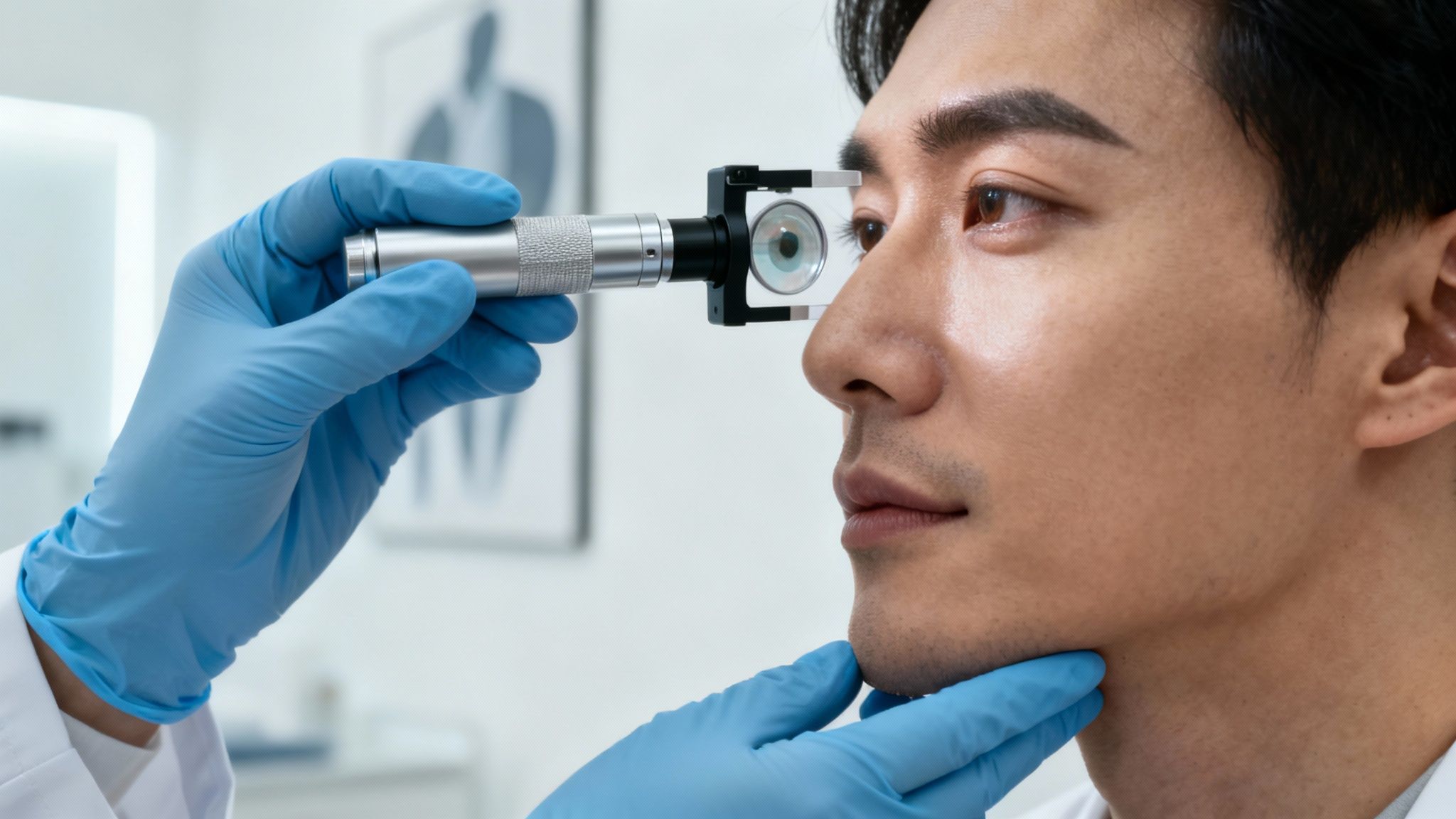
A regular eye exam focuses on your prescription and overall eye health, while the fitting zooms in on the unique physical characteristics of your eyes. It’s a lot like being measured for a custom suit instead of just grabbing one off the rack. The goal is a flawless fit made just for you.
This personalized approach is vital for everyone, whether you're a student at Glenbard West High School or a professional navigating the commute on Army Trail Road. An ill-fitting lens can cause more than just frustration; it can lead to irritation, blurry vision, and even potential damage to your cornea.
What We Actually Measure
During a fitting, your optometrist takes several precise measurements that aren't part of a standard exam. We need this data to find the right lens for your eye's specific anatomy.
- Corneal Curvature: We map the exact curve of your eye's front surface. This tells us which lens shape will sit correctly without being too tight or too loose.
- Pupil and Iris Size: Knowing the size of your pupil and iris helps us choose a lens that covers the right area for optimal vision.
- Tear Film Evaluation: We’ll also take a close look at your tear film. If your eyes tend to be dry, certain types of lenses will be far more comfortable than others.
A Look at Who Wears Contacts
The world of contact lenses is incredibly diverse. While research shows the average age for a first-time fitting is 34.1 years, we see everyone from teenagers to older adults. It's also interesting to note that about 65% of all fittings are for female patients. A large group—about 38%—are brand-new wearers who are just starting their contact lens journey.
At iDoctor, our mission is to make the fitting process straightforward and stress-free. We want you to feel confident and comfortable from day one. Our detailed approach ensures the lenses you get don't just correct your vision but fit seamlessly into your life here in Glendale Heights.
To get a better idea of the whole process, you can find all the details of our contact lens exam in Glendale Heights.
Why a Professional Fitting Is Non-Negotiable
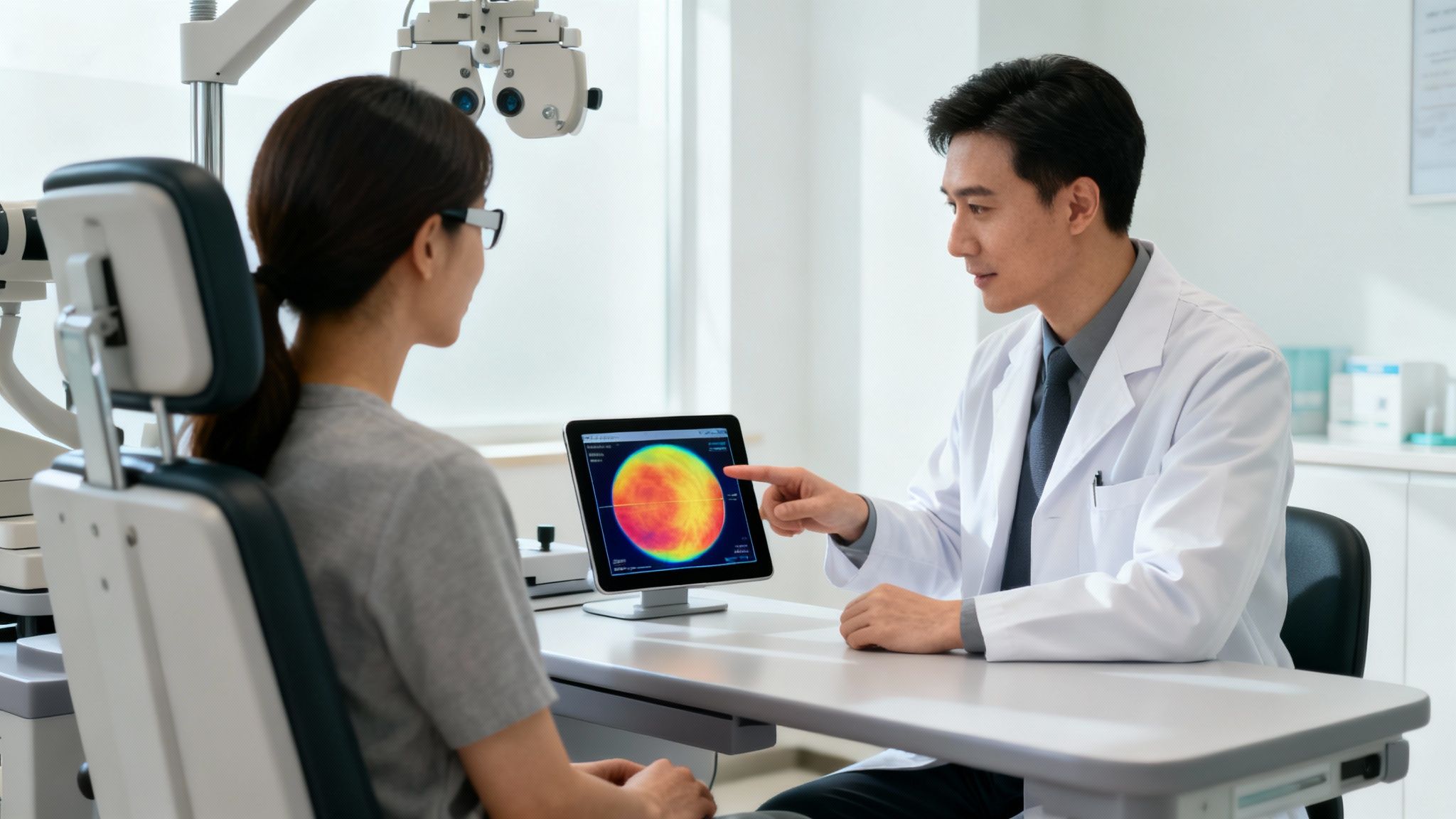
It's easy to see an ad online and assume you can just order a box of contacts using your glasses prescription. This is one of the most common and riskiest mistakes you can make for your eye health. Contacts aren't fashion accessories; they are medical devices that sit directly on your eye and absolutely require a prescription from a licensed optometrist.
Think about it this way: your glasses prescription is measured for lenses that sit about 12 millimeters away from your eyes. A contact lens, on the other hand, rests right on the surface of your cornea. The measurements and power needed are completely different. Trying to use the wrong one is like wearing shoes that are two sizes too small—it’s not just uncomfortable, it’s going to cause real problems.
An improper fit can lead to everything from annoying blurry vision and constant irritation to more severe issues like corneal scratches, oxygen deprivation, and even infections that could threaten your sight.
A professional fitting is the only way to ensure your lens has the right material, size, and shape for your unique cornea. It's a fundamental step for healthy eyes and clear, comfortable vision.
What Makes a Fitting Different
During a dedicated contact lens fitting, our eye doctor in Glendale Heights goes way beyond a standard eye exam. We’re not just looking for your prescription; we’re carefully evaluating how the lens physically interacts with your eye.
This evaluation includes checking for a few key things:
- Proper Movement: A contact lens should move just a tiny bit with every blink. Too tight, and it can starve your eye of oxygen. Too loose, and it will feel like there's always something in your eye.
- Corneal Health: We use a high-powered biomicroscope to get an up-close look at your cornea, making sure the lens isn't causing any hidden stress or damage to its delicate surface.
- Oxygen Permeability: Not all lens materials are created equal. Some let more oxygen pass through than others, and we’ll select one that allows your eyes to breathe properly and stay healthy.
This meticulous process is precisely why you cannot simply use your glasses prescription for contacts. They are two different tools for two very different jobs.
Conditions Requiring a Specialized Fit
For many people, a standard fitting works perfectly. But for others with specific eye conditions, we need an even more customized approach to find a lens that’s both comfortable and effective.
- Giant Papillary Conjunctivitis (GPC): This is an inflammatory condition often triggered by protein build-up on lenses. For these patients, daily disposable lenses are often a game-changer.
- Keratoconus: With this condition, the cornea bulges into a cone shape, which means standard soft lenses just won't work. We have to turn to specialty hard or hybrid lenses to create a smooth surface for clear vision.
- Severe Dry Eye: Chronic dry eye can make wearing traditional contacts feel impossible. For these patients, scleral lenses can provide incredible relief by creating a fluid-filled reservoir that constantly hydrates the cornea.
At iDoctor, your eye health is our number one priority. A professional fitting at our Glendale Heights boutique isn't just a suggestion—it's the essential first step to wearing contact lenses successfully, safely, and comfortably.
Your Step-by-Step Fitting Journey at iDoctor
Knowing what to expect can make any new experience, like getting contacts for the first time, a whole lot easier. Here at iDoctor, we’ve refined our contact lens fitting into a clear, four-step process. We want you to feel comfortable and confident from the moment you walk into our Glendale Heights boutique, knowing you’re in good hands.
Step 1: It Starts with a Conversation
Before we look at a single lens, we just talk. We’ll sit down with you to get a real sense of your day-to-day life and what you want from your vision.
Are you a student at the College of DuPage who’s staring at books and screens for hours? Do you work in an office near the Bloomingdale Court shopping center and struggle with that tired, strained feeling in your eyes? Maybe you’re an athlete who spends weekends at East Branch Forest Preserve and needs contacts that won't budge.
Your lifestyle is the single biggest clue to finding the right lens. For instance, if you only want contacts for a wedding or a night out, daily disposables make the most sense. But if you plan to wear them every day, a monthly lens might be a better fit. This chat is the foundation for everything that comes next.
Step 2: Taking Precise Measurements of Your Eyes
Next up is the technical part, where we map the unique landscape of your eyes. This goes way beyond your standard prescription check.
- Corneal Curvature (Keratometry): We use a keratometer to measure the exact curve of your cornea. This is a crucial number that tells us the base curve your contact lens needs. Think of it like finding the right size hat—too tight is uncomfortable, and too loose won't stay put.
- Pupil and Iris Size: We also measure the diameter of your pupils and irises. This helps us choose a lens that’s big enough to give you crisp vision but won't get in the way as your pupil naturally changes size in different light.
Getting these measurements right from the start means we’re not just guessing. We’re scientifically matching a lens to your eye’s specific anatomy, which is central to how we provide the best contact lenses in Glendale Heights.
Step 3: The All-Important Trial Lens
With your measurements in hand, we’ll select a diagnostic trial lens for you to pop in. This is the moment of truth, where we get to see how the lens actually behaves on your eye.
After giving it a few minutes to settle, we'll take a close look using a biomicroscope (a special high-powered microscope) to check a few key things:
- Fit and Movement: Is the lens moving just a tiny bit with each blink? That's exactly what we want to see.
- Centration: Is it sitting perfectly centered over your cornea?
- Comfort: The big one—how does it actually feel?
Your feedback here is just as important as what we see through the microscope.
Step 4: Fine-Tuning Your Vision
Last but not least, we check your vision with the trial lenses in. We'll run through a quick vision test to make sure the prescription is dialed in perfectly, giving you that sharp, clear sight you’re looking for.
If any adjustments are needed, we can fine-tune the power right then and there. Our detailed eye exams in Glendale Heights use high-resolution imaging to ensure we achieve this level of accuracy for every patient.
Once everything looks sharp and feels great, you’re all set. This detailed process ensures you walk out not just seeing better, but feeling fantastic in your new contacts.
Choosing the Perfect Contact Lenses for You
Once we've talked about your daily life and we have your precise eye measurements, we get to the fun part: picking out the perfect contact lens. The world of contacts has grown so much over the years. We're well beyond a single, one-size-fits-all option, with a whole range of materials, wear schedules, and specialty designs to match just about every patient we see. Our goal is always to find a lens that feels like it’s not even there while giving you effortlessly clear vision.
Most people end up with soft contact lenses, and for good reason—they’re known for being comfortable right out of the package. But for some folks, especially those with high astigmatism, rigid gas permeable (RGP) lenses can actually provide sharper, crisper vision because they hold a firm, consistent shape on the eye.
Finding a Lens for Your Lifestyle
Beyond the material itself, the replacement schedule is a huge factor in finding the right fit for your routine. It’s all about balancing convenience with care.
- Daily Disposables: These are the gold standard for convenience and hygiene. You pop in a fresh pair every morning and just toss them at night. No cleaning, no solutions, no fuss. They’re a fantastic choice for people with allergies, dry eyes, or anyone who only wears contacts part-time.
- Bi-weekly or Monthly Lenses: As the name suggests, you reuse these lenses for a set period. They offer great value for full-time wearers and just require a simple daily cleaning. The technology behind them has come a long way, making them incredibly comfortable and breathable.
Your fitting journey here at iDoctor follows a clear, logical path. We start with your lifestyle needs, take precise measurements, and then select the ideal trial lens for you to test out.
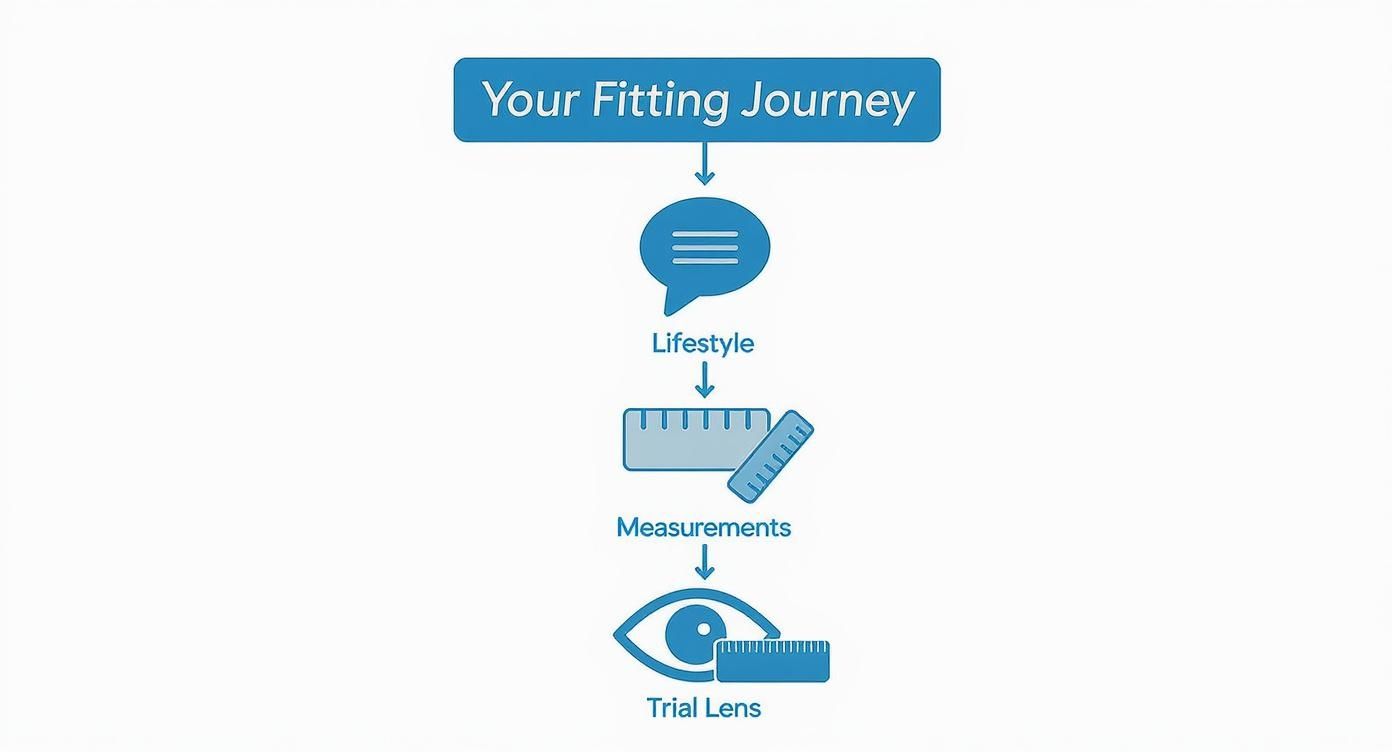
As you can see, every step builds on the last, starting with our initial conversation and leading directly to a lens choice made just for your eyes. If you want to get into the nitty-gritty of daily vs. monthly options, take a look at our guide on daily disposable vs. monthly contact lenses in Glendale Heights.
To help you see the options at a glance, this table breaks down the most common types of lenses we work with.
Contact Lens Types At a Glance
| Lens Type | Best For | Replacement Schedule | Key Benefit |
|---|---|---|---|
| Soft Lenses | Most users, active lifestyles | Daily, bi-weekly, monthly | Immediate comfort and flexibility |
| RGP Lenses | High astigmatism, crisp vision needs | Yearly | Superior visual acuity and durability |
| Toric Lenses | Patients with astigmatism | Daily, bi-weekly, monthly | Corrects irregular eye shape for clear vision |
| Multifocal Lenses | Patients over 40 needing near & far vision | Daily, bi-weekly, monthly | Eliminates the need for reading glasses |
| Extended Wear | Approved overnight wearers | Up to 30 days (with doctor approval) | Maximum convenience, wear while sleeping |
Each of these serves a different purpose, and finding the right one is what the fitting process is all about.
Specialty Lenses for Unique Vision Needs
What if your prescription is a bit more complex? Don't worry, modern lens technology has solutions for that, too.
At iDoctor, we specialize in matching advanced lens technology to your specific visual demands. Whether you have astigmatism or need help seeing both near and far, there's a custom solution waiting for you.
For our patients with astigmatism, we use toric lenses. These are specially weighted and shaped to correct the unique, irregular curvature of the cornea, which prevents the blurriness that standard lenses can cause. And if you're over 40 and find yourself squinting at menus or your phone, multifocal lenses are a game-changer. They provide a seamless transition between near and far vision, much like progressive eyeglasses.
There are also extended wear lenses, which are FDA-approved for overnight wear. The development of silicone hydrogel materials in the early 2000s was a major breakthrough here, as these lenses allow significantly more oxygen to reach the cornea, making overnight wear much safer. At their peak, these lenses made up 9-12% of all soft lens fittings, showing just how much people value that convenience.
From daily disposables to highly specialized multifocal designs, our mission at our Glendale Heights boutique is to find the perfect lens that works in complete harmony with your life.
Mastering Your Contact Lens Care Routine
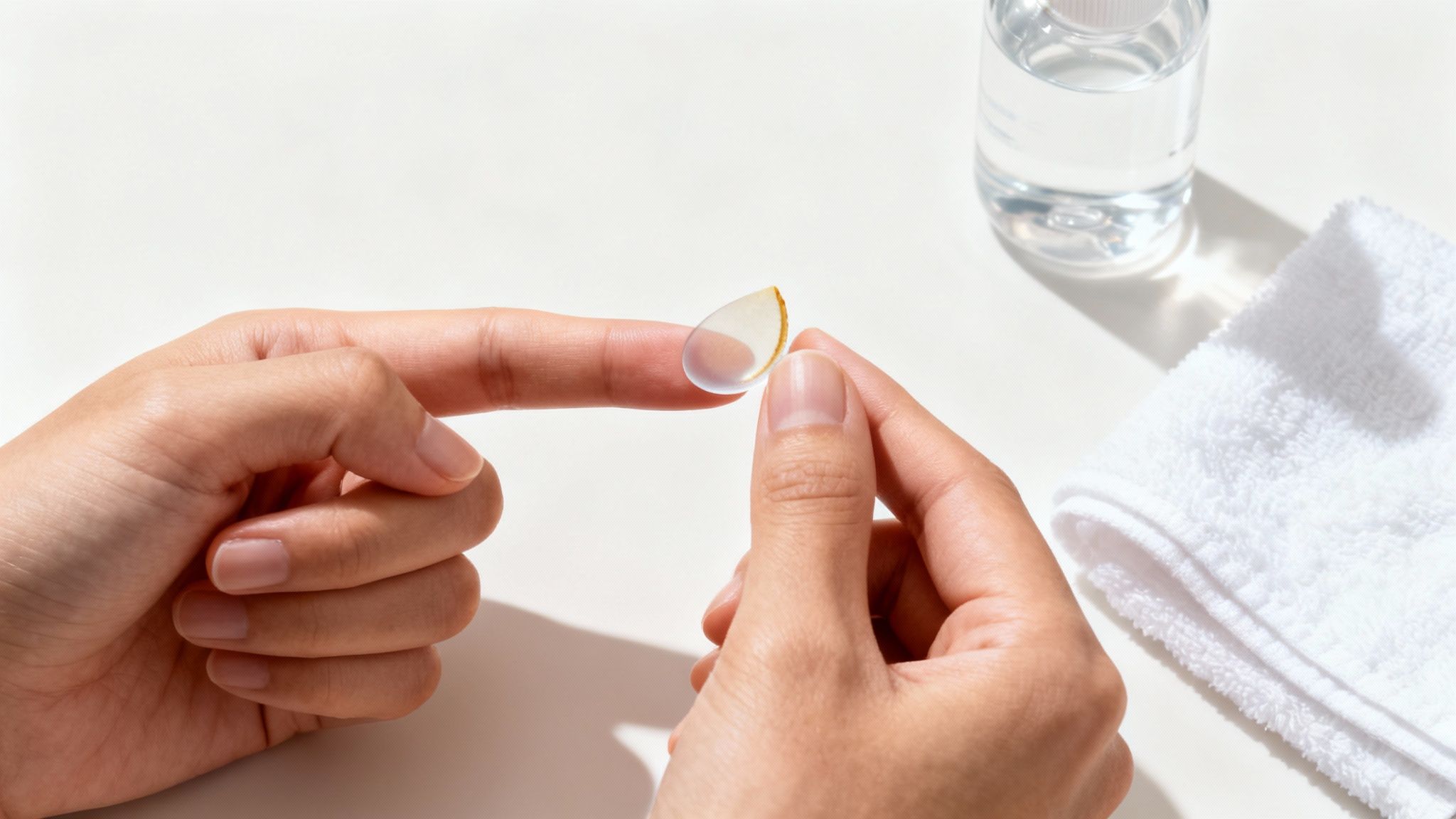
Getting the perfect contact lens is only half the battle. The real secret to success is knowing exactly how to care for them. That’s why a huge part of your fitting appointment at iDoctor is dedicated to hands-on training for inserting, removing, and cleaning your new contacts. We don't send you home until you feel completely confident.
Our team will walk you through simple, effective techniques until handling your lenses feels like second nature. We'll show you helpful tricks like the "taco test"—a quick fold to check if a soft lens is inside out—and give you tips to make the whole process smooth and stress-free from day one.
The Golden Rules of Contact Lens Hygiene
When it comes to wearing contacts safely, nothing is more important than proper hygiene. Cutting corners here can lead to anything from minor irritation to serious eye infections. The good news is, keeping things clean is simple if you stick to a few non-negotiable rules.
Before anyone leaves our Glendale Heights office with new lenses, we make sure they’ve got these core principles down cold:
- Always Wash Your Hands: This is step one, every single time. Before touching your lenses or your eyes, scrub your hands with soap and water, then dry them on a lint-free towel.
- Use Fresh Solution Every Time: Never just "top off" the old solution in your case. Dump it all out and refill with fresh, sterile solution. This is what actually disinfects your lenses.
- Never Use Tap Water: This is a big one. Tap water has tiny microorganisms that can cause nasty eye infections. It should never touch your lenses or your case.
A clean lens is a comfortable lens. Your daily habits are the first line of defense in keeping your eyes healthy and your vision clear for the entire life of your contacts.
If you have reusable lenses, like bi-weekly or monthly ones, we’ll show you the crucial 'rub and rinse' cleaning method. It’s a simple but vital step: just gently rub the lens in your palm with a few drops of solution. This physically removes the gunk and protein deposits that build up throughout the day. A quick rinse afterward, and your lenses are truly clean and ready for your next wear. For a more detailed walkthrough, check out our guide on the best way to clean your contacts.
Here at iDoctor, we're invested in your long-term success. We want to make sure you leave our Glendale Heights office not just with a great pair of contacts, but with all the skills you need to wear them safely and comfortably for years.
Finalizing Your Prescription at Your Follow-Up Visit
Think of your first set of contact lenses as a trial run. The real test happens out in the world, not just in the exam chair. That's what the follow-up appointment is all about—it's our final quality check to make sure your new lenses are a perfect match for your daily life.
This is your chance to tell us everything. How did they feel after a full day at work or school? Was your vision crystal clear while you were enjoying an afternoon at Camera Park? If anything feels slightly off, now is the time we fine-tune it.
Confirming the Perfect Fit
Once we’ve both agreed that the comfort, fit, and vision are exactly right, we can finalize your prescription. This isn't just a simple update; it’s a highly specific document tailored to your eyes. To get a better handle on all the details, check out our guide on understanding your contact lens prescription.
A contact lens prescription has crucial details you won’t find on one for glasses:
- Lens Brand and Material: The exact product that’s best suited for your eye health.
- Base Curve (BC): This number matches the lens curvature to your cornea's shape.
- Diameter (DIA): The overall lens size, ensuring it sits correctly on your eye.
This hands-on approach is why fittings are almost always done in person. It might surprise you to learn that even in 2024, 61% of the global contact lens market still relies on offline sales, and the U.S. makes up 73.1% of that. It just goes to show how much people value the expertise you can only get from a professional fitting. Discover more about the contact lens market.
Your follow-up visit is the final seal of approval, transforming your trial lenses into a finalized prescription that guarantees safe, clear, and comfortable wear.
We welcome all our neighbors in Glendale Heights to come experience this detailed process for themselves. And for those days when you want to switch things up, you can always browse our curated collection of designer eyeglasses in Glendale Heights, featuring brands like Cartier and Gucci.
Your Contact Lens Fitting Questions, Answered
If you're thinking about getting contact lenses, you probably have a few questions. It's a big step! We get it. Here are some of the most common questions we hear from our patients right here in Glendale Heights.
Do I need a contact lens fitting every year?
Yes, it’s essential to have a contact lens fitting annually, even if your vision hasn't changed. Your eyes can change in ways you might not notice, and this yearly check-up ensures your lenses still fit correctly and are healthy for your corneas. It's also required by law to have a valid, unexpired prescription to purchase contacts.
How is a fitting different from a regular eye exam?
A regular eye exam checks your overall eye health and determines your prescription for glasses. A contact lens fitting is a specialized appointment that includes extra measurements of your eye's surface to find a lens that fits your unique shape. We also assess how the lens interacts with your eye and provide training on care and handling.
Can I get Tom Ford glasses near me at your office?
Yes, absolutely! While you’re here for your contact lens fitting, we encourage you to browse our curated collection of luxury and designer eyewear. We are an authorized retailer for Tom Ford, along with other high-end brands like Cartier, Gucci, and Oliver Peoples, as well as affordable brands like Ray-Ban.
Why does a contact lens fitting cost extra?
The fitting is a separate service from a comprehensive eye exam and requires additional time, specialized tests, and professional expertise. It covers the precise measurements of your cornea, the evaluation of trial lenses, and the follow-up visits needed to finalize a prescription that is safe, comfortable, and provides clear vision. Many vision insurance plans offer coverage for this service.
Ready to discover just how comfortable and clear your vision can be with the right contacts? It all starts with a fitting that's focused on you, right here at our Glendale Heights boutique.