Are you finding yourself holding your phone at arm's length or squinting at menus, even though you can see perfectly fine across the room? It’s a classic story and a sign of presbyopia, a completely normal change in vision that affects most of us after we turn 40. For residents here in Glendale Heights, the go-to solution today is progressive lenses.
Your Guide to Seamless Vision with Progressive Lenses
Simply put, progressive lenses are multifocal lenses that do away with the distracting, old-fashioned lines you see on bifocals. They give you a smooth, seamless transition between looking at things far away (like street signs on Army Trail Road), at an intermediate distance (your computer screen), and up close (your smartphone). This guide will walk you through everything you need to know.
Here at iDoctor, we’re experts in fitting Glendale Heights residents with the right advanced eyewear for their lifestyle, making sure you see every detail of your world with absolute clarity.
What Makes Progressive Lenses Different
The magic of progressive lenses lies in creating a single, uninterrupted visual experience. Instead of having just two or three distinct focusing powers separated by harsh lines, progressives feature a gradual, invisible shift in power from the top of the lens to the bottom.
This smart design lets your eyes move naturally between different focal points, just like they did before presbyopia set in. Think of it as a smooth ramp for your vision instead of a clunky set of stairs. While there are many different kinds of eyeglass lenses out there, progressives offer a special combination of performance and aesthetics.
This technology solves presbyopia—the natural, age–related loss of the eye's ability to focus on nearby objects. By providing a gradual change in lens power, they get rid of the visible lines found in traditional bifocals or trifocals.
The Evolution of Multifocal Vision
Progressive lenses are the most advanced solution we have for this common vision challenge. Though they were first patented way back in 1959, they've gone through decades of improvements to enhance comfort and minimize the peripheral distortions that early designs sometimes had. You can read more about the history and market of this lens technology to see how far they've come.
Today’s modern digital "free-form" progressives are a game-changer. They use computer-guided surfacing to create a lens that is custom-made for your specific prescription and frame choice, resulting in much wider fields of clear vision and a far easier adaptation process.
Why Choose Progressives in Glendale Heights
If you live an active life in and around Glendale Heights—whether you're commuting on North Avenue or enjoying an afternoon at the Glendale Lakes Golf Club—progressive lenses offer incredible convenience. You can finally stop juggling multiple pairs of glasses for driving, computer work, and reading.
At iDoctor, we pair this incredible lens technology with our hand-picked collection of luxury and affordable frames. So, whether you're searching for iconic Gucci glasses near me or a timeless pair of Ray-Bans, our expert team will make sure your new progressive lenses are fitted perfectly for flawless performance.
How Progressive Lenses Create Effortless Vision
Think about how you see the world. Your eyes move fluidly from a distant treetop to the dashboard of your car, then down to the phone in your hand. Progressive lenses are designed to mimic that natural, seamless experience.
Unlike a traditional bifocal with its jarring, visible line—picture a sudden step down—a progressive lens is more like a smooth, gentle ramp. It allows your vision to glide effortlessly from one distance to another.
A Closer Look at the Vision Zones
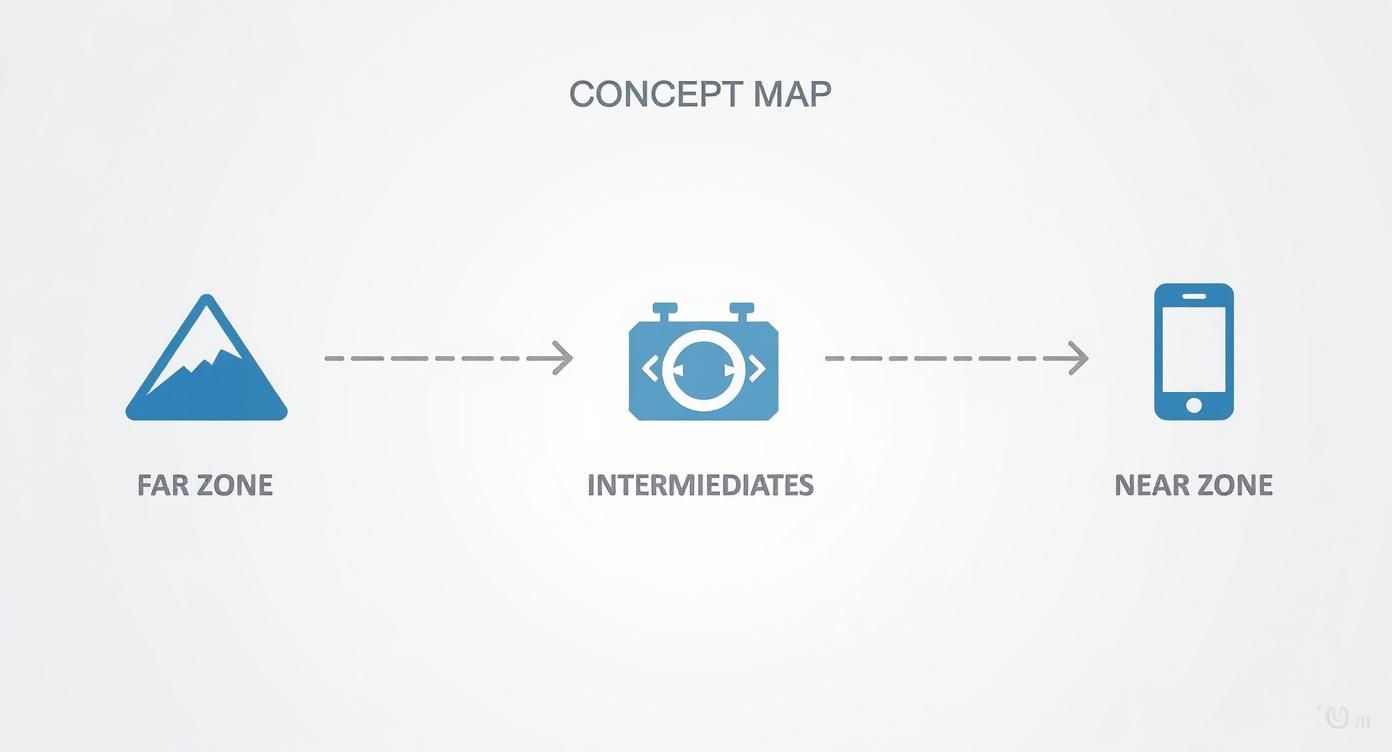
So, how do they pull this off? Every progressive lens is engineered with three distinct, yet invisibly blended, vision zones.
- The Top Zone: This is the largest part of the lens and is designed for your distance vision. It’s what you use for driving down Bloomingdale Road, watching a movie, or seeing across the room.
- The Bottom Zone: The very bottom of the lens contains the full magnification power you need for near vision. This is your sweet spot for reading a menu, checking a price tag, or sending a text message.
- The Intermediate Corridor: Here’s where the real magic happens. This middle section provides a gradual, continuous shift in power, connecting the top and bottom zones. It’s perfectly calibrated for arm's-length distances—think computer screens, your car's GPS, or seeing the person you're having dinner with.
This sophisticated, line-free design is what lets you see clearly at any distance without the frustrating "image jump" that bifocal wearers often complain about. The transition is so smooth, most people eventually forget they’re wearing multifocal glasses at all.
Simply put, progressive lenses are mapped to the way you naturally use your eyes all day long, creating a single, do-it-all solution for your vision.
Comparing Your Vision Correction Options
To really understand what makes progressives unique, it helps to see how they stack up against other common options. Here’s a quick look at the key differences in how they function and look.
| Feature | Progressive Lenses | Bifocals | Single-Vision Readers |
|---|---|---|---|
| Vision Zones | Seamless Distance, Intermediate, & Near | Two distinct zones (Distance & Near) | Single zone (Near only) |
| Appearance | No visible lines | Visible line separates zones | No lines, but for near vision only |
| Visual Transition | Smooth and gradual | Abrupt "image jump" | N/A |
| Best For | All-day, all-distance wear | People who primarily need distance & near | Dedicated near tasks (reading) |
As you can see, while each type has its purpose, only progressives offer a complete, natural-feeling range of vision in one lens.
The Technology Behind the Seamless Surface
How is that perfectly smooth, multifocal surface actually created? The answer lies in digital free-form technology. This is a state-of-the-art, computer-guided manufacturing process that sculpts the back of the lens with incredible precision. It’s not a one-size-fits-all approach; the design is optimized for your unique prescription, the specific frame you've chosen, and even how the frame sits on your face.
It’s the difference between buying a suit off the rack and having one custom-tailored. This level of personalization results in wider fields of view and dramatically reduces the peripheral distortion—that "swim" or "wobble" effect that older progressive designs were sometimes known for.
This technology is what allows us to deliver sharper, more comfortable vision that's easier than ever to adapt to for our patients across Glen Ellyn and Carol Stream.
The core idea behind a progressive lens is simple but powerful: it’s a lens designed to adapt to the user, not the other way around. By mapping the lens power to your natural eye movements, it delivers a more intuitive visual experience.
Lens designers are constantly refining these designs, sometimes using advanced data from millions of prescriptions to optimize the size and clarity of each vision zone. On top of that, specialized coatings and treatments can enhance your vision even further. To see what’s available, you can learn more about how to choose the best lens coating package in our detailed guide. It all comes together to create a lens that feels truly made for you.
Weighing the Benefits and Drawbacks of Progressives
Progressive lenses are a fantastic, modern fix for anyone dealing with presbyopia. But like any custom-tailored technology, they have their own set of pros and cons. Knowing both sides of the coin is the best way to make a smart decision and ensure you'll be happy with your new glasses. Here at iDoctor, we pride ourselves on being the best optometrist in Glendale Heights by giving you the honest, transparent guidance you need.
Let’s break down what makes these lenses so popular, and also touch on the potential hurdles to keep in mind before you take the plunge.
The Clear Advantages of Progressive Lenses
The upsides to progressives are pretty compelling, boiling down to convenience, aesthetics, and a more natural way of seeing. For most people, these benefits make them a clear winner over older multifocal designs.
- Seamless, Line-Free Appearance: The first thing you'll notice is what's not there—no lines. Progressives offer a clean, modern look that doesn't scream "I'm wearing bifocals." This simple cosmetic difference helps create a more youthful and polished look.
- One Pair for Everything: This is where the real magic happens. Imagine driving your car, then glancing at your dashboard, then reading a text on your phone—all without switching glasses. It completely gets rid of the daily juggle of carrying multiple pairs for different distances.
- Natural Vision Transition: Without that hard line found in bifocals, you won't get that distracting "image jump" when you look down. The power in the lens shifts gradually, so moving your focus from something far away to something up close feels smooth and intuitive.
Potential Challenges and What to Expect
While the benefits are great, it’s just as important to be real about the potential downsides. The good news is that almost all of these are temporary and part of the initial learning curve.
The biggest hurdle is simply getting used to a new way of seeing. Some first-time wearers notice a "swim" or "wobble" effect, especially when looking out of the corners of their eyes. This is a normal byproduct of the lens design; the very edges of the lens have slight distortions to create that seamless corridor of clear vision down the middle.
The key takeaway is that your brain needs a little time to learn the new rules. For most people, this adaptation period takes anywhere from a few days to two weeks of consistent, full-time wear.
You might also notice that the viewing areas for your computer distance and reading feel a bit narrower at first than what you're used to with single-vision glasses. This just requires a small change in habit: you'll learn to point your nose at what you want to see, rather than just flicking your eyes to the side. For a deeper dive, you can read our detailed guide on progressive lenses vs. bifocals for more on this.
Setting Realistic Expectations
Going into this process prepared for the adjustment phase is the single best thing you can do for a successful outcome. When you know that a brief learning period is completely normal, it's easier to stay patient. The initial feelings of peripheral blur or the need to turn your head more will fade as your brain adapts to its new normal.
I like to compare it to breaking in a new pair of high-quality shoes. They might feel a little stiff at first, but after wearing them for a bit, they feel like they were made for you. It’s the exact same principle with progressive lenses.
Our expert opticians at iDoctor in Glendale Heights will walk you through exactly what to expect and give you personalized tips to make your transition as quick and easy as possible. We take the time to make sure every pair—whether you're looking for Cartier glasses near me or a stylish set of Coach frames—is fitted perfectly to shrink that adjustment period and give you amazing vision from day one.
Tips for a Smooth Adaptation to Your New Lenses
Getting used to new progressive lenses is a bit like breaking in a new pair of shoes. At first, they might feel a little different, but with a bit of time, they become so comfortable you forget you're even wearing them. The key is giving your brain a chance to learn the new layout of your vision.
We’ve helped hundreds of people in Glendale Heights make this transition, and we've learned what works. It’s all about building new habits, and these simple tips will get you there faster.

That initial "wobbly" or "swim" feeling some people notice is totally normal. It's just your brain getting its bearings and creating a new visual map. Pushing through that first day or two is the quickest way to get to that effortless, clear vision you’re looking for.
Your Step-by-Step Adaptation Guide
Patience is your best friend here. If you commit to wearing them consistently, most people feel completely natural in their new progressives within one to two weeks. Sometimes it’s just a few days! Follow these proven tips to make the process a breeze.
- Go All In: The number one thing you can do is wear your new glasses full-time. Put them on when you wake up and don't take them off until bed. Toggling back to your old pair just confuses your brain and resets the clock on your adjustment period.
- Point Your Nose, Not Just Your Eyes: This is the golden rule for progressive lens wearers. Instead of darting your eyes to the side, get used to turning your head and pointing your nose directly at what you want to see. This lines up your vision with the clearest part of the lens for any distance. When you read, just dip your chin slightly to access that sweet spot at the bottom.
- Make Purposeful Head Movements: When you're scanning a shelf at the grocery store or checking your blind spot while driving, make a conscious effort to turn your head. This habit keeps you out of the softer-focus zones on the lens periphery. It might feel a little strange at first, but it becomes automatic in no time.
Navigating the Common Hiccups
Even with the best approach, you might hit a few small snags. That’s perfectly okay—it's part of the process. If you want a deeper dive into what to expect, check out our guide on adjusting to new glasses.
The goal isn't for you to adapt to the lens; it's for the lens to adapt to you. Today's advanced digital designs are made to work with your natural posture and eye movements, making this process easier than ever.
One classic example is dealing with stairs. The first few times, make a point to tuck your chin down. This lets you look through the distance portion of the lens at the top, not the reading zone at the bottom, so the steps are sharp and clear.
If you’ve given it a week or two and things still don't feel quite right, please give us a call. We're your vision partners at iDoctor. A quick follow-up appointment is often all it takes for a minor frame adjustment that makes all the difference. Your comfort is our priority, and that dedication to a perfect fit is why so many people trust us for their eye care in Glendale Heights.
Choosing Advanced Progressive Lens Options
Once you've settled on progressives, the real fun begins. Modern lenses aren't a one-size-fits-all solution; they're more like a custom-tailored suit for your eyes. We can fine-tune the design and add coatings that match everything from your daily habits to the specific frames you fall in love with. Think of a standard progressive lens as a fantastic starting point, but these advanced options are what elevate your vision from good to great.
Here at iDoctor, our team will walk you through all the possibilities. We want to make sure your new glasses are a perfect fit for your life, whether you're working in an office near the Glendale Heights Public Library or spending a weekend at Cosley Zoo with the family.
Tailoring the Lens Design to Your Frames and Lifestyle
Believe it or not, not all progressive lenses are created equal. The internal design—the "corridor" that smoothly transitions between your distance and reading vision—can be shaped to fit your life. This is where we dial in the performance and make sure the lenses work seamlessly with your chosen frames.
Two of the most common designs we recommend are:
- Short-Corridor Lenses: Found a pair of smaller, stylish frames you just have to have? No problem. A short-corridor progressive is designed to fit them perfectly. It packs the full range of vision correction into a shorter vertical space, so you don't need a large, clunky frame to get the benefits. This means you can easily rock the latest styles from designers like Tom Ford and Kate Spade without giving up your multifocal vision.
- Computer Progressive Lenses: Anyone who spends their day in front of a screen will tell you these are a revelation. Often called "office" or "indoor" lenses, they have a massive intermediate zone for viewing computer monitors and a wide, comfortable near zone for reading. They're not meant for distance tasks like driving, but they work wonders to reduce digital eye strain and even help you sit with better posture at your desk.
Performance-Enhancing Coatings Your Vision Deserves
The lens itself is only half the story. The coatings we add to the surface are just as important. These are incredibly thin layers that offer powerful benefits—they protect your eyes, make your vision sharper, and help your glasses last longer. It’s a small investment that makes a huge difference in your day-to-day comfort.
We almost always recommend a few key options:
- Anti-Reflective (AR) Coating: This is non-negotiable for most people. AR coatings get rid of those annoying reflections on both sides of your lenses. The result? More light gets through to your eyes, giving you crisper, clearer vision. It's especially noticeable when driving at night, cutting down the glare and halos from oncoming headlights on roads like Schmale Road.
- Blue Light Filtering: If a computer or phone is a big part of your day, a blue light filter is worth considering. It helps block a portion of the high-energy blue-violet light from digital screens, which many people find helps ease eye fatigue and may even help regulate sleep cycles.
- Scratch-Resistant Coating: A good hard coat protects your investment. It makes the lens surface tougher and more resistant to the minor scuffs and scratches of daily life that can get in the way of your vision.
- Photochromic Lenses: You probably know them by the brand name Transitions. These are the lenses that intelligently darken in sunlight and turn clear again indoors. It’s the ultimate convenience—like having your regular glasses and sunglasses in one single pair.
It's no surprise that more and more people are opting for these features. The global market for progressive lenses was valued at around USD 11.5 billion in 2023 and is expected to climb to USD 19.3 billion by 2032. That growth is a testament to how much people appreciate the convenience and visual clarity these modern lenses provide. You can read more about market trends and lens innovations to see what's on the horizon.
Getting the Perfect Fit at iDoctor in Glendale Heights
You can have the most advanced progressive lens technology on the planet, but it won’t work right without one critical ingredient: a perfect, professional fit. This isn't like buying a pair of simple reading glasses off the rack. The entire success of your new progressive lenses comes down to precise, personalized measurements.
This is where the skill of a dedicated optician truly shines. At iDoctor, we see the fitting process as the essential final step to unlocking clear, comfortable vision. Our team goes far beyond just reading your prescription; we meticulously calibrate your new lenses to your eyes, your chosen frames, and the unique way you view the world. It’s a hands-on, detailed approach that makes all the difference.
This kind of careful fitting is more important than ever. North America has become a huge market for progressive lenses, making up over 30% of the entire global revenue in 2023. People are increasingly looking for eyewear that doesn't just work well but also looks great, and a precision fit is the key to both. Learn more about the regional market for progressive lenses to see why quality is driving this trend.
The iDoctor Difference in Precision Measurements
So, what exactly goes into a "perfect fit"? It all boils down to a few key measurements that demand expert accuracy.
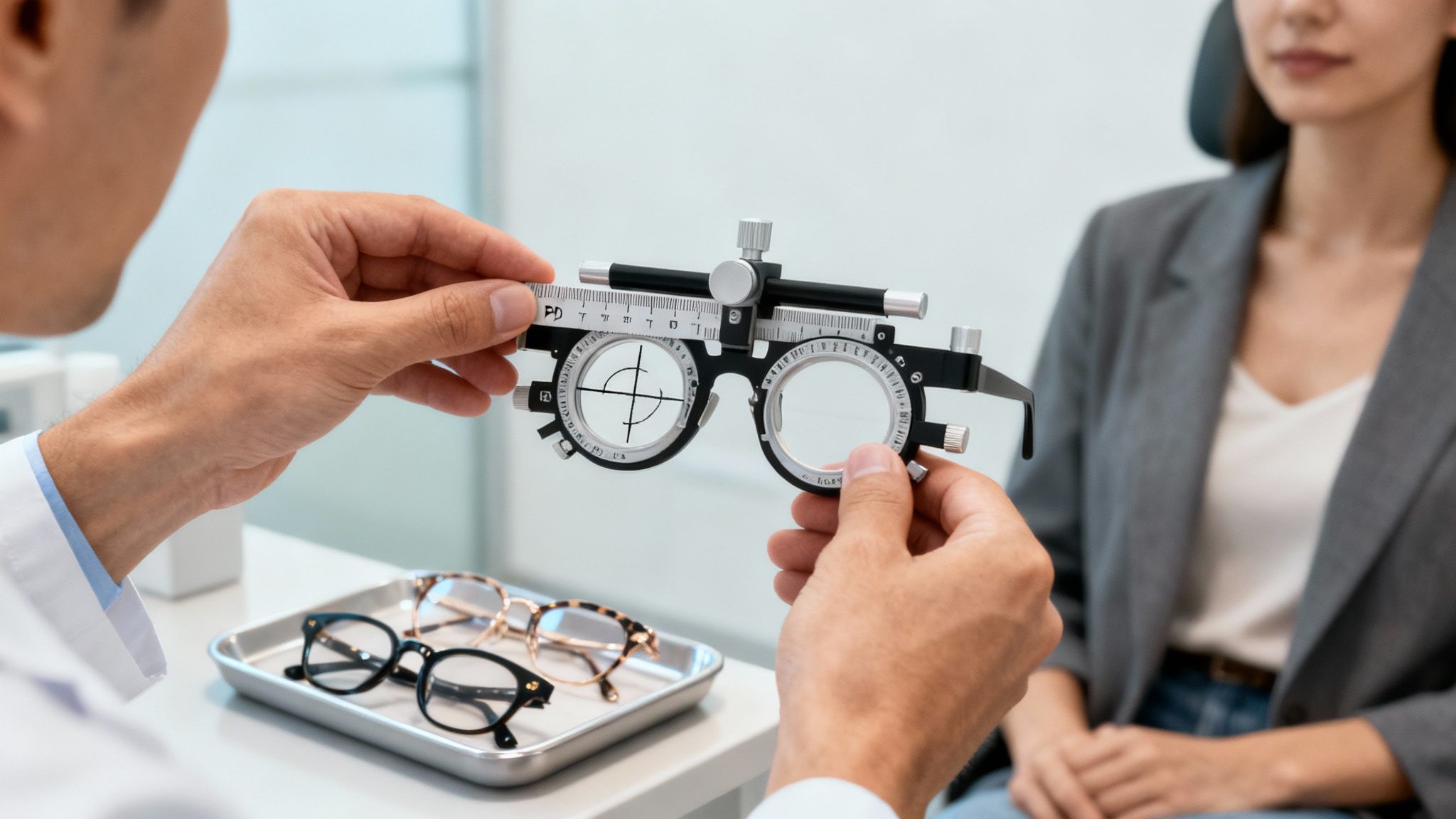
- Pupillary Distance (PD): This is simply the distance between the centers of your pupils. Getting this right ensures the optical center of the lens lines up perfectly with your line of sight, giving you the sharpest possible distance vision.
- Ocular Center (OC) Height: This vertical measurement maps out exactly where the progressive power corridor should start in the lens. It needs to be positioned perfectly so you can naturally shift your gaze down to read without having to tilt your head or strain your eyes.
Our skilled opticians use advanced digital tools to nail these measurements down to the sub-millimeter. This precision is what allows your vision to flow seamlessly from far to near, dramatically cutting down your adjustment period and preventing visual fatigue.
We are serious about providing the best custom eyewear measurements in Glendale Heights because we know it’s the secret to getting the most out of your new glasses.
Pairing the Perfect Fit with Designer Frames
With your measurements dialed in, the fun part begins: finding the perfect frame from our hand-picked collection of designer eyeglasses in Glendale Heights. We stock a wide range of styles from world-class brands like Cartier, Gucci, Oliver Peoples, and Tom Ford, all specifically chosen to work beautifully with progressive lenses.
We believe everyone deserves exceptional vision. That's why we proudly accept all major vision insurance plans to help you invest in premium eyewear. Our team is here to help you get the most out of your benefits, making sure you walk away with the best lenses and frames for your life.
Local FAQ: Progressive Lenses in Glendale Heights
Choosing new glasses is a big deal, and we get that. To help you feel completely sure about your decision, we've put together answers to the questions we hear most often from our patients right here in Glendale Heights.
Where can I get designer progressive glasses in Glendale Heights?
You've come to the right place! At iDoctor, we offer a curated collection of luxury eyewear from brands like Cartier, Gucci, Tom Ford, Oliver Peoples, and Fendi, as well as affordable designer lines like Ray-Ban and Coach. We specialize in fitting these premium frames with the latest progressive lens technology. Our expert opticians ensure a perfect fit for both your vision and your style.
Do you offer eye exams for progressive lenses near me?
Yes, we provide detailed eye exams in Glendale Heights that are perfect for determining your progressive lens prescription. Our 30-minute exams use high-resolution imaging to get the most accurate measurements, which is crucial for custom progressive lenses. Our team will assess your vision needs for all distances to ensure your new glasses work seamlessly for your lifestyle.
How much do progressive lenses cost and do you take vision insurance?
The cost of progressive lenses can vary based on the lens technology and any coatings you choose. At iDoctor, we believe in transparent pricing and will help you find the best option for your budget. The great news is we accept all major vision insurance plans, which can significantly reduce your out-of-pocket costs. Our team is happy to check your benefits and explain your coverage.
What if I can't get used to my new progressive lenses?
Your comfort is our top priority. While most people adapt within a week or two, we offer a satisfaction guarantee. If you're struggling, please call us. As a leading eye doctor in Glendale Heights, we'll schedule a follow-up to double-check the measurements, adjust the frame fit, and make sure you are 100% happy and seeing clearly.
Ready to see what life is like with seamless vision from a single pair of glasses? At iDoctor, we pair expert fittings with an incredible collection of designer frames right here in Glendale Heights. Schedule your detailed eye exam today and see the difference for yourself.