Staring at a wall of sunglasses can feel completely overwhelming. With so many different lens types to choose from, how do you even begin? The secret is knowing that the best lenses for you are a specific combination of material, color, and advanced features like polarization—all tailored to protect your vision, cut down on glare, and perfectly match your lifestyle in Glendale Heights.
Choosing Your Perfect Sunglass Lenses in Glendale Heights
So, with all those options staring back at you, how do you pick the right ones? This guide is here to break it all down in simple, no-nonsense terms. We’ll walk through the different lens materials, explain why certain colors work better for specific situations, and demystify what all those fancy features actually do for your eyes.
As the leading eye doctor in Glendale Heights, our team at iDoctor is dedicated to helping you find that perfect pair. We want your sunglasses to protect your vision and fit seamlessly into your life—whether you’re driving down North Avenue every day or spending a sunny afternoon at the East Branch Forest Preserve.
Think of it this way: the right lenses are more than just a fashion statement. They’re a tool to enhance how you see the world, protect the long-term health of your eyes, and complement everything you do. We'll help you see that the perfect pair is an investment in both your style and your well-being.
Matching Lenses to Your Lifestyle
Picking sunglass lenses is definitely not a one-size-fits-all deal. Your daily routine, your hobbies, and your specific vision needs are the most important factors in finding the ideal combination of features. Someone who drives past Glenbard East High School during their daily commute has very different needs than an angler spending their weekends fishing at Mallard Lake.
Here are a few quick examples:
- Daily Drivers: You'll get the most benefit from gray or brown polarized lenses, which are fantastic for cutting the harsh glare off the road.
- Outdoor Athletes: Your priority should be impact-resistant materials like polycarbonate or Trivex to keep your eyes safe.
- Fashion-Forward Individuals: You might love the look of gradient tints or mirrored coatings to make a bold statement with a pair of designer eyeglasses in Glendale Heights.
This simple decision-making process helps connect what you do with the right lens solution.
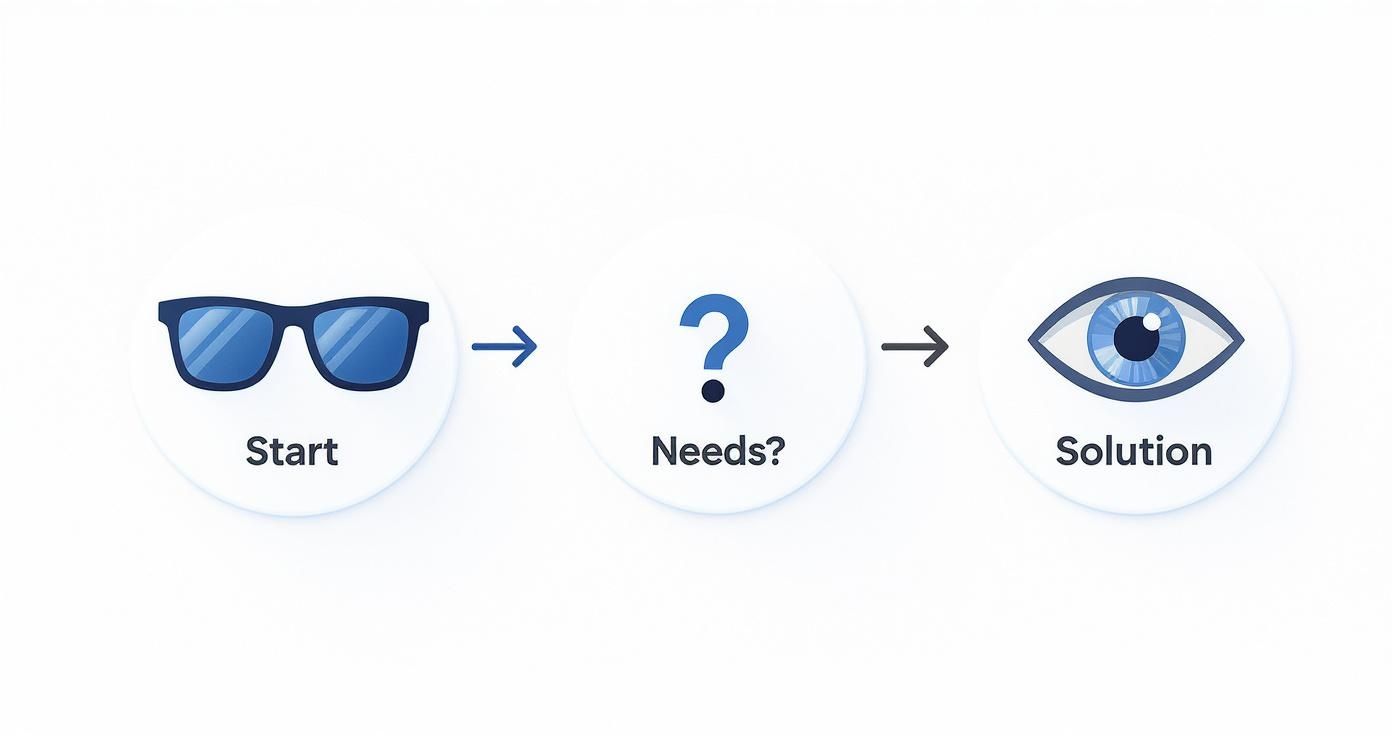
The real takeaway here is that if you start by thinking about your primary activities, you can narrow down the choices much faster and more effectively. For even more guidance, check out our complete guide on how to choose sunglasses that fit your face and lifestyle. We’re here to help our Glendale Heights community find eyewear they truly love.
Exploring Sunglass Lens Materials
The material your sunglass lenses are made from is the very foundation of your vision, comfort, and safety. It’s a lot like choosing tires for a car—what works for a daily commute isn't necessarily what you'd want for a high-performance sports car. Getting this choice right is the first step to finding the perfect pair.
Glass lenses were the original standard, and for good reason. They offer incredible optical clarity and are tough to scratch. But they have two major downsides: they're heavy, and they can shatter on impact, making them a risky choice for sports or any active lifestyle.
The Rise of Modern Polymer Lenses
These days, advanced plastics and polymers have taken over, and it's easy to see why. They offer a fantastic blend of lightweight comfort, impact resistance, and crisp, clear vision.
- Polycarbonate: Think of this as the workhorse of modern lenses. It's exceptionally tough and shatter-resistant, which is why it's the go-to material for safety glasses, sports eyewear, and kids' sunglasses. It's a safe, reliable choice for anyone with an active lifestyle—like students at Glenbard West who are always on the go. You can dive deeper into its benefits in our guide to polycarbonate eyeglass lenses.
- Trivex: Trivex is like polycarbonate's more refined cousin. It offers the same incredible impact resistance and built-in UV protection but with superior optical clarity. It's also even lighter, making it one of the most comfortable materials you can put in a frame.
The shift away from glass is no small trend. The global sunglasses lens market is projected to jump from USD 8.5 billion in 2023 to USD 13.6 billion by 2032. Lightweight, shatter-resistant polymers like polycarbonate and Trivex now make up over 75% of all sunglasses sold. You can read more about these market trends to see how quickly the technology is advancing.
Let's break down how these materials stack up against each other.
Comparing Sunglass Lens Materials
Here’s a quick-glance comparison to help you understand the key differences between the most common lens materials.
| Material | Optical Clarity | Impact Resistance | Weight | Best For |
|---|---|---|---|---|
| Glass | Excellent | Low | Heavy | Casual wear; when clarity is the absolute top priority. |
| Polycarbonate | Good | Excellent | Very Light | Sports, safety glasses, and children's eyewear. |
| Trivex | Excellent | Excellent | Lightest | Everyday wear, active lifestyles, and rimless frames. |
| High-Index Plastic | Very Good | Good | Light | Strong prescriptions where lens thinness is key. |
As you can see, the right choice really depends on what you'll be doing and what you need from your eyewear.
High-Index Lenses for Stronger Prescriptions
If you have a strong prescription, you might worry about your sunglasses having thick, heavy lenses. That’s where high-index plastic comes in. This material is engineered to bend light far more efficiently than standard plastics.
The real magic of high-index lenses is that they can deliver powerful vision correction in a much thinner and lighter package. This frees you up to choose bold, fashionable frames from designers like Cartier, Gucci, or Tom Ford without the dreaded "coke-bottle" effect.
At iDoctor, we're experts at matching these incredible lens materials with our curated collection of designer frames. We'll help you find the perfect combination that gives you flawless vision, feels amazing all day, and looks absolutely stunning.
How Lens Tints and Colors Affect Your Vision
The color of your sunglass lenses does a whole lot more than just look cool—it fundamentally changes how you see the world. Think of different lens tints as specific filters, each one engineered to fine-tune your vision for certain conditions. Picking the right color is a massive part of finding the best types of sunglass lenses for your lifestyle.
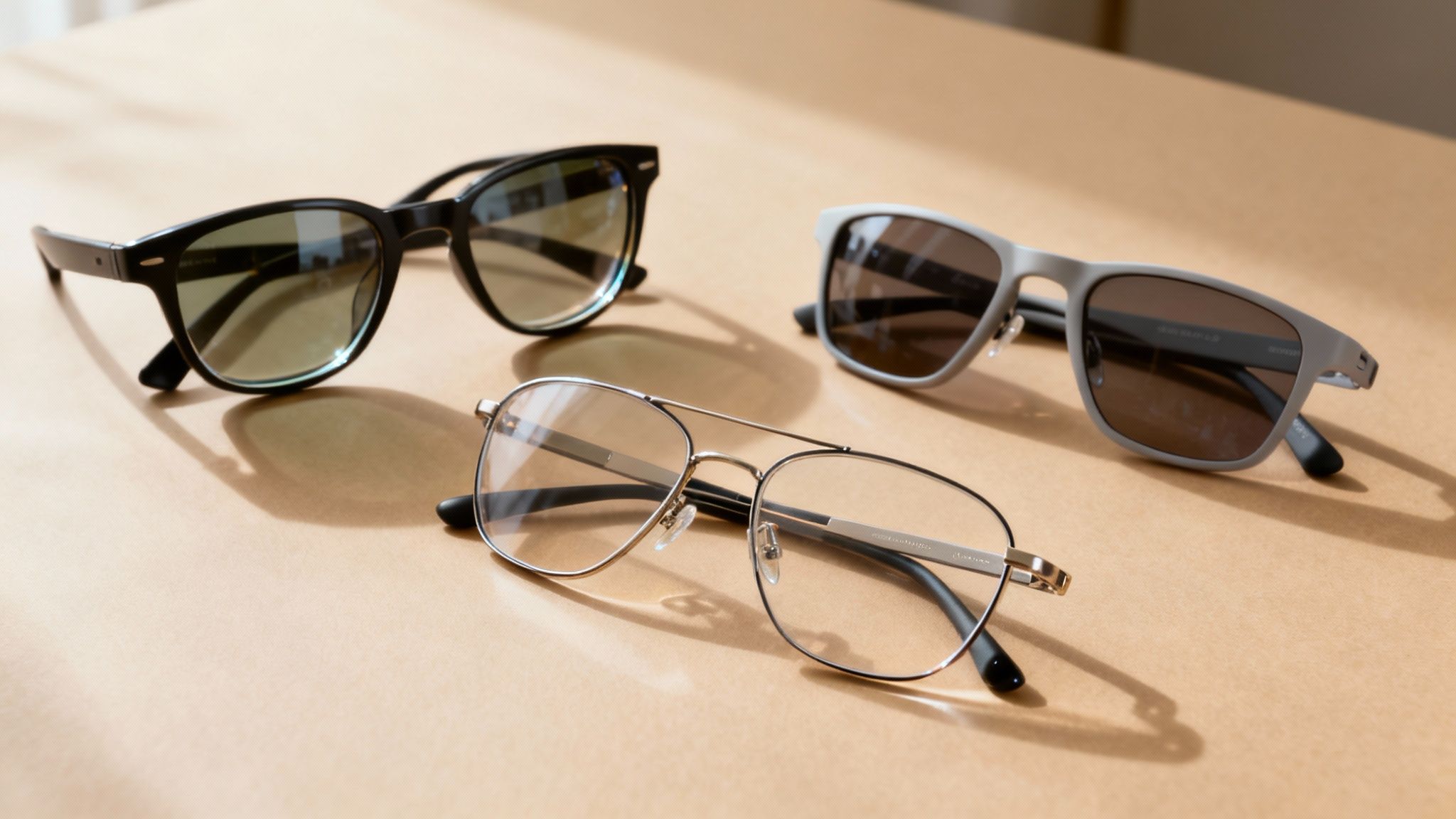
This really isn't about fashion; it's about function. Matching the right lens tint to what you're doing can cut down on eye strain, make things look clearer, and even boost your safety. It's a simple, effective way to get the most out of your eyewear.
Everyday and All-Purpose Tints
For daily, all-around use, a few colors really stand out by giving you balanced vision without messing with your color perception. These are your go-to choices for driving around Glendale Heights or just going about your day.
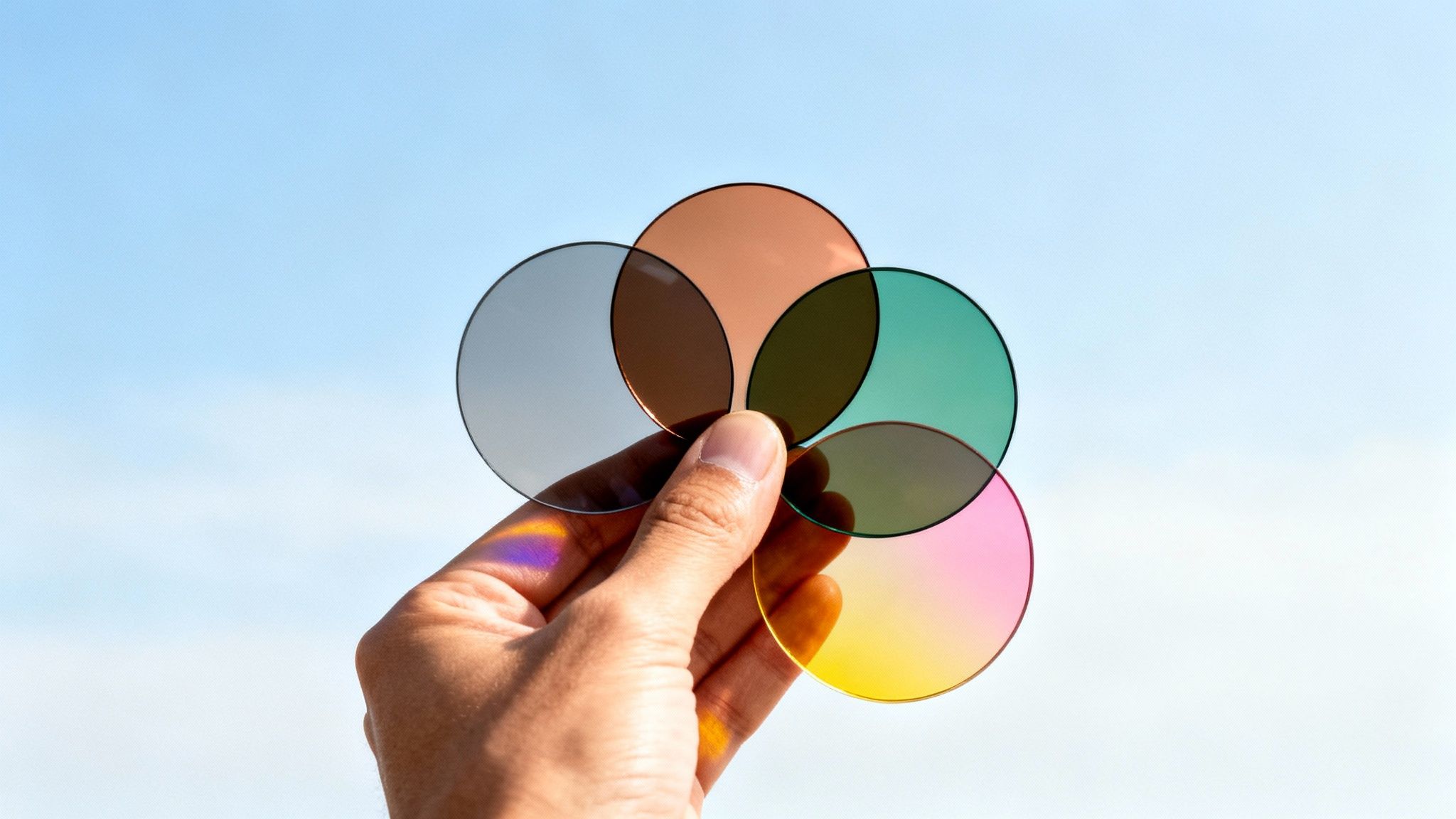
- Gray Lenses: This is your most neutral option, hands down. Gray tints dial down the intensity of bright light across the board without skewing colors, giving you a true-to-life view. It's why they're such a perfect pick for everyday wear.
- Green Lenses: A classic for a reason. Green tints provide a bit more contrast than gray but still keep colors looking natural. They’re especially good at filtering some blue light, which can really help reduce eye fatigue on those blindingly sunny days.
Tints for Enhanced Contrast and Depth
Some situations call for a sharper, more defined view. Whether you're trying to read the green on a golf course or navigate a rocky trail, the right tint can give you a serious visual advantage.
Brown and copper lenses are amazing for boosting contrast. They make greens and reds pop, which is perfect for activities like fishing, golfing, or hiking through forested spots like the nearby East Branch Forest Preserve. By making colors stand out from each other, they can dramatically improve your sense of depth.
Rose-tinted lenses also do a great job of enhancing contrast and are known for being incredibly soothing on the eyes. They can improve visibility while driving and are a comfortable choice for wearing over long stretches.
Specialty Tints for Specific Conditions
Moving beyond the usual suspects, some tints are built for very specific jobs, acting more like high-performance equipment for your eyes.
Yellow or orange lenses are the champs in low-light, hazy, or foggy conditions. They're a favorite among cyclists and pilots because they filter out the fuzzy, blue end of the light spectrum, making your surroundings seem sharper and brighter. While they’re definitely not dark enough for bright sun, they are a total game-changer on overcast days.
Another great option for changing light is photochromic lenses, which darken automatically when exposed to UV light. To see if they might be the right fit for you, check out our guide covering the pros and cons of photochromic lenses.
What Is Polarization and Why You Need It
When it comes to sunglass features, polarization is probably one of the most talked-about upgrades you can get. It's also one of the most genuinely useful. But what does it actually do?
Think of it this way: sunlight travels in waves moving in every direction. When those waves hit a flat, reflective surface—like a wet road, the hood of a car, or the water at Mallard Lake—the light bounces back horizontally. All that concentrated horizontal light is what we see and feel as blinding glare.
Polarized lenses have a special chemical filter laminated onto them that works like a microscopic set of Venetian blinds. This filter is aligned vertically, so it only lets in vertical light while blocking the horizontal light waves responsible for glare. The result isn't just a darker view; it's a crisper, clearer, and much more comfortable one.
Why Polarization Is a Game-Changer
Getting rid of glare is more than just a nice-to-have feature; it’s a massive improvement in visual comfort and safety. By cutting through the visual "noise," polarized lenses let you see details that would otherwise be completely washed out.
You'll really feel the difference in situations like these:
- Driving: Ever been blinded by the reflection off wet pavement or the car in front of you? Polarized sunglasses make driving significantly safer and less stressful on your eyes, especially during that commute on I-355.
- Water Activities: For anyone who loves fishing or boating, these are a must. Polarization cuts right through the glare on the water's surface, so you can actually see what’s swimming beneath.
- Snow Sports: A fresh blanket of snow is basically a giant mirror for the sun. Polarized lenses dial down that harsh, reflective glare, helping you see the contours of the slopes much better.
In short, polarization transforms your vision from hazy and strained to sharp and relaxed. It doesn't just make things darker; it actively enhances what you see by removing visual interference.
It's no surprise that this technology is in high demand. The global market for polarized sunglasses is projected to hit USD 12.18 billion by 2032, and North American consumers are a huge part of that. In fact, more than half of buyers here are willing to spend 20-50% more for that superior clarity and glare reduction. It's a feature people truly value. Discover more insights about polarized sunglasses market trends.
Is Polarization Right for Everyone?
For most people, the answer is a resounding yes. However, there are a couple of specific situations where polarized lenses can be a minor drawback. Because the filter can interfere with the light from LCD screens, you might find it hard to see your smartphone, a GPS device, or some digital dashboards in newer cars.
For the vast majority of your day-to-day life here in Glendale Heights, though, the benefits of polarization easily outweigh this small trade-off. We dive much deeper into this topic in our guide on the difference between polarized and nonpolarized lenses.
Here at iDoctor, we know that the best lens is the one that fits your life. That’s why we offer premium polarized options from brands you love, from classics like Ray-Ban to high-end collections from Gucci and Oliver Peoples. We can help you see the difference for yourself and find the perfect pair.
Advanced Coatings That Enhance Your Lenses
Think of a standard sunglass lens as a great camera sensor. It does a good job, but it’s the special filters and coatings that take a photo from just okay to truly spectacular. That's exactly what modern lens coatings do for your sunglasses—they turn a good pair of shades into a high-performance tool built for your life.
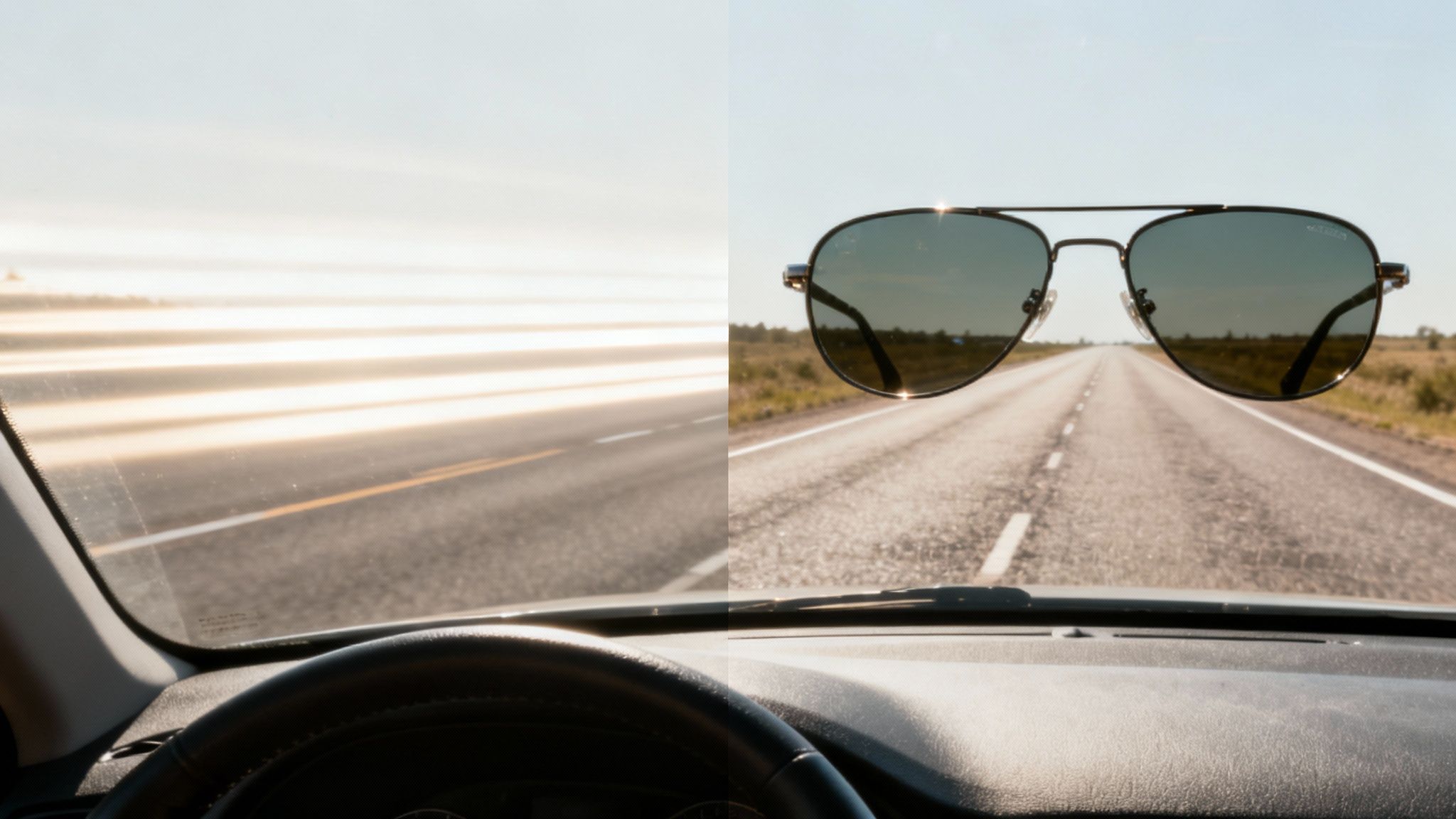
These treatments aren't just bells and whistles. They’re functional upgrades that solve real-world problems, from annoying reflections and changing light to the daily battle against smudges and fingerprints. By layering these technologies, we can craft a lens that’s perfectly tuned to you.
Lenses That Adapt to Your Environment
Photochromic lenses are the chameleons of the eyewear world. You probably know them by the brand name Transitions®. These lenses are embedded with special molecules that react to UV light, causing them to darken automatically when you step into the sun and fade back to clear when you head indoors.
This on-the-fly adjustment is a game-changer for anyone who’s constantly moving between inside and outside, saving you the hassle of juggling separate pairs of prescription glasses and sunglasses.
It's no surprise that demand for this kind of smart eyewear is soaring. The global sunglasses market is projected to hit over USD 61.8 billion by 2035, and a big reason is that people want more from their lenses. In fact, by 2030, analysts expect that over 70% of sunglasses sold in developed markets will feature advanced tech like photochromic or polarized lenses. This shows a huge shift toward eyewear that does more to protect and enhance our vision. You can learn more about these consumer eyewear trends and the technology behind them.
Coatings for Style and Performance
Beyond adaptive technology, several coatings can add both a unique look and serious functional benefits to your lenses. These are the options that let you dial in your eyewear for both aesthetics and peak performance.
- Mirrored Coatings: This is a highly reflective layer applied to the front of the lens. It creates a bold, striking look, but it's not just for show. That mirror finish actually bounces a significant amount of light away from the lens, making it a fantastic choice for intensely bright conditions, like a day on the water or hitting the slopes in the snow.
- Anti-Reflective (AR) Coatings: Honestly, this is a must-have upgrade for sunglasses. An AR coating is applied to the back surface of the lens to stop that distracting glare that reflects off the lens and into your eye. It’s a simple addition that makes a world of difference for clear, comfortable vision. Curious how it works on regular glasses? Check out the benefits of anti-reflective lens coatings in our detailed guide.
A Quick Tip on Lens Care: To keep these advanced coatings in top shape, always clean your lenses with a microfiber cloth and a spray designed for glasses. Steer clear of paper towels or the hem of your shirt—they can create tiny scratches that add up over time.
Keeping Your Vision Clear and Clean
Finally, some coatings are all about making your life easier by helping your lenses stay cleaner, longer.
Hydrophobic and oleophobic coatings work together to create an incredibly slick surface on your lenses. A hydrophobic treatment repels water, causing droplets to bead up and roll right off. An oleophobic treatment does the same for oils, fighting off smudges from fingerprints and your skin.
When you bundle these together, you spend less time wiping down your glasses and more time enjoying crisp, unobstructed vision. Here at iDoctor in Glendale Heights, our expert team can walk you through combining the right lens types and coatings to build a truly personalized pair of sunglasses you’ll absolutely love to wear.
Find Your Perfect Lenses at iDoctor in Glendale Heights
Choosing the right sunglass lenses isn't just about style—it's a deeply personal decision that affects your daily comfort, keeps your vision safe, and protects your long-term eye health. Now that you have a better handle on the different options, the next step is finding that perfect match with guidance from the best optometrist in Glendale Heights.
Here at iDoctor, we combine our clinical expertise with a hand-picked collection of world-class designer eyewear from brands like Cartier, Gucci, Tom Ford, and Oliver Peoples. Our mission is to ensure you never have to compromise between seeing clearly and looking fantastic. We’re here to walk you through every option, step by step, and we proudly accept all major vision insurance plans.
A Consultation Just for You
During one of our detailed eye exams in Glendale Heights, we can help you sort through all the materials, tints, and high-tech coatings to create a pair of sunglasses that fits your vision needs and your life. Maybe you need prescription lenses in a stunning pair of Fendi frames, or perhaps you're after classic polarized Ray-Bans for those sunny drives down Army Trail Road. Whatever it is, our team is obsessed with getting your fit just right.
Your sunglasses are one of the most important tools you have for protecting your vision. Our role is to ensure that tool is perfectly suited to you, combining flawless optics with a style you'll be excited to wear every day.
We'd love to invite our neighbors from Glendale Heights, Bloomingdale, and Carol Stream to stop by our boutique for a one-on-one consultation. Let our team show you what a difference professional, personalized care truly makes. Your journey to clearer, more comfortable vision in the sun starts right here.
Frequently Asked Questions About Sunglass Lenses
We know that choosing the right eyewear can bring up a lot of questions. Here are a few common ones we hear from our patients at iDoctor to help you on your search.
Can I get my prescription in designer sunglasses like Gucci or Prada?
Absolutely! This is one of our specialties. At iDoctor, we can fit custom prescription lenses into our entire collection of luxury frames, including iconic brands like Gucci, Prada, and Tom Ford. Our expert opticians ensure a perfect fit, so you get the high-fashion look you want with the crystal-clear vision you need.
Do you offer any affordable sunglass brands?
Yes, we do. While we are known for our curated luxury collections, we also believe in providing fantastic options for every budget. We carry a wide selection of affordable and stylish brands like Ray-Ban, Scott Harris, Michael Kors, Kate Spade, and Coach, ensuring everyone in Glendale Heights can find a pair they love.
Are more expensive sunglass lenses actually better?
In most cases, yes. Premium lenses from trusted brands deliver superior optical clarity, are made from more durable and lightweight materials, and feature advanced coatings that provide 100% UV protection. They are engineered to reduce distortion and are often more scratch-resistant. We can show you the difference a quality lens makes for your vision and comfort right here in our boutique.
Ready to find the perfect sunglasses? At iDoctor, we combine expert guidance with an unmatched selection of designer eyewear. Schedule your personalized consultation today!