Learning how to put contacts in for the first time can feel a bit awkward, but it really just comes down to clean hands, a calm approach, and getting the technique right. For many of our clients here in Glendale Heights, once they get the hang of it, the whole process becomes a quick, seamless part of their daily routine. At iDoctor, our goal is to make your transition to contact lenses a comfortable and successful one.
Your Guide to Stress-Free Contact Lens Application
If you're new to wearing contacts, the idea of putting something in your eye can be intimidating. You're definitely not alone. Many new wearers in the Glendale Heights area find it a little strange at first, but we promise it's a skill you can pick up quickly. This guide is here to help you get past any initial fumbling and make inserting your lenses second nature.
We'll break down the process, share some practical tips that really work, and help you feel more confident. The absolute best way to start is by making sure you have the right lenses, and that begins with a professional fitting from a trusted eye doctor in Glendale Heights. A properly fitted lens isn't just about comfort and clear vision; it also makes the lenses themselves much easier to handle.
Starting with Confidence
It’s completely normal to feel a bit hesitant. In fact, a survey from the American Optometric Association showed that about 40% of contact lens wearers had some trouble with insertion at the beginning, sometimes leading to irritation or a lens that just wouldn't sit right.
This guide is designed to help you join the confident majority. As your local eye care experts near the Glendale Heights Post Office, we want to help you succeed with clear, step-by-step guidance you can actually use.
Key Takeaway: The single most important factor for easy contact lens insertion is a professional fitting from your optometrist. Getting the right lens material, size, and prescription makes everything smoother from day one.
Getting familiar with the specifics of your vision needs can also be really empowering. For a little more background, you can check out our guide on how to read and understand your contact lens prescription.
From students at Glenbard West High School to professionals commuting down North Avenue, our goal at iDoctor is to make your transition to contacts a great one.
Getting Ready for a Smooth Application
Before a contact lens even gets near your eye, a little bit of prep work goes a long way. Think of it as creating the perfect, clean workspace. Getting this part right is the key to making the whole process easy and, more importantly, hygienic.
First things first: wash your hands. And we mean really wash them. Use a simple, non-moisturizing soap and warm water. Soaps with heavy perfumes or lotions can leave a residue on your fingers that will inevitably transfer to your lens, leading to cloudy vision and some serious irritation. This one step is non-negotiable and your best line of defense against eye infections.
Next, dry your hands completely with a clean, lint-free towel. You want to avoid those tiny, almost invisible fibers from a regular bathroom towel. Trust us, nothing is more annoying than getting a lens in perfectly, only to realize a piece of lint is stuck under it, making it feel like you have an eyelash in your eye all day.
Your Pre-Flight Lens Check
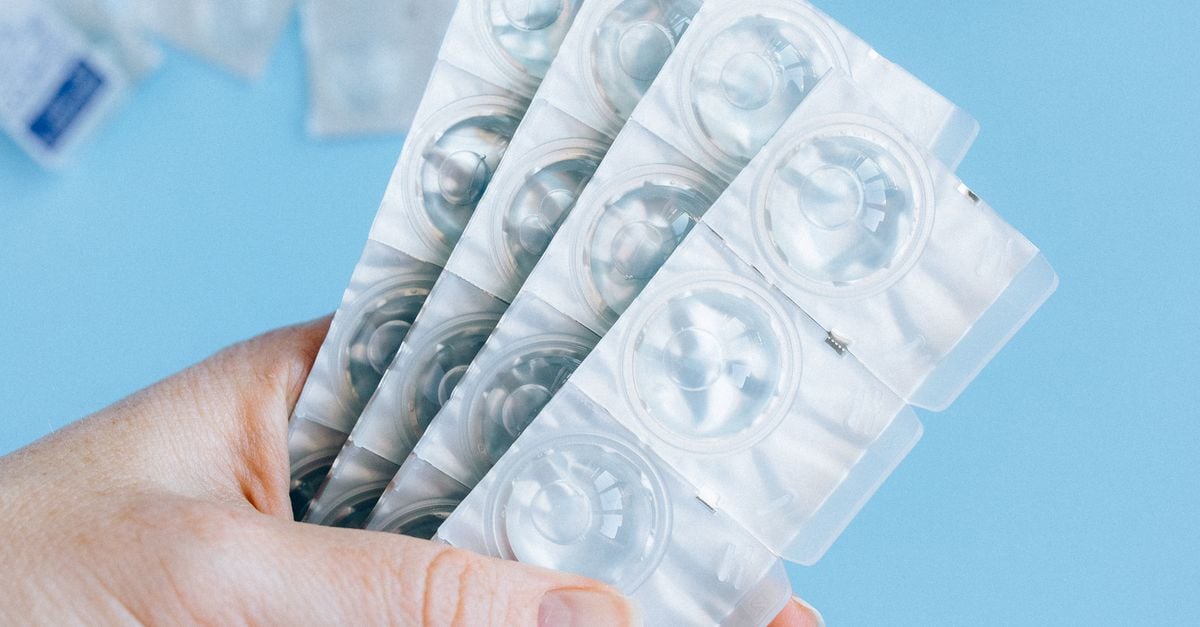
With clean, dry hands, it's time to meet your lens. Carefully slide one out of its case or blister pack and into the palm of your hand with a few drops of fresh solution. Give it a quick look-over. You're checking for any tiny nicks, tears, or bits of debris that might have found their way in.
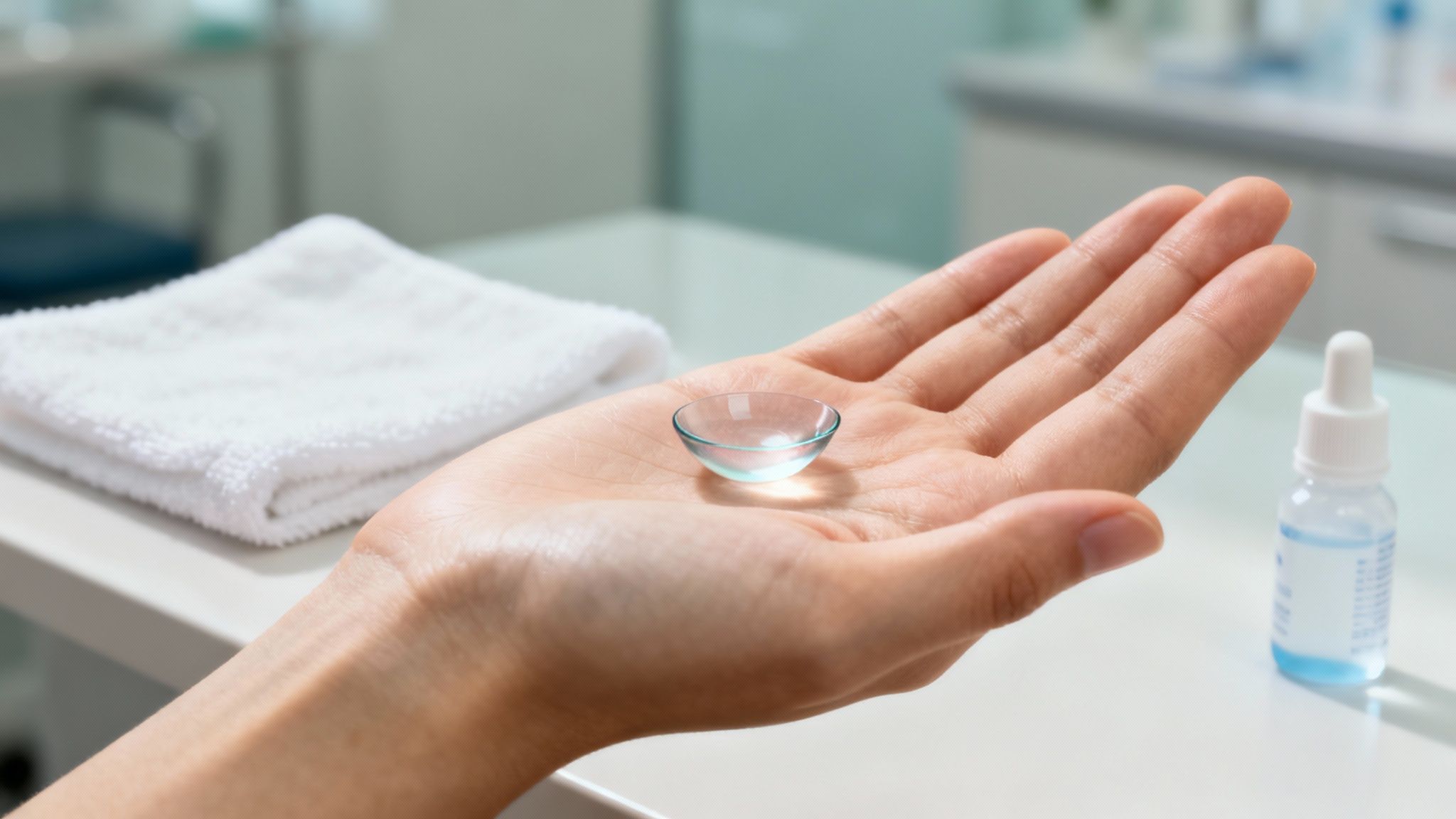
Now for the most important part: making sure the lens isn't inside out. This is a super common mistake for new wearers. When it’s right-side up, the lens will look like a perfect little bowl with the edges pointing straight up.
The "Taco Test" is a classic for a reason. Gently pinch the lens between your thumb and forefinger. If it folds neatly into a "U" shape, like a taco shell, you're good to go. If the edges flare out, it's inside out. Flip it and try again.
Taking a few seconds to do this check saves you from the discomfort and blurry vision that comes from an inverted lens. It’s a simple habit that ensures a comfortable fit every time you put your contact lenses in Glendale Heights.
A Practical Method for Inserting Your Lenses
Alright, this is the part that can feel a little intimidating at first, but we promise it gets easier with practice. Let's ditch the idea of poking yourself in the eye and focus on a calm, controlled method that works.
First, gently place the clean lens on the tip of your dry index finger. It should sit there like a perfectly curved little bowl. If the edges flare out, it's inside-out.
Now, here's the key to stopping that involuntary blink. Use the middle finger of the same hand to pull your lower eyelid down. Then, with your other hand, reach over your head and use your fingers to lift your upper eyelid, holding it securely against your brow bone. This creates a wide, clear space to work with.
The Gentle Placement
Look straight into the mirror. Some people find it helps to look up slightly, so experiment to see what feels best for you.
Slowly and steadily, bring the lens toward your eye. There's no need to rush. As it gets close, it will touch the surface of your eye and you'll feel a slight, cool sensation as it floats onto your tear film. The lens will practically grab on by itself.
Once it's on, slowly let go of your lower eyelid, then your upper. Give a few slow, deliberate blinks to help the lens center itself. And that's it!
This infographic is a great visual reminder of the essential prep work that makes the whole process go smoothly.
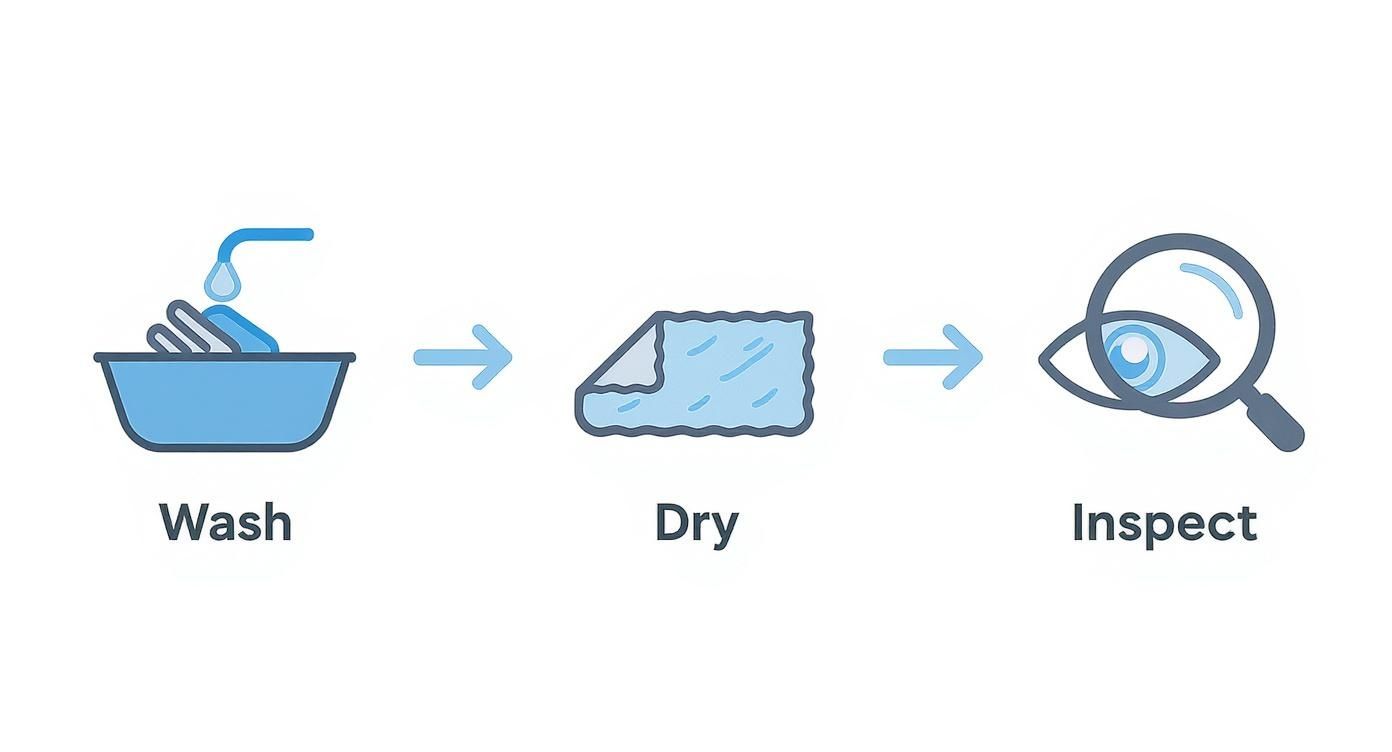
As you can see, getting the lens in is just one part of the equation. Proper hygiene is what sets you up for success.
Pro Tip: If your eyes tend to be on the dry side, try putting a single rewetting drop (one specifically formulated for contact lenses) into the lens "bowl" just before you put it in. This little bit of extra moisture can make for a much more comfortable experience.
You might feel the lens for a minute or two, but it should never be painful or scratchy. If you experience any real discomfort, something's not right. It could be inside-out, or a tiny piece of lint might have gotten on it. Just take it out, give it a good rinse with fresh solution, and start over. Never try to tough it out.
The type of lenses you wear can also make a huge difference in handling and comfort. If you're curious about the options, check out our guide on daily disposable vs. monthly contact lenses in Glendale Heights.
To make this even easier, here’s a quick checklist you can mentally run through each time.
Contact Lens Insertion Checklist
This table breaks down the entire process into a simple, repeatable routine. Following these steps consistently is the fastest way to build good habits.
| Stage | Action Required | Why It's Important |
|---|---|---|
| Preparation | Wash and dry hands thoroughly. | Prevents transferring bacteria, oils, and lint to your lens and eye. |
| Inspection | Place lens on your fingertip and check for damage or if it's inside-out. | A torn lens can irritate your eye, and an inside-out lens won't fit correctly. |
| Positioning | Use your free hand to hold your upper and lower eyelids open. | Creates a stable "landing zone" and bypasses your natural blink reflex. |
| Placement | Look straight ahead and gently place the lens on your eye. | A calm, steady motion ensures the lens adheres to your tear film without issue. |
| Settling | Slowly release your eyelids and blink a few times. | Allows the lens to center properly on your cornea for clear, comfortable vision. |
Remember, what feels awkward and clumsy on day one will become a quick, thoughtless part of your routine in no time. Be patient with yourself.
If you continue to struggle or just want some hands-on guidance, a professional contact lens fitting in Glendale Heights at iDoctor is the perfect solution. We can provide personalized training to help you master the technique and ensure you have the best possible lenses for your unique eyes.
Dealing With Common Insertion Hiccups
Don't worry if you hit a few snags when you're starting out—it’s a rite of passage for every new contact lens wearer in Glendale Heights. Even the most experienced of us had a learning curve! The trick is to stay calm and know how to handle these little issues. Once you do, you'll build confidence and the whole process will feel second nature.
One of the first things you might notice is a scratchy, annoying feeling as soon as the lens is on your eye. This almost always means one of two things: a tiny piece of lint is trapped underneath, or the lens is inside-out. Whatever you do, don't try to just blink through the discomfort.
The fix is easy. Just take the lens out, give it a good rinse with fresh solution, and double-check its shape with the "taco test" before trying again.
Turning Frustration into Quick Fixes
What about when the lens folds over on your fingertip? This is super common and usually just means there’s a little too much solution on it, making it slippery. A quick, gentle shake is often all it takes to flick off the excess liquid so it sits properly.
If your eye feels a bit dry, that can also make it tricky for the lens to settle onto the surface. Here's a pro tip: put a single rewetting drop right into the "bowl" of the lens before you pop it in. This creates an extra cushion of moisture that helps it glide on smoothly. In fact, research shows about 30% of users find that rewetting drops make application easier. (You can learn more about trends in the contact lens market).
Let's Bust a Common Myth: New wearers often worry a contact can get lost behind their eye. I'm here to tell you that's physically impossible. A thin membrane called the conjunctiva connects your eyeball to your eyelid, creating a natural barrier. A "lost" lens is almost always just hiding under your upper eyelid.
Most of the time, what feels like a lost contact has simply shifted out of place. We've got you covered with a full guide on what to do if you have a contact lens stuck in your eye. Learning to handle these minor setbacks with confidence is what turns you from a rookie into a pro.
Pro Tips for Comfortable Long-Term Wear
Okay, so you've nailed putting your contacts in. The real key to loving your lenses long-term, though, is all about developing a few simple, healthy habits.
One rule we always stress is to only use fresh contact solution. Every single time. Don't just top off the old stuff in your case—that's basically asking for bacteria to move in. And please, never, ever use tap water. It can carry some nasty microorganisms that are bad news for your eyes.
Keep Your Gear Clean and Pick the Right Lenses
Think of your lens case as part of your hygiene routine. To keep bacteria from building up, you need to replace it every three months. A clean case is just as crucial as a fresh lens for keeping your eyes happy and healthy.
It's also a great idea to talk with your optometrist about the different types of lenses available. For a lot of my first-time wearers here in Glendale Heights, daily disposables are a game-changer. They completely take cleaning out of the equation and give you a perfectly sterile, new lens every morning.
Modern lens technology has come a long way, focusing heavily on comfort. Materials like silicone hydrogel and smarter lens designs have made a huge difference in how contacts feel and how easy they are to handle. These newer materials are more flexible and let way more oxygen reach your eye.
Expert Insight: If your eyes tend to feel dry by the end of the day, some lens materials are specifically designed to hold onto moisture. We have a great guide on this topic if you want to learn more about managing contacts and dry eyes.
Opting for lenses made with these advanced materials, like the ones from top brands such as Acuvue or Biofinity, can make all the difference. When your eyes can breathe better, you'll find wearing your contacts all day is a much more comfortable experience.
Your Contact Lens Questions Answered in Glendale Heights
At iDoctor, we want to be the best optometrist in Glendale Heights for our patients, which means answering all your questions, big and small. Here are a few common ones we hear at our boutique.
How do I know if my contact lens is inside out?
This is the classic beginner's question! The easiest way to check is the "taco test." Place the lens on your fingertip. If it forms a perfect "U" shape like a taco shell, you're good. If the edges flare out like a soup bowl, it's inside out. An inverted lens feels uncomfortable and makes your vision blurry.
What if my eyes feel dry when I put my lenses in?
A rewetting drop designed for contacts placed in the "bowl" of the lens before insertion can help it glide on smoothly. If dryness is a constant issue, it might be time for one of our detailed eye exams in Glendale Heights. We can assess your tear film and recommend lens materials that retain moisture better. For more tips, check our guide on the best way to clean contacts.
Do I still need glasses if I wear contacts?
Yes, 100%! Every contact lens wearer needs a reliable pair of backup glasses for times when your eyes are tired, irritated, or you simply prefer not to wear lenses. Having a current pair of designer eyeglasses in Glendale Heights from our curated collections—including brands like Cartier, Gucci, and Tom Ford—ensures you're never without clear vision.
Ready to start your journey to clear, comfortable vision? The team at iDoctor, your local optometry boutique in Glendale Heights, is here to provide a personalized fitting and find the perfect lenses for your lifestyle.