If you take away just one thing from this guide, let it be this: the best way to clean your contacts is to mechanically rub and rinse them with a quality solution every single time you take them out. This simple, two-minute ritual is your number one defense against protein buildup, debris, and nasty infections that could seriously damage your vision. For contact lens wearers in Glendale Heights and the surrounding Chicagoland suburbs, mastering this routine is the key to healthy eyes.
Why Your Contact Cleaning Routine Matters
For anyone wearing contact lenses in Glendale Heights, a solid cleaning routine isn't just a suggestion—it's the bedrock of healthy eyes. This is about more than just seeing clearly; it's about protecting yourself from problems that can genuinely put your sight at risk. As an independent optometry boutique, we at iDoctor tell our patients to think of it less like a chore and more like brushing your teeth. It’s a non-negotiable part of your daily health.
Every time you wear your contacts, they’re collecting stuff. Your own tears leave behind proteins and lipids, and the air adds dust, pollen, and other gunk. If you don't clean that off, you're asking for trouble.
- Blurry Vision: That film of buildup on your lens acts like a dirty window, making everything look hazy or fuzzy.
- Discomfort and Irritation: Gritty deposits are the main culprit when your lenses feel scratchy, dry, or just plain uncomfortable by the end of the day.
- Higher Infection Risk: All that buildup creates a perfect feeding ground for bacteria and other microbes, which can lead to painful, and sometimes sight-threatening, infections.
The Science of a Good Clean
We see it all the time—people skip the "rub and rinse" step to save a few seconds. It’s a common shortcut, but it's incredibly risky. Research backs this up, with one study showing that a startling 44% of contact lens wearers don't follow the recommended cleaning steps consistently.
What’s really eye-opening is that the same research found that simply rubbing and rinsing your lenses removes over 90% of microbial contamination before the disinfecting solution even gets to work. It proves just how crucial that physical cleaning action is.
It’s interesting how this principle applies elsewhere. People often evaluate the true impact of cleaning routines for things like their home's air ducts. In both cases, a little preventative maintenance goes a long way in ensuring safety and proper function.
A Glendale Heights Perspective
Here at iDoctor, we see patients from all walks of life—from the busy commuters on North Avenue to the students at Glenbard North High School—and we stress the importance of this to every single one. Taking care of your eyes means you can continue enjoying everything our community has to offer, whether it’s a beautiful day at Camera Park or a round at Glendale Lakes Golf Club.
We've put together even more advice to help you prevent common contact lens infections in our detailed guide.
Mastering the Daily Contact Cleaning Ritual
Let's turn cleaning your reusable soft contacts from a daily chore into a quick, protective habit. Think of it as a simple, two-minute ritual that's your best defense against irritation and nasty eye infections. When it comes to eye health, consistency is everything.
The whole process starts before you even think about touching your lenses. Your first move, always, is to get your hands perfectly clean by mastering proper hand washing technique. Use a mild soap that doesn't have a lot of oils or fragrances, and dry your hands completely with a lint-free towel. Trust us, any fuzz or soap residue left on your fingers will end up on your lens and drive you crazy.
The Rub and Rinse Method
With clean, dry hands, you're ready to go. If you need a quick refresher on taking your lenses out, our guide on how to remove contact lenses easily can help.
Start by placing one lens in the clean, dry palm of your hand. Squeeze a few generous drops of your contact lens solution over it. Don't be shy with the solution.
Now for the part that really matters. Using your fingertip, gently rub the lens back and forth for about 20 seconds. This is the non-negotiable “rub” step that so many people skip. It's the physical friction that does the heavy lifting, breaking up the film of proteins, oils, and other gunk that rinsing alone simply can't handle.
Expert Tip: Avoid rubbing your lenses in a circle. A gentle, straight back-and-forth motion is much more effective for cleaning the entire surface without putting unnecessary stress on the lens.
After a good rub, rinse the lens thoroughly with more fresh solution for at least five seconds. This washes away all the debris you just loosened up. Finally, pop the clean lens into your case, which should be filled with fresh disinfecting solution. Never, ever top off old solution.
Now, just do the exact same thing for the other eye.
This simple routine is the key to prevention, which ultimately lets you enjoy clear, comfortable vision day in and day out.
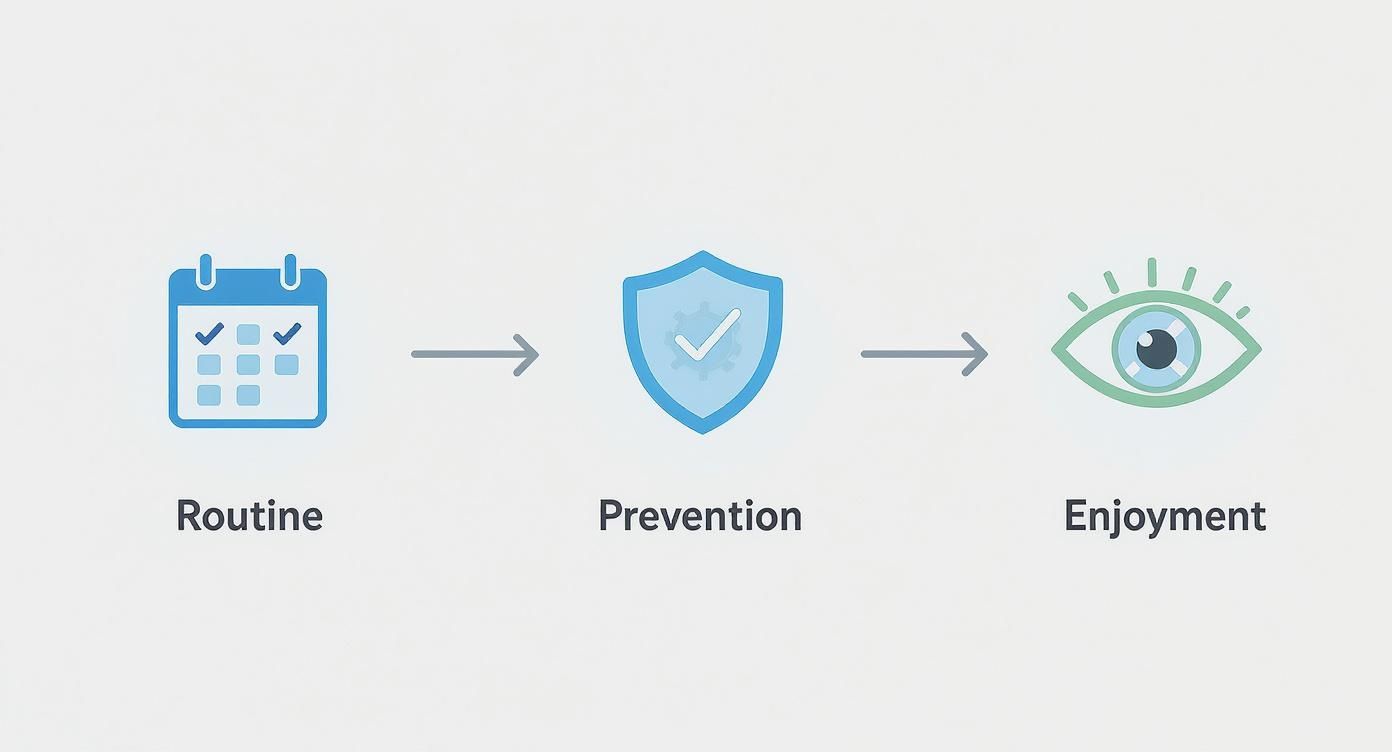
As you can see, a daily commitment to these steps is what prevents problems down the road, ensuring your eyes stay healthy and your vision stays sharp.
Choosing The Right Cleaning Solution
Walking down the contact lens aisle can feel like a pop quiz. Dozens of bottles, all promising the cleanest, most comfortable lenses. How do you pick the right one? It really boils down to understanding the two main players in the lens care game: multipurpose solutions and hydrogen peroxide systems.
Here at iDoctor, we walk patients from Glendale Heights and the surrounding areas through this choice every day. The best solution for you isn't a one-size-fits-all answer; it depends on your specific lenses, how sensitive your eyes are, and frankly, your daily routine.
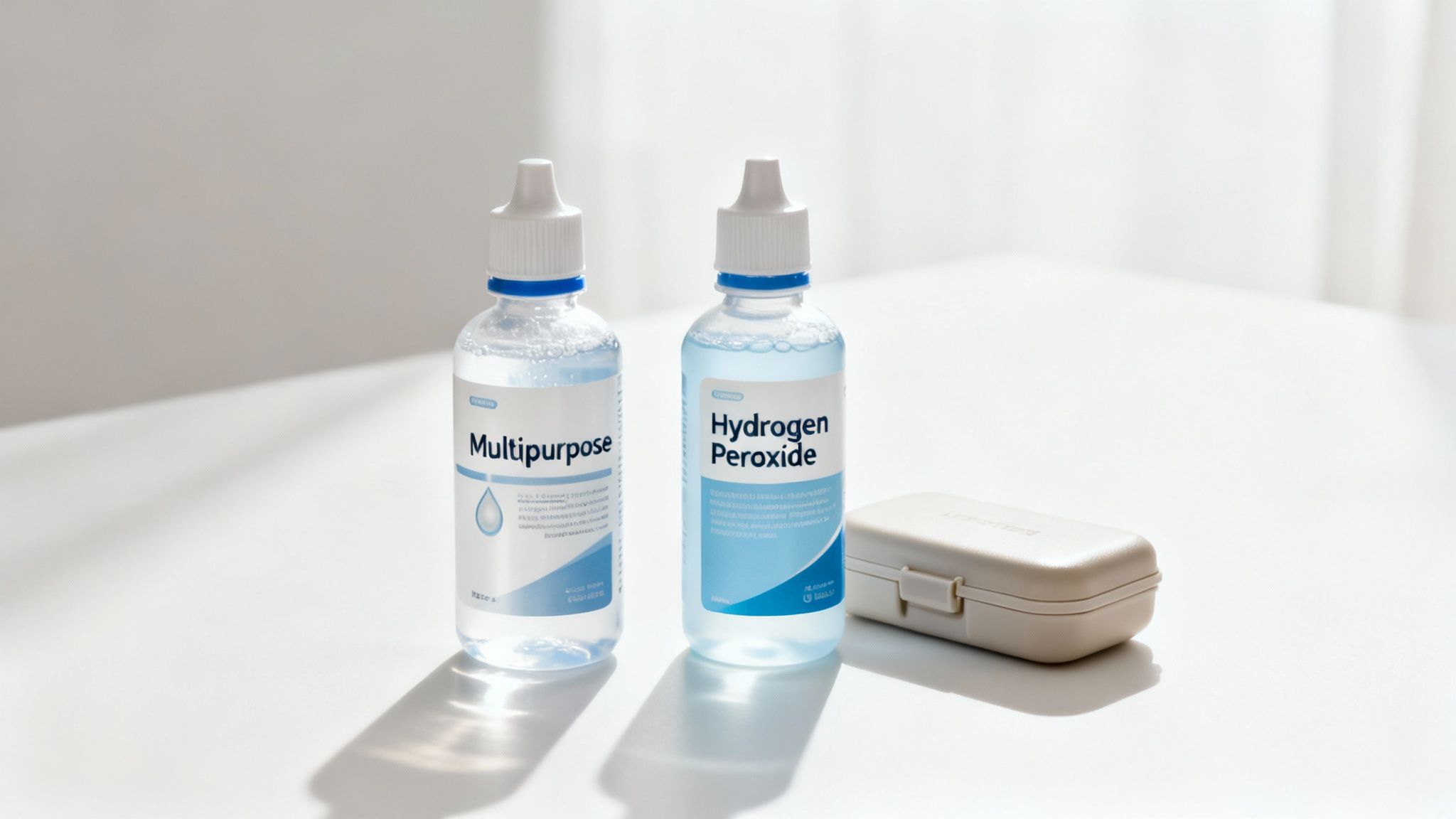
Multipurpose Solutions: The All-in-One Option
There's a reason multipurpose solution (MPS) is the go-to for so many people: it's incredibly simple. Just as the name implies, a single bottle does it all—it cleans, rinses, disinfects, and stores your lenses. It’s the definition of a streamlined routine.
The whole process is straightforward: a quick rub and rinse, then pop them in the case with the same liquid. This makes it a fantastic choice for anyone new to contacts or for those of us who just want to keep things quick and easy.
The catch? To stay sterile in the bottle, MPS contains preservatives. For most people, this is no big deal, but if you have sensitive eyes, these preservatives can sometimes lead to irritation or dryness.
Hydrogen Peroxide Systems: The Deep Clean
If you have sensitive eyes or find your lenses get cloudy with deposits, a hydrogen peroxide-based system might be a game-changer. These systems provide a powerful, deep clean without any preservatives, which many wearers find much more comfortable.
But this deep-cleaning power comes with a strict set of rules. You have to use the special case that comes with the solution. This case has a built-in neutralizer (a small disc or tablet) that slowly converts the hydrogen peroxide into a harmless saline solution.
CRITICAL SAFETY WARNING: Never, ever put hydrogen peroxide solution directly into your eye or rinse your lenses with it before putting them in. It will cause intense stinging and burning. Your lenses must soak in the special case for the full time—usually at least six hours—to be fully neutralized and safe to wear.
Because of this methodical process, hydrogen peroxide systems are often seen as the gold standard for killing germs. They're linked with fewer issues, and studies show that users are incredibly good at following the rules. In fact, one study noted that 100% of hydrogen peroxide users followed the full regimen, a stark contrast to just 37% of those using multipurpose solutions.
Of course, the right solution goes hand-in-hand with the right type of lens. If you’re still weighing your options, our guide comparing daily disposable vs. monthly contact lenses for your Glendale Heights lifestyle can help you decide.
To make the choice even clearer, here's a quick breakdown of how the two systems stack up.
Comparing Contact Lens Solutions
Here’s a side-by-side comparison of Multipurpose and Hydrogen Peroxide solutions to help you understand the key differences at a glance.
| Feature | Multipurpose Solution (MPS) | Hydrogen Peroxide System |
|---|---|---|
| Convenience | High. One bottle for cleaning, rinsing, and storing. | Lower. Requires a special neutralizing case and a minimum soak time. |
| Cleaning Power | Good. Effective for most users. | Excellent. Provides a deep, preservative-free clean. |
| Best For | New users, travelers, and those who prioritize simplicity. | Sensitive eyes, allergy sufferers, and those prone to protein buildup. |
| Key Risk | Potential for irritation from preservatives. | Accidental eye contact before neutralization causes severe stinging. |
| Soaking Time | Typically 4-6 hours. | Minimum of 6 hours for full neutralization is non-negotiable. |
Ultimately, choosing between them comes down to balancing convenience with cleaning power.
The absolute best solution is the one you’ll actually use correctly and consistently, day in and day out. During your next contact lens fitting at iDoctor, we can talk through your lifestyle and eye health to find the perfect match, ensuring your vision stays clear, comfortable, and—most importantly—safe.
Don't Forget Your Lens Case—It's a Big Deal
It’s so easy to get caught up in the routine of cleaning your lenses that you completely forget about the very thing that keeps them safe all night: the case. As eye care professionals at our Glendale Heights boutique, we’ve seen it time and time again—patients who are meticulous with their lenses but neglect their case, which just reintroduces grime and bacteria and undoes all their careful cleaning.
Think of it this way: a dirty case is a breeding ground for everything from minor eye irritation to some pretty nasty infections. That little plastic container is essentially a medical device, and it needs its own daily cleaning routine. This one simple habit is a cornerstone of safe, comfortable contact lens wear for everyone in Glendale Heights, whether you're commuting down Bloomingdale Road or studying over at Glenbard East.
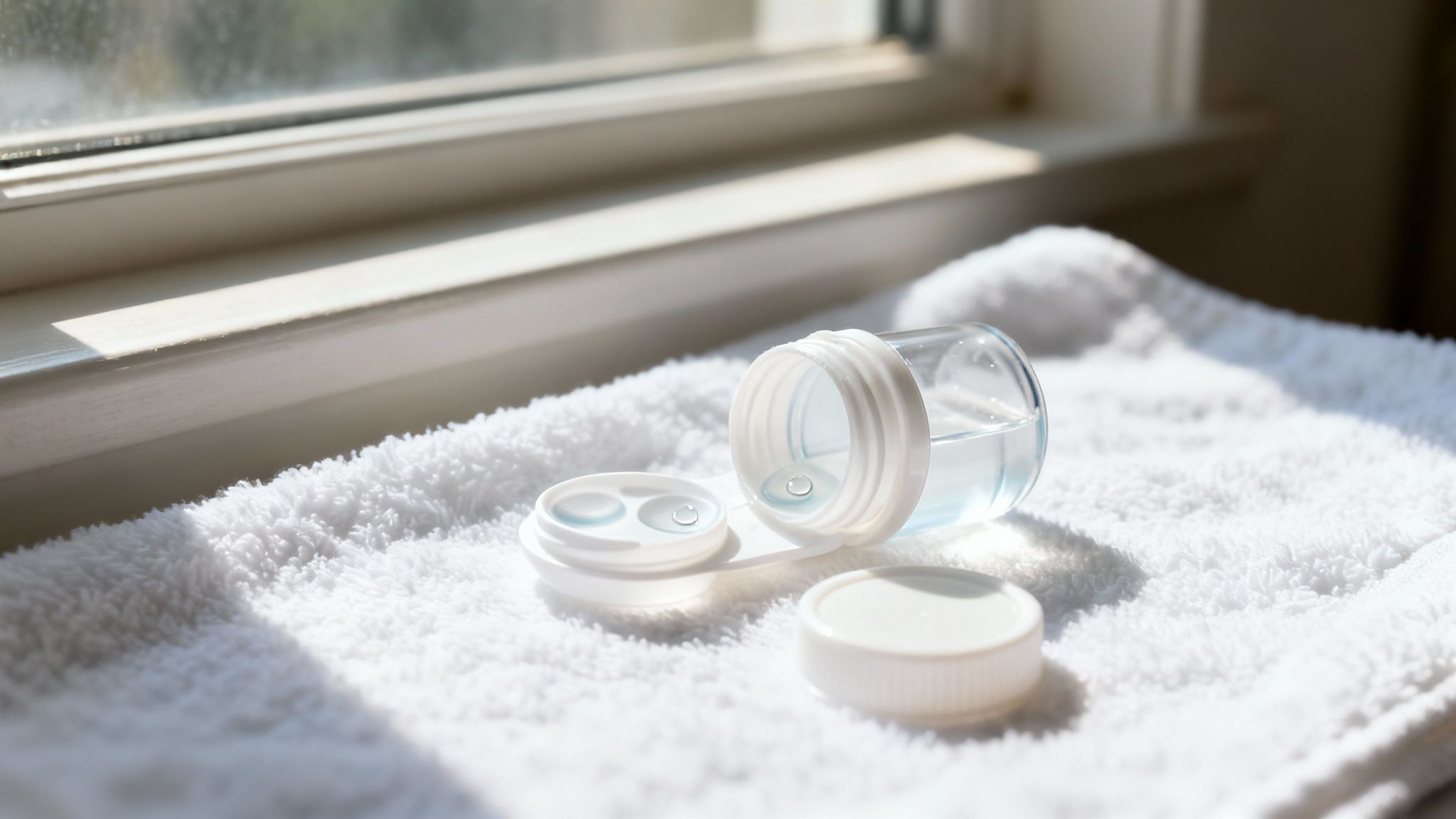
Your Daily Case-Cleaning Habit
Building this habit takes less than a minute, and the best time to do it is right after you put your lenses in each morning.
- First, dump out all the old solution. Never, ever top it off. That's like bathing in dirty water.
- Next, give both sides of the case a good rinse with fresh multipurpose or saline solution. Never use tap water. It contains microorganisms that can lead to serious, sight-threatening infections.
- Finally, leave the case open and upside down on a clean tissue to air dry completely. A dry case is not a friendly environment for bacteria.
This daily upkeep is crucial. To get the full picture of keeping your lenses safe, you can also check out our guide on how to store contacts correctly.
Toss Your Case Every Three Months
Just like your toothbrush, your contact lens case doesn’t last forever. It needs to be replaced on a regular schedule. The American Optometric Association is very clear on this: get a new case at least every three months. Over time, microscopic scratches form in the plastic, creating the perfect hiding spots for bacteria that even a good cleaning can't reach.
Unfortunately, this is advice that many people seem to miss. The research on this is a bit alarming—a study found that 47% of users fail to replace their case as recommended. Even more concerning, 26% of people admitted they never clean their case at all, which is a huge risk to their eye health.
Here's a pro tip we always share with my patients: start a new case every time you open a new bottle of multipurpose solution. Most of the larger bottles are designed to last about three months, so it’s a perfect built-in reminder.
Common Contact Lens Mistakes to Avoid
Even the most careful contact lens wearers can fall into bad habits. These little shortcuts might seem harmless at the moment, but they can create some serious problems for your eyes down the road. As the go-to eye doctor in Glendale Heights, we’ve seen firsthand how these small slip-ups can lead to everything from nagging irritation to painful infections.
Honestly, knowing what not to do is just as critical as following the right steps. Dodging these common mistakes is a huge part of keeping your eyes healthy and comfortable for the long haul.
Topping Off Your Solution
This is probably the most common—and riskiest—mistake we see. "Topping off" means just adding a bit of new solution to the old stuff already sitting in your case. Please, don't do this. It's a huge no-no.
When you top off, you’re basically watering down the fresh solution, which guts its ability to disinfect. Think of it like trying to wash dirty dishes with used, grimy water. You’re just swishing bacteria around. Always, always dump the old solution out, give the case a quick rinse with fresh solution, and then fill it up.
Using Tap Water or Saliva
We know it's tempting, especially if you drop a lens and you're in a bind. But you should never, ever use tap water or saliva to rinse your contacts. Tap water, even if it’s perfectly safe to drink, is full of microorganisms that can cause devastating, sight-threatening eye infections like Acanthamoeba keratitis. And your saliva? It’s loaded with bacteria from your mouth.
There are no exceptions here. Only use sterile contact lens solution to rinse and store your lenses. Period.
At our practice, we constantly remind patients that there are no safe shortcuts when it comes to your vision. Using the right solution every single time isn't just a recommendation; it's a non-negotiable part of wearing contacts safely.
Stretching Your Lenses Past Their Prime
Look, we all want to save a little money, but trying to squeeze an extra week or month out of your lenses is a really bad gamble. Monthly lenses are built to be worn for about 30 days, and two-week disposables are meant for 14 days. After that, the material itself begins to degrade. It becomes less breathable and a magnet for protein deposits that even a perfect cleaning routine can’t fully remove.
When you wear your lenses for too long, you're essentially starving your corneas of oxygen. This dramatically cranks up your risk for infections, inflammation, and other serious complications. Stick to the replacement schedule your optometrist gave you—it’s there for a reason.
Forgetting Your Backup Glasses
Your eyes deserve a vacation, too. If you only rely on your contact lenses, you're in a bind if you lose one, get an eye irritation, or just need to give your eyes a rest. That's why we always tell our patients to have a current pair of glasses on hand.
Taking a day off from contacts lets your eyes breathe and recover, which is crucial for long-term health. For those much-needed rest days, our collection of designer eyeglasses in Glendale Heights offers plenty of comfortable and stylish backups. We carry everything from classic Ray-Ban and chic Kate Spade frames to luxury choices like Gucci, Tom Ford, and Cartier glasses near me.
Your Partner in Healthy Vision
When it comes to getting the clearest, safest, and most comfortable vision from your contact lenses, it all comes down to one thing: consistency. The secret isn't some magic product—it's building a daily routine you can stick to without fail. Honestly, making these steps an unbreakable habit is the most powerful thing you can do to protect your eyes for life.
At iDoctor, we’re not just here to give you an eye exam and send you on your way. We see ourselves as your long-term partners in eye health. Our goal is to give you the practical knowledge you need to make smart, safe choices every single day. We want every person who leaves our Glendale Heights boutique to feel totally confident in how they care for their eyes and their lenses.
Your Daily Vision Checklist
If you only take one thing away from this guide, let it be these core principles. They're the absolute foundation of healthy, problem-free contact lens wear.
-
Wash Your Hands First. Always. Before a lens or your finger ever gets near your eye, wash your hands with a simple, lotion-free soap. Then, dry them completely with a lint-free towel to avoid any fuzzies sticking to your lens.
-
The "Rub and Rinse" Is Non-Negotiable. We can't stress this enough. Gently rubbing your lenses with a few drops of fresh solution is what actually breaks up the gunk—protein and lipid deposits—that a simple rinse just can't tackle. This mechanical friction is critical.
-
Fresh Solution, Every Single Time. Never, ever top off the old solution in your case. Dump it out completely and fill it with fresh disinfecting solution. This ensures your lenses are actually getting clean and sanitized overnight.
-
Don't Forget Your Case. Your lens case needs cleaning, too. Rinse it daily with solution (never tap water!), then leave it upside down with the caps off to air dry. To be safe, toss it and start with a new one every three months.
When to Call a Professional
Even with the most perfect routine, things can happen. If you ever experience redness, pain, unusual light sensitivity, or a sudden blurriness in your vision, take your lenses out immediately. These are your eyes telling you something is wrong, and it’s time to call an eye care professional. Don't ever try to "power through" the discomfort.
We’re always here for our neighbors in Glendale Heights, Carol Stream, Lombard, and the surrounding areas. Whether you need to schedule one of our detailed eye exams in Glendale Heights or just have a quick question about your cleaning habits, our team is ready to help.
Let's work together to make sure your contact lens fit is perfect and your daily routine sets you up for years of healthy, successful wear. Your vision is our priority at our Glendale Heights office.
FAQ: Contact Lens Care in Glendale Heights
We hear a lot of the same questions from patients at our Glendale Heights clinic. When it comes to cleaning contacts and keeping your eyes healthy, there's no such thing as a bad question. Let's tackle a few of the most common ones.
Where can I get designer eyeglasses in Glendale Heights for my "off" days from contacts?
At iDoctor, we have a curated collection of both luxury and affordable designer eyewear perfect for giving your eyes a rest. We carry top brands like Cartier, Gucci, and Tom Ford, as well as stylish options from Ray-Ban and Kate Spade. Having a great backup pair of glasses is a key part of healthy contact lens wear.
I need a new contact lens fitting. Does iDoctor accept vision insurance?
Yes! We believe premium eye care should be accessible. iDoctor accepts all major vision insurance plans for our services, including comprehensive eye exams and contact lens fittings. We're committed to providing the best care for our Glendale Heights community.
What should I do if I drop my contact lens?
It happens to everyone. You're leaning over the sink, and plop—your lens is on the counter or, worse, the floor. The absolute rule here is you must clean and disinfect it before it goes anywhere near your eye again.
Never, ever just rinse it with tap water and pop it back in. Give it a full "rub and rinse" cleaning with your multipurpose solution, just like you would at the end of the day.
If you’re out and about without your solution, the choice is simple: throw the lens away. It’s a far better alternative than risking a painful eye infection. This is also a good time to be mindful of your replacement schedule; you might wonder if contacts expire and realize it's simply time for a fresh pair anyway.
How do I know if I have a contact lens infection?
Your eyes are pretty good at telling you when something is wrong. The early signs of an infection can be easy to dismiss, but you should pay close attention to them.
Look out for:
- Persistent redness that won't go away
- Pain or a gritty feeling
- Unusual sensitivity to light
- Blurry vision that doesn't clear up
- Any kind of discharge from your eye
If you notice any of these symptoms, take your contact lenses out immediately. This is not the time to wait and see if it gets better on its own. Getting prompt care from the best optometrist in Glendale Heights is crucial for protecting your vision.
Give our office a call right away if you suspect a problem. We're conveniently located for anyone driving along Schmale Road or Army Trail Boulevard, and we're ready to help.
For a personalized consultation or to explore our collection of designer eyewear, schedule an appointment with iDoctor today. Visit us at https://idoctoril.com to book online.