In our fast-paced world, especially for those of us commuting down North Avenue or spending long hours on screens here in Glendale Heights, tired, strained eyes are an all-too-common complaint. That gritty, heavy, and burning feeling is more than just a minor annoyance; it's a clear signal from your eyes that they need a break and some dedicated care. Digital eye strain, environmental factors, and even subtle vision changes can contribute to this persistent discomfort, affecting your productivity and overall well-being. Before you resign yourself to the daily struggle, know that effective, practical relief is well within your reach.
This comprehensive guide explores ten proven remedies for tired eyes, blending simple at-home solutions with professional strategies you can implement immediately. We’ll move beyond generic advice to provide actionable steps for everything from evidence-based techniques like the 20-20-20 rule to lifestyle and ergonomic adjustments that make a significant difference. Whether you're a student at Glendale Heights Middle School studying late into the night or a professional working from home near the Glendale Lakes Golf Club, it's time to prioritize your vision.
Understanding how to care for your hardworking eyes can restore comfort and clarity. For persistent symptoms or to explore advanced solutions like our curated collection of designer eyeglasses in Glendale Heights, a consultation with the best optometrist in Glendale Heights can provide a definitive diagnosis and a personalized treatment plan. Let’s dive into the strategies that will help you find lasting relief.
1. The 20-20-20 Rule: Your First Line of Defense Against Digital Strain
If you spend your days staring at a screen, whether in an office near Glen Ellyn or working remotely from home in Glendale Heights, the 20-20-20 rule is one of the most effective no-cost remedies for tired eyes. This evidence-based technique is simple yet powerful, providing immediate relief from the focusing fatigue that causes digital eye strain. It's a foundational habit we recommend to all our patients at iDoctor.
The concept is straightforward: Every 20 minutes of screen time, take a 20-second break to look at something at least 20 feet away. This simple action allows the tiny ciliary muscles inside your eyes, which contract to focus on near objects, to relax. By breaking this constant state of tension, you prevent the muscle strain that leads to soreness, headaches, and blurred vision.
How to Implement the 20-20-20 Rule
Making this rule a consistent habit is key to its success. Here are some actionable tips to integrate it into your daily routine:
- Set Digital Reminders: Use a timer on your phone or install a free browser extension like 'Break Timer' or 'Eyes Care' to provide a gentle nudge every 20 minutes.
- Find Your Focal Point: Look out a window at a distant tree, a building across the street, or the far end of a long hallway. The goal is to focus on something genuinely far away, not just the other side of your desk.
- Blink and Hydrate: During your 20-second break, make a conscious effort to blink several times. Staring at screens reduces our blink rate, leading to dry eyes. Blinking helps re-moisten the eye's surface.
- Combine with Stretches: Use the 20-second interval to also stretch your neck and shoulders, relieving tension that often accompanies prolonged desk work.
This simple practice actively prevents the symptoms of what's often called computer vision syndrome before they begin. For a deeper understanding of how prolonged screen time affects your vision, learn more about the symptoms of computer eye strain and how professional guidance can help.
2. Warm Compress Therapy: Soothing Heat for Relief and Restoration
For those seeking a simple yet deeply effective home remedy for tired eyes, warm compress therapy is a classic solution that brings spa-like comfort right to your living room in Glendale Heights. This technique uses gentle, moist heat to soothe eye fatigue, but its benefits go much deeper. It's a method we often recommend at iDoctor for patients experiencing dryness and discomfort, as it actively improves the function of your eyes' natural lubrication system.

The science behind this remedy is compelling: The warmth helps to unclog the tiny Meibomian glands along your eyelids. These glands produce essential oils that prevent your tears from evaporating too quickly. When they are blocked, a common issue for many, it leads to dry eye syndrome, a major cause of tired, gritty, and irritated eyes. Applying a warm compress melts the hardened oils, restoring healthy tear film and providing lasting relief.
How to Implement Warm Compress Therapy
Turning this soothing practice into a regular routine is simple and requires no special equipment. Here are some actionable tips for getting the most out of your warm compress:
- Maintain the Right Temperature: Use a clean, soft cloth dampened with warm water. The ideal temperature is between 110-113°F (43-45°C), warm enough to be effective but not hot enough to cause discomfort. Always test it on your wrist first.
- Time It Right: Close your eyes and gently place the compress over your eyelids for 5 to 10 minutes. Aim to do this once in the morning and once in the evening for the best results.
- Consider a Commercial Mask: For convenience and sustained heat, you might try a commercial warm eye mask, like those made by Bruder. These can be microwaved and provide consistent, gentle warmth.
- Add a Gentle Massage: After your compress session, gently massage your eyelids with clean fingertips. This can further help express the melted oils from the Meibomian glands, enhancing the therapeutic effect.
This practice is more than just a momentary comfort; it's an active way to combat one of the root causes of chronic eye fatigue. If you find that symptoms of dryness persist, it may be time for a professional evaluation. Our comprehensive eye exams in Glendale Heights can help identify underlying issues like Meibomian Gland Dysfunction and create a tailored treatment plan.
3. Proper Screen Distance and Posture: Ergonomics for Eye Comfort
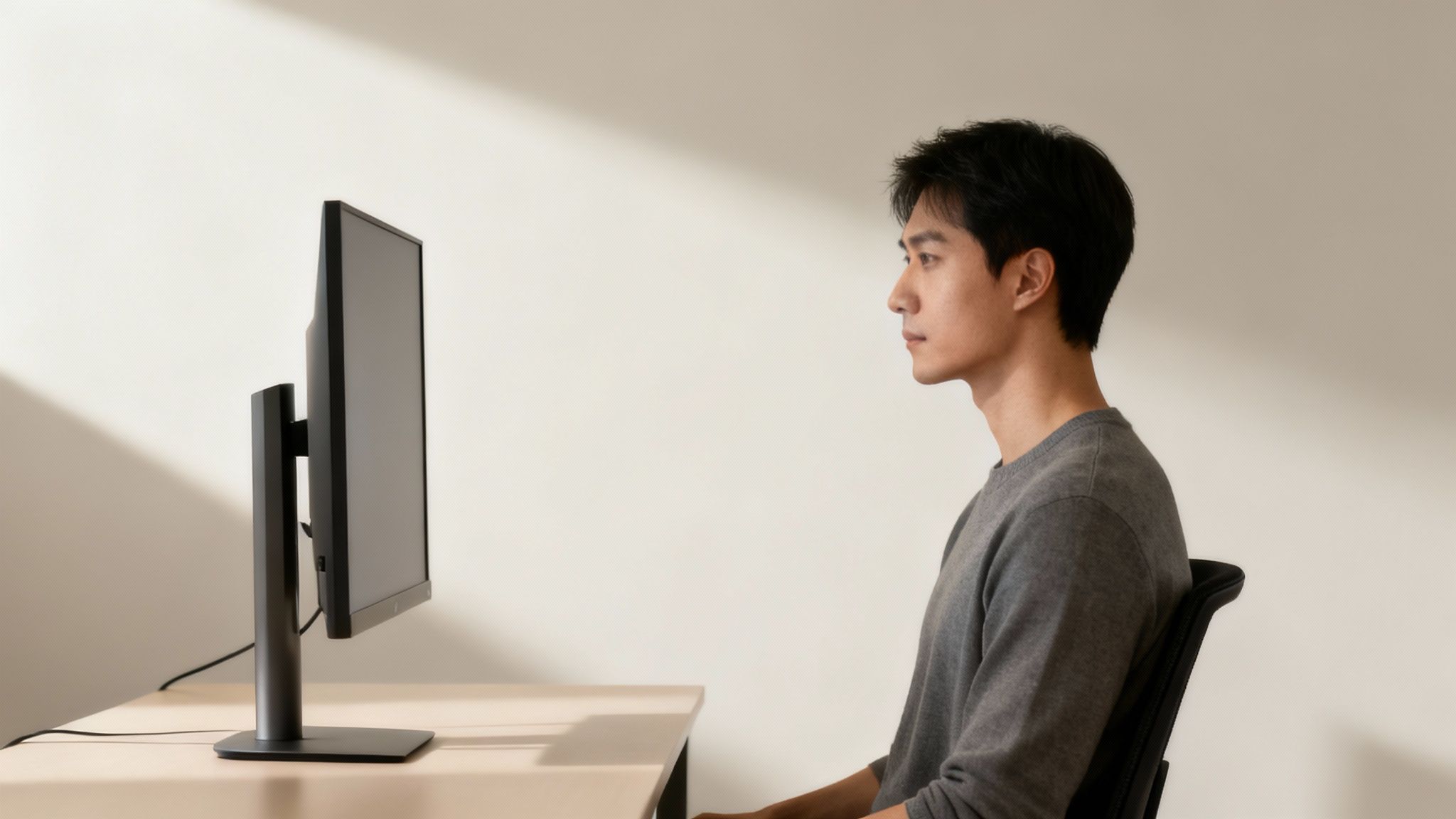
While breaks are essential, your everyday setup plays a massive role in preventing eye fatigue before it starts. Proper screen distance and posture are fundamental remedies for tired eyes, reducing the constant physical stress on both your visual system and your body. Whether you're in an office in Carol Stream or working from a home setup in Glendale Heights, optimizing your workspace ergonomics is a proactive step towards healthier vision.
This approach focuses on creating a neutral, comfortable position that minimizes strain. When your screen is too close, too far, too high, or too low, your eye muscles and neck muscles must work harder to compensate. Over time, this sustained effort leads to the familiar symptoms of digital eye strain: sore eyes, headaches, and neck pain. Adhering to ergonomic guidelines ensures your body is in its most efficient state, reducing fatigue.
How to Implement Proper Ergonomics
Creating an eye-friendly workspace is easier than you think. Small, intentional adjustments can make a significant difference. Here are some actionable tips recommended by our optometrists at iDoctor:
- Maintain Arm's Length: Position your computer monitor roughly an arm's length away, which is about 20 to 26 inches from your eyes. This is the optimal distance for your eyes' focusing system to work without excessive effort.
- Position the Screen Below Eye Level: The top of your monitor should be at or slightly below your natural eye level. This allows you to look slightly downward, which is a more relaxed posture for your eyes and neck. Use a monitor stand or a stack of books to achieve the right height.
- Adjust Your Chair and Posture: Set your chair height so your feet are flat on the floor and your knees are at about a 90-degree angle. Sit up straight with your shoulders relaxed to avoid hunching over.
- Minimize Glare: Position your screen to avoid glare from windows or overhead lights, as this can cause you to squint and strain. For more advanced solutions, explore ways to reduce screen glare with screen filters and lighting adjustments.
By integrating these ergonomic principles, you create a sustainable work environment that actively combats the sources of digital eye strain, providing a powerful, long-term remedy for tired eyes.
4. Artificial Tears and Lubricating Eye Drops
When your eyes feel gritty, dry, and fatigued, one of the most direct and effective remedies for tired eyes is using artificial tears. Staring at screens, being in dry environments, or even wearing contact lenses can reduce natural tear production, leaving your eyes feeling uncomfortable. These over-the-counter drops are specifically formulated to supplement your natural tears and provide immediate, soothing relief.
Lubricating eye drops work by adding moisture and essential components back to the eye's surface, mimicking your body's own tears. They contain ingredients like hyaluronic acid, glycerin, or mineral oil that restore the tear film, reducing the friction and irritation that contribute to that tired feeling. For many of our patients in Glendale Heights, keeping a bottle at their desk is a simple way to combat eye fatigue throughout the workday.
How to Use Lubricating Eye Drops Effectively
To get the most benefit from artificial tears, proper application and selection are crucial. Here are some practical tips to ensure you find fast and lasting relief:
- Choose Preservative-Free for Frequent Use: If you need drops more than four times a day, opt for preservative-free formulations, which come in single-use vials. This avoids potential irritation from the preservatives found in multi-dose bottles.
- Apply Correctly: Tilt your head back, gently pull down your lower eyelid to create a small pocket, and apply one or two drops into this space. Avoid touching the dropper tip to your eye to prevent contamination.
- Blink to Distribute: After applying the drops, close your eyes for a moment and blink several times. This action helps spread the lubricant evenly across the entire surface of your eye.
- Refrigerate for Extra Comfort: For an enhanced soothing sensation, especially on days when your eyes feel particularly warm or inflamed, store your eye drops in the refrigerator. The cool liquid can provide an extra layer of immediate relief.
While over-the-counter drops are excellent for managing mild symptoms, persistent dryness could indicate a more significant issue. To explore a wider range of solutions, you can learn more about the different dry eye treatment options available and consult with a professional.
5. Increased Humidity and Environmental Control
Often overlooked, the environment where you live and work plays a significant role in eye comfort. Whether you're in a climate-controlled office in Glendale Heights or at home near Glenbard North High School, dry air is a primary culprit behind tired, irritated eyes. Controlling your environmental humidity is one of the most effective lifestyle-based remedies for tired eyes, especially for contact lens wearers or those prone to dryness.
The core concept is to combat the dry, moisture-leaching air produced by indoor heating and air conditioning. Maintaining an indoor relative humidity level between 40-60% helps keep your tear film stable, preventing the rapid evaporation that leads to grittiness, redness, and fatigue. This simple environmental change provides a constant, passive form of relief that supports your eyes all day long.
How to Control Your Environment for Better Eye Health
Integrating this strategy is straightforward and can provide noticeable relief, particularly during the dry winter months. Here are some actionable tips:
- Use a Humidifier: Place a cool-mist or ultrasonic humidifier in your primary workspace or bedroom. For optimal effect, position it three to four feet away from where you sit.
- Monitor Humidity Levels: A small, inexpensive device called a hygrometer can tell you the exact relative humidity in a room, allowing you to adjust your humidifier settings to stay within the ideal 40-60% range.
- Avoid Direct Airflow: Position your desk or chair away from air conditioning vents, heaters, and fans. Constant airflow, even if it's not hot or cold, accelerates tear evaporation and contributes to dryness.
- Keep it Clean: Be sure to clean your humidifier regularly according to the manufacturer's instructions. This prevents the growth and dispersal of bacteria or mold into the air.
This proactive approach doesn't just soothe existing symptoms; it creates an environment where your eyes are less likely to become strained in the first place. For individuals suffering from persistent dry eye, a professional evaluation is crucial. Schedule a consultation to explore comprehensive dry eye treatments in Glendale Heights and find a personalized solution.
6. Eye Exercises and Focusing Techniques: Building Visual Stamina
Just as you exercise your body to build strength and flexibility, targeted eye exercises are effective remedies for tired eyes that can improve focusing ability and reduce fatigue. These structured techniques are designed to strengthen the tiny ciliary muscles responsible for shifting focus, helping them remain agile and resilient. For patients in Glendale Heights experiencing persistent eye fatigue, we often recommend these exercises at iDoctor to complement other treatments.
The core principle involves challenging your eyes to move and focus in ways they don't during routine tasks like screen work. By practicing techniques like focus-shifting and controlled eye rotations, you actively improve your eyes' accommodative facility, which is their ability to change focus from near to distant objects smoothly. This helps combat the muscle rigidity and strain caused by prolonged near-vision tasks.
How to Implement Eye Exercises and Focusing Techniques
Consistency is the most important factor for seeing results. Integrating these simple movements into your daily schedule can provide significant relief:
- Practice Near-Far Focusing: Hold your thumb about 10 inches from your face. Focus on it for 15 seconds, then shift your gaze to an object about 20 feet away for another 15 seconds. Repeat this cycle 5-10 times.
- Perform Gentle Eye Rotations: While looking straight ahead, slowly rotate your eyes clockwise in a large circle. Do this 10 times, then repeat the motion 10 times counterclockwise to gently stretch the eye muscles.
- Try Pencil Push-Ups: Hold a pencil at arm's length and slowly bring it closer to the bridge of your nose, maintaining a single, clear image of the pencil tip for as long as possible. Stop when the image doubles, then move it back out. This is excellent for training convergence.
- Blink and Rest: Always remember to blink frequently during exercises to keep your eyes lubricated. Afterward, close your eyes for a minute to let them rest.
These exercises actively train your visual system to handle daily demands more efficiently, preventing the deep-seated fatigue that leads to discomfort. For a more comprehensive guide on specific routines, you can learn more about eye exercises for eye strain and how they can be tailored to your needs.
7. Anti-Blue Light Glasses and Screen Filters
In our digitally-driven world, many people in Glendale Heights and the surrounding communities are looking for modern remedies for tired eyes. Anti-blue light glasses and screen filters have emerged as a popular solution to combat the high-energy visible (HEV) light emitted from our phones, computers, and tablets. This technology is designed to selectively filter out a portion of the blue light spectrum, which is often linked to digital eye strain and potential disruptions to sleep cycles.
The principle behind this remedy is to reduce the amount of stimulating blue light that reaches your retinas, especially during evening hours. By doing so, you can alleviate some of the visual discomfort associated with prolonged screen use, such as eye fatigue and headaches. At iDoctor, we help patients understand if this technology is a suitable addition to their eye care strategy, often as part of a comprehensive approach to managing digital eye strain.
How to Implement Blue Light Filtering
Effectively using blue light protection involves choosing the right tools and integrating them into your daily habits. Here are some practical ways to get started:
- Choose Quality Eyewear: When selecting blue light glasses, look for lenses that filter a significant percentage of blue light. We can help you find high-quality prescription or non-prescription lenses with this feature, including options for our designer eyeglasses in Glendale Heights.
- Use Built-In Device Settings: Most smartphones, tablets, and computers now have a "Night Shift" or "Eye Comfort Shield" mode. Schedule this to turn on automatically a few hours before bedtime to warm the screen's color temperature.
- Time Your Usage: For sleep benefits, the most crucial time to wear blue light glasses is in the two to three hours leading up to bedtime. This helps your brain’s natural melatonin production proceed without interruption.
- Combine with Other Habits: Blue light filters are a helpful tool, not a cure-all. They work best when used alongside other remedies for tired eyes, such as the 20-20-20 rule and taking regular screen breaks.
By reducing your exposure to artificial blue light, you can provide your eyes with a more comfortable viewing experience and support a healthier sleep-wake cycle. Discussing your specific screen time habits during an eye exam can help us determine the best solution for you.
8. Increased Omega-3 Fatty Acid Intake
While many remedies for tired eyes focus on external relief, a powerful, long-term solution starts from within. Increasing your intake of omega-3 fatty acids is a dietary strategy that addresses a root cause of eye fatigue: inflammation and dryness. For our patients in Glendale Heights, we often recommend this nutritional approach to support the eye's natural lubrication system.
Omega-3s are essential fats that help maintain the crucial oily layer of your tear film. This lipid layer prevents tears from evaporating too quickly, keeping the eye's surface moist and comfortable. By reducing inflammation and improving tear quality, a diet rich in omega-3s can significantly diminish the symptoms of dry, tired eyes, often reducing the need for constant artificial tears.
How to Implement Increased Omega-3 Intake
Integrating these beneficial fats into your diet is simpler than you might think. Consistency is the most important factor for seeing results.
- Eat Fatty Fish: Aim to consume fatty fish like salmon, mackerel, or sardines at least two to three times per week. These are some of the most potent natural sources of omega-3s.
- Incorporate Seeds: Add a tablespoon of ground flaxseed or chia seeds to your daily smoothie, oatmeal, or yogurt. These plant-based sources are excellent for boosting your intake.
- Consider Supplementation: If you don't eat fish regularly, a high-quality supplement can be effective. Dosages of 1000-2000mg per day are often recommended, but it's best to consult with your eye doctor. To support eye health through nutrition, you might look into specific products such as Allmax Omega 3.
- Stay Hydrated and Be Patient: Combine your increased omega-3 intake with plenty of water for optimal hydration. It may take anywhere from 4 to 12 weeks to notice the full benefits as your body incorporates these nutrients.
This dietary change is a proactive step toward lasting eye comfort. To dive deeper into how your diet impacts your vision, you can explore more about foods for eye health and build a comprehensive nutritional plan.
9. Blinking Awareness and Tear Film Management
It might sound overly simple, but consciously managing how you blink is one of the most powerful and overlooked remedies for tired eyes. When you're absorbed in work, whether at a desk in Glendale Heights or commuting on North Avenue, your natural blink rate can decrease by over 60%. This drastic reduction prevents the even distribution of your tear film, leading to rapid evaporation, dryness, and that familiar gritty, fatigued sensation.
Blinking is your eye’s natural cleansing and moisturizing mechanism. A full, complete blink spreads a fresh layer of tears across the cornea, nourishing the surface and washing away debris. By bringing awareness to this automatic process, you can actively combat the dryness that is a primary cause of eye fatigue. This is a technique we often discuss with patients at iDoctor, especially those who wear contact lenses or experience chronic dry eye.
How to Implement Blinking Awareness
Integrating intentional blinking into your day requires building a new habit. It’s about quality over quantity, focusing on complete eyelid closure rather than incomplete "flutter" blinks. Here are some actionable tips to get started:
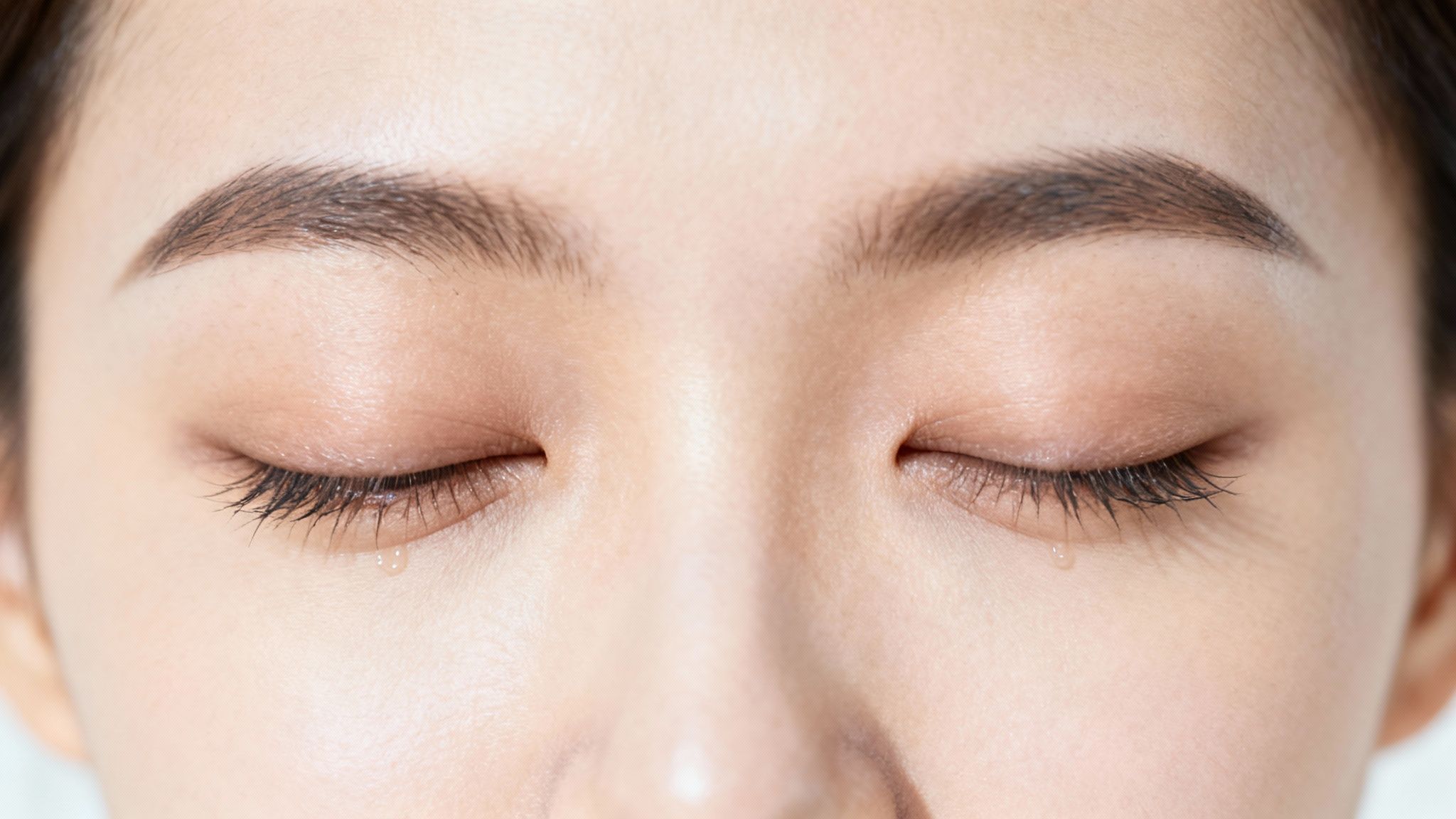
- Practice Complete Blinks: Several times an hour, perform a "reset" blink. Gently close your eyelids completely, pause for a count of two, and then open them normally. This ensures the oil-producing meibomian glands in your eyelids express properly, improving tear quality.
- Use Digital Nudges: Set a recurring calendar alert or use a simple sticky note on your monitor that says "BLINK." This visual cue can break your concentration just enough to remind you to rehydrate your eyes.
- The 10-Second Rule: While engaged in screen work, try to consciously perform a full blink every 10-15 seconds. This proactive approach prevents the tear film from breaking up in the first place.
- Pair with Other Habits: Link your blinking exercises to another routine action. For example, do five complete blinks every time you take a sip of water or after you send an email.
This technique is especially crucial for contact lens wearers, as a healthy tear film is essential for comfort. If you find your eyes still feel dry and tired despite these efforts, it may be a sign of an underlying condition. A consultation for contact lenses in Glendale Heights can help determine the best solution for your needs.
10. Adequate Sleep and Rest Cycles: The Ultimate Eye Repair System
While many remedies offer temporary relief, nothing is more foundational for combating tired eyes than consistent, high-quality sleep. For residents from Glendale Heights to Glen Ellyn, a full night's rest is the body's non-negotiable repair cycle, and your eyes are primary beneficiaries. During deep sleep, your eyes get the uninterrupted time needed to heal, lubricate, and prepare for the next day's visual demands.
The science is clear: During sleep, your eyes replenish vital tear components, eye muscles fully relax, and the cornea repairs microscopic damage from daily exposure. Most adults need 7-9 hours of sleep per night to complete this crucial process. Skimping on sleep short-circuits this natural remedy, leading directly to the dryness, redness, and strain that define tired eyes. At iDoctor, we often find that improving sleep hygiene is a critical first step in a patient's journey to better eye comfort.
How to Implement Better Sleep for Your Eyes
Transforming your sleep from a necessity into a powerful eye health tool involves building consistent habits. Here are actionable tips to get started tonight:
- Prioritize a Consistent Schedule: Go to bed and wake up around the same time each day, even on weekends. This stabilizes your body's internal clock, or circadian rhythm, promoting deeper, more restorative sleep.
- Create a Screen-Free Wind-Down: Stop using phones, tablets, and computers at least one to two hours before bed. The blue light emitted from these devices can suppress melatonin production, making it harder to fall asleep.
- Optimize Your Sleep Environment: Keep your bedroom cool (60-67°F is ideal), dark, and quiet. Use blackout curtains or an eye mask to block out disruptive light from sources like streetlights on Bloomingdale Road.
- Be Mindful of Stimulants: Avoid caffeine and large meals late in the day. Caffeine, in particular, can stay in your system for hours and interfere with your ability to achieve deep sleep.
To truly banish tired eyes, understanding the science behind a good night's rest is crucial. For further insights, explore more about understanding and enhancing sleep quality.
10-Point Comparison of Remedies for Tired Eyes
| Method | 🔄 Implementation complexity | ⚡ Resource & efficiency | ⭐ Expected outcomes | 📊 Ideal use cases | 💡 Key advantages / Tips |
|---|---|---|---|---|---|
| 20-20-20 Rule | Low — simple habit to form | Minimal — no equipment; immediate breaks ⚡ | ⭐⭐⭐⭐ — proven to reduce digital eye strain | Continuous screen work (office, students, remote) | Free, evidence-backed; set timers; focus on truly distant object |
| Warm Compress Therapy | Low–Moderate — requires preparation each use | Low cost — cloth or commercial mask; 5–10 min per session ⚡ | ⭐⭐⭐⭐ — effective for dry eye and meibomian gland dysfunction | Dry eye, blepharitis, post-screen soreness | Immediate soothing relief; avoid too-hot water; massage lids gently |
| Proper Screen Distance & Posture | Moderate — workspace adjustment, habit change 🔄 | Medium — may need stands/chair; one-time setup, long-term efficient | ⭐⭐⭐⭐ — reduces ocular and neck strain long-term | Office setups, remote workstations, students | Addresses root cause; use monitor risers, set screen 20–26" and slightly below eye level |
| Artificial Tears / Lubricating Drops | Low — simple application | Low cost; widely available; instant effect ⚡ | ⭐⭐⭐ — fast symptom relief but temporary | Intermittent dry eyes, contact lens users, acute discomfort | Use preservative-free if frequent; blink after drops; consult if persistent |
| Increased Humidity & Environmental Control | Low–Moderate — install/maintain humidifier | Moderate — humidifier purchase and upkeep; gradual effect ⚡ | ⭐⭐⭐ — helps tear stability in dry environments | Dry climates, heated/cooled offices, group spaces | Maintain 40–60% RH; clean devices to avoid mold; place away from vents |
| Eye Exercises & Focusing Techniques | Moderate — requires instruction and consistency 🔄 | Minimal equipment; time investment daily; slow gains | ⭐⭐⭐ — effective for accommodative/convergence issues over weeks | Accommodative dysfunction, vision therapy, athletes | Perform 5–10 min daily; combine with professional guidance for best results |
| Anti-Blue Light Glasses & Screen Filters | Low — wear or install filters | Cost variable (low→high); passive while worn ⚡ | ⭐⭐ — mixed evidence for eye strain; possible sleep benefits | Evening screen users, people concerned about sleep | Use 2–3 hrs before bed for sleep aid; test individual response |
| Increased Omega‑3 Intake | Moderate — dietary change or supplements 🔄 | Low–medium cost; weeks–months for effect | ⭐⭐⭐ — supports tear quality and reduces inflammation over time | Chronic dry eye, inflammatory-related symptoms | Consume fatty fish or supplements (1,000–2,000 mg EPA/DHA); allow 4–12 weeks |
| Blinking Awareness & Tear Film Management | Low — behavioral change, requires reminders | No cost; immediate effect when practiced ⚡ | ⭐⭐⭐ — quickly improves comfort if maintained | Any screen user, contact lens wearers, focused tasks | Practice complete blinks every 10 sec; use blink reminders or apps |
| Adequate Sleep & Rest Cycles | Moderate — lifestyle and schedule changes 🔄 | No direct cost; requires time investment; systemic benefits | ⭐⭐⭐⭐ — foundational long-term improvement in eye recovery | Chronic fatigue, systemic causes of eye tiredness | Aim 7–9 hrs; avoid screens 1–2 hrs before bed; keep consistent sleep schedule |
Your Next Step to Clear, Comfortable Vision in Glendale Heights
Navigating the demands of modern life, from long hours in front of screens to the environmental stressors here in the Chicagoland area, can leave your eyes feeling strained, dry, and exhausted. Throughout this guide, we have explored a comprehensive toolkit of ten powerful remedies for tired eyes. You have learned how to harness the simplicity of the 20-20-20 rule, the therapeutic benefits of warm compresses, and the crucial role of proper screen ergonomics in your daily routine.
We’ve also delved into more proactive strategies, such as using artificial tears to maintain moisture, optimizing your environment with a humidifier, and strengthening your eye muscles with targeted focusing exercises. By now, you understand the value of integrating anti-blue light filters, increasing your intake of Omega-3s, practicing mindful blinking, and prioritizing restorative sleep. Each of these strategies is a building block toward achieving sustained visual comfort and protecting your precious eyesight for years to come.
From Self-Care to Professional Care: A Holistic Approach
Think of these remedies as a layered defense system. The first layer involves immediate, actionable habits you can adopt today.
- Daily Habits: Consciously practice the 20-20-20 rule during your workday. Keep a bottle of preservative-free lubricating eye drops at your desk. Make an effort to blink fully and frequently, especially during tasks that require intense focus.
- Environmental Adjustments: Position your monitor correctly, adjust its brightness and contrast settings, and consider adding a humidifier to your office or bedroom. These small changes create a more eye-friendly environment, reducing the constant strain that leads to fatigue.
- Lifestyle Integration: Incorporating Omega-3-rich foods into your diet and ensuring you get 7-9 hours of quality sleep are foundational pillars of long-term eye health. They support your eyes' natural functions from the inside out.
However, sometimes these excellent at-home remedies for tired eyes are not enough to resolve persistent symptoms. If you find yourself constantly reaching for eye drops or struggling with headaches, redness, and a gritty sensation despite your best efforts, it’s a clear signal that your eyes are asking for professional attention. These could be signs of an underlying condition like chronic dry eye syndrome, an outdated prescription that is forcing your eyes to work overtime, or even digital eye strain that requires a more advanced solution.
Key Takeaway: Consistent, proactive self-care is your first and best defense against tired eyes. But persistent discomfort is your body’s signal to seek an expert diagnosis. Ignoring it can allow minor issues to become more significant problems.
Your Local Glendale Heights Eye Care Partner
At iDoctor, conveniently located for our neighbors in Glendale Heights, Carol Stream, and Bloomingdale, we see beyond the symptoms to find the root cause. As the premier eye doctor in Glendale Heights, we believe that exceptional care starts with a deeper understanding of your unique visual system. Our signature detailed eye exams in Glendale Heights utilize high-resolution imaging to give us an incredibly clear picture of your eye health.
This advanced diagnostic approach allows us to identify the precise reason for your discomfort. Perhaps you need specialized contact lenses in Glendale Heights designed for dry eyes, or your lifestyle would benefit from eyeglass lenses with an advanced anti-reflective coating. For those looking to combine function with high fashion, our curated collection of designer eyeglasses in Glendale Heights offers the perfect solution, featuring top-tier brands like Gucci, Cartier, and Tom Ford. We can fit these stunning frames with lenses tailored to combat digital eye strain, giving you relief without sacrificing style.
Local FAQ: Your Questions Answered
Q: I work near North Avenue and Schmale Road. How long does a typical eye exam at iDoctor take?
A: We respect your busy schedule. Our comprehensive eye exams are designed to be thorough yet efficient, typically lasting around 30 minutes. This allows us to perform detailed imaging and diagnostics without taking up your entire afternoon.
Q: Do you carry specific designer brands like Oliver Peoples or Prada?
A: Yes, we do! Our boutique in Glendale Heights features a hand-selected collection of luxury eyewear, including Oliver Peoples and Prada. We are the go-to destination for finding exclusive [Eyewear Brand] glasses near me and other high-end frames.
Q: I have vision insurance. Can I use it at iDoctor?
A: Absolutely. iDoctor proudly accepts all major vision insurance plans to ensure our high-quality eye care and premium eyewear are accessible to our community. Our knowledgeable staff is happy to help you understand and maximize your benefits.
Don't let tired eyes diminish your quality of life. Take the next step toward clear, comfortable vision here in Glendale Heights.
Ready to find lasting relief and discover the perfect eyewear for your lifestyle? Schedule your detailed eye exam at iDoctor today and let our expert team provide the personalized care you deserve. Visit us online at iDoctor or call us to book your appointment in Glendale Heights.