Waking up to or ending your day with red, irritated eyes is a familiar frustration for many contact lens wearers in Glendale Heights. It's more than just a cosmetic issue; it's your eyes sending out an S.O.S. signal. Think of it as a warning light on your car's dashboard—something needs your attention.
Often, the cause is something simple like dryness, a poor lens fit, or less-than-perfect cleaning habits. But ignoring that signal can turn a minor annoyance into a much bigger problem. The very first thing you should always do is take your lenses out to give your eyes a break. If you're near Glen Ellyn or Carol Stream and experiencing persistent issues, a visit to a local optometrist is your next best step.
Your Guide to Soothing Contact Lens-Related Redness
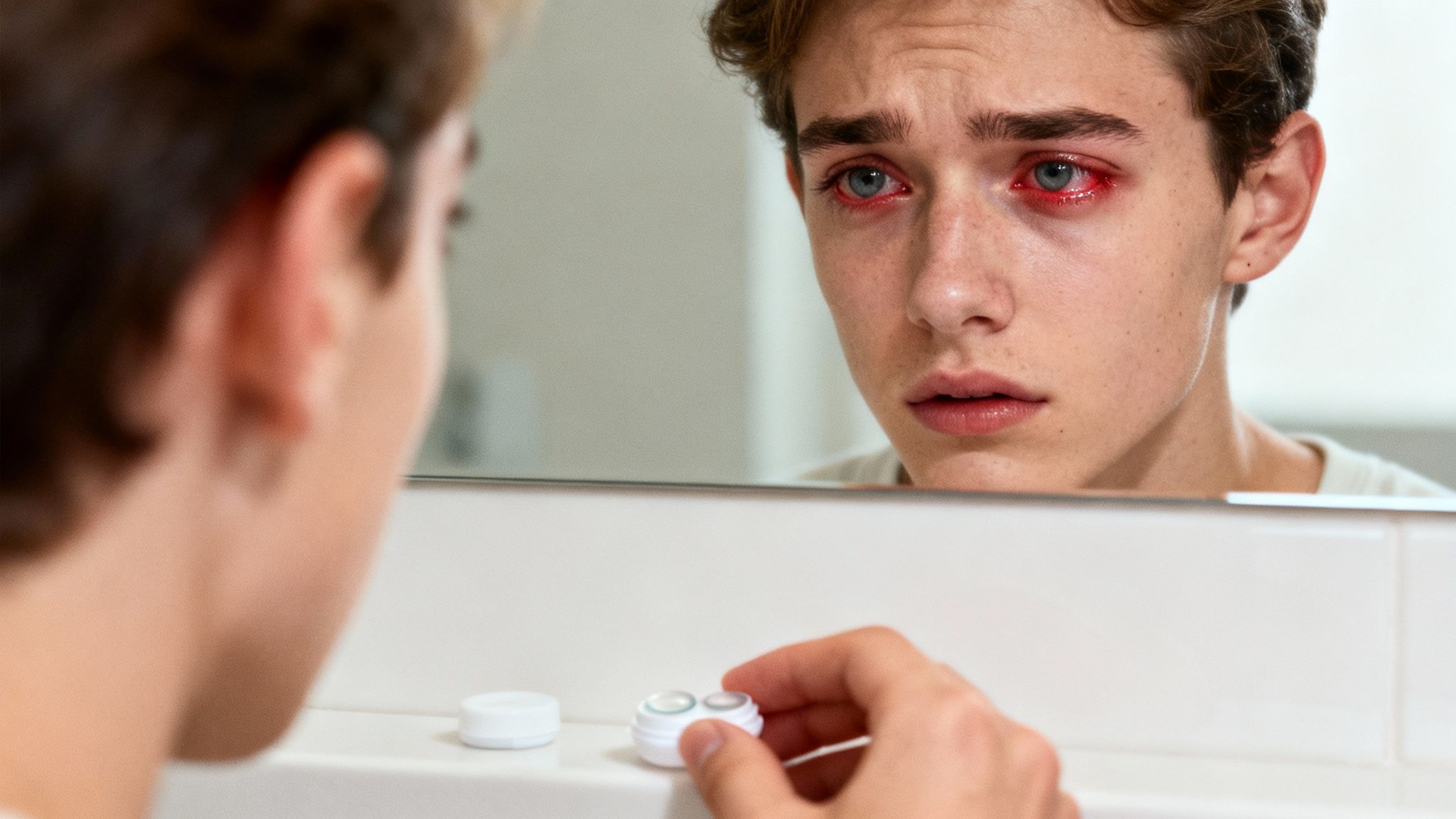
We've all been there—you look in the mirror after a long day and are greeted by a tired, red-eyed reflection. For many of us in Glendale Heights and the surrounding Chicagoland suburbs, this can feel like a daily struggle. But it doesn’t have to be. This guide will help you understand what's really going on and how to get back to clear, comfortable vision.
Here at iDoctor, a boutique optometry practice in Glendale Heights, we believe your eyes should feel as good as they see. So, let’s dive into the common reasons your contacts might be causing redness and, more importantly, what you can do about it.
Common Causes of Red Eyes
Getting to the root of the problem is the only way to find a lasting solution. Most of the time, red eyes from contacts can be traced back to one of a handful of culprits.
Let's break them down.
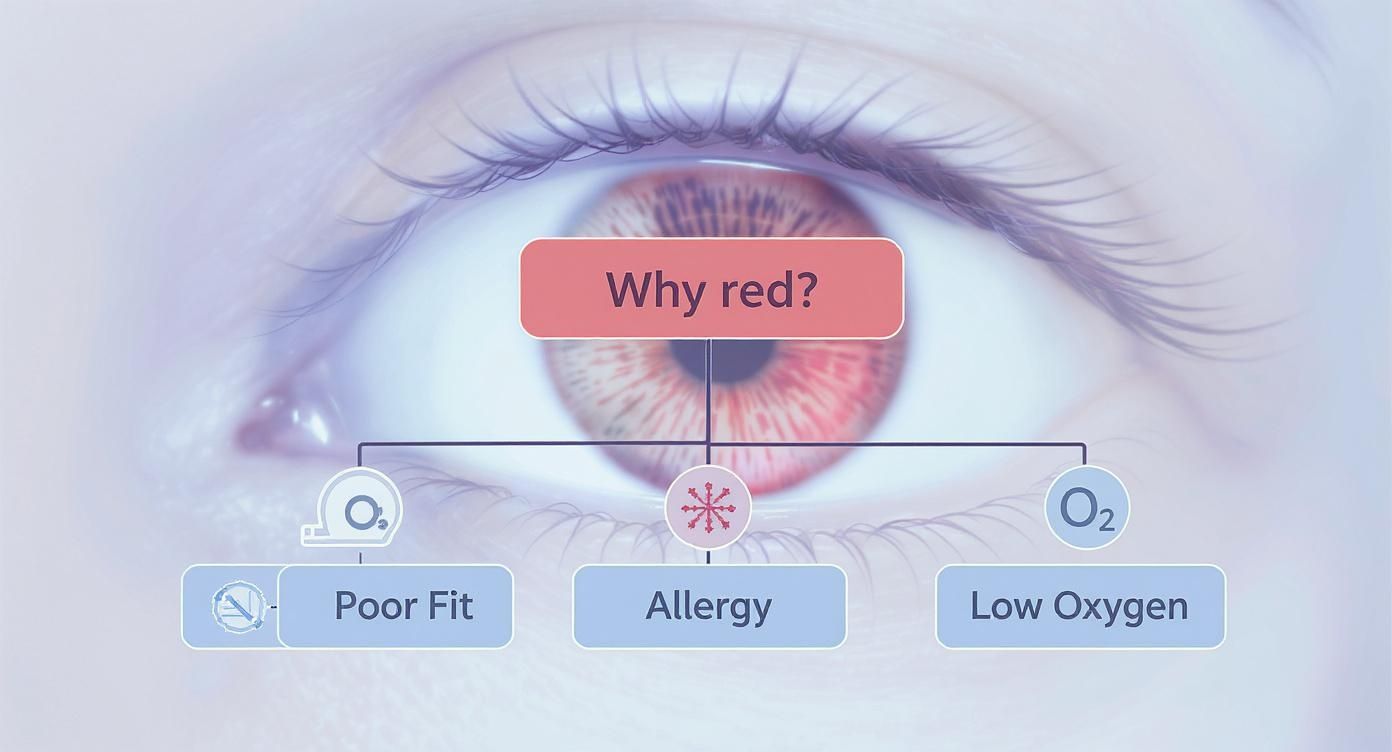
- Dry Eyes: Your cornea (the clear front part of your eye) needs oxygen to stay healthy. A contact lens can act as a barrier, reducing that oxygen supply and leading to dryness. If you're already prone to dry eyes, contacts can make the gritty, burning sensation even worse.
- Poor Lens Care: This is a big one. When you slack on your cleaning routine, you’re basically putting a dirty petri dish on your eye. Bacteria, proteins, and other gunk build up on the lens surface, leading to serious irritation.
- Allergic Reactions: Sometimes, the problem isn't your habits but the products you're using. You could be sensitive to the lens material itself or, more commonly, to the preservatives found in some contact lens solutions.
- Overwearing Your Lenses: Pushing your lenses past their recommended wear time—whether it's sleeping in dailies or wearing monthlies for six weeks—is a recipe for disaster. It starves your eyes of oxygen, causing redness, strain, and increasing your risk of infection.
- An Improper Fit: A contact lens isn't one-size-fits-all. A lens that’s too tight can suffocate the cornea, while one that’s too loose can slide around and cause friction with every blink. Either way, the result is discomfort and redness.
The most crucial first step is to remove your lenses immediately when you notice redness or discomfort. This gives your eyes a chance to breathe and recover, preventing a minor issue from escalating into a major one.
Quick Guide to Common Causes of Red Eyes From Contacts
Feeling overwhelmed by the possibilities? This table can help you quickly narrow down what might be going on with your eyes.
| Cause | What It Feels Like | What You Can Do |
|---|---|---|
| Dry Eyes | Gritty, sandy, or burning sensation. Vision might blur intermittently. | Remove lenses, use preservative-free rewetting drops, and give your eyes a break. |
| Poor Lens Care | Discomfort that builds through the day, filmy vision, and general irritation. | Thoroughly clean and disinfect your lenses and case. Consider daily disposables. |
| Allergies | Itchiness is the hallmark symptom, often accompanied by redness and watery eyes. | Switch to a preservative-free solution (like a hydrogen peroxide system) or try a different lens brand. |
| Overwearing | Tired, strained, and achy eyes that look progressively redder as the day goes on. | Stick strictly to the replacement schedule recommended by your eye doctor. Never sleep in lenses not approved for it. |
| Improper Fit | A feeling that something is always in your eye, excessive lens movement, or sharp pain. | Schedule a contact lens fitting with your eye doctor immediately to get properly sized lenses. |
This quick guide is a great starting point, but remember that proper care involves more than just identifying the problem.
Using the right products makes a huge difference. Lubricating drops can offer fantastic relief, but it's critical to know that not all of them are safe to use while wearing contacts. To help you make a safe choice, check out our guide on using eye drops with contacts for a list of effective and approved options.
Why Your Contacts Are Causing Redness
Looking in the mirror and seeing red, irritated eyes can be unsettling, especially when you rely on contacts for clear vision. But figuring out why they're red is the first step to getting back to comfortable wear.
Think of your contact lens like a tiny, high-tech piece of clothing for your eye. It has to fit just right. If it doesn't, that constant friction and poor positioning can cause a world of irritation. But a bad fit is only one of the usual suspects. Let’s break down the common culprits behind that frustrating redness.
An Improper Mechanical Fit
A contact lens is designed to float gently on the tear film covering your cornea, moving just a tiny bit with every blink. This movement is crucial for letting fresh tears wash underneath. If the fit is off, you’re practically guaranteed to have problems.
- A Lens That's Too Tight: This is like putting a suction cup on your eye. It clamps down on the cornea, choking off the flow of tears and oxygen. The result is usually a deep, stubborn redness and a nagging feeling of pressure.
- A Lens That's Too Loose: On the flip side, a lens that slides around too much creates friction with every blink. It's like a shoe that's too big rubbing a blister on your heel. By the end of the day, that constant rubbing leaves your eyes red and sore.
Allergic and Sensitivity Reactions
Sometimes, the problem isn't the fit, but what the lens is made of—or what you're cleaning it with. Your eyes can have an allergic reaction just like your nose does during pollen season. Your immune system flags a substance as an invader, triggering an inflammatory response that brings on the redness and itching.
The most common triggers are:
- Lens Material: Not all eyes get along with all materials. Some people are sensitive to specific types of silicone hydrogel or other polymers used to make contacts.
- Cleaning Solutions: To keep them sterile, most multipurpose solutions contain preservatives. While perfectly safe for most people, these chemicals can build up on your lenses and cause a reaction in sensitive eyes.
If you think an allergy is the issue, switching to a preservative-free hydrogen peroxide cleaning system or moving to daily disposables can often be a game-changer.
Corneal Hypoxia The Oxygen Problem
Your cornea—the clear dome at the front of your eye—is a pretty amazing piece of anatomy. It has no blood vessels, so it gets the oxygen it needs to stay healthy directly from the air. When you put a contact lens on, you're placing a barrier between your cornea and its oxygen supply.
When the cornea doesn't get enough oxygen, a condition known as corneal hypoxia, it goes into survival mode. It tries to grow new, tiny blood vessels to grab the oxygen it's missing. This process, called neovascularization, creates a visible web of redness on the white of the eye.
This problem is most common when people wear their lenses for too long (especially sleeping in them) or use older, less breathable lens materials. Thankfully, modern silicone hydrogel lenses are engineered to let much more oxygen pass through, dramatically reducing this risk.
It's a widespread issue. Of the 140 million people worldwide who wear contact lenses, red eye is one of the most frequent complaints. In fact, research shows that around 68% of wearers experience red eye symptoms at some point, often due to poor oxygen flow or overwear. You can dive deeper into the data on contact lens complications on IJMS.info.
Underlying Dry Eye Conditions
For many contact lens wearers, the lens isn't the real villain—it's just making an existing problem worse. That problem is often an underlying dry eye condition. A healthy, thick layer of tears is what allows a contact lens to float comfortably on the eye's surface.
But when your eyes don't produce enough tears, or the tears you do produce are poor quality, that lens can feel like sandpaper. Instead of gliding smoothly, it drags across the dry cornea, causing friction, irritation, and redness. This can quickly turn a lens that used to feel fine into a source of constant discomfort.
If your eyes often feel gritty or have a burning sensation, it's worth exploring how to better manage dry eyes with contact lenses and finding solutions that address the root of the dryness.
What to Do Immediately When Your Eyes Turn Red
You glance in the mirror and there it is—that dreaded, tell-tale redness. The moment you notice that irritation or see red eyes staring back, what you do next really matters.
The most important first step is always the same: remove your contact lenses immediately. Think of it like kicking off a shoe that’s too tight after a long day. It brings instant relief and gives your eye a much-needed chance to breathe and start recovering.
Once the lens is out, don't just toss it aside. Hold it on your fingertip and take a good look. Can you see any tiny tears, chips around the edge, or any debris that might have gotten stuck to it? This simple check can often solve the mystery of your discomfort right away.
Even if you think the lens is damaged, be sure to clean and store it properly in a clean case with fresh solution. This keeps the lens in good condition so your eye doctor can examine it if the problem doesn't go away. If you need a refresher, our guide has some helpful contact lens removal tips to help you avoid causing any more irritation.
First Aid for Irritated Eyes
With your contacts safely out, it's time to soothe your eyes. It can be tempting to grab whatever "get the red out" eye drops you have in the medicine cabinet, but this can often backfire.
Many of those redness-relieving drops use chemicals called vasoconstrictors. They work by shrinking the blood vessels in your eye, which makes the white part of your eye look whiter for a little while. The problem is, this just masks the issue. It doesn't fix it. Even worse, your eyes can start to rely on these drops, leading to a "rebound effect" where the redness comes roaring back even worse than before.
Instead, stick to these simple and safe steps for immediate relief:
- Use Preservative-Free Artificial Tears: Gently flush your eye with sterile, preservative-free lubricating drops. This helps wash out any irritants and adds moisture back into the eye without introducing harsh chemicals.
- Apply a Cool Compress: A clean washcloth soaked in cool water and placed over your closed eyelids for a few minutes can feel amazing. The cold helps calm inflammation and provides instant, soothing relief.
- Give Your Eyes a Break: Switch to your glasses for the rest of the day. This is the best way to give your cornea time to heal, rehydrate, and get the oxygen it needs.
Home Care vs. Professional Care
Knowing when you can handle something at home versus when it's time to call a professional is crucial for your eye health. If you have some minor redness that goes away quickly after you take your lenses out and doesn't come back, the home care steps above are usually all you need.
But some symptoms are definite red flags. You should never ignore them.
When to Call Your Eye Doctor Immediately
If your red eyes are paired with any of the following symptoms, it's time to call an eye doctor for an urgent appointment:
- Sharp or persistent eye pain
- Sensitivity to light (photophobia)
- Blurry or decreased vision
- Any discharge from the eye (yellow, green, or watery)
- A constant feeling that something is stuck in your eye
These warning signs could point to a serious infection like keratitis or even a corneal ulcer—conditions that can threaten your sight if not treated quickly. Don't just wait it out and hope for the best. Prompt action can stop a minor irritation from turning into a major problem.
Building a Bulletproof Contact Lens Care Routine
When it comes to red eyes from contacts, the best defense is a good offense. Preventing irritation before it ever starts is far easier than treating it later. Think of your contact lens care as the foundation for a healthy, comfortable relationship with your vision. It all comes down to a few simple, consistent habits that can make a world of difference.
This isn't about adding complicated steps to your day. It’s about building a solid, non-negotiable routine that becomes second nature and keeps your eyes protected. From how you handle your lenses to knowing when to toss them, these practices are your best line of defense against redness and discomfort.
The Rub and Rinse Rule
Years ago, some contact lens solutions were marketed as "no-rub," creating a myth that you could just plop your lenses in the case and call it a day. We now know that's a shortcut that can lead to big problems. The gold standard for truly clean lenses is, and always will be, the rub and rinse method.
Think about it: you wouldn't try to wash a muddy dish just by soaking it in soapy water, would you? The same idea applies to your contacts. All day long, a thin film of proteins, lipids, and other gunk from your tears builds up on the lens surface. Rinsing alone just can't get it all off.
By gently rubbing each lens in your palm with fresh solution for about 15-20 seconds, you physically break up and dislodge that stubborn buildup. This simple mechanical step is the single most effective way to ensure your lenses are actually clean, which dramatically cuts down on the irritation that causes red eyes.
The Dangers of Tap Water
It might seem harmless to give your lenses or case a quick rinse under the faucet, but this is one of the riskiest things you can do for your eye health. Tap water, no matter how clean your city's supply is, is not sterile.
It’s teeming with microorganisms that are perfectly safe to drink but can be devastating to your eyes. One of the worst offenders is Acanthamoeba, a nasty amoeba that can latch onto your contact lens, infect your cornea, and cause Acanthamoeba keratitis—a severe, painful infection that can lead to permanent vision loss.
Always, always use fresh, sterile contact lens solution for every single step of your routine: rinsing, rubbing, and storing. For a more detailed walkthrough, check out our guide on the best way to clean your contact lenses, which breaks the process down completely.
Respecting the Replacement Schedule
Every type of contact lens—whether it's a daily, bi-weekly, or monthly—has a strict expiration date for a very good reason. Overwearing your lenses is like trying to use a disposable razor for weeks on end. Eventually, it gets dull, grimy, and starts causing irritation.
Here’s why sticking to that schedule is non-negotiable:
- Oxygen Flow Decreases: As a lens ages, the material naturally degrades and gets coated in deposits, making it harder for oxygen to reach your cornea. This oxygen deprivation, or hypoxia, is a direct cause of redness and discomfort.
- Deposit Buildup: Even with perfect cleaning, microscopic deposits will eventually cling to the lens. This gunk makes the surface rough and creates a perfect breeding ground for bacteria.
- Lens Shape Warps: An old lens can lose its precise shape, leading to a poor fit. An ill-fitting lens can cause friction and mechanical irritation with every single blink.
Think of the replacement date not as a suggestion, but as a prescription for keeping your eyes healthy.
Give Your Eyes a Break
Even the most advanced, breathable contacts are still a foreign object resting on your eye. One of the healthiest habits you can get into is simply giving your eyes a regular break by wearing your glasses.
Try to schedule at least one "glasses day" a week, or at the very least, take your contacts out a few hours before bed. This downtime allows your cornea to breathe and get a full dose of oxygen, and it gives your natural tear film a chance to replenish itself. It’s a small change that can make a huge impact on your long-term comfort and reduce chronic redness.
The statistics on contact lens hygiene are pretty eye-opening. An estimated 40.9 million adults in the U.S. wear contacts, yet a staggering 99% of them admit to at least one risky hygiene habit. It's no surprise, then, that about one-third of all wearers have had to see a doctor for a red or painful eye problem. You can dig into more of these findings on hygiene behaviors among contact lens wearers from the CDC. This data really drives home just how critical a solid care routine is for preventing serious issues.
How a Professional Fitting Prevents Redness
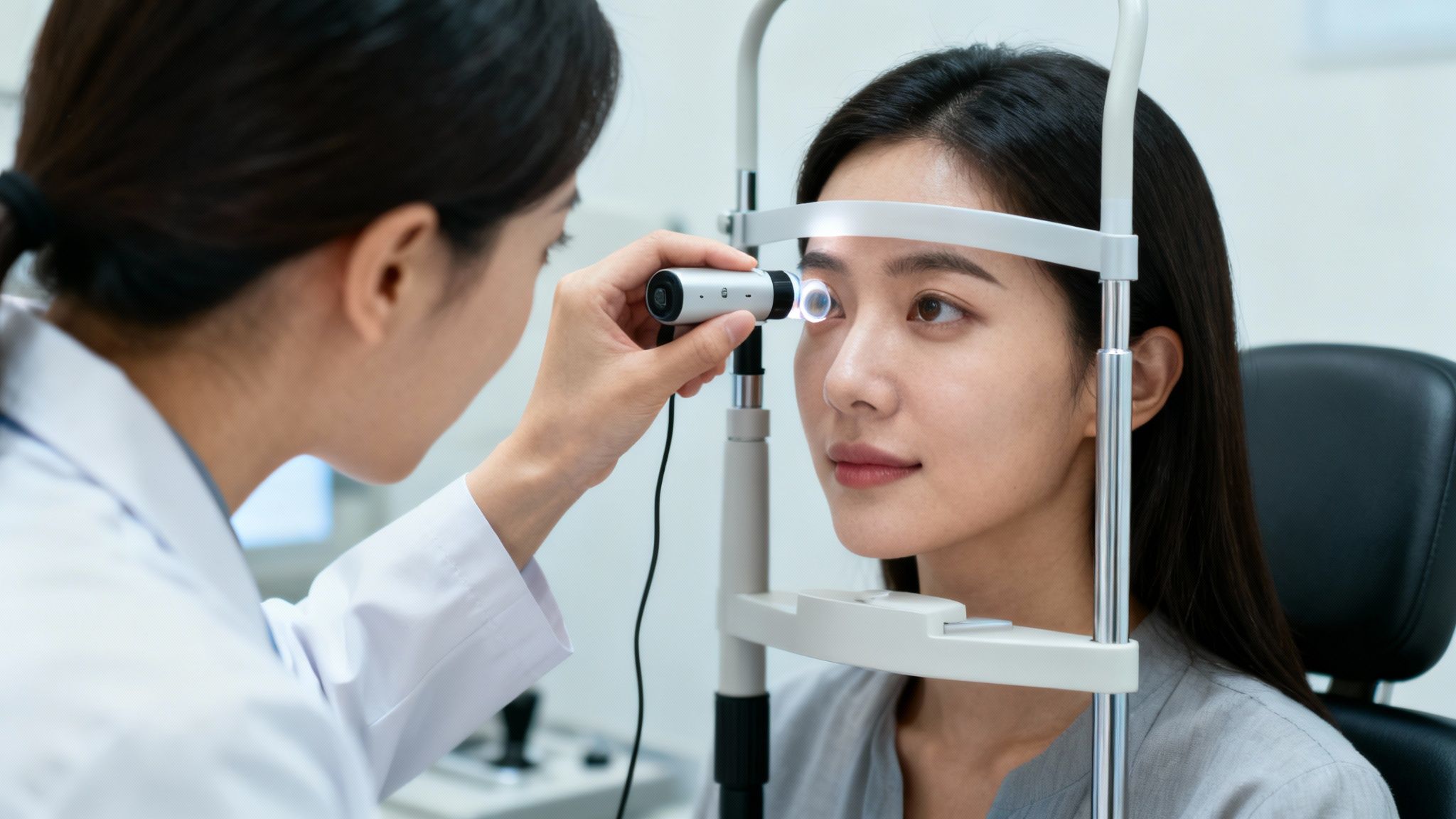
When your eyes are constantly red from contacts, it’s easy to blame your cleaning routine or the brand of solution you're using. While those things definitely matter, the real culprit is often hiding in plain sight: the fit of your lenses. A contact lens isn't just a piece of plastic; it’s a medical device that needs to be perfectly matched to the unique curves and needs of your eye.
An ill-fitting lens is one of the most common—and totally preventable—reasons for chronic redness and discomfort. This isn't a one-size-fits-all game. The path to comfortable, clear vision always starts with a professional fitting, where we make sure the lens works with your eye, not against it.
More Than Just a Prescription
During a professional contact lens fitting in Glendale Heights, we go way beyond just checking the power you need to see clearly. We take a whole series of precise measurements to create a detailed blueprint of your eye's surface. This is the secret to avoiding the mechanical irritation that makes your eyes angry and red.
Think of it like getting a custom-tailored suit. Sure, an off-the-rack option might look fine, but a tailored one feels right, moves with you, and fits flawlessly. It’s the exact same principle for your contacts.
Our fitting process is incredibly detailed and includes:
- Corneal Curvature: Using a tool called a keratometer, we measure the exact curve of your cornea. This tells us the "base curve" your lens needs. If the lens is too steep, it acts like a suction cup, trapping debris and cutting off tear flow. If it’s too flat, it slides around with every blink, causing constant friction.
- Corneal Diameter: We also measure the size of your cornea to select the right lens diameter. A lens that's too small or too large will dig into the edges or sit improperly, leading to immediate discomfort.
A well-fitted lens should float gently on your tear film, allowing for a slight, healthy movement with each blink. This ensures that oxygen and fresh tears can circulate freely underneath the lens, keeping your eye nourished and white.
Matching the Lens to Your Lifestyle
A perfect fit isn't just about the numbers; it’s about finding the right material and type of lens for your actual life. Someone who stares at a computer for eight hours a day has totally different needs than a student-athlete who’s always on the go.
This is where having the best optometrist in Glendale Heights really makes a difference. We talk to you, understand your routine, and recommend a lens that’s built for what you do. For instance, if you struggle with dry eyes, we'll point you toward lenses with advanced moisture-locking technology.
Here’s how we customize the choice for you:
- Silicone Hydrogel Lenses: If you wear your contacts for long hours, these are often our top recommendation. They are incredibly breathable and allow up to five times more oxygen to reach the cornea than older materials, which dramatically lowers the risk of redness from oxygen deprivation.
- Daily Disposables: For allergy sufferers or anyone who values convenience, dailies are a game-changer. You start with a fresh, sterile lens every single morning, completely eliminating the daily buildup of allergens and proteins that cause so much irritation.
- Specialty Lenses: Conditions like astigmatism (an irregular eye shape) or presbyopia (age-related trouble with close-up vision) demand specialized toric or multifocal lenses. Trying to force a standard lens to work in these situations is a guaranteed recipe for discomfort, blurry vision, and red eyes.
Ultimately, a proper fitting is the single most important investment you can make for comfortable, healthy contact lens wear. It ensures your lenses feel invisible, letting you see the world clearly and without a second thought.
Your Partner in Healthy Vision in Glendale Heights
Dealing with red, irritated eyes from your contacts can be incredibly frustrating, but you don't have to figure it out alone. Here at iDoctor, we're deeply committed to the long-term eye health of our neighbors right here in the Glendale Heights community. We know that constant irritation is more than just an annoyance—it's a daily battle. Having a local, trusted eye care team on your side can make all the difference.
Conveniently located for anyone driving along North Avenue or Army Trail Road, our independent optometry boutique offers a refreshingly different approach to eye care. We’re not about quick, impersonal checks. Our 30-minute detailed eye exams in Glendale Heights use advanced, high-resolution imaging to get a crystal-clear picture of your eye health. This lets us dig deep and find the real reason behind your discomfort.
Personalized Solutions for Clear Vision
If your current contacts are the culprit, we'll work together to find a better fit for your eyes and lifestyle. This might involve switching to a more modern lens designed for superior oxygen flow or trying out daily disposables to keep allergies at bay. Sometimes, the healthiest choice is simply giving your eyes a well-deserved break with a stylish pair of glasses. We can help you find your next favorite look from our curated collection of designer eyeglasses in Glendale Heights, featuring iconic luxury brands like Cartier, Tom Ford, and Gucci, as well as affordable favorites like Ray-Ban and Coach.
For a vision practice serving Glendale Heights, establishing a strong online presence is key. Explore how targeted Glendale SEO Services can help a clinic reach more local patients.
Your comfort and vision are our top priorities. We believe that exceptional eye care should be accessible, which is why we proudly accept all major vision insurance plans, making it easier for you to get the expert help you deserve.
Don't let red eyes get in the way of your life. Schedule an appointment with the best optometrist in Glendale Heights today and feel the difference that warm, professional, and local eye care can make.
Frequently Asked Questions About Red Eyes and Contacts
Why do my eyes get red after wearing contacts for only a few hours?
This is a common issue for Glendale Heights residents and often points to either an underlying dry eye condition or a poor lens fit. When your eye lacks a healthy tear film, the contact creates friction, causing irritation. It could also mean the lens material isn't breathable enough for your needs. A visit to an eye doctor in Glendale Heights like iDoctor can help pinpoint the exact cause and find a more comfortable lens for you.
Can I wear contacts during allergy season in Chicagoland?
Absolutely! The key is using the right strategy. For many of our patients in Glendale Heights, switching to daily disposable contact lenses in Glendale Heights is a game-changer. Tossing them at the end of the day prevents pollen and other local allergens from building up. We can also recommend specific allergy eye drops that are safe to use with your contacts.
Where can I find designer eyeglasses in Glendale Heights if I need to give my eyes a break?
Taking a break from contacts is a great way to reduce redness. Here at iDoctor, we offer a curated collection of luxury eyewear, including Gucci glasses near me, Cartier, Prada, and Tom Ford. We also carry a wide range of affordable brands like Ray-Ban and Kate Spade, ensuring you can find a stylish pair of glasses you love to wear.
You don't have to put up with red, irritated eyes from your contacts. At iDoctor, we’re committed to finding a solution that gives you clear vision without sacrificing comfort. Schedule your personalized contact lens fitting with our warm and professional team in Glendale Heights today.