When you’re looking for the perfect sunglasses in Glendale Heights, the choice between polarized and unpolarized lenses can seem complicated. But the real difference boils down to one key thing: polarized lenses are specifically designed to kill the blinding glare that bounces off reflective surfaces. In contrast, unpolarized lenses just turn down the volume on the overall brightness of your surroundings.
Which one is right for you? It all depends on whether you need that targeted glare-cutting power for activities like driving down North Avenue, or if you just want a simple dimming effect for a casual walk through East Branch Forest Preserve. Understanding this distinction is the first step toward finding eyewear that truly works for your life in the Chicagoland suburbs.
What Are Polarized and Unpolarized Lenses?
When you're shopping for a new pair of designer sunglasses, it's easy to get bogged down by terms like "polarized" and "unpolarized." But getting a handle on this one difference is crucial for picking eyewear that not only looks sharp but actually delivers the visual comfort and safety you need. As the go-to eye doctor in Glendale Heights, we want to make this choice simple and clear for you.
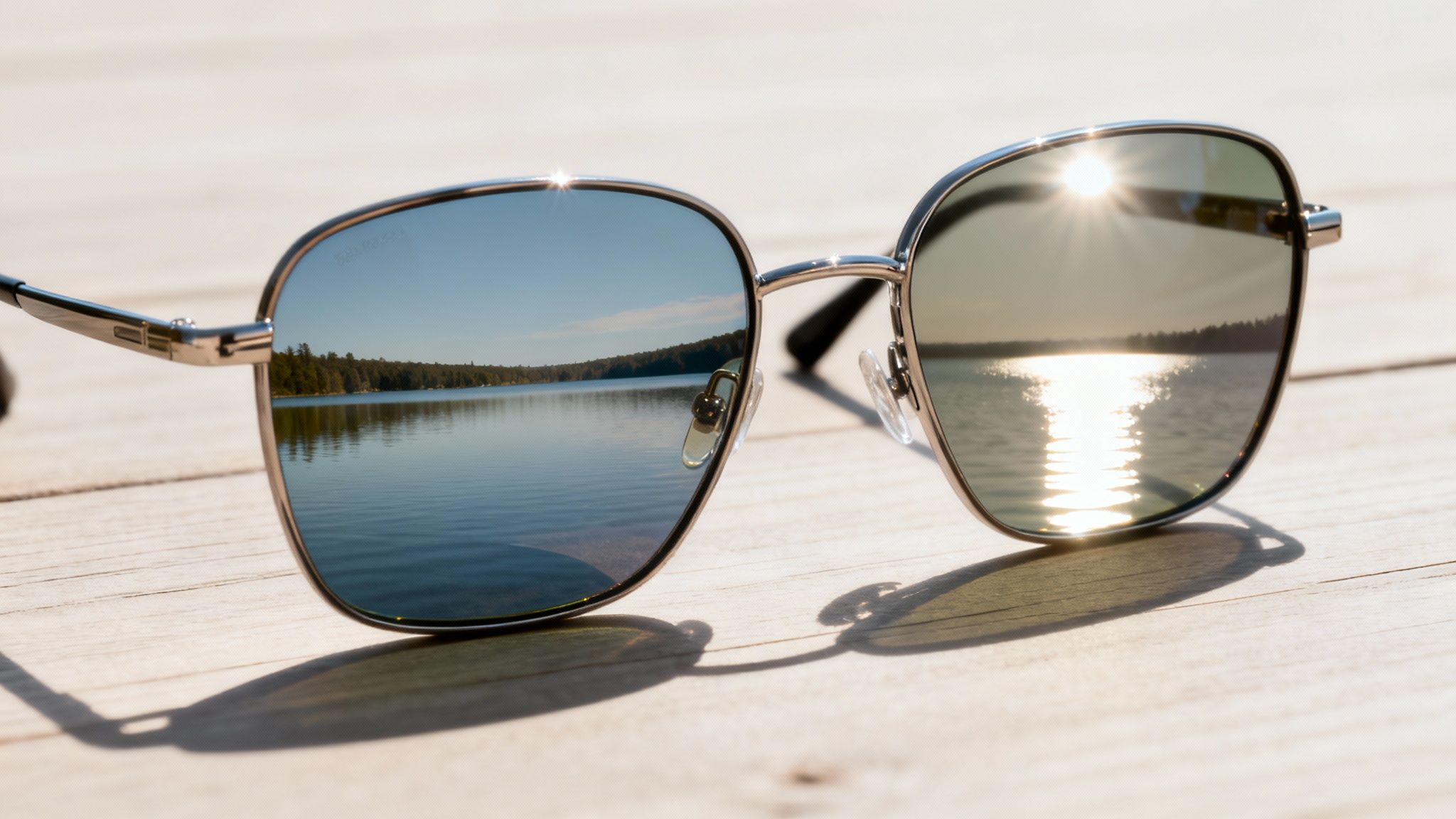
Think about driving down Bloomingdale Road on a bright, sunny afternoon. That harsh glare bouncing off the car in front of you isn't just annoying—it can be downright dangerous. This is where the lens type really matters. Polarized lenses are built to combat that specific, horizontally reflected light, while your standard unpolarized lenses just make everything darker without tackling the glare itself.
How Each Lens Type Works
The science is actually pretty cool and easy to grasp. Polarized lenses have a special chemical filter laminated into them that works like a set of microscopic blinds. This filter is oriented vertically, so it blocks the intense horizontal light waves that cause glare while letting the useful vertical light pass through to your eyes. The result is vision that feels crisp, clear, and far more comfortable.
Unpolarized lenses, on the other hand, don't discriminate. They're simply tinted to reduce the total amount of light that reaches your eyes. While this helps with general brightness, it does absolutely nothing to stop that concentrated, blinding glare.
Here’s a quick side-by-side to make the choice clearer:
| Feature | Polarized Lenses | Unpolarized Lenses |
|---|---|---|
| Glare Reduction | Excellent. Specifically blocks reflected glare. | None. Only reduces overall brightness. |
| Visual Clarity | Significantly boosts contrast and detail. | Offers basic tinting and standard clarity. |
| Eye Comfort | Drastically cuts down on squinting and eye strain. | Provides some relief from general brightness. |
| Best For | Driving, fishing, snow sports, water activities. | Everyday casual wear in less reflective settings. |
At the end of the day, picking between polarized and unpolarized lenses comes down to your lifestyle. Both options should provide essential UV protection, but only polarized lenses have the advanced technology to really defeat blinding glare.
If you want to dig deeper into finding the perfect frames, check out our guide on how to choose sunglasses for your face and needs. Making the right call ensures your eyes stay comfortable and protected, whether you’re enjoying a local park or navigating the Chicagoland commute.
How Light and Lenses Create Visual Clarity
Before we can really get into the polarized versus unpolarized debate, we have to talk about light itself. Think of sunlight as a wild, chaotic burst of energy, with light waves vibrating in every direction imaginable—up, down, sideways, and everywhere in between. This is what scientists call unpolarized light.

When that scattered light hits a flat surface, everything changes. Surfaces like a wet road on Route 64, the water at Glen Ellyn's Lake Ellyn, or even the hood of a car act like a filter, organizing the light waves into a single, horizontal pattern. This intensely concentrated horizontal light is what our eyes perceive as blinding glare.
The Science of Polarization Explained Simply
This is precisely where the genius of polarized lenses comes in. Imagine a polarized lens has a microscopic filter that functions like a set of tiny vertical blinds. This special chemical filter is laminated onto the lens in a vertical pattern.
Because the filter is aligned vertically, it only allows useful vertical light to pass through to your eye. At the same time, it physically blocks the harsh, horizontal light waves that cause glare.
Key Takeaway: Polarized lenses don't just make your view darker; they selectively filter out the specific light waves responsible for glare. This targeted approach is what gives you such incredible visual comfort and clarity.
This is worlds apart from how unpolarized lenses work. A standard tinted lens just reduces the total amount of light reaching your eye across the board, but it’s completely helpless against the concentrated glare bouncing off a flat surface. It’s the difference between dimming all the lights in a room versus blocking the one flashlight being shined directly in your eyes.
How Light Reflection Creates Glare
The science here isn't new; it’s been understood for more than two centuries. Natural light from the sun is unpolarized, with light waves oscillating randomly. But, as French physicist Étienne-Louis Malus figured out way back in 1808, when this light reflects off a nonmetallic surface, it becomes partially or fully polarized. This effect is most powerful at a specific angle, making the glare off water or roads intensely horizontal—and perfectly set up for polarized sunglasses to block.
This selective filtering process brings some major benefits:
- Drastically Reduced Eye Strain: No more squinting. By cutting the glare, your eyes can relax, which helps reduce fatigue and even prevent headaches.
- Enhanced Contrast and Clarity: Objects appear sharper and more defined, letting you see details you might have otherwise missed.
- Truer Color Perception: Without the washout effect of harsh glare, colors look richer, more vibrant, and more natural.
Combining Polarization with Other Coatings
For the absolute best visual experience, polarization can be paired with other advanced lens treatments. An anti-reflective coating, for example, is designed to eliminate reflections on the backside of your lenses. This stops that distracting glare from light sources behind you. Combining these two ensures your vision is crystal clear from every angle.
When these technologies work together, they create a lens that offers maximum protection and performance. If you're curious about how different coatings complement each other, feel free to explore the benefits of anti-reflective coatings in one of our other guides. Here at iDoctor, our team can help you customize the perfect lens package for your lifestyle, whether you're putting them in a frame from Cartier or Ray-Ban.
A Detailed Comparison of Polarized and Unpolarized Lenses
Picking the right sunglasses goes way beyond just style. It's about how the lens technology actually performs for you and your daily life, whether you're dealing with sun glare on Army Trail Boulevard or just enjoying a walk through O'Hara Woods Preserve.
Let's get one thing straight from the start: both types of quality lenses should offer 100% UV protection. That's non-negotiable. Where they really part ways is in how they handle light and, most importantly, glare. One is a precision tool, the other a basic shade.
Glare Reduction: The Defining Difference
This is the main event in the polarized vs. unpolarized debate. It's the one feature that completely changes the game, and where polarized lenses have a massive advantage.
Polarized lenses are engineered with a special chemical filter that acts like a smart gate, blocking the intense, blinding glare that reflects off flat surfaces. Think about that harsh shimmer coming off Thunderbird Lake on a bright afternoon—polarized lenses are designed to specifically cancel out that horizontal light, leaving you with clear, comfortable vision.
On the other hand, unpolarized lenses don't have this selective filtering. They simply make everything darker across the board. While that provides some relief from overall brightness, they're powerless against the kind of concentrated glare that causes you to squint and strain your eyes.
The most crucial takeaway is this: While both lenses block UV rays, only polarized lenses can actively eliminate blinding reflective glare. This is the key to achieving superior visual comfort and clarity in bright, reflective conditions.
Visual Clarity and Contrast
Fighting glare is one thing, but how does the world actually look through the lenses? This is another area where polarization makes a world of difference.
By cutting out the "visual noise" of glare, polarized lenses make your surroundings appear sharper and more detailed. Colors pop with more vibrancy because they aren't being washed out by harsh, reflected light. This boost in contrast makes it far easier to pick out details, whether that’s a pothole on the road ahead or fish swimming just below the water's surface.
Unpolarized lenses offer a standard view of the world—they just tint it. There’s no enhancement of detail or color, just a general dimming effect. Your vision is darkened, not refined.
Lens Feature Showdown: Polarized vs. Unpolarized
To help you see the differences at a glance, we've put together a direct comparison of key features. This should make it easier to understand the functional trade-offs and decide which lens is right for your needs.
| Feature | Polarized Lenses | Unpolarized Lenses | Best For |
|---|---|---|---|
| Glare Reduction | Excellent: Specifically targets and blocks horizontal glare from wet roads, water, and other cars. | Minimal: Only reduces overall ambient light; has no effect on concentrated, reflected glare. | Driving, water sports, and snow activities where reflective glare is a major issue. |
| Visual Comfort | Superior: Dramatically reduces squinting and eye fatigue for more relaxed vision, especially over long periods. | Basic: Provides some relief from brightness but doesn't prevent eye strain caused by intense glare. | Casual wear in environments with minimal reflective surfaces. |
| Contrast & Clarity | Enhanced: Objects look sharper, colors appear more vibrant, and details are much more defined. | Standard: Vision is simply tinted darker without any significant improvement in contrast or detail. | Situations where seeing fine detail and rich color is important for performance or enjoyment. |
| Driving Safety | Optimal: The clear winner for daytime driving. Cutting blinding glare can improve reaction times. Our guide on the best sunglasses for driving in Glendale Heights has more. | Adequate: Better than no sunglasses, but leaves you vulnerable to sudden, dangerous glare from other vehicles or wet roads. | Short, casual drives in non-challenging light conditions. |
| Screen Viewing | Potential Issues: Can cause LCD screens on phones, dashboards, or gas pumps to appear distorted or blacked out. | No Interference: Digital screens are perfectly visible without any distortion or dark spots. | Pilots, heavy equipment operators, or anyone who frequently relies on digital displays. |
Ultimately, choosing the right lens comes down to how and where you plan to use your sunglasses. For most people, especially for driving and outdoor sports, the performance benefits of polarization are simply too good to pass up.
Picking the Right Lenses for Your Lifestyle
Knowing the science behind polarized and unpolarized lenses is a great start, but what really matters is how that tech fits into your everyday life. The best choice isn't about which lens is "better" overall, but which one is better for you and what you do. Whether you're navigating I-355 during rush hour or just enjoying a weekend at a local park, your activities are the best guide.
Think of it this way: a lens that’s a lifesaver on the water might not be the ideal pick for every single situation you encounter. It’s all about matching the lens to your environment.
When Polarized Lenses Are the Clear Winner
For a lot of activities, especially right here in the Chicagoland area, polarized lenses offer some serious advantages in safety, comfort, and visual performance.
-
For the Daily Driver: If you spend any time on roads like I-355 or I-290, you know the blinding glare coming off other cars and wet asphalt. Polarized lenses are built specifically to kill that horizontal glare, which means less squinting, reduced eye strain, and quicker reaction times. It can turn a tense drive into a much safer, more relaxed experience.
-
For the Angler and Boater: Anyone who enjoys fishing or boating on the DuPage River or other local lakes knows that polarization is non-negotiable. It slices right through the shimmering reflections on the water, letting you see what’s going on underneath. That can be the difference between spotting a great catch and just seeing a reflection of the clouds.
-
For the Winter Sports Enthusiast: Snow glare is incredibly intense and can even lead to snow blindness. Whether you're hitting the slopes or just navigating a sunny winter day in Glendale Heights, polarized lenses are a must. They cut down the harsh reflections, boost contrast, and help you see every bump and contour in the snow.
The real magic of polarized lenses is their power to conquer specific, high-glare environments. For any activity where reflective surfaces are a constant battle, their performance is simply unmatched.
Athletes who need top-tier visual clarity in bright light often rely on polarization. If that sounds like you, you’ll find some great insights in our guide on how to choose the best prescription lenses for athletes in Glendale Heights, which dives even deeper into eyewear for an active lifestyle.
Situations Where Unpolarized Lenses Make More Sense
As great as polarized lenses are, they aren’t perfect for everything. In some very specific situations, unpolarized lenses are actually the more practical—and sometimes safer—option.
The main drawback of polarization is how it interacts with certain digital screens. Many LCDs, like the one on your phone, your car's dashboard, or even the gas pump, use a polarizing filter to function. When you look at one of these screens through polarized sunglasses, it can look distorted, dim, or just plain black.
This creates a few key scenarios where unpolarized is the way to go:
-
For Pilots and Heavy Equipment Operators: A pilot needs a perfectly clear view of their digital instrument panels. Since polarized lenses can completely black out these crucial LCD screens, aviation regulations often forbid them. The same logic applies to operators of construction equipment who rely on digital displays for safety.
-
For Heavy Smartphone Users Outdoors: If you're constantly checking your phone while you're outside, the screen-dimming effect of polarized lenses can get old fast. Unpolarized lenses make sure your screen is always perfectly visible, no matter which way you tilt your head.
-
For Skiers Spotting Ice: This one is a bit of a trade-off. While polarized lenses are fantastic for general snow glare, some skiers and snowboarders actually prefer unpolarized lenses. Why? They find it easier to spot dangerous patches of ice, since the tell-tale glare reflecting off the ice serves as a visual warning—a warning that polarized lenses would eliminate.
Ultimately, the polarized vs. unpolarized debate comes down to how you spend your time. For most people around Glendale Heights, the incredible glare reduction for driving and general outdoor use makes polarized lenses the hands-down winner. Still, knowing the few times they might be a hindrance helps you make a choice that’s truly right for your eyes.
Finding Your Perfect Eyewear at iDoctor
Knowing the difference between polarized and unpolarized lenses is one thing, but translating that knowledge into the right pair of sunglasses for you is where our expertise comes in. Here at iDoctor in Glendale Heights, our passion is walking you through that very process, making sure your final choice fits your vision, your lifestyle, and your personal style.
We believe the best eyewear is a perfect marriage of advanced lens technology and a frame you absolutely love. That's why we can fit either polarized or unpolarized lenses into nearly any frame in our collection, whether you need a prescription or not. You never have to settle.
Curated Frames for Custom Lenses
Our boutique isn't just a shop; it's a carefully curated gallery of designer eyewear. We carry everything from iconic luxury brands to stylish, accessible frames, so there's truly something for everyone.
- Luxury & High Fashion: If you appreciate impeccable craftsmanship, we can customize frames from premier brands like Cartier, Tom Ford, and Gucci with the most advanced polarized lenses. It's the ultimate blend of iconic style and superior visual performance.
- Popular & Timeless Brands: We also feature all-time favorites like Ray-Ban, Coach, and Kate Spade. These frames are perfect candidates for a polarization upgrade, giving a classic look the benefits of modern, glare-killing technology.
What really sets us apart is our personalized approach. Our friendly opticians are experts at matching the perfect frame with the ideal lens, creating a pair of sunglasses that feels completely custom-made.
To make things a bit clearer, this simple decision guide can help you see which lens type might be best for your daily activities.
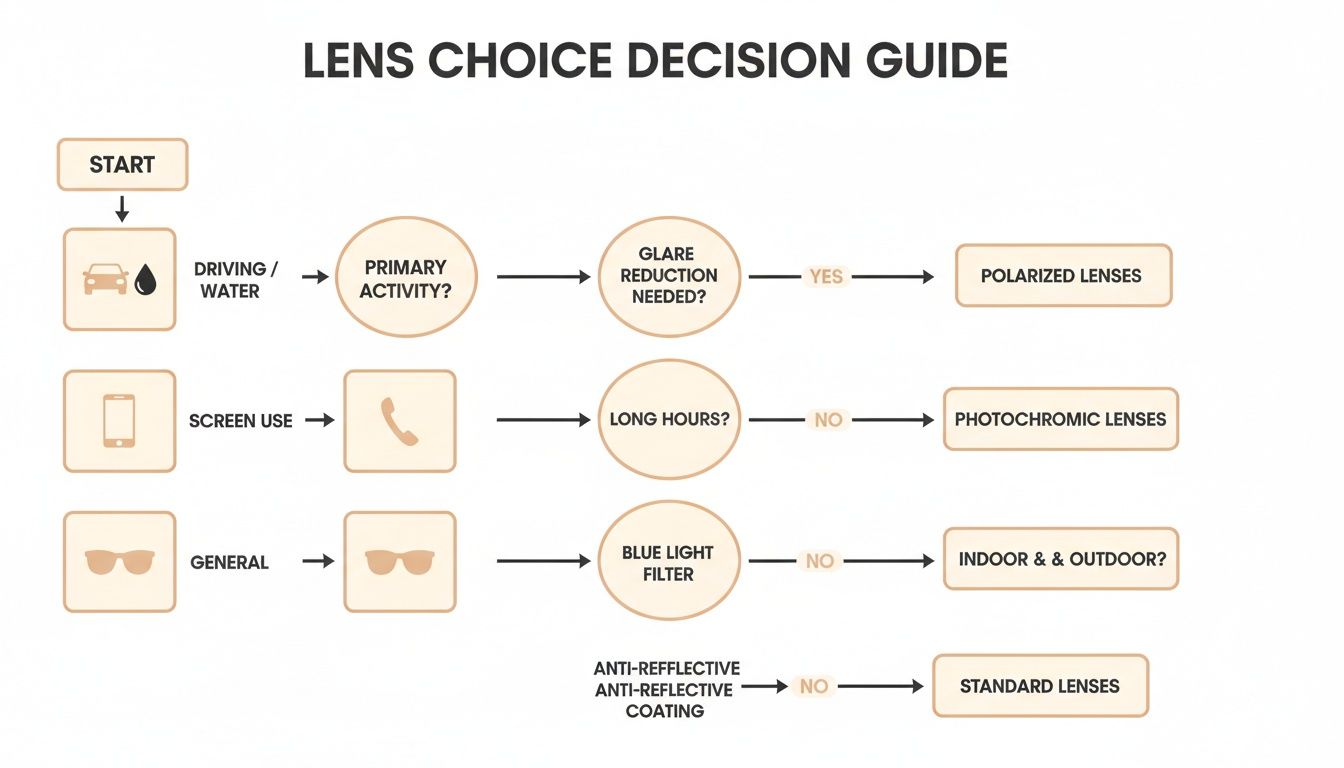
As the chart shows, for activities where you face a lot of reflective glare—like driving or spending time on the water—polarized lenses are usually the way to go. On the other hand, unpolarized lenses might be a better fit if you’re constantly looking at screens.
The Science of Superior Vision
The technology behind polarization isn't new, but it's incredibly effective. It all started back in 1929 when Edwin Land invented Polaroid, finding a way to filter out the chaotic, scattered light that causes glare. Today's polarized lenses are so efficient they can reduce glare by 90-99%. In real-world terms, studies show this can boost visibility and even help cut down on accident risks on the road.
At iDoctor, our goal is simple: bring this powerful technology to our clients in Glendale Heights. We’re not just selling sunglasses; we’re providing a tool for clearer, safer, and more comfortable vision every day.
The first step, of course, is understanding your unique vision needs. A comprehensive eye exam will ensure your prescription is current and gives you a chance to talk with an optometrist about your lifestyle. If you have questions about your prescription, our team is always ready to help. You can also learn more in our guide on getting prescription sunglasses right here on our blog.
We invite you to stop by our boutique to explore the collection and feel the difference a truly personalized fitting can make. Let us help you find eyewear you’ll be excited to put on every single morning.
Ready to See the Difference in Glendale Heights?
So, polarized or unpolarized? The best answer always comes back to your own life. Think about your daily routine, what you need from your vision, and even your drive to and from work. For most people navigating the roads around Glendale Heights, the glare-cutting power of polarized lenses is a game-changer for both safety and comfort.
But there's no substitute for seeing it yourself. Reading about how a lens works is one thing, but experiencing that "aha!" moment when the glare disappears is something else entirely. That's why we invite you to stop by our iDoctor boutique here in Glendale Heights. Our team can give you a live demonstration, showing you exactly how a polarized lens erases blinding reflections compared to a standard, high-quality lens.
Your Personal Consultation Awaits at iDoctor
If you're in Glendale Heights, Carol Stream, or Bloomingdale, come on in for a chat. We can walk you through our collection of designer eyeglasses in Glendale Heights—from sleek Tom Ford and Gucci frames to the classic cool of Ray-Ban—and help you match the perfect frame with the right lens for your life.
At iDoctor, our goal is to blend clinical precision with incredible style. Your vision is everything to us, and the right lens is a huge part of that. We're here to make sure your glasses don't just look amazing, but work perfectly for you, every single day.
Taking care of your eyes shouldn't be a hassle. We're conveniently located, we accept all major vision insurance plans, and our team is truly dedicated to giving you personalized care. Getting the best eyewear has never been easier. Come in and let us help you see your world more clearly and comfortably.
FAQ: Your Top Questions Answered by a Glendale Heights Optometrist
We get a lot of great questions about lens technology at our Glendale Heights boutique. Here are a few of the most common ones to help you make an informed choice.
Are polarized sunglasses better for driving in the Chicago area?
Absolutely. For daytime driving, they are the superior choice. Polarized lenses are specifically designed to cut the blinding glare from wet pavement, snow, and the hoods of other cars—all common challenges on local roads like I-355. This reduces eye strain and can improve your reaction time, making for a safer, more comfortable drive.
Can I get polarized lenses in my favorite Cartier or Gucci frames?
Yes, you can! At iDoctor, we specialize in customizing lenses for our entire collection of luxury and designer frames. If you find a pair of Gucci glasses near me that you love, we can fit them with high-quality polarized prescription or non-prescription lenses. This allows you to combine high-fashion style with high-performance vision.
Do I need a new eye exam to get polarized sunglasses?
While you don't always need a new exam for non-prescription sunglasses, it's a good idea if your prescription has changed or if it's been a while. Our detailed eye exams in Glendale Heights ensure your vision is perfectly corrected, which is the foundation for any great pair of glasses—sunglasses included.
Ready to see the difference for yourself? The expert team at iDoctor is here to give you personalized advice and help you find the perfect polarized or unpolarized lenses for your life. Schedule your eye exam in Glendale Heights today and let us help you see the world more clearly.