Taking out your contacts correctly is a small daily habit that makes a huge difference in protecting your eyes from irritation and infection. The process is simple and repeatable: start with clean, dry hands, gently slide the lens off the center of your eye, and then carefully pinch it out. For our patients across Glendale Heights, this quick routine is one of the most important things you can do for your long-term eye health. At iDoctor, our mission is to ensure you feel confident and safe with your contact lenses every single day.
Your Guide to Safe and Easy Contact Lens Removal
Think of this as your go-to guide for taking out contact lenses without any fuss. For so many of our patients here in Glendale Heights, from students at Glenbard East High School to professionals commuting down North Avenue, contacts are a game-changer for clear vision. But at the end of the day, removing them correctly isn't just a suggestion—it's essential for keeping your eyes healthy.
We'll start with the basics, like proper handwashing, before walking through the best techniques for both soft and rigid gas permeable (RGP) lenses. This is especially relevant now, with so many people choosing the convenience and hygiene of daily disposables. It's a huge market, valued at around $18.09 billion in 2024, and it's only expected to grow as more people make the switch. You can learn more about this market trend and its impact.
Consider this a friendly conversation with your optometrist. Our goal at iDoctor is to give you the confidence to handle your lenses safely, turning what might feel like a chore into a simple, stress-free habit.
Of course, taking your lenses out is only half the battle. If you're new to contacts, you can also check out our detailed guide on how to put contacts in your eye.
Let's dive in and give you the knowledge you need to keep your eyes comfortable and healthy.
Removing Soft Lenses with The Gentle Pinch Method
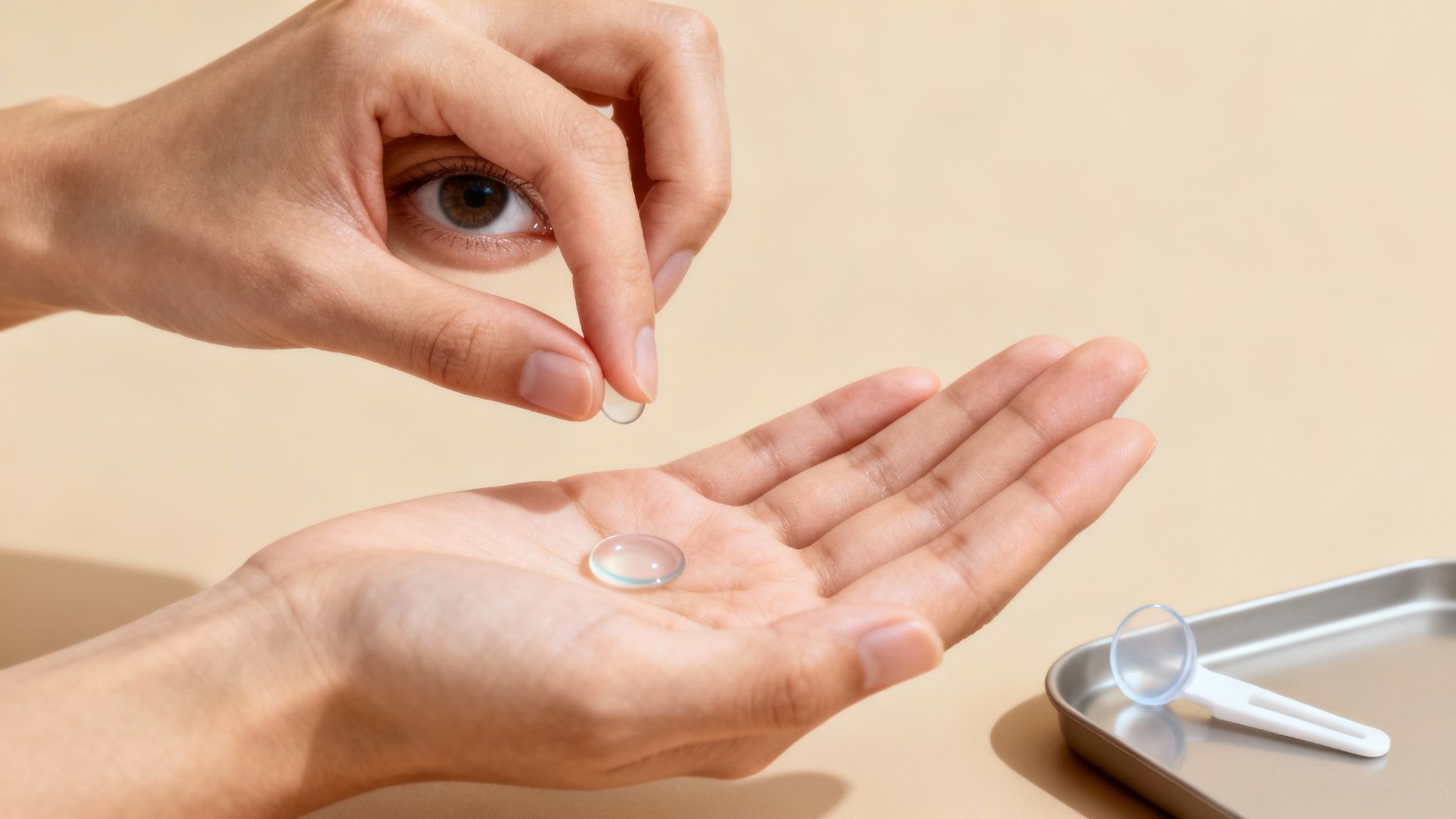
For most people who wear soft lenses, the "pinch method" is the go-to technique for removal. Think of it less as a rigid set of steps and more as a gentle, confident touch you'll develop over time. The real key here is to avoid trying to grab the lens directly off your cornea (the clear front part of your eye), which can be difficult and feel pretty strange.
The trick is to look up and use the soft pad of your index finger to carefully slide the lens down onto the white of your eye (the sclera). This one simple move is a game-changer because it breaks the suction holding the lens in place. Once it's resting on the sclera, you can easily pinch it between your thumb and index finger to lift it out.
Of course, before you even think about touching your eye, a solid hygiene routine is non-negotiable.
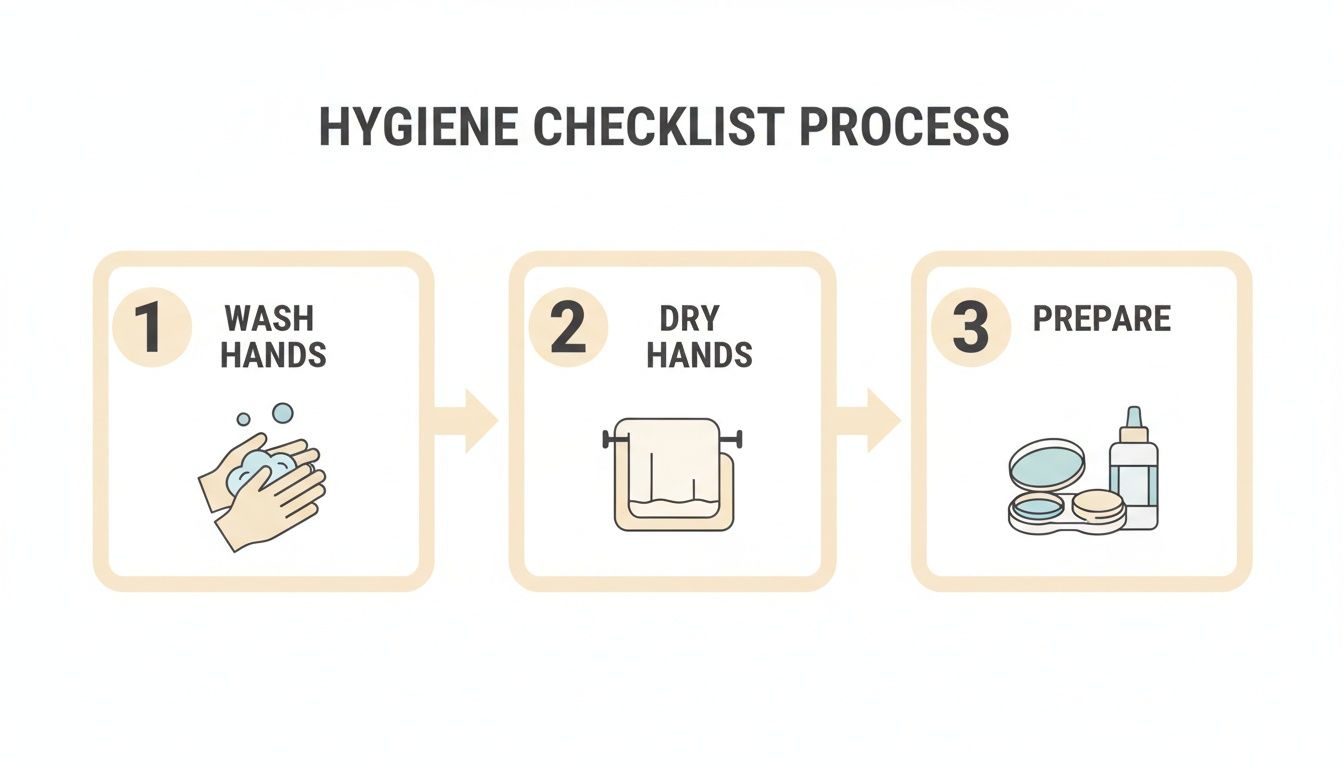
This wash-dry-prepare process gets rid of any contaminants on your hands and ensures you have everything you need right there, which really cuts down on the risk of irritation or infection.
Making Removal Even Easier
Ever notice your lenses feel a bit stubborn at the end of a long day? This is common, especially if you've been in an air-conditioned office or spent time outdoors. When your eyes are dry, the lenses can stick a little.
A great pro-tip is to use a few rewetting drops formulated for contact lenses about five minutes before you plan to take them out. This adds a bit of moisture back into the mix, making the lens softer and much more comfortable to handle.
A quick but important reminder: keep your fingernails trimmed and smooth. A tiny, accidental scratch on your cornea is painful and completely avoidable with just a little bit of care.
Learning to take your contacts out is a skill, just like mastering how to put contacts in your eye. With a little practice, these tips for removing contacts will help the whole process become second nature.
Expert Techniques for Rigid Gas Permeable (RGP) Lenses
If you wear rigid gas permeable (RGP) lenses, you know they offer incredibly crisp vision. But you’ve also probably realized they don’t come out the same way soft lenses do. Since they’re firm, you can’t just pinch them. Don't worry, there are a couple of tried-and-true methods that our patients master quickly.
Getting comfortable with these techniques is a huge part of a successful contact lens fitting in Glendale Heights. It helps you feel completely confident with your new lenses right from the start. Let's walk through the two best ways to get them out.
The Blink Method
This is a fantastic, tool-free trick that uses your own eyelid to gently pop the lens out. It’s perfect for those times you find yourself without your lens case or remover tool.
Here’s the breakdown:
- First, lean over a clean towel or countertop. Open your eye wide, looking straight ahead.
- Take your index finger and place it right at the outer corner of your eye, where the upper and lower lids meet.
- Pull the skin gently but firmly straight out toward your ear. You're trying to make the eyelids a little taut against the lens.
- Now, give one forceful, complete blink.
That little bit of eyelid pressure should be enough to dislodge the lens, causing it to pop right out. Just be ready to catch it with your other hand!
Using a Removal Tool
For a bit more precision and control, a small suction cup tool is your best friend. These little devices, often called lens removers, let you handle the lens without ever having to touch your eye. They've become so popular that the market for them is valued at $35 million and is projected to keep growing. Read the full analysis of the contact lens remover market.
The process is simple: wet the tip of the tool with a bit of saline solution. Gently touch the suction cup to the center of your RGP lens, and it will grip on. Then, just lift the lens straight off your eye. It’s a very comfortable and hygienic way to do it.
Common Removal Mistakes and How to Fix Them
Even seasoned contact lens wearers can slip into bad habits over time. It happens to the best of us. But some of these seemingly small shortcuts can have a big impact on your eye health. Let’s walk through some of the most common missteps we see at our Glendale Heights boutique and, more importantly, how to get back on track.
The Dangers of Tap Water and Overwearing
One of the biggest no-nos is rinsing your lenses or case with tap water. We can't stress this enough. Tap water isn't sterile and is home to nasty microorganisms like Acanthamoeba, which can cause severe, vision-threatening infections. The only liquid that should ever touch your lenses is fresh, sterile contact lens solution. It's a simple rule that can save you from a world of trouble.
To dive deeper into keeping your eyes safe, our guide on how to prevent common contact lens infections is a must-read for every contact lens wearer.
Another habit that’s easy to fall into is trying to stretch the life of your lenses. Pushing your dailies for "just one more day" or wearing your monthlies a little longer might seem harmless, but it's not. This allows protein deposits and other buildup to accumulate, which can lead to irritation, blurry vision, and a much higher risk of infection.
Sleeping in Lenses: A Risky Gamble
Then there’s the big one: sleeping in your contacts. Unless your eye doctor has specifically prescribed lenses approved for overnight wear, this is a major risk. Your cornea (the clear outer layer of your eye) needs oxygen to stay healthy, and sleeping with a lens on top of it can cut off that supply. This can lead to inflammation, swelling, and a painful infection. For a thorough explanation of the risks, this resource does a great job explaining why you shouldn't just assume it's okay to Can you sleep with contacts? if it hasn't been explicitly approved for you.
To help you stay on track, here's a quick comparison of what to do versus what to avoid.
Smart Habits vs Common Mistakes in Lens Removal
| Do This for Healthy Eyes | Avoid This Common Mistake |
|---|---|
| Always wash and dry hands with a lint-free towel first. | Touching lenses with dirty or wet hands. |
| Use fresh, sterile contact lens solution every single time. | "Topping off" old solution or using tap water. |
| Stick strictly to your prescribed lens replacement schedule. | Wearing lenses past their expiration date. |
| Remove lenses before sleeping (unless approved for overnight wear). | Forgetting to take lenses out before a nap or bedtime. |
| Gently pinch the soft lens off the eye. | Using fingernails or tweezers, which can tear the lens or scratch your eye. |
| Store lenses in a clean, air-dried case. | Letting your case get grimy or storing it in a humid bathroom. |
Building these smart habits into your daily routine is the single best way to ensure your eyes stay comfortable and healthy for years to come.
Key Takeaway: Your contact lens schedule isn’t just a suggestion—it’s a prescription designed by your eye doctor to keep your eyes healthy. Sticking to it is the best way to ensure clear, comfortable vision without complications.
What To Do When a Contact Lens Gets Stuck
We’ve all been there—that mini-panic when a contact lens just won't come out. The most important thing to remember is to stay calm and take a breath. Let's clear up a common fear right away: a contact lens cannot get lost behind your eye. The anatomy of your eye, specifically a thin membrane called the conjunctiva, forms a natural barrier that makes this impossible.
Most of the time, a soft lens feels stuck simply because it's dried out, causing it to suction to the surface of your eye. The fix is usually much easier and gentler than you might think.
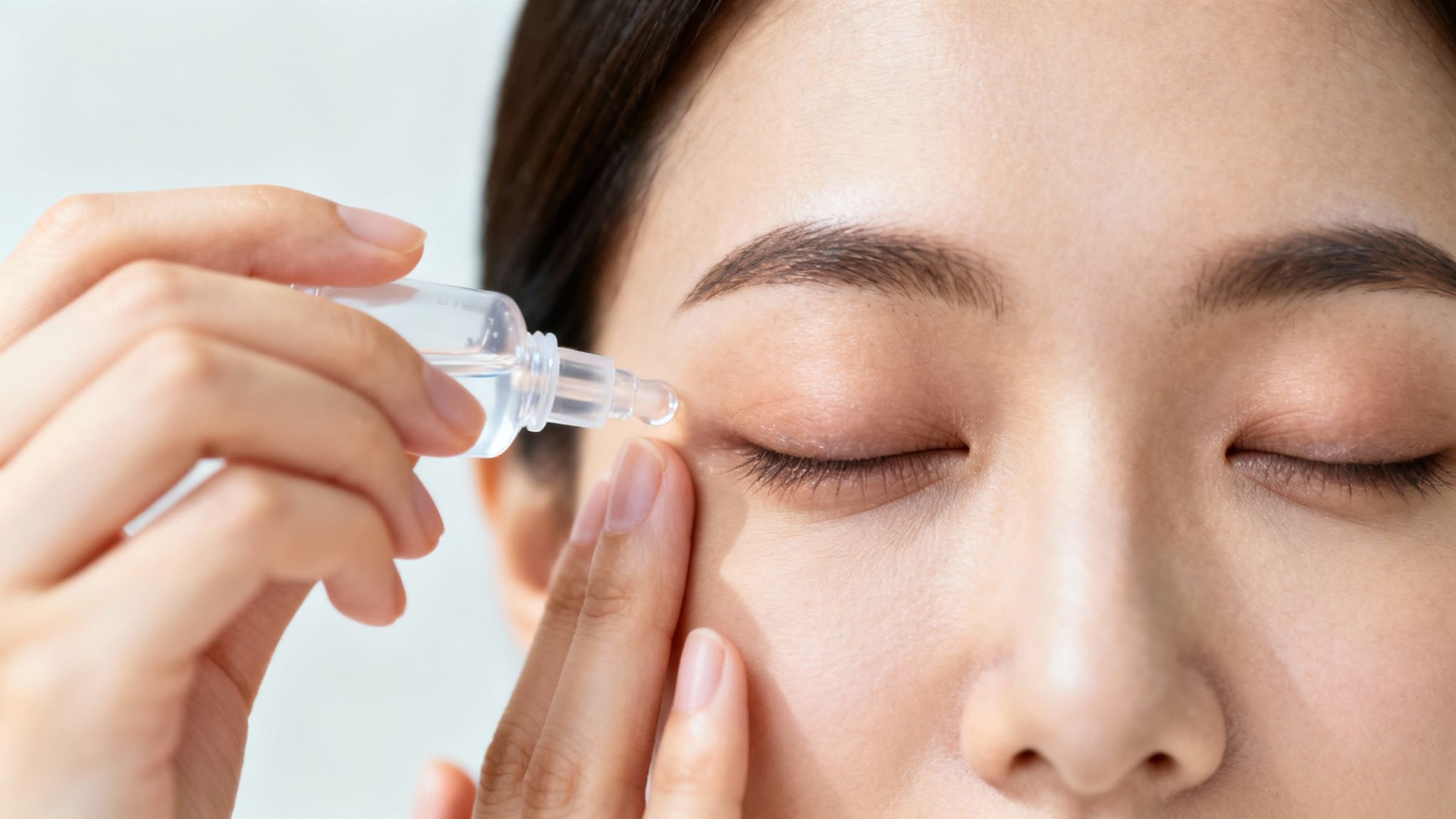
Rehydrating a Stuck Lens
Before you even think about pinching it out, your first move should be rehydration. Start by generously applying a sterile saline solution or contact-safe rewetting drops into the eye. Don't be shy with the drops.
- After applying the drops, close your eye for a good minute or two. Let that moisture really soak in.
- Blink a few times. This helps spread the solution underneath the lens, breaking that seal.
- You can also try gently massaging your closed eyelid with your fingertip to help loosen things up.
This should be enough to rehydrate the lens and get it moving freely again. Once it’s mobile, go ahead and remove it like you normally would. If it's still not budging or you're feeling a lot of discomfort, an online medical consultation can be a good first step for advice.
Your safety is priority number one. Never, ever use tweezers, your fingernails, or any other object to try and remove a lens. This is a surefire way to cause a painful corneal scratch, which can lead to serious infection.
If you start feeling any pain, see significant redness that won't go away, or notice any changes in your vision, stop what you're doing immediately. These are signs that it's time to call in a professional. Your best bet is to contact us right away. We can always schedule one of our detailed eye exams in Glendale Heights to make sure your eyes are healthy.
We're Here to Help You See Clearly in Glendale Heights
Getting the hang of your contact lens routine is a huge step toward keeping your eyes healthy for the long haul. It all comes down to a few key things: meticulous hygiene, using the right removal method for your lenses, and knowing when to ask for help. Think of it as a team effort between you and your eye doctor.
For our patients in Glendale Heights and the surrounding areas, from Army Trail Road to Camera Park, iDoctor is honored to be your trusted partner in that effort. This focus on proper care is why we talk so much about every part of your routine. It's a big deal—the global market for contact lens solution alone was valued at $3.60 billion in 2023, which shows just how essential these products are for millions of wearers. You can explore more trends in contact lens solutions here.
We want you to see us as your personal eye health team. We’re here to guide you, answer your questions, and make sure your vision stays sharp and comfortable.
Whether you're struggling with a stubborn contact lens, looking for a new pair of designer eyeglasses in Glendale Heights, or just need to schedule your next eye exam, we're here to provide the expert, friendly care you deserve. Stop by our boutique anytime to see our collection of Cartier, Gucci, and Tom Ford glasses, and to see what makes us different.
FAQ: Your Local Contact Lens Questions Answered
Here are a few of the most common questions we get from our patients at iDoctor in Glendale Heights.
Do I need a separate prescription for contact lenses?
Yes, absolutely. A contact lens prescription is different from an eyeglasses prescription. It includes specific measurements like the base curve and diameter of the lens to ensure a proper, healthy fit on your eye. At iDoctor, our contact lens fitting in Glendale Heights ensures you get the perfect lens for your vision and lifestyle.
My eyes feel dry when I take my lenses out. What can I do?
This is a very common issue! Try putting a few preservative-free rewetting drops in your eyes about 5 to 10 minutes before you plan to remove your lenses. This rehydrates the lens, making it much easier and more comfortable to take out. If dryness persists, we can discuss different lens materials or solutions during your next exam.
I ran out of solution. Can I use tap water just this once?
No, never. Using tap water to rinse or store your lenses can lead to a serious, vision-threatening infection called Acanthamoeba keratitis. It's far safer to throw away a pair of lenses than to risk your eyesight. Always use fresh, sterile contact lens solution.
Where can I find designer eyeglasses like Cartier or Gucci near me?
You're in the right place! iDoctor in Glendale Heights specializes in luxury eyewear. We have a curated collection that includes Cartier, Gucci, Tom Ford, Oliver Peoples, and many other designer brands. Stop by our boutique to find your perfect pair of designer eyeglasses in Glendale Heights.