Here at iDoctor, our high-end optometry boutique in Glendale Heights, we often meet people who love their new frames but wish the lenses weren't so thick. That's where advanced lens technology comes in, and a 1.67 high-index lens is one of the best tools we have. Think of it as a powerful, modern engine for your glasses—it gives you the strong vision correction you need, but in a package that's dramatically thinner and lighter than old-school standard lenses.
This is a true game-changer for our clients from Glendale Heights, Bloomingdale, and beyond, especially if you have a moderate to strong prescription.
What Are High-Index Lenses, Really?
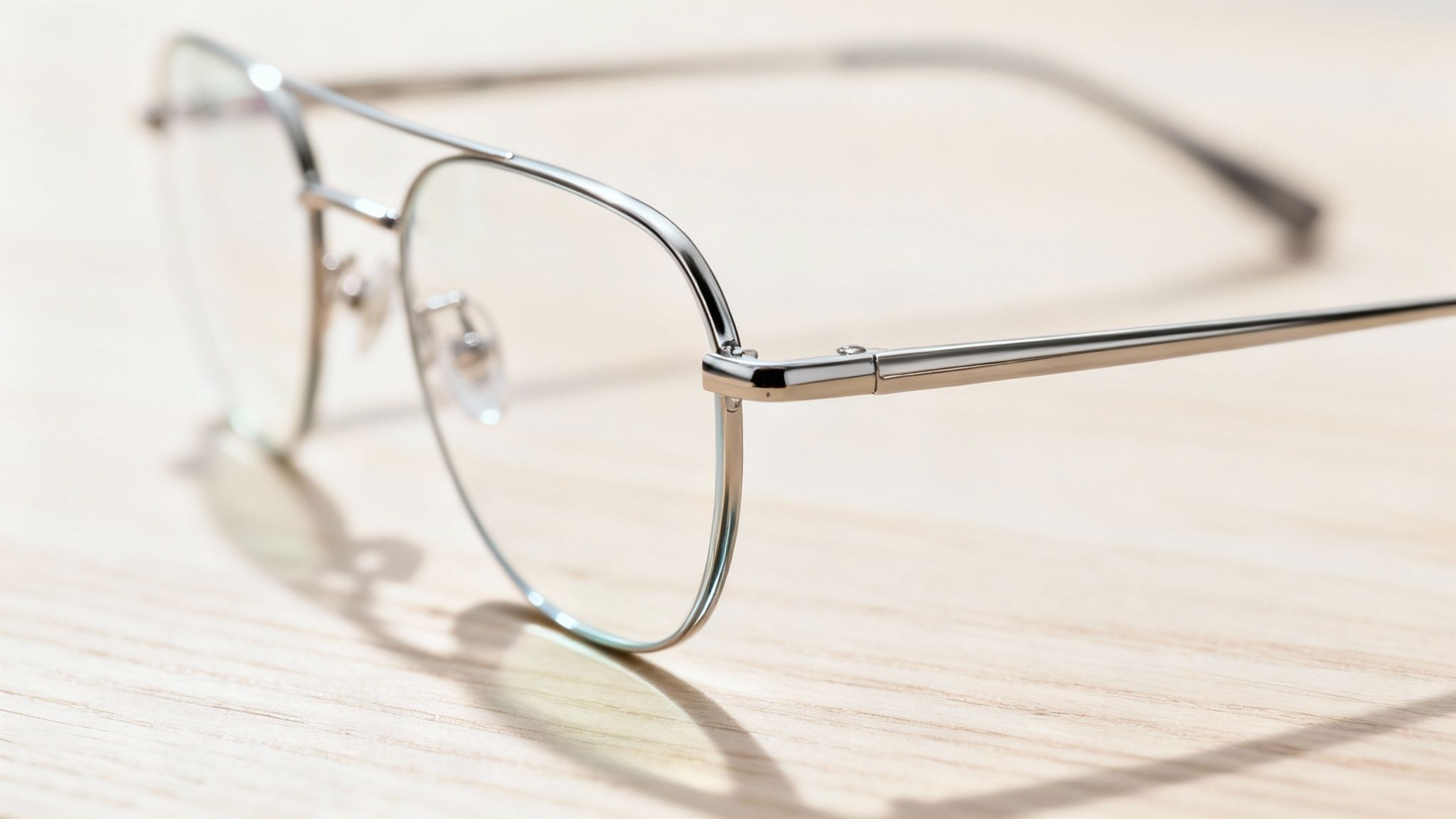
If you've ever put on your glasses and felt them weighing you down, high-index lenses are the answer. The term "index" simply refers to the refractive index of the lens material. In plain English, it’s a number that tells us how efficiently the material can bend light to sharpen your vision.
A higher number, like 1.67, means the material is much better at its job. Because it's so efficient at bending light, we don't need as much of it to create your prescription. This lets us craft lenses that are sleeker and more comfortable without losing an ounce of optical power.
How Can a Lens Be Thinner but Just as Strong?
Here’s a simple way to think about it. Imagine a standard lens is like a big, bulky old stereo speaker that needs a lot of physical space to pump out clear sound. A 1.67 high-index lens is like a modern, premium bookshelf speaker—it produces the same incredible, powerful sound from a much smaller, smarter device. It’s all about efficiency.
This leap in material science is a huge deal for anyone with a stronger prescription who wants to finally ditch the thick, distorting "coke bottle" look. The difference is something you can see and feel.
- Slimmer Profile: For the exact same prescription, these lenses can be up to 40% thinner than standard plastic.
- Lighter Feel: Less material means less weight sitting on your nose and ears, which makes a massive difference for all-day comfort.
- Better Aesthetics: Thinner lenses reduce the eye magnification (for farsightedness) or minification (for nearsightedness) effect, so your eyes look more natural behind your glasses.
The 1.67 high-index lens hits a sweet spot. It provides a major cosmetic upgrade and a noticeable reduction in weight, making it one of the most popular choices for balancing performance with value.
To give you a clearer picture, let's look at a direct comparison.
Standard Vs. High Index Lenses At A Glance
| Feature | Standard 1.50 Lenses | 1.67 High Index Lenses |
|---|---|---|
| Thickness | Bulky, especially at the edges | Up to 40% thinner |
| Weight | Heavier, can feel cumbersome | Significantly lighter |
| Appearance | Can cause a "coke bottle" look | Sleek, modern profile |
| Best For | Mild prescriptions (below +/-2.00) | Moderate to high prescriptions |
| Material | Basic plastic (CR-39) | Advanced, dense plastic |
This table shows just how big of a leap it is to move from standard to high-index. It's not just a minor tweak; it's a completely different wearing experience.
A Growing Choice For Clearer, More Comfortable Vision
The demand for this kind of technology isn't just a local trend here in Glendale Heights; it's happening worldwide. The global market for the raw materials used in high-index lenses is growing fast, which shows how many people are looking for better, more comfortable eyewear. Valued at around USD 0.07 billion, the market is projected to hit USD 0.12 billion by 2033. You can read more about these market trends and their impact to see where the industry is headed.
Here at iDoctor, we’re passionate about bringing these modern solutions to our community. Understanding what makes each lens type different is the first step. To dig deeper, check out our guide on high index vs. standard lenses in Glendale Heights.
Is a 1.67 High-Index Lens Right for You?
While just about anyone can appreciate a lighter, sleeker pair of glasses, 1.67 high-index lenses are a game-changer for a specific group of people. They offer the most significant, noticeable benefits for those with moderate to high prescriptions—anyone who has worried about the thick, distorting "coke bottle" look that can come with standard lenses.
If you’ve ever felt self-conscious about how thick your glasses are, or if you've noticed your eyes look strangely small or large behind your lenses, you're exactly who this technology was designed for. These lenses tackle the precise cosmetic and comfort problems that stronger prescriptions often create.
How to Check Your Prescription
So, how can you tell if your prescription is in that "moderate to high" range? It's all about the sphere (SPH) number on your prescription slip.
Here’s a good rule of thumb: you are a perfect candidate for 1.67 high-index lenses if your sphere value is:
- For nearsightedness (myopia): -3.00 or higher (like -3.25, -4.50, or -6.00)
- For farsightedness (hyperopia): +3.00 or higher (like +3.25, +4.00, or +5.50)
Once your prescription gets stronger than +/- 4.00, the difference is truly night and day. During one of our detailed eye exams in Glendale Heights, we can walk you through your specific visual needs and even show you a comparison of just how much thinner your new lenses could be.
Real-World Scenarios in Our Community
The advantages of upgrading go way beyond just a number on a piece of paper. Think about these everyday situations right here around Glendale Heights and how much of a difference thinner, lighter lenses could make.
A local professional prepping for a big client meeting on North Avenue in Bloomingdale needs to look polished and confident. Thick, heavy lenses can undermine that sharp, sophisticated look, but the sleek profile of 1.67 lenses in a pair of Tom Ford or Cartier frames pulls the whole professional image together.
Or consider a student at Glenbard East High School who needs a strong prescription but wants to feel good about how they look. Lighter glasses that don't constantly slide down their nose during class or distort their eyes can make all the difference in their daily life. That aesthetic boost helps them focus on their studies, not on their eyewear.
The Clear Advantages for Stronger Prescriptions
If you're still on the fence, let's break down the huge real-world benefits that directly solve the most common complaints from people with stronger prescriptions.
- A Major Reduction in Weight: The first thing you'll feel is the comfort. Lighter lenses mean less pressure on the bridge of your nose and behind your ears. Say goodbye to those annoying red marks and hello to effortless all-day wear.
- A Sharper, More Natural Look: Thinner lenses simply look better from every angle. They dramatically reduce the visual distortion that makes eyes appear unnaturally bug-eyed or shrunken, giving you a more natural and flattering appearance.
- A Much Wider Choice of Frames: Let's be honest—thick lenses can seriously limit your style. You're often pushed toward smaller, clunkier frames that can hide the lens edge. With the slim profile of 1.67 high-index lenses, you suddenly have access to a world of new options, including delicate metal frames and high-fashion designs from brands like Oliver Peoples and Saint Laurent.
The market is catching on to this demand for both style and substance. Lenses with a 1.67 index are incredibly popular for people with moderate to high refractive errors because they deliver a thickness reduction of about 30-40% compared to standard plastic, all while being more budget-friendly than even higher index options. People choose this sweet spot for its practical comfort and aesthetic punch, as you can explore additional market insights on high-index materials here.
Seeing Clearly: A Visual Comparison of Lens Materials
When you're choosing new glasses, the frames get all the attention. But the real magic happens in the lenses. Picking the right material is a game-changer, affecting everything from how your glasses look and feel to how clearly you see the world.
Think of it like this: all lenses might look like simple clear plastic, but the underlying material dictates how thick, heavy, and optically pure they'll be. Let's walk through the most common options, from standard to state-of-the-art, so you can see exactly where 1.67 high-index lenses shine and why they are such a fantastic choice for so many people.
Standard Plastic (CR-39 or 1.50 Index)
This is the old reliable, the classic material that’s been around for decades. For people with just a little bit of a prescription, it offers fantastic optical clarity.
- Who It's For: It’s a great, affordable option for very mild prescriptions, usually in the +2.00 to -2.00 range.
- The Downside: The moment your prescription gets stronger, these lenses get thick. And fast. They can feel heavy on your face and create that dreaded "coke bottle" look, forcing you into smaller, chunkier frames that can handle the weight.
Polycarbonate (1.59 Index)
Originally designed for things like astronaut helmet visors and safety goggles, polycarbonate's claim to fame is its toughness. It’s incredibly impact-resistant, making it the default choice for safety and kids' eyewear.
- Who It's For: The go-to for children, athletes, or anyone with an active lifestyle who needs durable, shatter-resistant lenses. As a bonus, it’s about 25% thinner than standard plastic.
- The Downside: While it's tough, it’s not the best for optical purity. Some wearers notice "chromatic aberration," which looks like subtle color fringing around lights or high-contrast edges. It's a small trade-off for its superior safety.
1.67 High Index: The Modern Sweet Spot
This is where the real innovation comes in. 1.67 high-index lenses are engineered specifically for those of us with moderate-to-strong prescriptions who refuse to compromise on style or comfort.
- Who It's For: The perfect solution for anyone with a prescription stronger than +/-3.00. These lenses are up to 40% thinner than standard plastic and are significantly lighter than polycarbonate.
- The Perfect Balance: They deliver a huge cosmetic upgrade—slimmer, sleeker, and more attractive—without the premium cost or optical quirks of the absolute highest-index materials. This blend of performance and value is why it’s the most popular high-index lens and our top recommendation here in Glendale Heights.
This diagram perfectly illustrates who gets the most out of making the jump to 1.67 lenses.
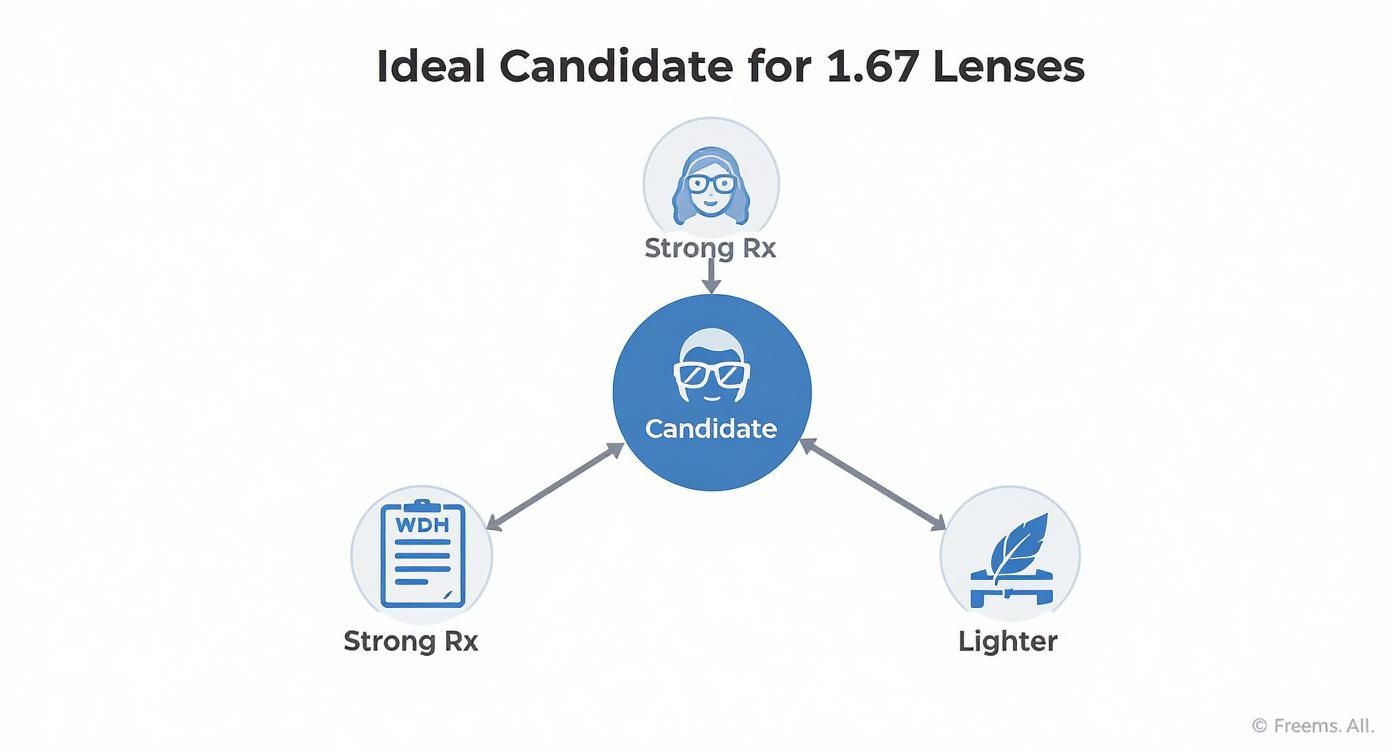
As you can see, it's all about matching strong vision correction with the desire for thinner, lighter eyewear that you can comfortably wear all day.
1.74 High Index: The Thinnest Possible
This is the pinnacle of thin-lens technology—the flattest and lightest plastic lens you can get. It's reserved for those with very powerful prescriptions who need every bit of cosmetic thinning available.
- Who It's For: Recommended for extremely high prescriptions, typically starting around +/-8.00.
- The Downside: Being the thinnest comes at a cost. It’s the most expensive material and is more prone to reflections, meaning a top-tier anti-reflective coating isn't just a recommendation; it's essential. For most, the fractional thinness gained over a 1.67 lens doesn't justify the significant price jump.
Lens Material Comparison
To make it even clearer, here’s a side-by-side breakdown of how these materials stack up. Notice the relationship between the refractive index, thickness, and optical clarity (Abbe value)—a higher Abbe value means less color distortion.
| Lens Material (Index) | Relative Thickness | Weight | Optical Clarity (Abbe Value) | Recommended Prescription |
|---|---|---|---|---|
| Standard Plastic (1.50) | Thickest | Heavy | Excellent (58) | +/- 2.00 or less |
| Polycarbonate (1.59) | Thinner | Lighter | Fair (30) | +/- 2.00 to +/- 4.00 |
| High Index (1.67) | Much Thinner | Very Light | Good (32) | +/- 3.00 to +/- 8.00 |
| High Index (1.74) | Thinnest | Lightest | Good (33) | +/- 8.00 or higher |
This table shows why 1.67 high-index hits that sweet spot. It offers a dramatic reduction in thickness and weight compared to standard options while maintaining good optical clarity, making it the ideal upgrade for most people with moderate-to-strong prescriptions.
Choosing the right material is a crucial step in creating glasses you’ll love to wear. At iDoctor, our opticians don't just fill prescriptions; we guide you through these choices. We take the time to explain why 1.67 high-index is often the perfect blend of modern tech, sleek aesthetics, and real-world value for our Glendale Heights clients. To learn more, check out our comprehensive guide on the different kinds of eyeglass lenses.
Get the Most Out of Your Lenses with the Right Coatings
Picking a 1.67 high-index lens is a fantastic move for getting thinner, lighter glasses. But to really experience the best vision possible, you need to think about the coatings. It’s a bit like buying a high-performance car—you wouldn't put budget tires on it. Lens coatings aren’t just add-ons; they're what unlock the true potential of the lens material itself.
One thing about high-index materials is that they're naturally more reflective than standard plastic. This means that without a good coating, you'll be dealing with a lot more distracting glare from computer screens, fluorescent lights, and especially the headlights of oncoming cars. This is where a quality anti-reflective (AR) coating is non-negotiable.
Why You Absolutely Need an Anti-Reflective Coating
An AR coating is an incredibly thin, multi-layered treatment that cancels out almost all reflections on both sides of your lenses. The change you'll notice is immediate and striking.
- Sharper, Cleaner Vision: AR coatings allow up to 99.5% of light to pass directly through the lens to your eye. The result? A crisper, more vibrant view of the world with less "visual noise."
- Safer Night Driving: It dramatically cuts down on the blinding starbursts and halos from headlights, making your drives at night much safer and far more comfortable.
- A Better Look: AR coatings make your lenses look almost invisible. People can see your eyes clearly without those distracting glints of light, which really helps maintain the clean look of your frames.
For a 1.67 high-index lens, an anti-reflective coating isn’t just a nice feature; it’s essential. It takes the lens from being good to being truly exceptional, ensuring your vision is as clear as the high-quality frames you've chosen.
Here at iDoctor, we include a premium AR coating with our high-index lenses as standard. We simply believe our clients deserve the best visual performance right out of the box.
Protective Treatments That Go Beyond Glare
While AR is critical for visual clarity, a few other treatments are vital for protecting both your eyes and your investment. Think of these as a team of defenders for your lenses, working together to handle the rigors of daily life.
Scratch-Resistant Coating
Modern lens materials are tough, but nothing is completely scratch-proof. A durable, hard coating acts like a shield, defending your lenses against the inevitable bumps, drops, and cleanings of everyday life. It’s the single best way to extend the life of your glasses. To dig deeper into the science, you can learn more about next-generation lens coatings and scratch resistance here.
UV Protection
We all know to protect our skin from the sun, and our eyes need the exact same defense. Long-term exposure to ultraviolet (UV) radiation is linked to serious eye conditions down the road. A built-in UV-protective coating blocks 100% of these harmful rays, giving you invisible but crucial protection for your long-term eye health.
Blue Light Filtering
So many of us spend our days staring at screens. Blue light filters are specifically designed to reduce the amount of high-energy blue light from digital devices that reaches your eyes. This can help ease digital eye strain, reduce headaches, and even prevent disruption to your sleep cycle. It’s a modern solution for a very modern problem.
Pairing High Index Lenses with the Perfect Frames
The best thing about 1.67 high index lenses is how their slim profile opens up a whole world of frame styles that might have been out of the question with thicker, standard plastic lenses. But to really get the most out of them, you need to be strategic about the frame you choose.
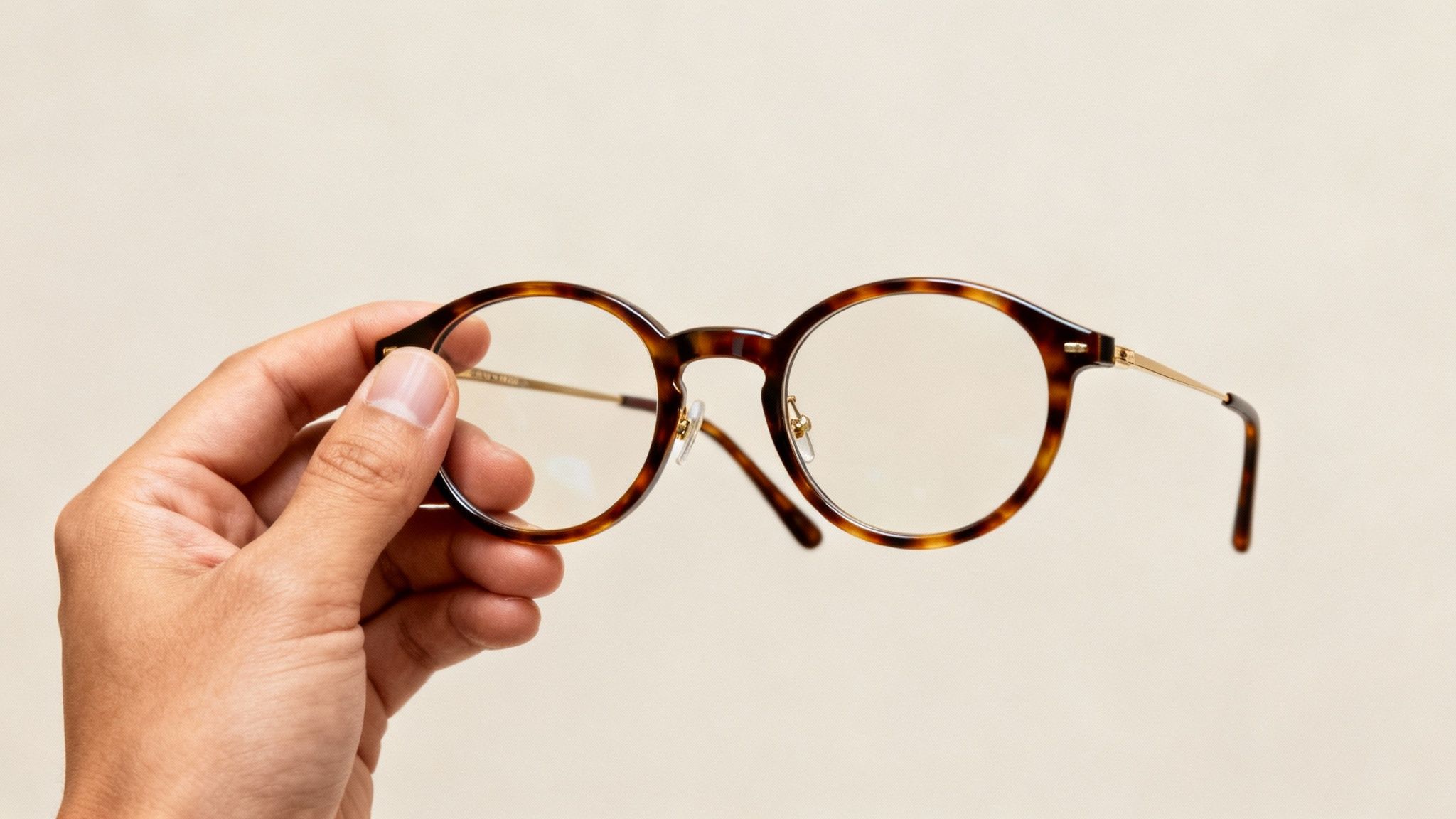
Think of it like this: a frame is the setting for the lens, just like for a gemstone. The right setting can make the stone look its absolute best, and the same goes for your glasses. When the frame and lens work together, you get a pair of glasses that are lightweight, comfortable, and incredibly flattering.
Frame Styles That Work Best
Personal style always comes first, of course. But some frame designs are just a better match for high index lenses, especially when you have a stronger prescription. Here are a few things an experienced optician will tell you to look for.
-
Full-Rim Frames: Styles where the rim goes all the way around the lens are a fantastic choice. A good acetate or plastic frame is perfect for masking what little lens edge is left, making your lenses appear even thinner.
-
Smaller, Rounded Shapes: Really big, oversized frames just need more lens material, which will always add a bit of thickness around the edges. A frame that keeps your eye centered is a smart move optically—it keeps the lens as thin and light as it can possibly be.
-
Thicker Acetate or Plastic: Don't be afraid of a bold plastic or acetate frame! They're not just a great fashion statement; they’re also super practical for high index lenses. The thicker material provides great coverage for the edge of the lens, giving you a clean, polished look from every angle.
The goal is to find a frame that doesn't just suit your face and your style, but also collaborates with the lens to create the sleekest profile possible. It's truly a partnership between fashion and function.
Styles to Approach with Caution
On the flip side, some frames might not be the best choice if your prescription is on the higher end, even with the thinning power of 1.67 high index material.
Rimless or Semi-Rimless Frames
These minimalist styles look great, but they leave the edge of the lens completely exposed. While 1.67 lenses are impressively thin, a strong prescription will still have a visible edge that these frames simply can't hide.
Very Large or Geometric Frames
As we touched on before, bigger frames mean bigger lenses. If you have a powerful prescription, this can lead to a noticeably thicker and heavier pair of glasses, which kind of defeats the purpose of choosing a high-index lens in the first place.
Finding Your Perfect Pair in Glendale Heights
At iDoctor, we live for that perfect pairing of advanced lens technology and beautiful, high-quality frames. We've hand-picked our collection of designer eyewear with exactly this in mind. So whether you love the timeless elegance of Cartier, the bold look of Tom Ford, or the classic vibe of Ray-Ban, we have styles that are a perfect match for 1.67 high index lenses.
Our expert opticians in Glendale Heights do more than just help you pick a frame you like. We’ll help you find a style that truly maximizes the benefits of your thin lenses, making sure your new glasses feel just as amazing as they look. To get a better feel for your options, check out our guide on the different types of spectacles frames.
Better yet, stop by our boutique and let us help you find the perfect combination for your vision.
Understanding the Cost and Your Insurance Benefits
Let's talk about the investment. It’s true that 1.67 high-index lenses cost more than basic plastic lenses, but it's helpful to think of it as a long-term upgrade for your daily life. You're not just buying a piece of plastic; you're investing in sharper vision, all-day comfort, and a look you can feel confident in.
The final price tag can vary a bit. A more complex prescription or adding premium coatings like a top-tier anti-glare will affect the cost. But here at iDoctor, our goal is to make this fantastic lens technology a realistic option for our Glendale Heights community.
Making Advanced Lenses Affordable
We genuinely believe that clear, comfortable vision shouldn't be a luxury you have to stress about. That’s why we work with all major vision insurance plans to help bring down your out-of-pocket costs.
Your insurance benefits can make a huge difference, often making a premium lens upgrade far more accessible than you might expect. Understanding your plan, including concepts like your health insurance premium, helps you see the complete picture of your coverage.
It's no surprise that 1.67 high-index lenses are becoming more popular worldwide. As more people need vision correction, they’re also looking for eyewear that is thin, light, and stylish—and these lenses deliver exactly that.
We’ll Help You Maximize Your Benefits
Insurance paperwork can be a real headache. Our team is here to take that off your plate. We know the ins and outs of different plans and can make sure you're getting every last dollar of value from your coverage.
We’ll walk you through exactly what your plan covers for both lenses and frames, explaining it all in plain English. No jargon, just clear answers.
Just bring your insurance card to your appointment, and we’ll handle the rest. We can give you a personalized estimate on the spot, so you know exactly what to expect. For more tips, check out our guide on how to maximize your vision insurance benefits in Glendale Heights.
Frequently Asked Questions about 1.67 Lenses in Glendale Heights
Can I get 1.67 high-index lenses for my Gucci glasses at iDoctor?
Absolutely! High-index 1.67 lenses are the perfect partner for luxury frames like Gucci, Cartier, or Tom Ford. Their thin, lightweight profile complements the high-end design, ensuring the focus remains on the beautiful craftsmanship of your frames, not on thick lenses. As the premier destination for designer eyeglasses in Glendale Heights, we specialize in fitting advanced lenses into these exquisite frames.
How much thinner will my glasses actually be with 1.67 lenses?
Compared to standard plastic (1.50 index) lenses, a 1.67 high-index lens can be up to 40% thinner for the same prescription. This difference is most dramatic for those with stronger prescriptions. During your visit to our Glendale Heights boutique, we can provide a personalized demonstration to show you exactly how much sleeker your new glasses will be.
Does iDoctor accept vision insurance for high-index lenses?
Yes, we do. At iDoctor, we accept all major vision insurance plans. Most plans provide a significant allowance for lens upgrades like high-index materials, which can make them much more affordable. Our team is expert at navigating insurance benefits and will help you maximize your coverage to ensure you get the best possible value.
Ready to feel the difference a thinner, lighter lens can make? At iDoctor, we pair cutting-edge lens technology with an incredible collection of designer frames to give you the best vision and style in Glendale Heights. From our detailed 30-minute eye exams to our curated eyewear collection, we are dedicated to serving the Chicagoland community with unparalleled care. Let's find your perfect pair.