Let me cut right to the chase: as your local eye doctor in Glendale Heights, I can tell you that swimming with contact lenses is a really bad idea. I know it seems like the easy option for a day at the Sports Hub pool or a dip in a local lake, but the risks to your vision are serious. The golden rule is simple: never swim, shower, or even hop in a hot tub while wearing your contacts.
Why Swimming in Contacts Is a Major Risk
Water is absolutely teeming with microorganisms. We're talking about bacteria, parasites, and all sorts of other invisible critters you don't want anywhere near your eyes. When a contact lens gets wet, it essentially becomes a tiny sponge, trapping these invaders directly against your cornea. This creates the perfect breeding ground for some truly nasty, vision-threatening infections.
Think of your soft lens like a high-tech, porous disc. Its design is great for letting oxygen pass through to keep your eye healthy, but that very same porous nature means it soaks up whatever it comes into contact with—including whatever is in the water.
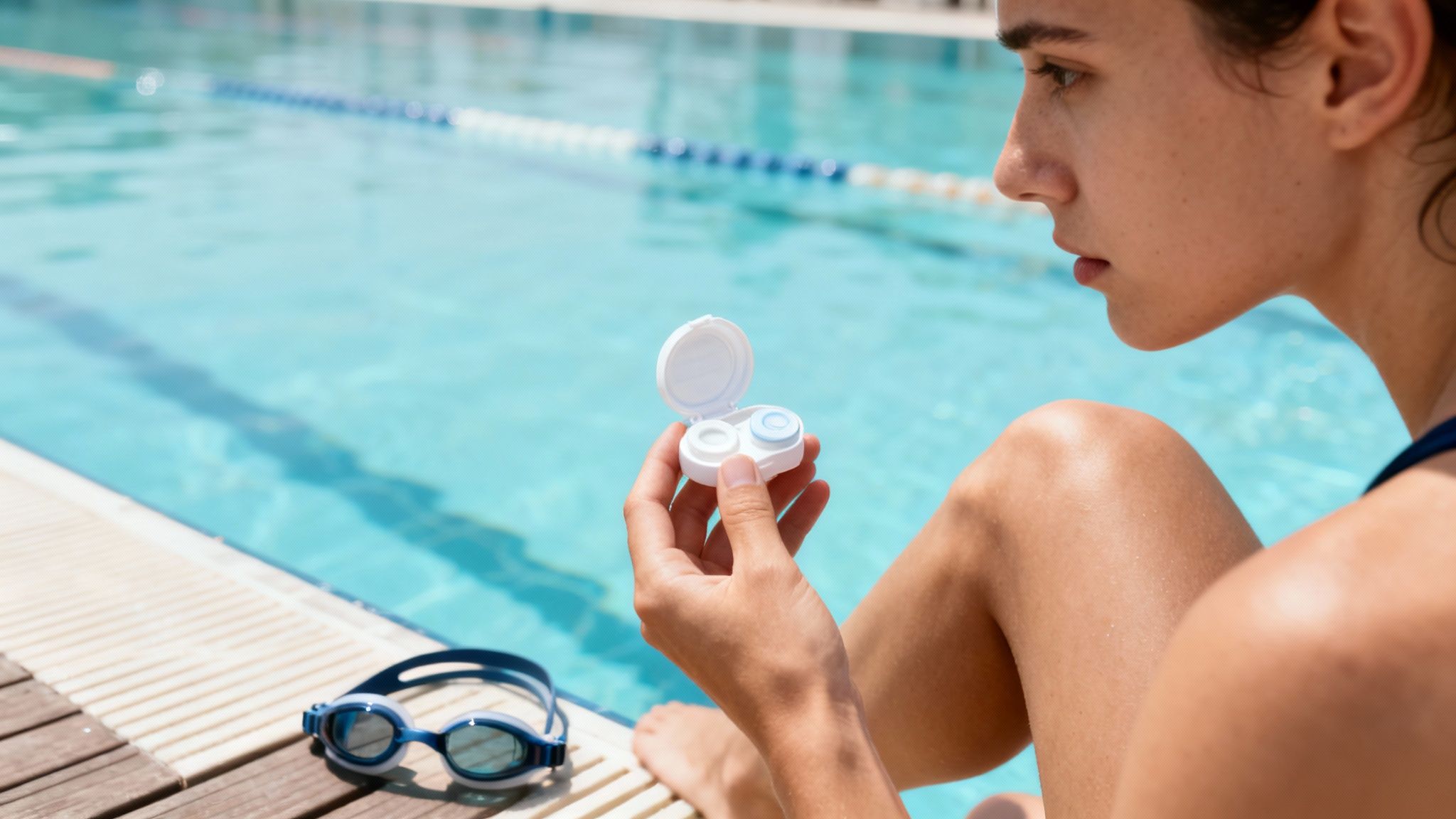
Dangers in Different Water Sources
It doesn't matter if you're doing laps near Glenbard North High School or just splashing around in a backyard pool—the threat is the same. Water changes how the lens fits and exposes your eye to harm. Here are the main things you need to worry about:
- Eye Infections: Pathogens can latch onto your lenses, leading to painful conditions like pink eye (conjunctivitis) or, much worse, corneal ulcers that can cause permanent scarring.
- Irritation and Dryness: The chlorine in pools and salt in the ocean get trapped under your lens, causing intense discomfort, redness, and a gritty, dry feeling.
- Corneal Scratches: When exposed to water, a soft contact lens can swell and tighten its grip on your eye. This can cause tiny, microscopic scratches on your cornea, which are like an open door for bacteria to get in.
One of the scariest risks is a parasite called Acanthamoeba. It’s found in all types of water and can cause Acanthamoeba keratitis, an incredibly painful infection that is notoriously difficult to treat and can lead to blindness. As a resource from Optometrists.org explains, this is one of the biggest reasons we are so adamant about this rule.
To quickly break down the hazards, here's a look at the different water sources and what you're up against.
Key Risks of Swimming with Contacts at a Glance
| Water Source | Primary Hazard | Potential Outcome |
|---|---|---|
| Swimming Pools | Chlorine, bacteria | Chemical irritation, lens tightening, pink eye, corneal ulcers |
| Oceans/Seas | Salt, bacteria, microorganisms | Severe dryness, scratches, increased risk of infection |
| Lakes & Rivers | Acanthamoeba parasite, bacteria | High risk of Acanthamoeba keratitis, severe infections |
| Hot Tubs | Bacteria, amoebas (thrive in heat) | Extremely high risk of aggressive infections like Pseudomonas |
| Tap Water/Showers | Acanthamoeba, bacteria | Corneal infections, lens contamination |
The takeaway here is that no water is truly "safe" when it comes to your contact lenses.
The bottom line is simple: water and contact lenses do not mix. Protecting your long-term vision is far more important than the temporary convenience of swimming with your lenses in.
If you're looking for personalized advice, the experts at iDoctor—your local optometry boutique right here on Bloomingdale Road in Glendale Heights—are always ready to help you find the safest and best solutions for your lifestyle.
Understanding the Invisible Dangers in Water
Think of your soft contact lens as a tiny, absorbent sponge. Now, imagine dipping that sponge into the water, whether it's at the local pool or a beautiful, clear lake. It doesn't just get wet—it actively soaks up and traps everything floating in that water, creating a perfect petri dish right on the surface of your eye.
This is the core reason why swimming with contact lenses is such a gamble. Water that looks perfectly clean is actually teeming with microscopic life, and your contact lens becomes the ideal vehicle for bringing these unwelcome guests into direct, prolonged contact with your cornea.
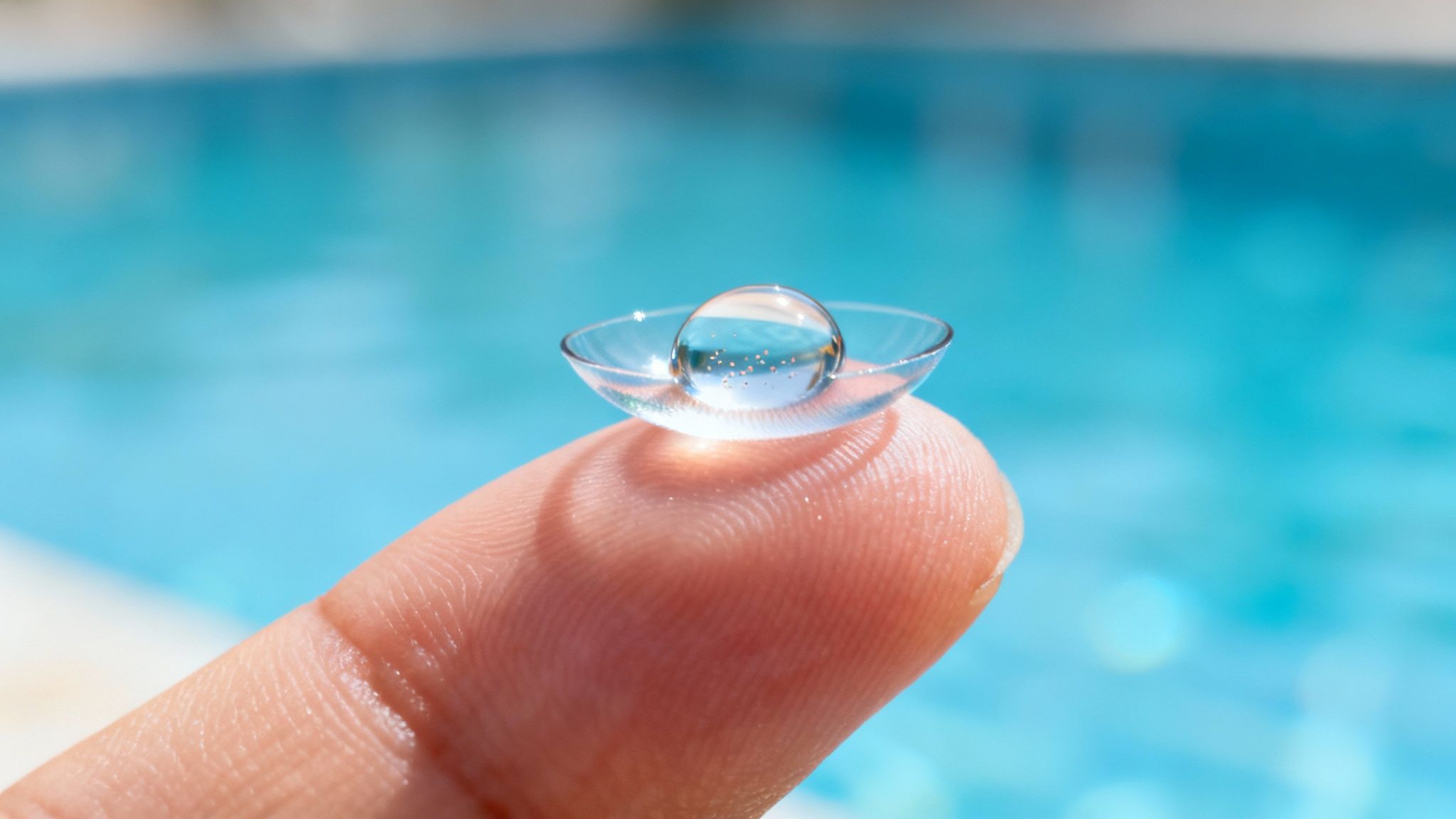
The Most Dangerous Microbe: Acanthamoeba
Of all the things you don't want in your eye, a nasty little amoeba called Acanthamoeba is near the top of the list. This single-celled organism is incredibly common and can be found in just about any water source you can think of.
- Lakes and rivers
- Oceans
- Swimming pools and hot tubs
- Even tap water from your shower
On its own, your eye is pretty good at flushing things like this away. But when an Acanthamoeba gets stuck behind a contact lens, it’s a whole different story. The lens gives it a surface to latch onto, protecting it from your blinks and tears. This is how a rare but devastatingly painful infection called Acanthamoeba keratitis takes hold.
Acanthamoeba keratitis is a severe infection of the cornea. It can lead to corneal ulcers, intense pain, and extreme light sensitivity. If not caught and treated aggressively, it can cause permanent vision loss or even require a corneal transplant.
Why Chlorine Is Not Enough Protection
"But my pool is chlorinated!" It’s a common thought, but unfortunately, it creates a false sense of security. While chlorine does a good job killing many germs, it doesn’t work instantly, and some stubborn microbes can survive long enough to cause an infection. Acanthamoeba, in its cyst form, is notoriously resistant to chlorine.
What's more, the chlorine itself can be a problem. It can bind to your soft lenses, causing irritation and even chemical burns on your cornea. This chemical irritation damages your eye's natural defenses, making it even easier for an infection to start. Curious about what's really in the water? Learning how to test water for bacteria can be eye-opening.
This combination of a waterlogged lens and a compromised cornea is a recipe for disaster. It's a key point we cover in our guide on how to prevent eye infections, because keeping contacts away from water is one of the most important rules of safe wear. Your vision is simply too precious to risk.
How Water Changes Your Contact Lenses
It's not just about the invisible germs. The real trouble starts when water physically messes with your contact lenses. Soft lenses are incredibly sophisticated pieces of medical technology, engineered to hold a precise shape, size, and moisture level to sit perfectly on your eye. The moment they hit the water—whether it's in a pool, lake, or even your shower—that delicate balance gets thrown completely out of whack.
Think of your soft contact lens as a tiny, high-tech sponge. It’s built to thrive in the salty, specific environment of your tears. But freshwater is a different story. Through a process called osmosis, the lens desperately tries to absorb this less-salty water, causing it to swell, change shape, and literally tighten its grip on your cornea.
The Problem with a Tightening Lens
This suction-cup effect is where the physical risk really kicks in. A lens that’s suddenly too tight creates a dangerous domino effect.
- Corneal Scratches: A swollen, warped lens doesn't move smoothly with each blink. Instead, it can scrape against the surface of your eye, creating tiny tears called corneal abrasions. These microscopic scratches are an open invitation for bacteria and other nasty microorganisms to get in and start a serious infection.
- Oxygen Deprivation: Your cornea doesn't have blood vessels; it breathes by absorbing oxygen directly from the air. A tight lens acts like a plastic wrap over your eye, choking off that vital oxygen supply. This puts your eye under serious stress, making it far more susceptible to infection and inflammation.
Washing Away Your Natural Defenses
While your lens is swelling up and clinging to your eye, the water is simultaneously stripping away your eye's natural protective barrier: your tear film. Tears are so much more than just water. They’re a complex cocktail of oils, mucus, and infection-fighting antibodies that keep your eyes lubricated and safe. Swimming washes that all away.
You end up with a compromised tear film, a contaminated lens creating micro-scratches, and a lack of oxygen. It’s the perfect storm for a vision-threatening eye infection.
This cycle of swelling and contamination can also lead to other problems, like stubborn protein buildup. To learn more about keeping your lenses in top shape, you can read our guide on the causes of contact lens protein deposits. Understanding how both germs and physical changes impact your lenses is the key to keeping your eyes safe.
Comparing Different Lens Types and Their Risks
So, if swimming with contacts is such a bad idea, does the type of lens you wear make any difference? It’s a great question, and the answer is yes—though the bottom line from any eye doctor will always be a firm no, don't do it.
Still, the reality is that different lenses react to water in different ways. The material they're made of, how they're designed, and how often you replace them all factor into the level of risk you're taking.
How Water Damages Your Lenses (and Your Eyes)
When a contact lens meets water, a few things happen, and none of them are good for your eye. The lens itself can physically change shape, which is where the real trouble begins.
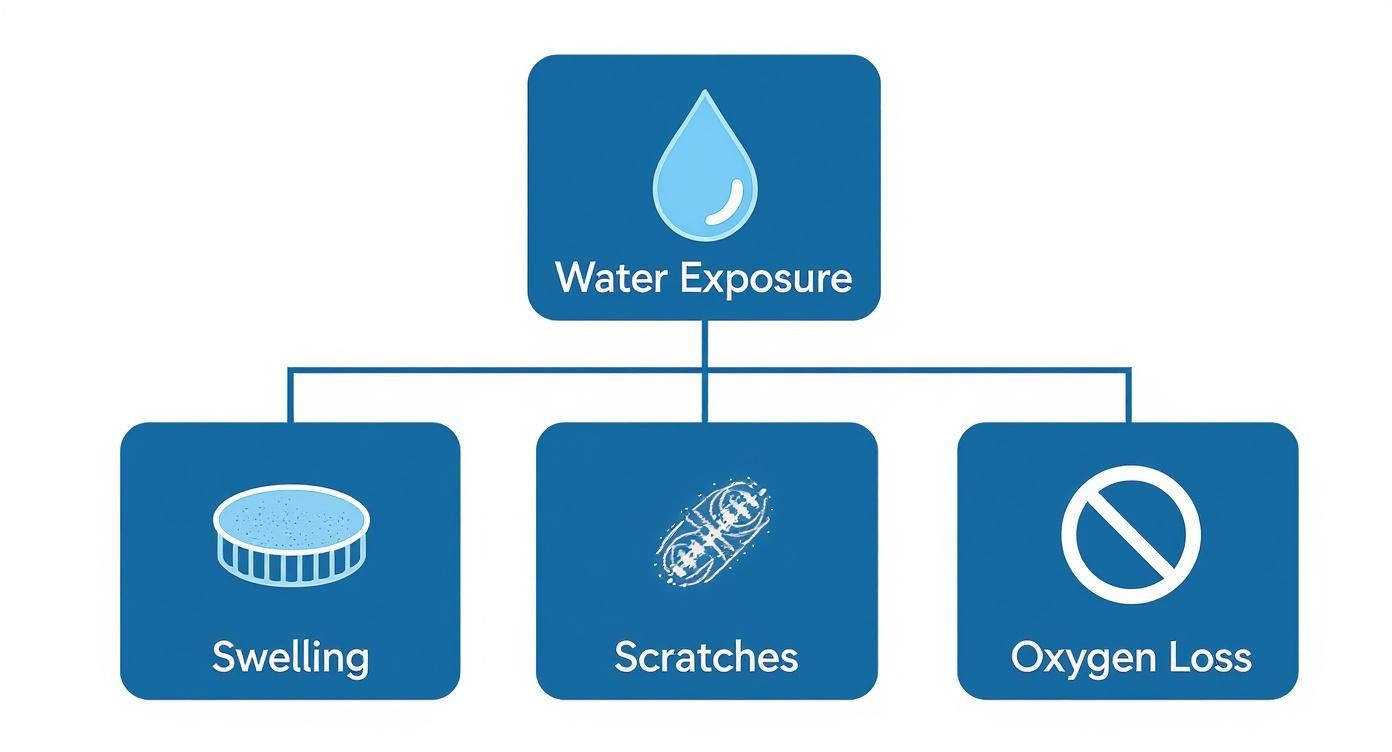
As you can see, the lens swells up, tightens its grip on your cornea, and can even cause tiny scratches on your eye's surface. Worse, this swelling chokes off the oxygen supply your cornea desperately needs to stay healthy.
Soft Lenses vs. Rigid Gas Permeable (RGP) Lenses
Most people today wear soft contact lenses. They're made from super-absorbent, flexible plastics that hold a lot of water—it’s what makes them so comfortable right out of the box. But that "water-loving" quality becomes a huge liability in a pool or the ocean. They act like tiny sponges, soaking up every bit of chlorine, bacteria, and parasite they touch.
On the other side of the coin are Rigid Gas Permeable (RGP) lenses. These are made from a firmer, less porous material, which means they don't absorb water or the nasty microbes in it. That’s a plus. The downside? They’re much easier to lose. A single splash of water can pop an RGP lens right out of your eye, and you'll likely never see it again.
The Daily Disposable Advantage
Let’s be clear: there's no such thing as a "safe" contact lens for swimming. But if you were absolutely forced to choose the least risky option, it would be daily disposables.
Why? It's all about damage control.
The single biggest benefit of daily disposables is the ability to throw them away the second you get out of the water. By immediately discarding a lens that’s been exposed to contaminants, you dramatically shorten the time those harmful microbes have to set up camp on your eye.
This simple act of disposal can make a huge difference. Studies have shown that different lens materials can influence infection rates, and keeping a contaminated lens on your eye for hours (or days) is asking for trouble.
Ultimately, picking the right lens is about finding the perfect fit for your vision and your lifestyle. For a deeper dive, check out our guide on daily disposable vs. monthly contact lenses. The best first step is always a proper fitting to make sure you have the right option for everything you do.
Safe and Effective Alternatives for Swimmers
So, what's the good news? You absolutely don't have to choose between seeing clearly and keeping your eyes safe in the water. For every Glendale Heights resident who loves a good swim, there are practical, effective solutions that let you have both.
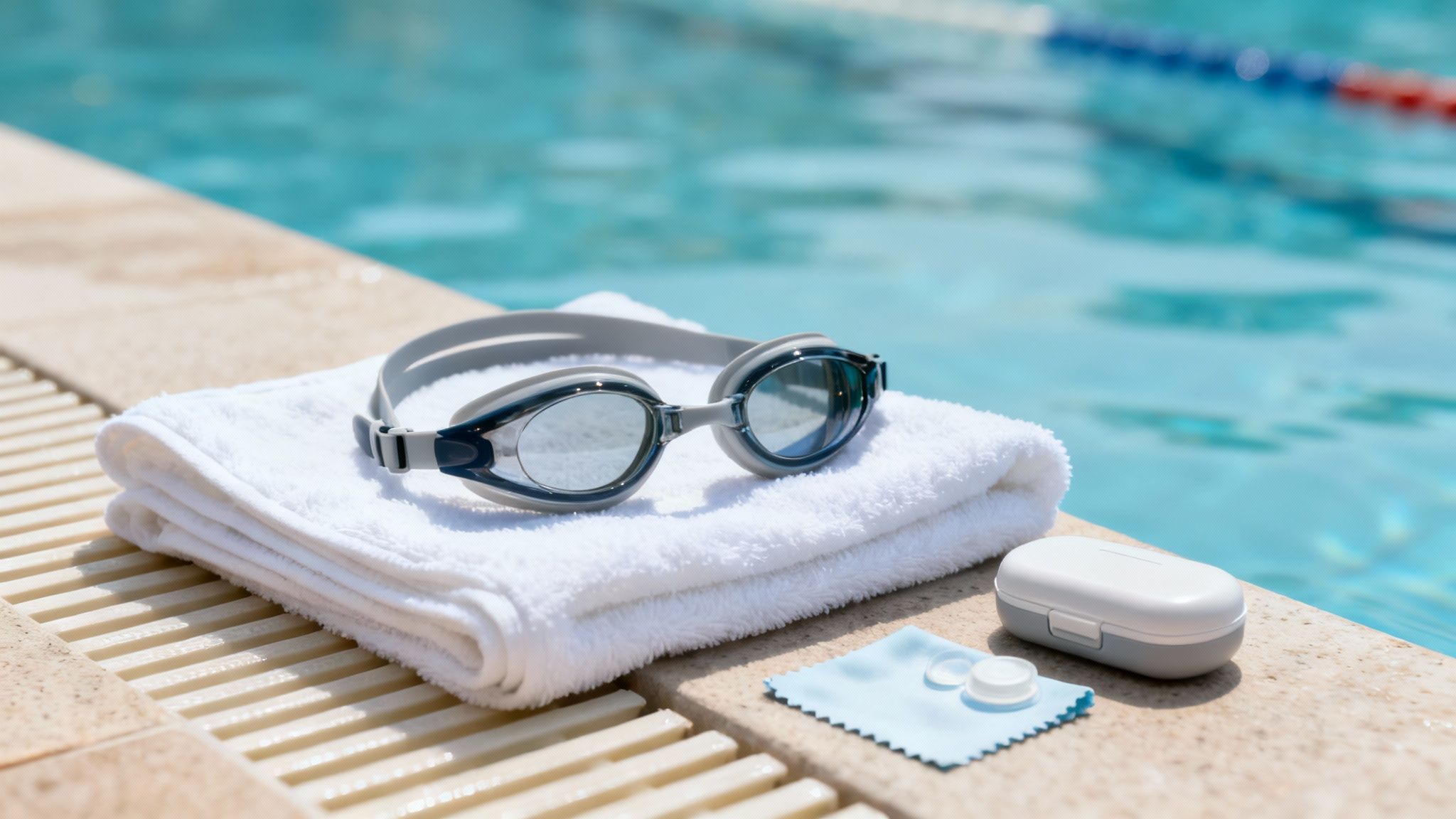
The best and safest option, hands down, is a pair of prescription swimming goggles. Think of them as the ultimate gear for any swimmer who needs vision correction. They create a perfect, watertight seal that completely shields your eyes from nasty microbes while giving you crystal-clear sight underwater.
The Gold Standard: Prescription Goggles
Investing in prescription swim goggles is a simple, one-and-done solution that sidesteps all the risks of mixing contacts and water. You really get the best of both worlds here.
- Complete Protection: A good, snug seal means no water gets in. That's your best defense against infection and irritation.
- Perfect Vision: The lenses are made to your exact prescription, just like your everyday glasses.
- Total Convenience: Just pop them on and dive in. You can finally stop worrying about losing a lens or dealing with a complicated post-swim cleaning routine.
Other Smart Vision Solutions
While prescription goggles are my top recommendation, a few other options can work well, depending on what you're doing in the water. The best move is always to chat with the best optometrist in Glendale Heights about your lifestyle to find what works for you.
A common workaround is to wear high-quality, watertight swimming goggles over your regular contact lenses. This definitely lowers your risk by creating a physical barrier, but it doesn't get it to zero. A broken seal or one good splash is all it takes for water to get in.
If you decide to wear contacts under goggles, your safest bet is to use daily disposables. The huge advantage here is that you can simply toss them out the second you're done swimming. This dramatically cuts down the time any trapped bacteria or amoebas have to sit against your eye. You can learn more about the pros and cons in our guide to disposable contact lenses.
For those who want to be completely free of lenses during the day, there are other great technologies. Ortho-K (orthokeratology), for example, involves wearing special shaping lenses overnight. They gently reshape your cornea while you sleep, giving you clear vision all day long—no glasses or contacts needed. And for anyone looking into specialized water activities, you can find great info on how to snorkel with glasses, including options like prescription masks and using contacts safely.
An Action Plan If You Accidentally Swam with Contacts
So, you took an unplanned dip in the pool or got knocked over by a wave at the beach and forgot about your contacts. It happens to the best of us. The most important thing to remember is not to panic. Just follow a few simple steps to keep your eyes safe.
Your first priority is to get those lenses out, but don't rush it. Before you touch your eyes, wash and dry your hands thoroughly. Water—whether from a pool, lake, or ocean—can make contact lenses stick to your eye like a suction cup, so you need to be extra gentle. If you need a quick refresher on the best technique, our guide has some great contact lens removal tips to help you do it safely.
Immediate Next Steps for Your Lenses
Once your hands are clean, what you do next depends on the kind of lenses you wear. The main goal here is to get rid of any nasty microbes that might have hitched a ride.
- Daily Disposables: This one’s easy. Throw them away immediately. Don't even think about trying to clean or reuse them. That's the whole point of dailies—a fresh, sterile lens every single time.
- Monthly or Bi-Weekly Lenses: The safest bet is still to discard them. It's just not worth the risk. If you absolutely can't, you need to clean and disinfect them with a top-notch solution for the full recommended time, no cutting corners.
Know the Warning Signs of an Infection
With the lenses out, your job isn't quite done. You need to keep a close eye on how your eyes feel over the next few hours and days. There’s a reason eye care professionals everywhere, from the American Optometric Association on down, are so adamant about keeping contacts away from water. As you can discover more about safe contact lens habits, it's a universal rule for a very good reason: preventing serious infections.
Be on the lookout for any of these key warning signs. The sooner you spot a potential issue, the better the outcome.
Keep an eye out for any of these symptoms:
- Redness or irritation that just won’t quit
- Eye pain or a feeling of grittiness
- Sudden sensitivity to light
- Vision that seems blurry or foggy
- Any unusual watery discharge
If you notice any of these things after swimming with your contacts, don't wait and see if it gets better. It’s time to act fast. Call your eye doctor in Glendale Heights immediately for an urgent appointment. Here at iDoctor, we're ready to check things out and give you the care you need to protect your vision.
Frequently Asked Questions in Glendale Heights
What about just showering in my contacts?
This is a hard no. You should always take your contacts out before hopping in the shower. Tap water, even here in DuPage County, can contain the same dangerous amoeba, Acanthamoeba, found in lakes and rivers. A hot, steamy shower creates the perfect environment for it to get trapped under your lens, which can lead to a serious infection.
Does iDoctor carry designer sunglasses I can wear to the pool?
Absolutely! While you shouldn't swim in contacts, protecting your eyes from UV rays around the water is crucial. We offer a curated collection of luxury eyewear perfect for a sunny day at the pool, including brands like Gucci, Tom Ford, and Ray-Ban. You can find stylish designer eyeglasses in Glendale Heights that can be made into prescription sunglasses.
What’s the safest option for a child who swims competitively?
For young athletes who need vision correction, prescription swimming goggles are the safest and most reliable choice. They provide clear vision and protect their eyes from infection and irritation from pool chemicals. We can help you order the right pair to ensure they can focus on their performance, not on their vision.
At iDoctor, your vision and eye health are our top priorities. From the annual Glendale Heights Fest to a quiet afternoon by the pool, we want you to enjoy every moment with clear, comfortable sight. Ready to find a vision solution that won't hold you back? The team at iDoctor is here to help you explore prescription swimming goggles, daily disposable contacts, and more. Schedule your detailed eye exams in Glendale Heights today and see what a difference personalized care can make.