When you're managing diabetes, you know how important it is to keep an eye on your blood sugar, diet, and overall health. But one of the most critical parts of your care plan involves something you can't see: the health of your retina. For residents of Glendale Heights managing their health, understanding diabetic retinopathy grading is a key step in protecting your sight.
Think of it as a staging system that your eye doctor uses to track the health of the tiny blood vessels in the back of your eye. It helps us understand exactly how diabetes is affecting your retina, ranging from no detectable changes to advanced stages that could threaten your vision. This grading system is the cornerstone of protecting your sight.
Your Guide to Diabetic Eye Health in Glendale Heights
If you're living with diabetes in Glendale Heights or the surrounding areas like Carol Stream, this guide is for you. At iDoctor, our optometry boutique located right here in Glendale Heights, we know that medical jargon can be overwhelming. Our goal is to break down diabetic retinopathy grading into simple, clear terms so you feel empowered and informed about your eye health.
We want this to feel like a warm, professional conversation, not a lecture. Whether you’re a parent of a student at Glenbard North High School or enjoy your weekends at the Glendale Lakes Golf Club, understanding what's happening inside your eyes is the first step toward preserving your vision for years to come.

Why Grading Your Retinopathy Is So Important
Getting a "grade" for your retinopathy isn't just about giving it a label; it's a vital tool that directly shapes how we protect your eyesight. By pinpointing the exact stage of the condition, your optometrist can:
- Assess Your Risk: We can determine the immediate and long-term risk to your vision. The earliest stages might just need watching, while more advanced ones require a more hands-on approach.
- Create the Right Treatment Plan: The grade tells us what to do next. For some, it’s simply continued monitoring. For others, it might mean coordinating specialized treatments to prevent vision loss.
- Track Changes Over Time: Regular exams and grading let us see if the condition is stable or progressing. This helps us stay one step ahead and adjust your care plan before problems arise.
This system gives both you and your doctor a clear, shared understanding of your eye health. It turns complex clinical findings into a straightforward plan. Catching and grading retinopathy in its early stages is the single best thing we can do to prevent serious, lasting complications.
A Quick Overview of Diabetic Retinopathy Stages
To get you started, the table below provides a simple snapshot of the different stages. Think of it as a quick-reference chart to help you understand the progression before we dive deeper. Familiarizing yourself with these stages is a great first step in taking control of your diabetic eye care. For more details on our process, you can learn about the specialized diabetic-related eye exams we offer at iDoctor.
Key Takeaway: The earliest stages of diabetic retinopathy often have no symptoms at all. You won't feel it, and your vision might seem perfectly fine. This is precisely why annual eye exams are non-negotiable—they allow us to find and grade the condition long before it ever affects your sight.
Here is a simplified breakdown of the different stages of diabetic retinopathy, from no signs to the most advanced stage, to help you quickly grasp the progression of the condition.
| Stage | Key Features | What It Means for Your Vision |
|---|---|---|
| No Apparent Retinopathy | No visible signs of damage to the retinal blood vessels. | No immediate threat to vision. Annual monitoring is key to maintaining eye health. |
| Mild NPDR | Tiny bulges (microaneurysms) appear in the retinal blood vessels. | Very low risk of vision loss at this stage, but it's a sign that diabetes is affecting the eyes. |
| Moderate NPDR | More significant blockage and swelling of blood vessels. | Increased risk of vision changes. More frequent monitoring is often recommended. |
| Severe NPDR | Widespread vessel blockage, significantly reducing blood flow to the retina. | High risk of progressing to the most advanced stage. Proactive management is critical. |
| Proliferative (PDR) | The retina grows new, fragile blood vessels that can easily bleed. | The most advanced stage, carrying a severe risk of vision loss. Requires specialized treatment. |
This table provides a high-level view, but remember that each person's journey with diabetic eye disease is unique. Your eye doctor will explain where you are on this spectrum and what it means for you personally.
What Is Diabetic Retinopathy and Why Grading Matters
Think of the delicate network of blood vessels in your retina like a sophisticated plumbing system. For it to work correctly, everything needs to flow smoothly. But consistently high blood sugar acts like a corrosive agent, slowly damaging these tiny pipes, causing them to leak, clog, or even break down entirely. This damage is what we call diabetic retinopathy.
The retina is the crucial, light-sensitive tissue lining the very back of your eye. Its job is to capture light and turn it into the images your brain understands. When its blood supply is compromised, your vision pays the price. That’s why diabetic retinopathy grading is one of the most important things we do for our patients in Glendale Heights.
The Role of Grading in Protecting Your Vision
So, what is grading? It’s simply the way your optometrist measures and classifies the extent of the damage to your retina. It’s not just a label; it’s our roadmap for protecting your sight. Grading helps us answer critical questions: Is the damage minor and just needs a watchful eye? Or has it reached a point where we need to act now to prevent vision loss?
By accurately grading the condition, we get a clear picture of your personal risk and can build a management plan that’s right for you. It's almost like a weather forecast for your eyes—it tells us what might be on the horizon so we can prepare and take the right precautions together.
At iDoctor, we see precise grading during our detailed eye exams as the absolute cornerstone of preventing serious, vision-stealing complications down the road.
This condition is far more common than most people think. Globally, diabetic retinopathy (DR) affects an estimated 93 million people. In a massive study of over 20,000 people with diabetes, researchers found that 34.6% had some form of DR. More alarmingly, the severe, vision-threatening stages of the disease impacted about 10.2% of them. These aren't just statistics; they're a powerful reminder of why regular screening is non-negotiable for anyone with diabetes.
Why Accurate Imaging Is Key
To grade diabetic retinopathy properly, we can't just guess. We rely on incredibly detailed, high-resolution images of your retina. These crystal-clear pictures allow us to spot the earliest, most subtle changes to your blood vessels. A big part of this process involves understanding medical imaging standards like DICOM, which is the universal language that ensures medical images are consistent and reliable, no matter the device.
This commitment to technical excellence means that when we evaluate your retinal health at our Glendale Heights boutique, we’re working with the most accurate information possible. The tricky part is that the early stages often have no noticeable signs. You can learn just how silent the initial damage can be in our guide on the early symptoms of diabetic retinopathy.
Ultimately, grading takes a complex set of clinical findings and turns them into a clear, actionable strategy. It empowers you and your eye doctor to work as a team, safeguarding your most precious sense for years to come.
When you receive a diabetic retinopathy diagnosis, the first thing your doctor will talk about is the specific "stage" or "grade" of the condition. It helps to think of these stages like escalating weather alerts for your eyes. An early warning just means you need to be prepared, while a more severe alert signals it's time to take immediate action.
Our goal is to make sure you understand exactly what your grade means for your vision and what we need to do next. The journey of diabetic retinopathy is typically broken down into two main phases: Non-Proliferative Diabetic Retinopathy (NPDR), which covers the earlier stages, and Proliferative Diabetic Retinopathy (PDR), which is the most advanced stage. Let's walk through each one.
This flowchart shows how we move from a broad examination of your retina to pinpointing any damage and assigning a precise grade.
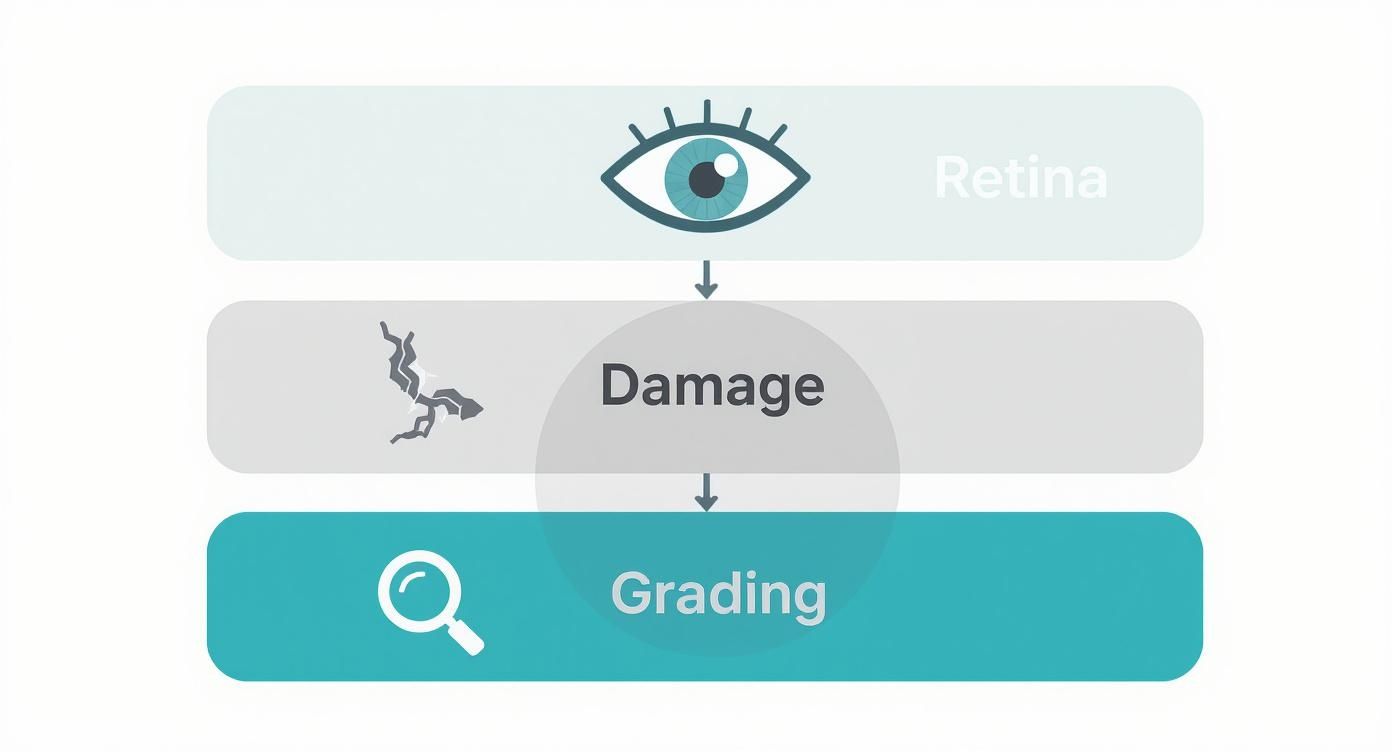
This step-by-step process is what allows us to create a management plan that’s perfectly suited to your eyes.
Stage 1: No Apparent Retinopathy
This is the best possible news you can get from a diabetic eye exam. It means that even with our powerful advanced retinal imaging, we see no visible signs of damage to the blood vessels in your retina.
While this is fantastic, it doesn't mean you get a free pass on future exams. It's a clear sign that your current diabetes management is working well to protect your eyes, and the goal is to keep it that way. We'll recommend you stick with annual eye exams to catch any potential changes the moment they appear.
Stage 2: Mild Non-Proliferative Diabetic Retinopathy (NPDR)
This is the very first detectable stage of the disease. At this point, we can see tiny, balloon-like bulges forming on the retinal blood vessels. These are called microaneurysms.
Think of it like a garden hose that’s starting to show small, weak spots on its surface. It isn't leaking yet, but those spots are the first sign of wear. You won't notice any symptoms at this stage, and your vision will feel normal. Our main course of action is simply to monitor things more closely, usually with a follow-up exam in six to twelve months.
Stage 3: Moderate Non-Proliferative Diabetic Retinopathy (NPDR)
As NPDR progresses, the signs of damage become more obvious. We'll see more microaneurysms, and some of the smaller blood vessels might become blocked, which stops blood from getting to certain parts of the retina.
This is like having a few small clogs in that garden hose, reducing water flow to some of the plants. The risk to your vision starts to increase here, so your optometrist will likely want to see you more frequently—perhaps every three to six months—to keep a close eye on how things are changing.
Stage 4: Severe Non-Proliferative Diabetic Retinopathy (NPDR)
At the severe stage, the blockages have become much more widespread. This means significant portions of your retina are being starved of their vital blood supply. In response, the retina starts sending out distress signals, telling the body it needs to grow new blood vessels to compensate.
This is the last and most critical stage before the condition becomes proliferative. The risk of vision loss is now high, and your eye doctor will almost certainly refer you to a retinal specialist. The focus here is on treatment to prevent the disease from advancing to the final stage.
Stage 5: Proliferative Diabetic Retinopathy (PDR)
This is the most advanced and serious stage of the disease. The retina, desperate for oxygen, has triggered the growth of new, abnormal blood vessels. This process is called neovascularization.
Unfortunately, these new vessels aren't the solution. They are incredibly fragile and weak, growing on the surface of the retina like weeds in a garden. They can easily break and bleed into the vitreous (the clear, gel-like substance that fills your eye). This can cause sudden and dramatic vision loss, often appearing as a swarm of dark spots or floaters. PDR requires immediate treatment to prevent severe, irreversible damage to your sight.
To help you understand these stages at a glance, this table breaks down what we see in the exam room and what it means for you.
Diabetic Retinopathy Grading Comparison
| Retinopathy Grade | What Your Eye Doctor Sees | Impact on Vision Risk | Typical Follow-Up Plan |
|---|---|---|---|
| No Apparent Retinopathy | A healthy retina with no visible signs of blood vessel damage. | Lowest risk; continued good diabetes control is key. | Annual routine eye exam. |
| Mild NPDR | Small, isolated bulges in the retinal blood vessels (microaneurysms). | Low risk, but it's the first warning sign. No vision loss at this stage. | Closer monitoring; follow-up in 6-12 months. |
| Moderate NPDR | More widespread microaneurysms, some minor vessel blockages, and potential fluid leakage. | Moderate risk of progression. Vision may still be normal, but the underlying damage is increasing. | More frequent exams, typically every 3-6 months, to track changes closely. |
| Severe NPDR | Significant blood vessel blockage and hemorrhages across the retina, signaling a lack of oxygen (retinal ischemia). | High risk of progressing to the advanced stage. This is a critical point for intervention. | Referral to a retinal specialist for potential treatment to prevent vision loss. |
| Proliferative Retinopathy (PDR) | Growth of new, fragile blood vessels on the retina or optic nerve (neovascularization). Often accompanied by bleeding. | Very high and immediate risk of severe, permanent vision loss due to bleeding or retinal detachment. | Urgent treatment is required, such as laser therapy or injections. |
| Diabetic Macular Edema (DME) (can co-exist) | Swelling in the macula (the center of the retina) caused by leaking fluid. | Can occur at any stage and directly causes blurry or distorted central vision. A leading cause of vision loss. | Specific treatments like injections are often needed to reduce swelling and restore vision. |
This table illustrates why regular exams are so critical. By catching retinopathy in the earlier, non-proliferative stages, we have a much better chance of protecting your vision for years to come.
How We Grade Retinopathy at iDoctor
When you come to our Glendale Heights clinic for a diabetic eye exam, our goal is to make the experience clear and reassuring. We want to pull back the curtain on diabetic retinopathy grading so you know exactly what we’re looking for and feel confident in the care you receive. At iDoctor, our approach is built on two key pillars: advanced technology and the dedicated time we spend with every patient.
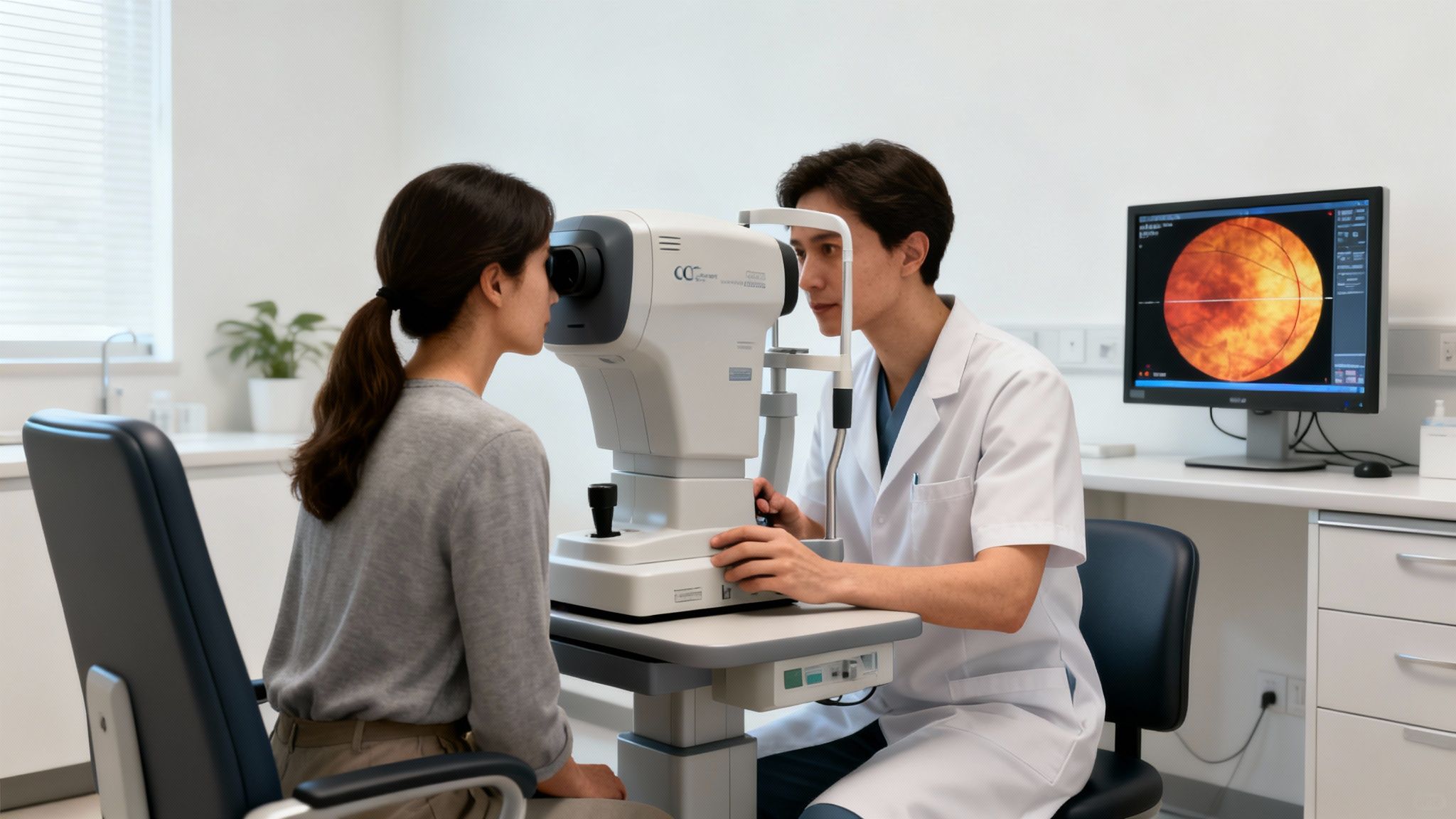
To grade retinopathy accurately, you have to be able to see every last detail of the retina. This is where our investment in technology truly shines. We never rush. Our 30-minute detailed eye exams give us the time we need to be incredibly thorough, and just as importantly, to sit down and explain everything to you in simple, easy-to-understand language.
Our Advanced Diagnostic Process
Getting a crystal-clear picture of your retinal health requires more than just a quick look. We combine time-tested clinical techniques with modern imaging to make sure nothing gets missed.
-
Dilated Fundus Exam: This has long been the gold standard for a reason. We use special drops to widen your pupils, which is like opening a window to the back of your eye. This gives us a wide, panoramic view of your entire retina, letting us carefully inspect the optic nerve, macula, and the delicate network of blood vessels for any early warning signs.
-
High-Resolution Retinal Imaging: We don’t just rely on what we can see in the moment. Our clinic is equipped with sophisticated cameras that capture ultra-detailed photographs of your retina. This creates a permanent digital record, which is invaluable for tracking even the most subtle changes from one year to the next.
-
Optical Coherence Tomography (OCT): Think of an OCT scan as an MRI for your retina. It uses light waves to create a high-definition, cross-sectional map of your retinal layers. This non-invasive scan measures tissue thickness with microscopic precision, making it essential for detecting diabetic macular edema (DME)—a leading cause of vision loss from diabetes.
This powerful combination of tools gives us all the data we need to assign a precise grade. You can learn more about these technologies on our page about advanced retinal imaging at iDoctor.
From Images to a Clear Diagnosis
After we’ve captured the images and completed the hands-on exam, the analysis begins. We meticulously review everything, looking for the specific clinical signs that tell us the story of your retinal health.
We’re systematically searching for things like:
- Microaneurysms: The very first sign—tiny bulges in the small blood vessels.
- Hemorrhages: Any small spots of bleeding on the retinal surface.
- Exudates: Leaky deposits of fats and proteins from damaged blood vessels.
- Neovascularization: The growth of new, fragile blood vessels that defines the more advanced, proliferative stage.
At iDoctor, our philosophy is simple: precision leads to prevention. By using the best technology to assign an accurate grade, we build the foundation for a personalized eye care plan designed to protect your vision for a lifetime.
This detailed process is how we deliver on our promise to provide the best possible care for our neighbors in Glendale Heights, from those near Camera Park to families along Bloomingdale Road. We believe an informed patient is an empowered one, and we're here to be your partner in preserving your sight.
Your Action Plan for Managing Diabetic Retinopathy
Getting a diagnosis is the first step, but what you do next is what truly counts. That diabetic retinopathy grade your doctor gave you isn't just a label; it’s the starting point for your personal action plan. Here at iDoctor, our goal is to turn that clinical term into clear, practical steps you can take to protect your vision, right here in Glendale Heights.

This isn't just a local issue—it's a global one. Back in 2020, diabetic retinopathy led to blindness in over 1.07 million people across the world and caused significant vision problems for nearly 3.28 million more. Those are sobering numbers, and they drive home why being proactive is so incredibly important.
For Early Stages: Proactive Monitoring Is Key
If you've been told you have mild or moderate non-proliferative retinopathy, your biggest advantage is control. At this point, your action plan is all about managing your overall diabetes. Think of it as building your vision's first and strongest line of defense.
- Blood Sugar Management: This is, without a doubt, the most important piece of the puzzle. Keeping your glucose levels in check slows down the damage to the delicate blood vessels in your retina. A huge part of this is understanding your HbA1c levels, which gives you the long-term view of your blood sugar control.
- Blood Pressure and Cholesterol Control: High blood pressure puts extra strain on those fragile retinal vessels, speeding up potential damage. Managing it alongside your cholesterol is a must.
- Lifestyle Choices: The daily choices you make really do add up. We have a great guide on how diet can play a big role in managing diabetic retinopathy.
- Regular Monitoring: This part is non-negotiable. Sticking to your scheduled follow-up appointments allows us to watch for even the slightest changes and intervene long before a small problem can become a big one.
Your Role: In these early stages, you are the most important person on your eye care team. Your day-to-day decisions have a direct and powerful impact on keeping your vision clear for years to come.
For Advanced Stages: Partnering for Treatment
Once retinopathy moves into the severe NPDR or PDR stages, our strategy shifts from watching and waiting to active treatment. The mission becomes stopping the damage in its tracks and preventing any further vision loss. I know that can sound scary, but modern treatments are incredibly effective and precise. And you won't be going through it alone.
We have a network of trusted retinal specialists right here in the Chicagoland area that we work with for procedures such as:
- Laser Treatment (Photocoagulation): This is a time-tested procedure where a specialist uses a focused laser to seal off leaking blood vessels. It also helps stop those new, unstable vessels from growing.
- Eye Injections (Anti-VEGF Therapy): These medications work by blocking the specific growth signals that cause abnormal blood vessels to form and leak, which helps reduce swelling in the macula.
We handle everything. We coordinate the referral, send over all of your diagnostic images and exam notes, and stay in the loop as your primary eye care home base. Our job is to make sure your care is completely seamless—from your initial diagnosis at our Glendale Heights boutique, to the specialist, and back to us for follow-up. Your action plan is a team effort, and we are your dedicated partners in preserving your sight.
Your Partner in Diabetic Eye Care in Glendale Heights
Getting a handle on your diabetic retinopathy grade is a huge step in taking control of your eye health. It turns a complex diagnosis into something you can actually understand and manage. Here in Glendale Heights, we want to be your trusted partner on this journey, making sure you feel supported and confident every step of the way.
The single best thing you can do to prevent vision loss is to have an annual diabetic eye exam. At iDoctor, our mission is to provide top-notch clinical care in a place where you feel genuinely welcome. We firmly believe that looking after your health shouldn’t mean giving up the things that make you feel like yourself. That's why we combine our medical expertise with a hand-picked collection of luxury and designer eyewear.
Style and Health, Hand in Hand
Your eye health will always be our top priority, but we know your personal style is important, too. After your comprehensive eye exam, take your time and explore our curated collection from some of the world's most recognized brands.
Maybe you're searching for iconic Tom Ford glasses near me, or perhaps the timeless elegance of Cartier is more your speed. We also carry stunning collections from Gucci, Fendi, Prada, Saint Laurent, and Oliver Peoples. Whatever your taste, we have frames that will complement your look without ever compromising on quality. We make sure your health and style can coexist beautifully.
We also feature a wonderful selection of stylish and more accessible brands like Ray-Ban, Kate Spade, and Coach. Protecting your vision shouldn't feel like a chore—finding that perfect pair of glasses is all part of making it a positive and empowering experience.
At iDoctor, our promise is simple: to provide the care of the best optometrist in Glendale Heights to protect your precious sight, while offering the designer eyewear you love. You never have to choose between your health and your style.
Your Next Step Is Clear
The path to protecting your vision is straightforward. It’s time to make your eyes a priority and schedule one of our detailed eye exams in Glendale Heights. Our team is ready to give you the clear answers and dedicated care you deserve, right from the moment you walk through our doors on Bloomingdale Road.
To make your care as simple and accessible as possible, we proudly accept all major vision insurance plans. Don’t wait for symptoms to show up. Take control of your diabetic eye health today by partnering with a team that puts you and your vision first. We look forward to seeing you at our Glendale Heights office soon.
FAQ: Your Questions About Diabetic Eye Care in Glendale Heights
It's natural to have questions about managing diabetes and your eyes. Here are clear, simple answers to some of the most common questions we hear at our Glendale Heights boutique.
Do I really need an eye exam every year if my vision is fine?
Yes, absolutely. This is the most important thing to remember. The early stages of diabetic retinopathy have no symptoms. Your vision can seem perfectly fine while damage is slowly occurring in the back of your eye. An annual exam allows your eye doctor in Glendale Heights to spot these changes long before they affect your sight, which is the key to preventing vision loss.
Is a diabetic eye exam covered by my regular vision insurance?
That’s a great question. In most cases, an eye exam to monitor a medical condition like diabetes is billed to your medical insurance, not your routine vision plan. At iDoctor, we accept all major vision insurance plans, and our team is happy to help you understand your benefits before your visit so there are no surprises.
Can I get new glasses at my diabetic eye exam appointment?
Of course! A diabetic eye exam is a comprehensive check of both your eye health and your vision. We will test your prescription during the exam. If you need new eyewear, you can browse our curated collection of designer eyeglasses in Glendale Heights right after your appointment. We carry everything from Cartier and Gucci to Ray-Ban and Coach.
Do you offer contact lenses for people with diabetes?
Yes, we do. Many people with diabetes wear contact lenses successfully. During your exam, we will assess if you are a good candidate and can perform a fitting to find the best contact lenses in Glendale Heights for your eyes and lifestyle.
Your vision is precious, and it’s not something to leave to chance. At iDoctor, we blend advanced diagnostic technology with genuine, personalized care to help protect your sight for the long run.
Ready to take control of your eye health? Schedule your diabetic eye exam with us today.