Knowing the difference between an optometrist and an ophthalmologist can be boiled down to this: your optometrist is your primary eye doctor for exams and vision correction, while an ophthalmologist is a medical and surgical specialist you see for more complex diseases. For most of your day-to-day vision needs here in Glendale Heights, an optometrist is the expert you'll see first.
Choosing The Right Eye Doctor In Glendale Heights
Deciding between eye care professionals can feel confusing, but it doesn't have to be. Knowing which one to see ensures you get the right care for your needs, whether you're a student at Glenbard North High School or a professional working near the Glendale Lakes Golf Club.
You're not alone if the distinction is a little fuzzy. Recent studies have shown that a surprising 33.3% of people have a low or fair understanding of their different roles, which really highlights the need for clearer information.
At its core, the choice really just comes down to why you're making the appointment. Think of an optometrist as your family doctor, but for your eyes. They are the go-to experts for routine check-ups, prescribing glasses and contact lenses, and managing common eye conditions. An ophthalmologist is the specialist you see for advanced medical issues or surgery, and you’ll often get there through a referral from your optometrist.
Optometrist vs. Ophthalmologist at a Glance
To make it even clearer, here's a quick side-by-side look. This table helps you immediately grasp the fundamental differences in roles, education, and primary services offered by each eye care professional.
Optometrist vs Ophthalmologist at a Glance
| Attribute | Optometrist (OD) | Ophthalmologist (MD) |
|---|---|---|
| Primary Role | Primary eye care provider | Medical and surgical specialist |
| Typical Services | Eye exams, vision tests, prescriptions | Surgery, complex disease treatment |
| Education | Doctor of Optometry (OD) | Medical Doctor (MD) |
| Surgical Procedures | No (performs minor in-office procedures) | Yes (cataracts, LASIK, etc.) |
As you can see, the roles are distinct but complementary.
Of course, choosing a provider is also about the experience. A great practice respects your time. As you look for an eye doctor, consider how they manage patient flow and wait times—it says a lot about their practice. It's helpful to understand how queue management systems improve customer flow to see what a difference it can make.
Making the right choice from the start is key. For more local insights, check out our guide on how to find the best eye doctor near me in Glendale Heights. For Glendale Heights residents, iDoctor is your premier local destination for expert primary eye care.
Comparing Education and Training Pathways
The simplest way to grasp the difference between an optometrist and an ophthalmologist comes down to their education. Their training paths are rigorous but fundamentally different, and that's what shapes their distinct roles in taking care of your eyes.
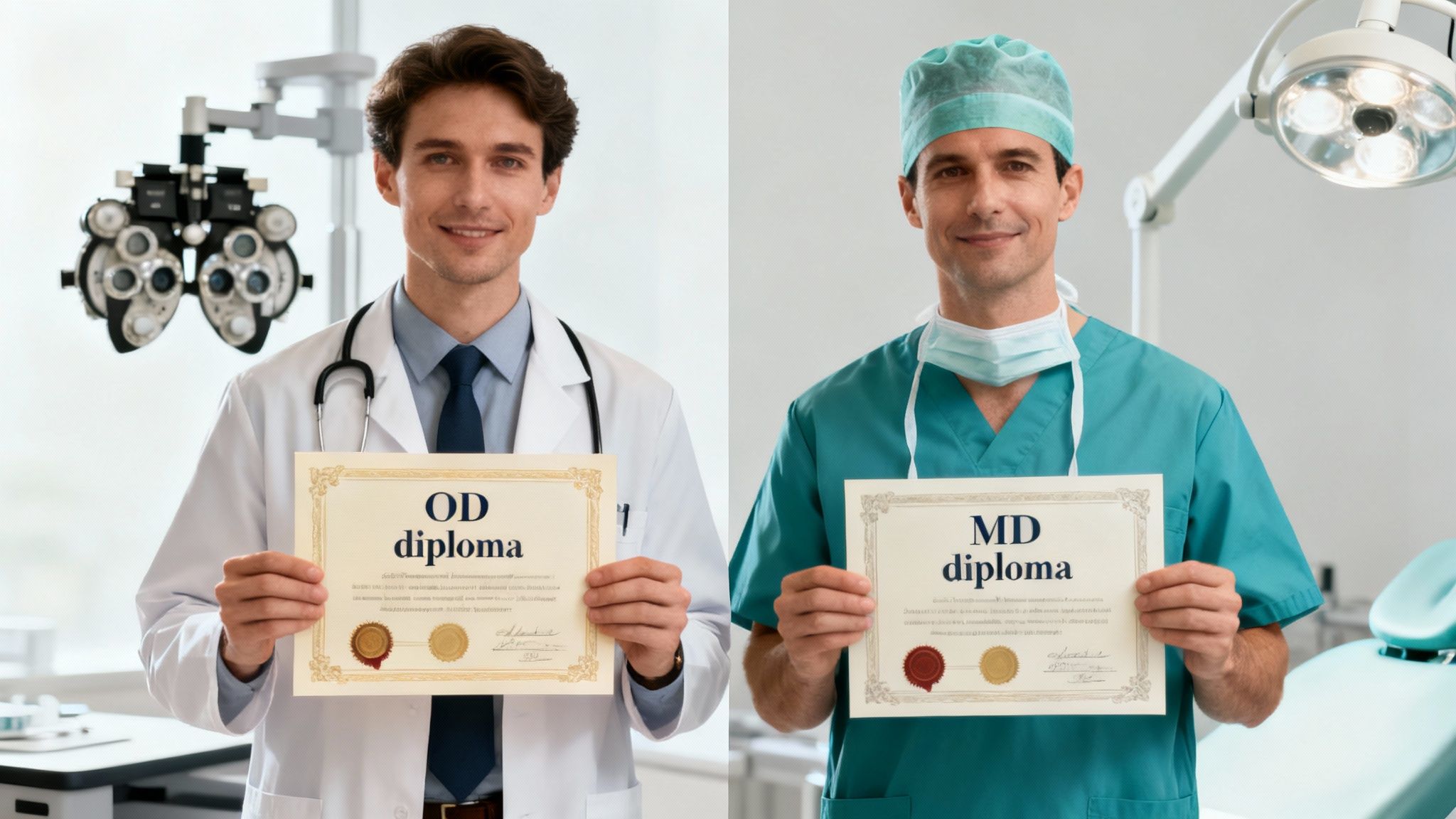
You can think of an optometrist's education as being laser-focused on eyes from the get-go. After finishing a bachelor's degree, they dive into a demanding four-year program to earn a Doctor of Optometry (OD) degree. This entire period is dedicated to vision science, optics, and the intricate details of diagnosing and managing eye health. Their training molds them into the primary care providers for your vision.
The Ophthalmologist's Medical School Foundation
An ophthalmologist's journey starts much broader. They first complete four years of medical school to become a Medical Doctor (MD) or Doctor of Osteopathic Medicine (DO), just like your family physician. Their initial training covers the entire human body, giving them a comprehensive understanding of general medicine before they ever start to specialize.
Only after becoming a physician do they begin a highly competitive, multi-year residency in ophthalmology. This is where they get their hands-on surgical training and learn to manage complex eye diseases.
Key Takeaway: An optometrist is a Doctor of Optometry, an expert in vision and eye health from day one of their post-graduate studies. An ophthalmologist is a medical doctor who later specializes in surgical and medical eye care.
The time commitment really highlights the difference. An optometrist completes about eight years of higher education. An ophthalmologist, however, goes through a minimum of 11 to 12 years of training, including that intensive surgical residency where they master procedures like cataract removal and LASIK.
How Training Translates to Your Care
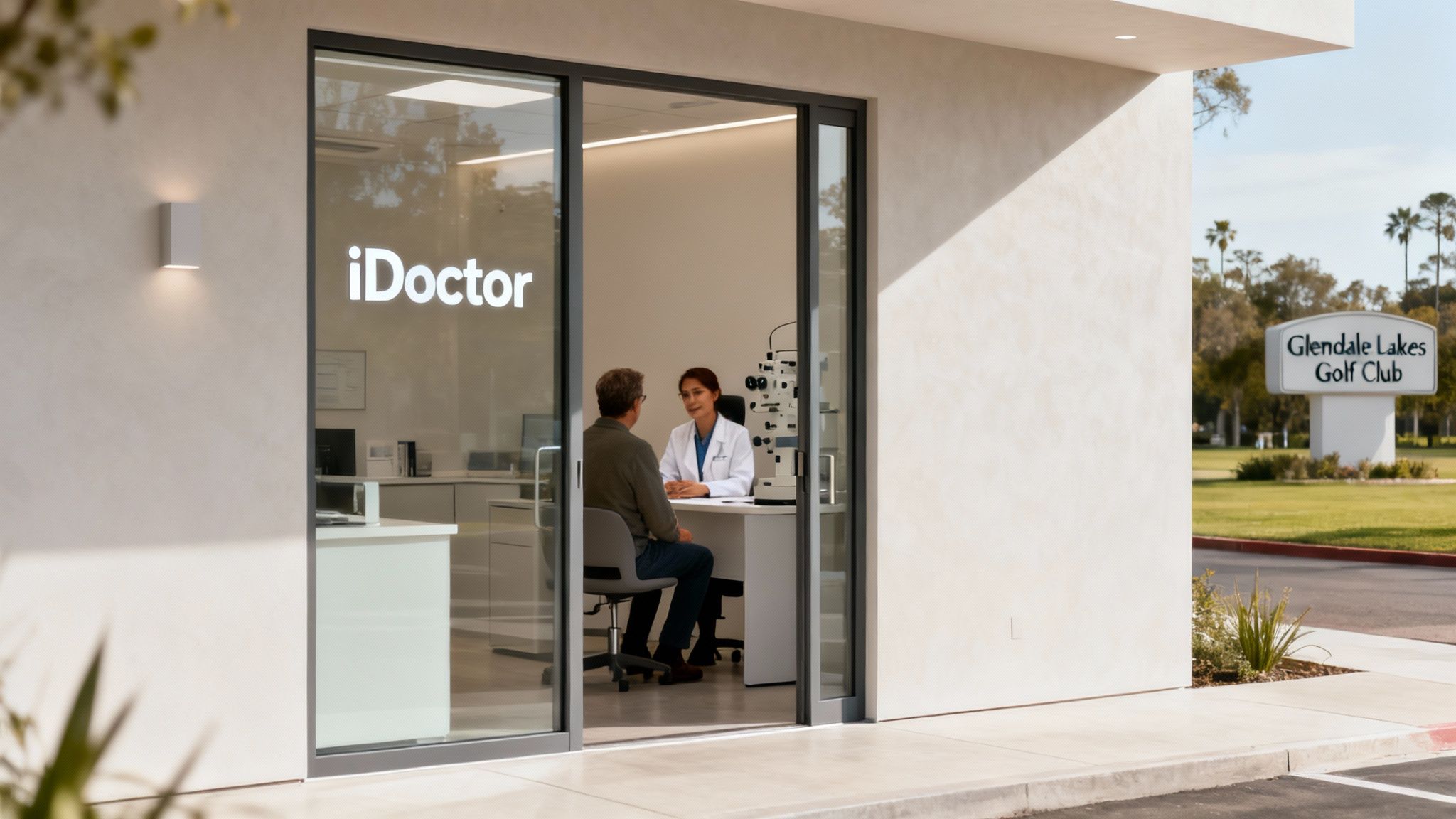
This educational divide directly impacts the kind of care you get. Here at iDoctor, our optometrists are the result of that highly specialized optometric training. Their expertise shines when it comes to conducting meticulous eye exams, nailing down the perfect vision correction, and managing common eye conditions.
This is precisely why they are your go-to professionals for an annual check-up, a new prescription for your favorite eyewear, or for tackling issues like persistent dry eye. The iDoctor team embodies this dedication to primary vision care, bringing years of focused experience to every patient. You can meet our team of dedicated optometrists and see their credentials for yourself. Their background is what makes them the trusted first stop for keeping your vision sharp and your eyes healthy.
Defining Daily Patient Care and Services
The real difference between an optometrist and an ophthalmologist comes down to what they do day-in and day-out. While both are committed to your eye health, their roles are distinct—think of it like the difference between your family doctor and a surgeon.
For most people in Glendale Heights, the path to healthy eyes and clear vision starts with an optometrist. They are the primary care managers for your eyesight. Their daily work revolves around comprehensive eye exams, testing your vision, and prescribing glasses or contact lenses.
The Optometrist’s Primary Care Role
Your optometrist is the expert you see for nearly all routine and non-surgical eye care. They're the ones you visit for the annual check-ups that keep your vision sharp and your eyes healthy.
At iDoctor, for example, our optometrists handle a wide range of essential services:
- Precise Vision Correction: We perform detailed eye exams in Glendale Heights to pinpoint your exact prescription for glasses and fit you with the best contact lenses for your eyes and lifestyle.
- Diagnosing Common Conditions: They identify and treat everyday problems like dry eye, conjunctivitis (pink eye), and annoying eye allergies.
- Detecting Early Signs of Disease: Using high-resolution imaging, they can screen for serious conditions like glaucoma, macular degeneration, and diabetic retinopathy, often before you notice any symptoms.
Think about a student from nearby Glenbard North High School who needs their first pair of contacts, or a professional working near Army Trail Road who wants the perfect pair of designer eyeglasses in Glendale Heights. These are the exact situations where an optometrist’s expertise shines. Our team is skilled at handling these everyday vision needs with truly personalized care.
The Ophthalmologist’s Surgical and Medical Focus
An ophthalmologist is who you see when your eye care requires surgery or advanced medical treatment. Typically, you'll get a referral to an ophthalmologist after an optometrist identifies a more complex problem during an exam.
Their world is one of specialized procedures and managing advanced disease. An optometrist works to maintain your vision, while an ophthalmologist is often called in to restore it.
Ophthalmologists handle highly specialized and more severe conditions. Here’s a look at what they do:
- Surgical Procedures: They perform complex surgeries, including cataract removal, LASIK vision correction, and procedures to treat glaucoma or retinal detachments.
- Advanced Disease Treatment: They manage eye diseases that have progressed beyond initial treatment, sometimes requiring injections, laser therapy, or other intensive care.
- Eye Trauma and Emergencies: They are the specialists who treat serious eye injuries and handle urgent, vision-threatening conditions.
This division of labor makes sure you always get the right level of care. For the vast majority of your needs—from a routine check-up to managing common eye health issues—starting with an optometrist is the best first step.
When to See an Optometrist vs. an Ophthalmologist
Figuring out the difference between an optometrist and an ophthalmologist is a great first step, but the real key to protecting your vision is knowing who to call for a specific problem. Think of it this way: your optometrist is your primary care doctor for your eyes, while an ophthalmologist is the specialist you see for surgery and complex diseases.
For almost everything related to your day-to-day vision health, your journey starts with an optometrist. They're on the front lines, dedicated to keeping your eyesight sharp and your eyes healthy.
Start with an Optometrist for Primary Eye Care
You’ll want to book an appointment with an optometrist for all your routine and primary vision needs. They are the experts you turn to for:
- Annual eye exams: This is your first line of defense. Just like a yearly physical, a comprehensive eye exam is crucial for catching problems early.
- Updated prescriptions: If the world is starting to look a little fuzzy or it's simply time for a new prescription for your glasses or contacts, your optometrist is who you need to see.
- New eyewear: Whether you’re getting fitted for contact lenses in Glendale Heights for the first time or you want to find the perfect pair of Gucci glasses near me, this is their turf.
- Treatment for common eye issues: Annoying problems like dry eye, digital eye strain, pink eye (conjunctivitis), and persistent eye allergies all fall squarely under an optometrist’s care.
At iDoctor, our team is proud to be the best optometrist in Glendale Heights for all of this and more. We’re here to be your first call for clear, comfortable vision.
The decision tree below does a fantastic job of laying out when your optometrist is the right choice versus when a referral to an ophthalmologist for surgical care might be needed.
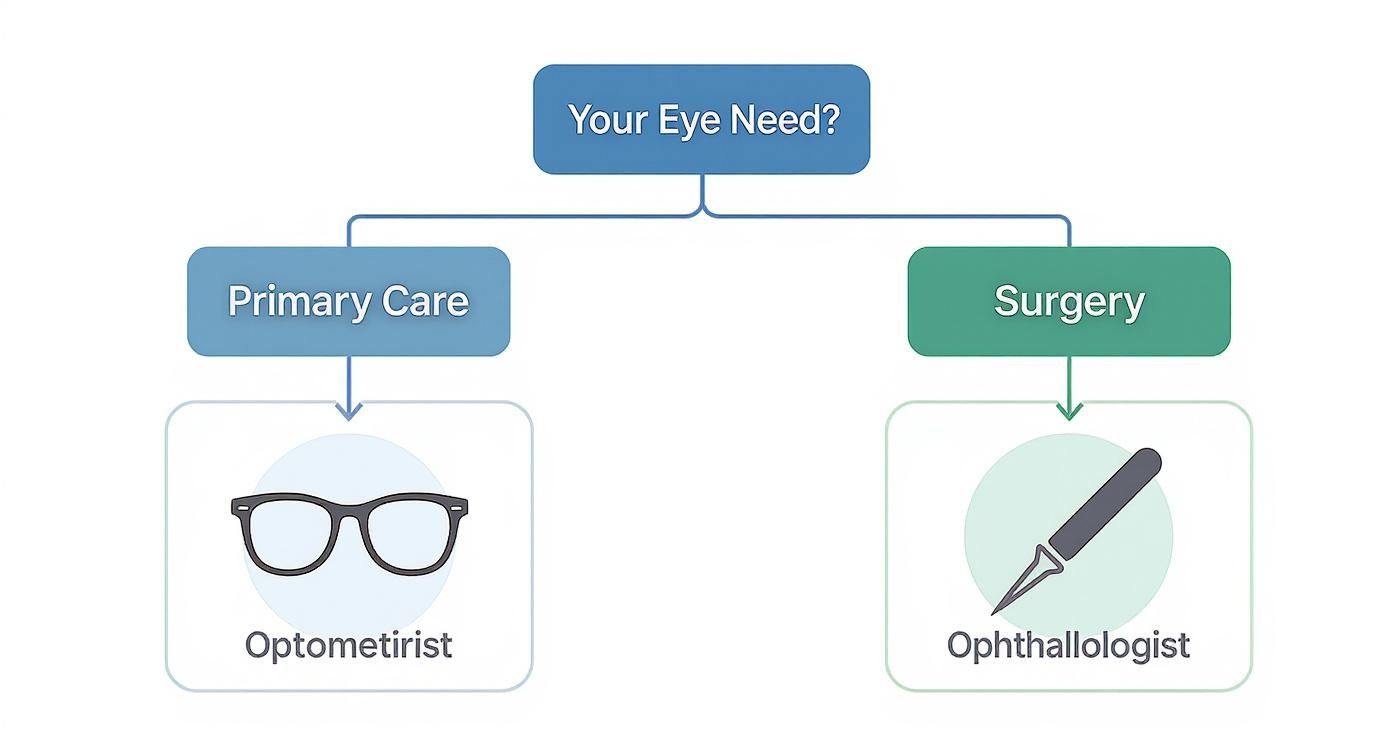
This visual guide really highlights the collaborative nature of eye care. Your optometrist is your long-term partner for wellness, and an ophthalmologist is the specialist they bring in when surgery is on the table. It’s a system designed to give you seamless, comprehensive care.
When a Referral to an Ophthalmologist is Necessary
While optometrists can manage the vast majority of your eye care needs, some situations call for the advanced medical and surgical skills of an ophthalmologist. You'll almost always see an ophthalmologist after getting a referral from your primary eye doctor.
A referral to an ophthalmologist is essential for:
- Eye Surgery: This is their specialty. Procedures like cataract removal, LASIK, and complex surgeries for conditions like glaucoma or a detached retina are all performed by ophthalmologists.
- Advanced Disease Management: For serious eye diseases like advanced macular degeneration or severe diabetic retinopathy that require injections, laser therapy, or other intensive treatments.
- Serious Eye Injuries: Any significant trauma to the eye is a medical emergency that demands the immediate attention of a specialist.
Key Insight: Think of your optometrist as the trusted gatekeeper of your eye health. They diagnose conditions and, if a surgical or highly specialized medical procedure is required, they’ll connect you with the right ophthalmologist.
This collaborative system means you don't have to worry about self-diagnosing a complicated problem. Instead, you can rely on your primary eye doctor to manage your care path.
Choosing Your Eye Care Professional Based on Your Needs
| Your Situation or Symptom | Recommended Professional | Reason |
|---|---|---|
| It's been over a year since your last eye check-up. | Optometrist | This is the perfect professional for routine, preventive eye exams. |
| You've noticed your vision getting blurry and need new glasses. | Optometrist | Optometrists are experts in vision testing and prescription management. |
| You have been diagnosed with cataracts that are now interfering with daily life. | Ophthalmologist (via referral) | Cataract removal is a surgical procedure performed by an ophthalmologist. |
| Your eyes are constantly red, itchy, and irritated. | Optometrist | This is likely a common condition like dry eye or allergies, which an optometrist can diagnose and treat. |
| You have a family history of glaucoma and want to be screened. | Optometrist | Glaucoma screening and initial management are core parts of an optometrist’s practice. |
| You were in an accident and suffered a major injury to your eye. | Ophthalmologist (Emergency) | Significant eye trauma requires immediate, specialized surgical and medical evaluation. |
Ultimately, for anyone living in Glendale Heights or the surrounding suburbs, building a relationship with an iDoctor optometrist is the best starting point for a lifetime of healthy vision. We’ll manage your routine care and ensure you are seamlessly connected to a specialist if and when you ever need one.
The Optometrist's Role in Managing Chronic Conditions
When you think about an optometrist, you probably picture annual exams and new glasses. But their role goes far deeper, especially when it comes to your long-term health. Think of them as the primary care physicians for your eyes, acting as the first line of defense in managing chronic diseases that can threaten your sight. This is a critical distinction between an optometrist and an ophthalmologist—one focuses on long-term management, while the other typically steps in for surgical intervention.
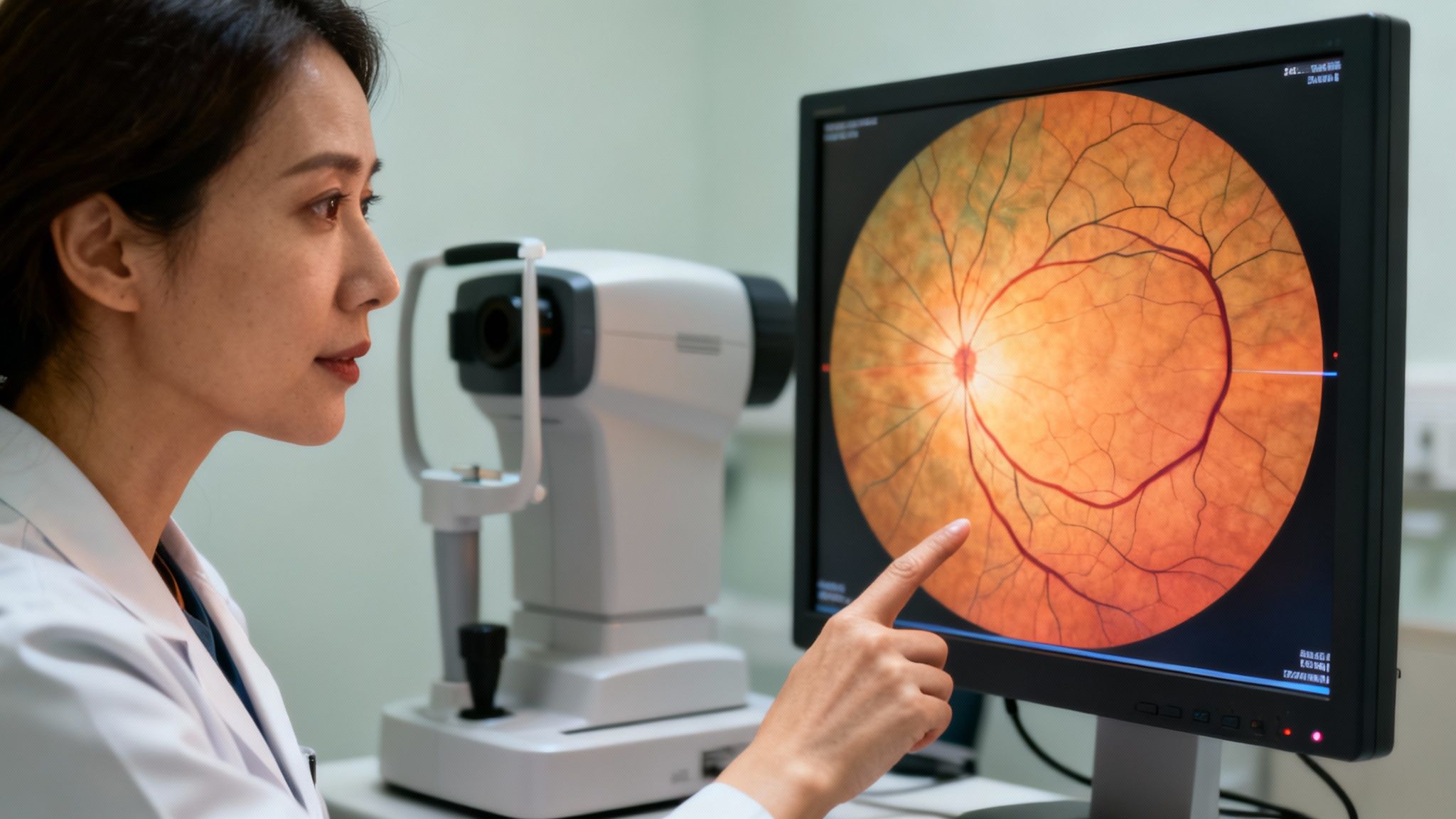
At a practice like iDoctor, we’re deeply involved in detecting and monitoring serious conditions like glaucoma, macular degeneration, and diabetic retinopathy. Armed with advanced diagnostic tools and high-resolution imaging, our optometrists can spot the faintest signs of these diseases, often long before you'd ever notice a change in your vision. Catching these problems early is absolutely key to preserving your sight for the long haul.
Building a Long-Term Health Partnership
Once a chronic condition is identified, your relationship with your optometrist transforms. They become more than just your eye doctor; they become a lifelong partner in your health, creating and overseeing a detailed management plan to protect your vision.
This ongoing partnership involves several key responsibilities:
- Prescribing and Adjusting Medication: Optometrists are licensed to prescribe medicated eye drops and other treatments to control conditions like glaucoma.
- Tracking Disease Progression: We use regular, in-depth exams to carefully monitor your condition, ensuring treatments remain effective and tweaking the plan as necessary.
- Coordinating with Specialists: If a condition advances to a stage requiring surgery, we don't just send you on your way. We facilitate the referral to a trusted ophthalmologist and work together to co-manage your care before and after the procedure.
For example, managing diabetic eye disease demands consistent, careful monitoring to prevent irreversible vision loss. Our team has extensive experience in this area, providing specialized diabetic-related eye exams that are crucial for protecting our patients' health. This close, collaborative approach ensures you get seamless care without feeling lost in the medical system.
Think of your optometrist as the gatekeeper of your eye health. Their expertise in disease management and easy accessibility make them the foundation for preventing vision loss from chronic conditions.
This role is even more vital when you realize how much more accessible optometrists are. On a global scale, there is roughly one optometrist for every 23,200 people, whereas ophthalmologists are significantly scarcer. This reality highlights the essential function optometrists play in handling a wide spectrum of conditions, which in turn frees up ophthalmologists to focus on the complex surgical cases where they are needed most.
When you establish a relationship with an optometrist at iDoctor, you're not just getting an eye exam—you're investing in a dedicated partnership to safeguard your vision for life. We are committed to being the trusted guardians of your eye health right here in Glendale Heights, managing chronic conditions with the expert, personalized attention you deserve. This focus on long-term management is a cornerstone of modern optometry and a key differentiator in your eye care journey.
Your Partner for Lifelong Vision Health in Glendale Heights
After breaking down the roles of optometrists and ophthalmologists, one thing usually becomes clear for folks in Glendale Heights: your go-to expert for day-to-day eye health is almost always an optometrist. Think about it—for the vast majority of your needs, from yearly check-ups to finally getting that pair of Tom Ford frames you've been eyeing, an optometrist is the most practical and accessible choice. They're the specialists who focus on keeping your vision sharp and your eyes healthy, year in and year out.
At iDoctor, we take that role seriously, blending top-notch clinical care with the personal touch you'd expect from a high-end boutique. We've moved away from the rushed, in-and-out model. Instead, we dedicate 30 minutes to every detailed eye exam, using high-resolution imaging to be thorough and ensure nothing is missed.
Your Local Destination for Complete Eye Care
We firmly believe that great eye care shouldn't be a hassle. Whether you're driving down Army Trail Road or live just around the corner from our Glendale Heights boutique, our practice is set up to be your home base for everything related to your vision.
Our commitment to the Glendale Heights community shows in everything we do:
- Curated Eyewear: We've hand-picked a collection that has something for everyone, from high-end luxury brands like Cartier, Gucci, Fendi, and Prada to timeless, affordable options from Ray-Ban and Coach.
- Insurance Made Simple: We make navigating benefits easy by accepting all major vision insurance plans. Our team is here to help you get the most out of your coverage.
At iDoctor, our aim is to build a genuine, lasting relationship with you. We're more than just an eye doctor in Glendale Heights; we want to be your trusted advisors for clear, healthy sight for life.
Come experience the kind of warm, professional care that truly sets us apart. We invite you to schedule your appointment today and see why so many of your neighbors trust us as their partners in vision.
FAQ: Your Local Eye Care Questions Answered
Choosing the right eye doctor can feel confusing, so we wanted to answer some of the questions we hear most often from our patients here in Glendale Heights. Hopefully, this clears things up and helps you feel confident about your eye care choices.
Do I need a referral to see an optometrist at iDoctor?
Not at all! You can book an appointment with our eye doctor in Glendale Heights directly. Think of us as your primary care provider for your eyes. Whether you need one of our detailed eye exams in Glendale Heights, a fitting for contact lenses in Glendale Heights, or want to browse our collection of designer eyeglasses in Glendale Heights, just give us a call. No referral is necessary.
Which brands of designer eyeglasses do you carry?
We offer a carefully curated selection of luxury and affordable eyewear. Our high-end brands include Cartier, Gucci, Tom Ford, Oliver Peoples, Fendi, Saint Laurent, Prada, and Tory Burch. We also carry popular brands like Ray-Ban, Scott Harris, Michael Kors, Kate Spade, and Coach, so there's truly something for every style and budget.
Can an optometrist diagnose eye diseases like glaucoma?
Yes, absolutely. A huge part of our job is detecting, diagnosing, and managing eye diseases like glaucoma, macular degeneration, and diabetic retinopathy. We use advanced diagnostic tools to catch these conditions early. If it turns out you need surgery, we’ll connect you with a trusted local ophthalmologist. We then co-manage your care, working side-by-side with the surgeon to ensure you get seamless treatment.
At iDoctor, we’re here to be your trusted partner for all your primary eye care needs in Glendale Heights. Schedule your appointment today and see what a difference personalized care and fantastic eyewear can make.