It's a common story for our clients in Glendale Heights: you've picked out the perfect pair of Cartier or Gucci glasses, but after a few days of wear, something just feels… off. Maybe they're constantly slipping down your nose while you're shopping at the Glendale Heights Shopping Center, or sitting crooked on your face. The good news is that many of these fit issues can be solved with a few simple, careful adjustments right at home.
Most of the time, the culprits are the temple arms (the parts that go over your ears), the nose pads, or the overall frame alignment. A tiny, gentle bend in the right spot can make a world of difference, turning a frustrating fit into one that feels custom-made. At iDoctor, your high-end optometry boutique in Glendale Heights, we want you to love your eyewear.
Your Guide to a Perfect Eyeglass Fit at Home
For our neighbors here in Glendale Heights, a perfect fit is key to clear vision and all-day comfort, whether you're navigating Bloomingdale Road or enjoying an afternoon at Camera Park. This guide is designed to walk you through the most common adjustments you can safely tackle yourself.
Think of this as your go-to manual for those minor tweaks. We want you to feel confident making small changes, but it's just as important to know when a problem needs a professional's touch. When in doubt, the iDoctor team is always here in Glendale Heights to dial in that flawless fit on your designer eyeglasses.
Identifying the Problem
Before you start adjusting anything, take a moment to figure out exactly what's wrong. Is one side of your frame sitting higher than the other? Do your glasses leave red marks on the bridge of your nose? Pinpointing the specific issue is the first step.
If you find yourself constantly pushing your glasses back up, it's a good sign the temple arms are too loose. If they feel lopsided, one arm is probably bent out of alignment.
Don't worry, needing an adjustment is completely normal. In fact, industry research shows that around 65% of eyeglass wearers need at least one tweak within the first month to correct things like slippage or misalignment.
This infographic shows just how common these issues are.
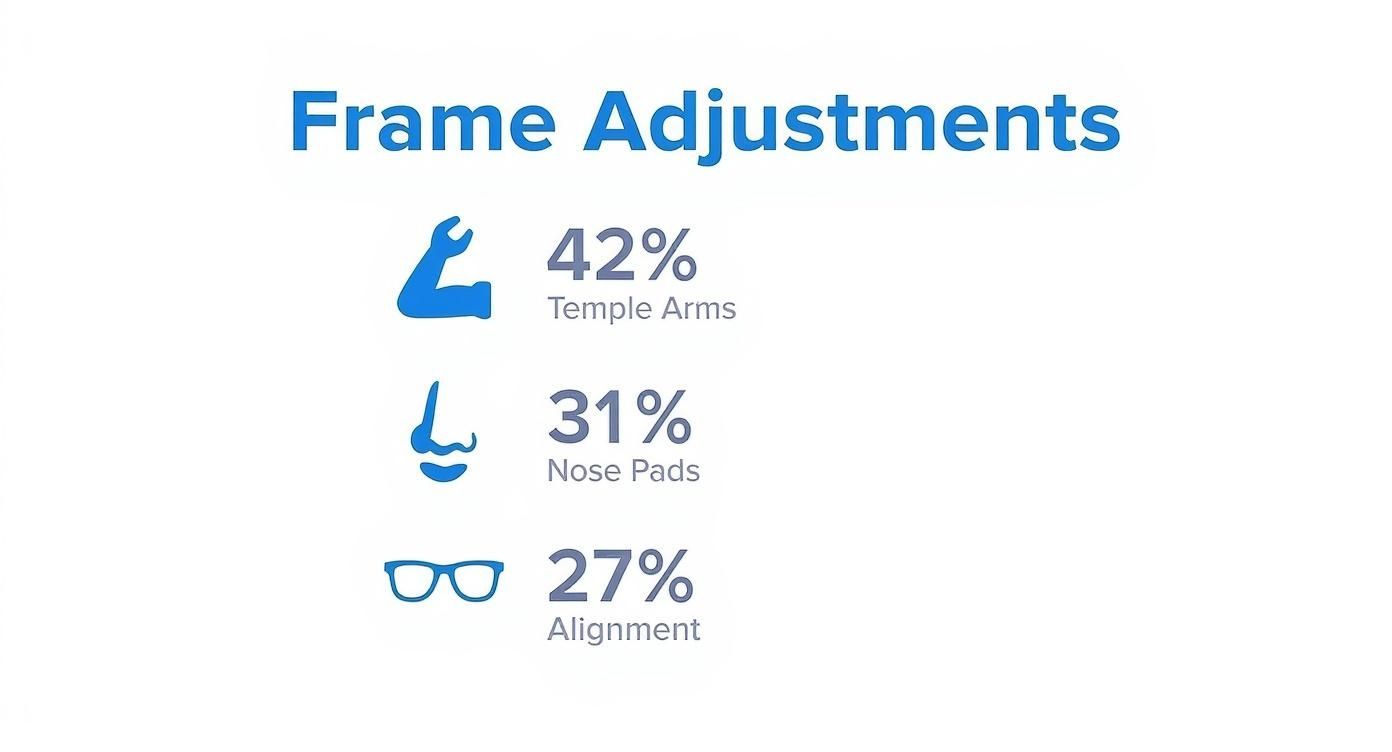
As you can see, problems with the temple arms are the most frequent complaint, but nose pads and overall alignment are close behind.
A well-fitted frame not only feels better but also ensures your lenses are correctly positioned for optimal vision. Proper alignment is especially critical for progressive or high-index lenses. You can learn more about how precise measurements impact your vision by checking out our guide on how to measure your pupillary distance.
Adjusting Metal Frames The Right Way
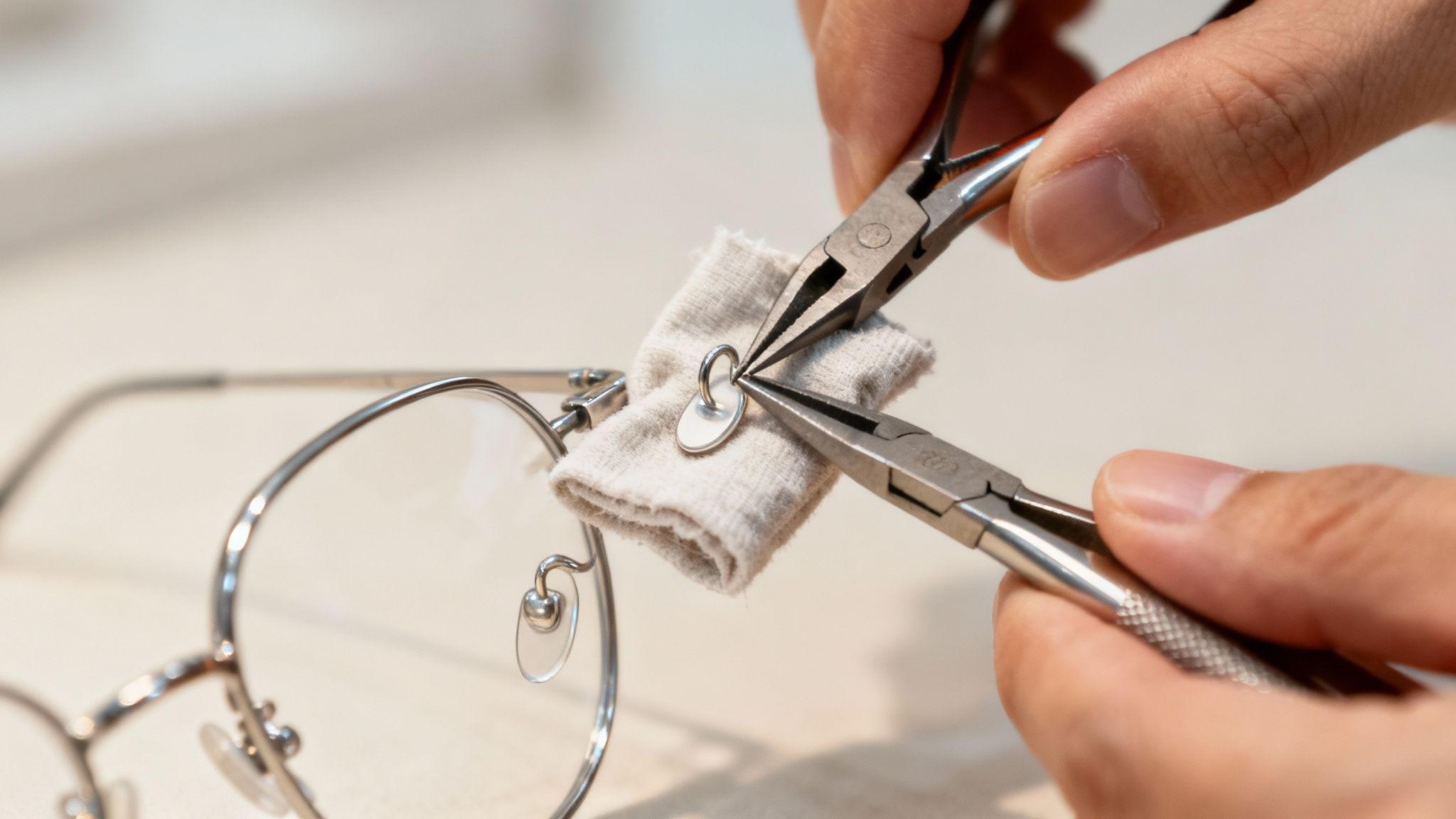
Metal frames, from a classic Ray-Ban aviator to a sleek Cartier, have a certain appeal. They're strong, stylish, and built to last. But that very strength—their rigidity—means you have to be careful when adjusting them. The secret is to use slow, even pressure. Anything too abrupt can bend the metal in a way you can't undo.
Most of the time, the discomfort you feel comes down to two culprits: the nose pads or the temple arms (the parts that go over your ears). A tiny adjustment to either of these can make a world of difference, taking your glasses from a constant annoyance to something you forget you're even wearing.
Fine-Tuning Your Nose Pads
Is the constant nose-push-up your signature move? Your nose pads are probably too wide. Or maybe you have those tell-tale red marks on the bridge of your nose at the end of the day? The pads are too narrow. Luckily, this is one of the easiest at-home fixes.
- To Tighten the Fit: If your glasses are slipping, you need to bring the nose pads closer together. Simply use your thumbs to gently push them inward, toward the center.
- To Loosen the Fit: If they're pinching, just do the opposite. Use your thumbs to carefully push the pads outward, away from each other.
With any nose pad adjustment, the key is to make tiny movements. Push a little, try them on, and see how they feel. Repeat until you get it just right. If you're using needle-nose pliers, be sure to wrap the tips in a soft cloth or tape to avoid scratching the frame's finish. Always grip the small metal arm holding the pad, not the soft pad itself.
Correcting the Temple Arms and Earpieces
The temple arms control how your glasses grip your head. If they slide down your face every time you look down, you need to add more curve to the earpieces. If they're digging in and causing headaches, you need to relax that curve.
Hold the frame front steady with one hand and grip the temple arm with the other, just before it starts to bend over your ear.
- For a Tighter Fit: Apply gentle, downward pressure to bend the earpiece down and slightly inward. This creates a stronger hook behind your ear.
- For a Looser Fit: Carefully bend the earpiece up and outward to lessen the curve, which will ease the pressure.
Pro Tip: Whatever you do, never bend the arm right at the hinge. That’s the weakest point on your frames and where breaks are most likely to happen. Always support the frame and make your adjustments further down the temple arm.
The way metal frames respond to adjustments is completely different from flexible materials like acetate or titanium. Knowing what you're working with is half the battle. To learn more, take a look at our Glendale Heights guide to designer frame materials.
These small tweaks can bring back that perfect-fit feeling. But if you've tried and they still don't feel right, or if you're just not comfortable bending your expensive frames, don't force it. It’s always smarter to let a professional handle it.
Safely Reshaping Plastic and Acetate Frames
Plastic and acetate frames—think stylish brands like Tom Ford or Oliver Peoples—have a fantastic look, but they can be a bit sensitive. Ever made the mistake of leaving your glasses on the car dashboard during a hot Glendale Heights summer day? If so, you've probably seen firsthand how they can lose their shape. Unlike metal, these materials need a bit of gentle heat to become pliable enough for a tune-up.
The good news is that with a little warmth and a careful hand, you can often coax them right back into that perfect fit. It’s a pretty simple process, but patience is key to avoid accidentally damaging your favorite pair.
The Gentle Heat Method
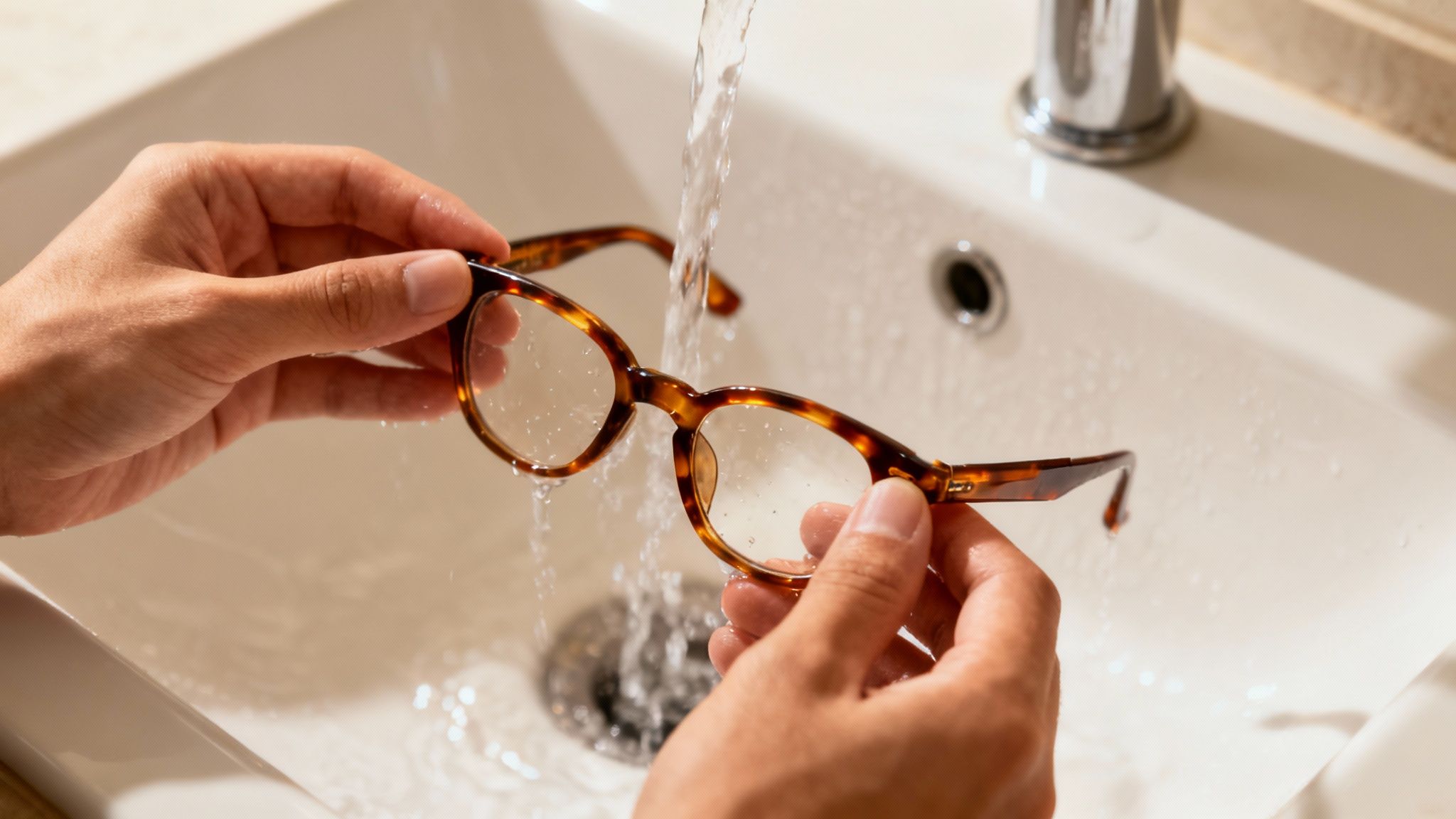
The whole idea is to get the plastic just soft enough to bend without overdoing it. You've got two great tools for this right at home: a hairdryer or warm running water. Let us be clear: never use boiling water or an open flame. That kind of intense heat will absolutely destroy the frame and can wreck your lens coatings.
For most small tweaks, warm tap water is your safest option. Just let the faucet run until the water is comfortably warm to the touch (not scalding!) and hold the part of the frame you need to adjust under the stream for 20 to 30 seconds. That's usually all it takes to make the material flexible.
If you prefer a hairdryer, set it to its lowest heat setting. The trick is to keep the dryer moving, holding it at least six inches away from the frames. This distributes the heat evenly and prevents one area from getting dangerously hot.
Making Your Adjustments
Once the plastic feels warm and pliable, it's time to make your move. Remember to apply slow, steady pressure. Rushing it is how frames get snapped.
- Frames feel too tight? Gently warm the bridge area. Once it's ready, carefully pull the two sides apart just a little to widen the frame.
- Frames slipping down your nose? Again, warm the bridge. This time, gently push the sides closer together to tighten the fit across your face.
- Need to adjust the arms? To make the arms hug your head more snugly, warm the temple and apply a slight inward curve. If they're digging in behind your ears, apply a gentle outward bend instead.
Crucial Safety Tip: Heat and lenses do not mix. Your lenses have delicate coatings for anti-glare and UV protection that can bubble or crack under direct heat. Always, always focus the warmth on the frame itself and keep it well away from your lenses.
Knowing your frame material is half the battle. If you want to dive deeper, our guide on the different types of spectacles frames is a great resource. It helps explain why materials like acetate respond so well to heat, while others need a totally different approach.
Tightening Up Your Frames and Keeping Them That Way
If the arms of your glasses swing open way too easily, with almost no resistance, you've got a loose hinge screw. It's an incredibly common problem that can make even a high-end pair of Gucci or Kate Spade frames feel flimsy and ready to slide right off your face. The good news? This is probably the easiest and most satisfying fix you can do yourself.
All you need is one of those tiny screwdrivers from an eyeglass repair kit you can grab at any pharmacy. Just lay your glasses on a soft cloth, find the tiny screw on the hinge, and give it a gentle clockwise turn. The goal here is a smooth, firm-but-not-stiff movement in the arm. Be careful not to go overboard—cranking down too hard can strip the screw or even crack the hinge.
Make Good Eyewear Habits Your Routine
Fixing things is one thing, but preventing problems in the first place is even better. A few simple, daily habits can make a huge difference in how long your glasses last and how well they fit. Think of it as protecting your investment and keeping your vision as sharp as possible.
Here are a few tips we always give our clients at iDoctor:
- Clean Them Right: Always, always use a microfiber cloth and a proper lens cleaning spray. Wiping your lenses on your shirt seems harmless, but it grinds dust and debris into the surface, creating tiny scratches that ruin your lens coatings over time.
- Use Two Hands: Make it a habit to put your glasses on and take them off with two hands. Using one hand puts uneven stress on one side, which is a fast track to bending your frames out of shape.
- Store Them Safely: If they're not on your face, they should be in their hard case. Period. Leaving them on a desk or countertop is just asking for them to get scratched, sat on, or knocked to the floor.
Why Your Case is Your Frame’s Best Friend
Speaking of storage, what you do with your glasses overnight is a bigger deal than you might think. Tossing them on the nightstand is a recipe for waking up to bent or crooked frames. That hard case they came in isn't just for travel; it's their home.
Proper storage is your number one defense against the slow, gradual warping that happens from everyday pressures. A solid case keeps the frames perfectly aligned, which is critical for clear, comfortable vision, especially if you lead an active life here in Glendale Heights.
A little consistent care goes a long way. For a more detailed look at getting those screws just right and other essential tips, check out our complete guide on how to tighten loose glasses. Following these small steps will keep your favorite frames feeling secure and looking great for years.
When to Visit Your Glendale Heights Optometrist
Knowing how to make a few minor tweaks to your glasses at home is a fantastic skill, but knowing when to put the tools down is even more critical. Some fixes just aren't suited for a DIY approach, and trying to force it can cause permanent damage to your frames or even mess with your vision. Think of your luxury eyewear as an investment—a quick trip to your eye doctor in Glendale Heights is the best way to protect it.
Pay attention to the warning signs. If you're gently bending a plastic frame and see faint, white lines or what we call stress marks start to appear, stop immediately. That's the material telling you it's about to snap, and only a professional with the right heating equipment should take it from there.
Problems Requiring an Expert Touch
Seriously crooked frames are another major red flag. If your glasses are so out of whack that one lens is obviously higher or closer to your eye than the other, it’s not just a comfort issue; it can actually throw off your visual alignment. This is especially true if you wear progressive lenses, where even a millimeter of misalignment can make a huge difference.
Here are a few other common situations where you should book a visit:
- Creaking or Stiff Hinges: You might be tempted to force a stiff hinge, but that's a recipe for a broken frame. It could be bent or have internal damage that needs a delicate touch.
- Loose Lenses: If you can hear or feel a lens rattling around in the frame, it needs to be professionally re-seated. Don't wait for it to pop out at the worst possible moment.
- Visible Frame Damage: Things like cracks, deep scratches, or peeling finishes on the frame can't be fixed with a home kit. We can assess whether a professional repair is possible.
Protecting Your Investment in Designer Eyewear
Your designer frames—whether they're Fendi, Prada, or Cartier—are made from premium materials that demand special care. We have professional frame warmers that provide even, consistent heat and specialized pliers designed to adjust delicate materials without leaving a mark. Trying to use a hairdryer or brute force on these materials can easily lead to a costly mistake.
A quick stop at our iDoctor boutique in Glendale Heights lets our specialists get your vision and comfort dialed in perfectly, protecting your eyewear for the long haul.
At-home tweaks are great for minor slips and pinches. But for anything that affects your actual line of sight or risks the integrity of the frame, professional intervention is the safest and most effective choice.
A perfect fit is about more than just comfort; it's about making sure your prescription lenses are positioned correctly to give you the clearest vision possible. To learn more about how a precise fit impacts your eyesight, check out our article on the benefits of custom eyewear measurements. When in doubt, let the best optometrist in Glendale Heights take a look.
FAQs about Eyeglass Adjustments in Glendale Heights
We get a lot of great questions at our Glendale Heights boutique about frame care and adjustments. Here are answers to a few we hear most often.
How often should my glasses be professionally adjusted?
We recommend stopping by our Glendale Heights location for a professional tune-up at least once a year. Daily wear, even just taking your glasses on and off, can slowly shift the alignment. And remember, if you purchased your eyewear from iDoctor, adjustments are always complimentary.
Can you fix frames I bought online?
Yes, we can! While we can't warranty frames purchased elsewhere, our experienced opticians are happy to adjust them for you. We have the proper tools to carefully adjust most frames, whether they're luxury brands like Saint Laurent or affordable options like Ray-Ban, to ensure a comfortable and accurate fit.
Do I need an appointment for a simple frame adjustment?
No appointment is necessary for a quick adjustment! Just stop by our boutique in Glendale Heights whenever it’s convenient. Whether your glasses are slipping down your nose or feeling a bit crooked, we'll get them fitting perfectly for you in just a few minutes.
What’s the difference between a DIY adjustment and a professional one?
While home adjustments using warm water are great for minor tweaks, our professional equipment makes a big difference. We use controlled frame warmers that apply even heat, preventing damage to sensitive materials or lens coatings on your Tom Ford or Fendi frames. Our specialized tools allow for precise bends without scratching or stressing the frame. For a perfect fit that protects your investment, a professional touch is always best.
At iDoctor, we're dedicated to providing exceptional eye care and a curated selection of luxury eyewear to the Glendale Heights community. From our 30-minute detailed eye exams in Glendale Heights to perfect frame fittings, your vision and style are our top priorities. Stop by our boutique on North Avenue or visit us online at https://idoctoril.com to see what makes us different.