Picking out new glasses is about more than just seeing clearly—it's about finding a pair that complements your features, feels comfortable all day long, and genuinely fits your life. Finding that perfect pair right here in Glendale Heights is a delicate balance between your prescription, your face shape, and your personal style.
Your Guide to Finding the Perfect Frames in Glendale Heights
Let's be honest, choosing new glasses can feel overwhelming. With so many options, where do you even start? This guide is here to cut through the noise and make the process not just simple, but actually enjoyable. We'll break down everything you need to know, from which styles will flatter your face shape to what materials can handle your day-to-day grind.
Whether you’re dealing with the glare on North Avenue during your commute or just relaxing with a book, your glasses need to deliver on comfort, clarity, and confidence. We’ll show you exactly how to find that perfect pair and introduce you to iDoctor, Glendale Heights' go-to boutique for a hand-picked selection of frames.
More Than Just an Accessory
Eyewear has truly become a blend of medical necessity and personal fashion. It's a huge market, valued at over $200 billion globally, and prescription glasses make up the biggest piece of that pie—over 69% of all sales. That just goes to show how many people are looking for frames that don't just correct their vision, but also say something about who they are. Discover more insights about the eyewear industry.
The perfect pair of glasses feels like it was made just for you. It sits comfortably, enhances your features, and withstands your daily routine without a second thought.
Finding Your Style in Glendale Heights
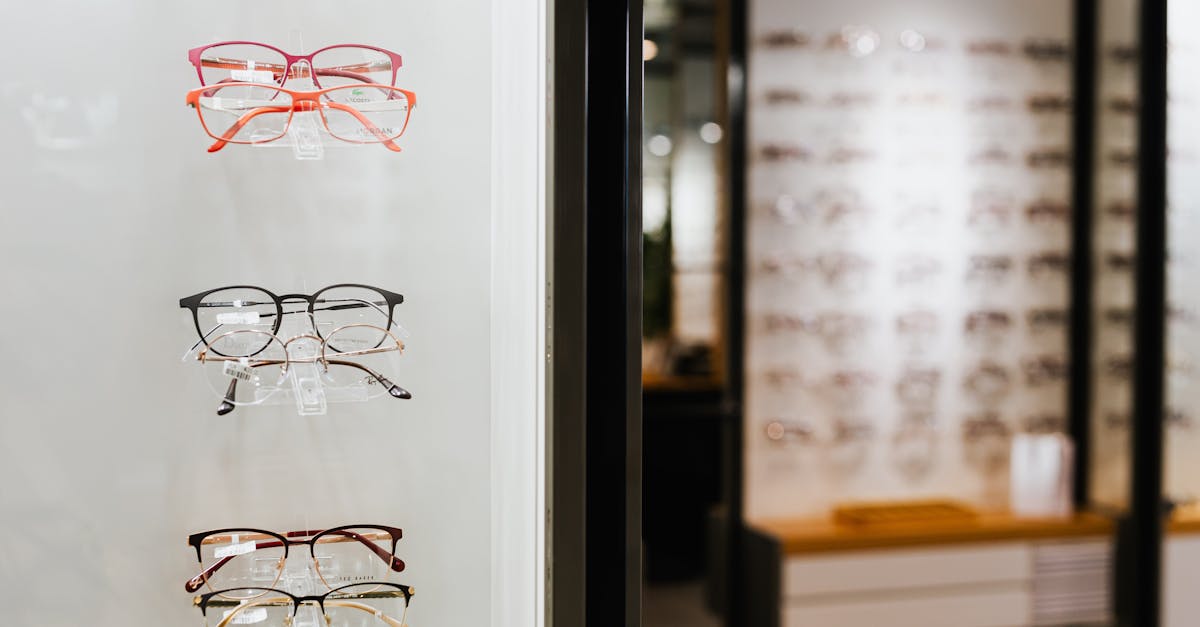
At iDoctor, we think the experience of choosing your eyewear should be as special as the frames themselves. That’s why we’ve carefully curated our collection to reflect the diverse styles and needs of our Glendale Heights community.
We carry frames to suit every taste and lifestyle:
- Luxury Statements: For those who appreciate timeless elegance, we offer stunning pieces from Cartier, Gucci, and Tom Ford.
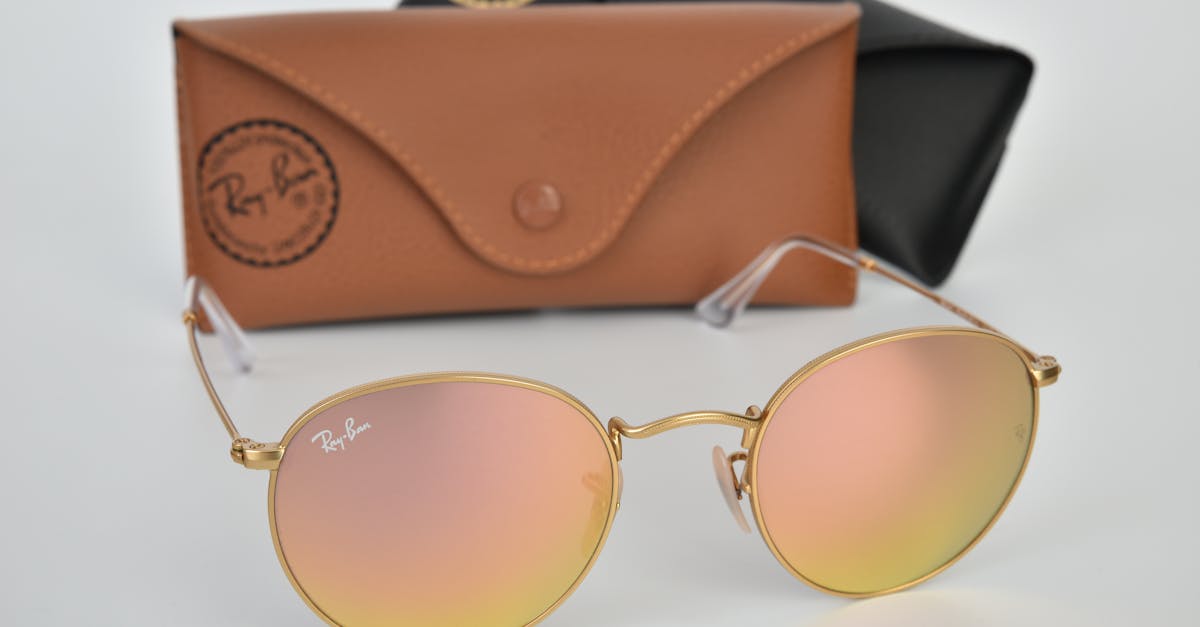
- Modern Classics: You can't go wrong with stylish and popular options from iconic designers like Ray-Ban, Kate Spade, and Michael Kors.
- Expert Guidance: Our warm, professional team is here to help you navigate our collections of designer eyeglasses in Glendale Heights and find a pair that truly works for your face, prescription, and life.
From a busy parent who needs something durable and stylish to a professional looking for that sharp, sophisticated edge, the right pair is waiting for you. This guide will give you the confidence and know-how to find glasses you’ll be happy to wear for years to come.
Matching Frame Styles to Your Face Shape
So, where do you even begin when you're staring at a wall of eyeglass frames? The best place to start is with the basics: your face shape. It's a classic rule of thumb for a reason. Think of it as creating balance—the right frames will contrast your natural features in a way that just works.
Figuring out if your face is primarily round, square, oval, or heart-shaped gives you a massive head start. It’s not about hard-and-fast rules, but more of a friendly guide. For example, if you have a square jawline with strong angles, the soft curves of a round or oval frame can provide a beautiful softening effect. On the flip side, someone with a round face might find that the sharp, clean lines of a rectangular frame add just the right amount of definition.
It’s all about that contrast. This simple concept helps you cut through the noise and zero in on styles that are likely to be flattering, making the whole process way less overwhelming.
Identifying Your Face Shape
Not sure which shape you have? Here’s a super simple trick. Grab a dry-erase marker, stand in front of a mirror, and trace the outline of your face directly on the glass. Then, step back and take a look at the shape you drew.
- Round: Your face is just about as wide as it is long, with fuller cheeks and a rounded chin.
- Square: You've got a more angular look, with a strong jawline and a forehead and cheekbones that are roughly the same width.
- Oval: Your face is a bit longer than it is wide, with a softly rounded chin and balanced proportions.
- Heart-Shaped: You'll notice a broader forehead and more prominent cheekbones that taper down to a narrower chin.
Once you’ve got a handle on your shape, the fun begins. If you have a heart-shaped face, look for frames that are wider at the bottom, like some aviators or certain cat-eye styles from a designer like Tom Ford. They help balance your features beautifully. Those with an oval face have it easy—this shape is considered the most versatile, so you can pull off bold, oversized styles from Oliver Peoples without a problem.
Want to dive deeper into this? We have a whole post that breaks it down even further. You can read it here: choosing the perfect glasses shape for your face.
Frame Styles for Your Face Shape
To make it even easier, here's a quick cheat sheet. Use this table to quickly find styles that are almost always a great match for your face shape.
| Face Shape | Key Characteristic | Best Frame Styles | Styles to Approach with Caution |
|---|---|---|---|
| Round | Soft, curved lines; width and length are similar. | Rectangular, square, geometric frames. | Small, round frames that can make the face appear rounder. |
| Square | Strong jawline; forehead and jaw are wide. | Round, oval, cat-eye frames. | Boxy, angular frames that can overemphasize angles. |
| Oval | Longer than it is wide; balanced proportions. | Most styles work! Wayfarer, square, aviator. | Frames that are overly wide and disrupt the natural balance. |
| Heart | Wide forehead, high cheekbones, narrow chin. | Frames wider at the bottom: aviator, rimless. | Heavy top-bar styles or frames that are too narrow. |
This is a great starting point, but remember to have fun with it and trust your gut when you're trying frames on.
A Visual Guide to Your Best Frames
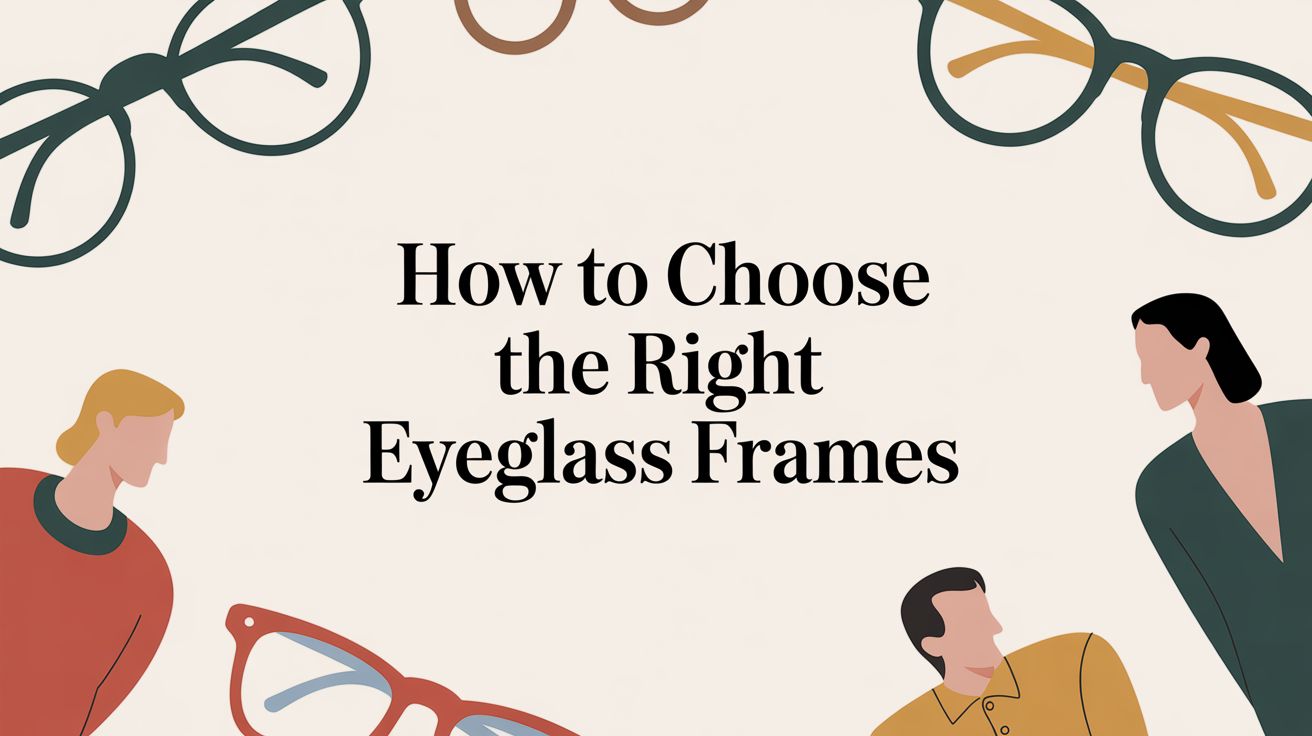
This quick visual guide really helps put it all together, showing how your face shape is just one part of the bigger picture.

As you can see, your prescription and your daily life play just as big a role in finding that perfect pair.
Beyond the Basics of Shape
While face shape is a fantastic starting point, it's just one piece of the puzzle. You also have to think about your personal style. What kind of vibe are you going for? Do you need a pair that looks professional and buttoned-up for the office, or are you after something more creative and playful for weekends in Glendale Heights?
It’s interesting to see how designers think about this. If you’re curious about the design world, looking at resources like fashion illustration templates can give you a peek behind the curtain. You start to see how every single curve and line is deliberately chosen to create a specific look and feel.
The best frames don't just fit your face; they fit your life. They should feel like an extension of your personality, whether you're aiming for sophisticated, creative, or understated.
Ultimately, these are just guidelines, not unbreakable laws. The most important thing is how a pair of glasses makes you feel. If you have a round face but you fall head-over-heels for a pair of round frames, you should absolutely wear them with confidence! Our job at iDoctor is to help you explore all the amazing options, from chic Fendi frames to timeless classics from Ray-Ban, so you can find a pair that feels like it was made just for you.
Decoding the Numbers for a Comfortable Fit
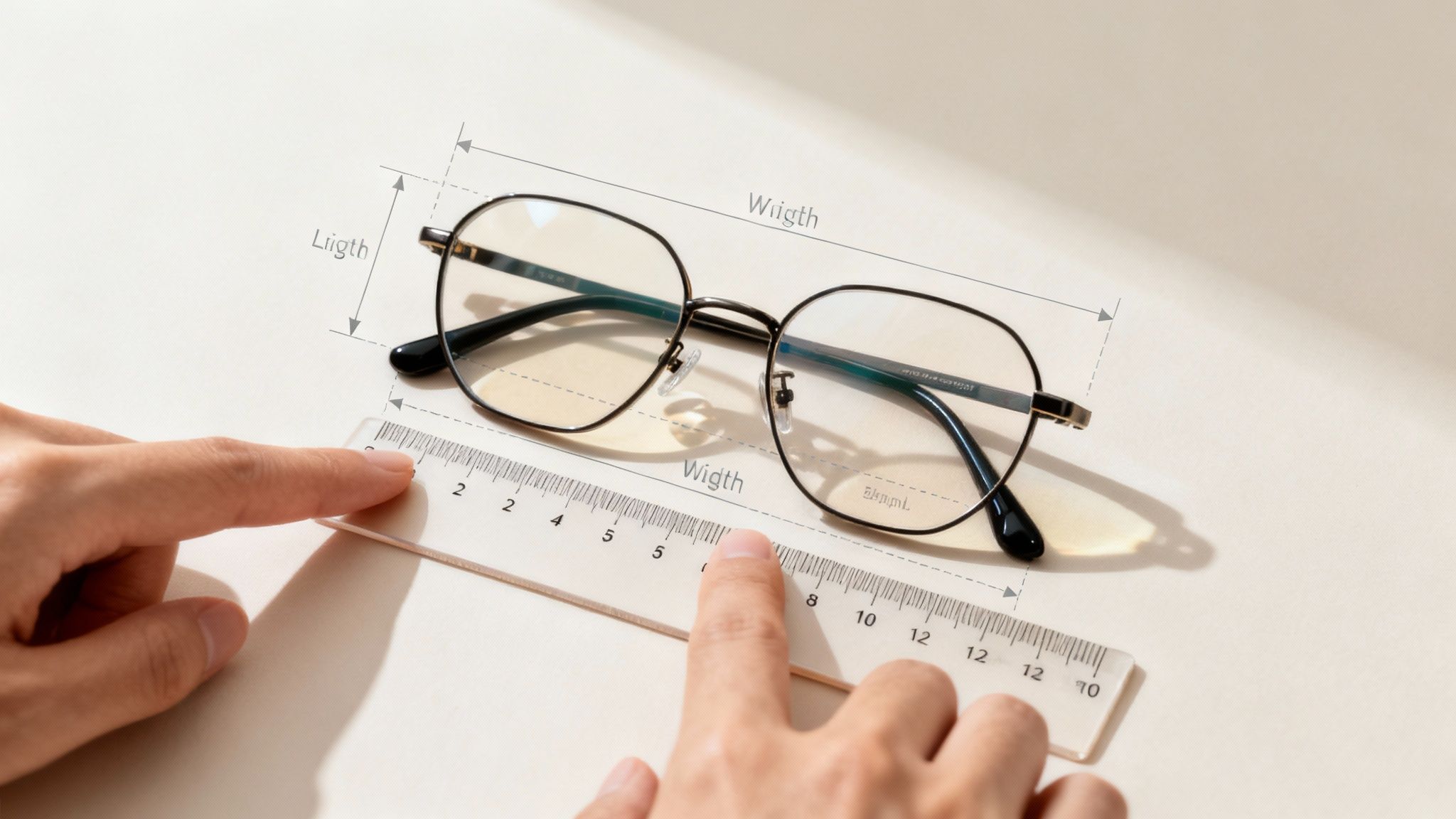
Ever noticed that small set of numbers printed on the inside arm of a pair of glasses? They might look something like 52-18-145, and they're the secret to finding frames that feel as good as they look. A stunning pair of Gucci frames is worthless if it's constantly slipping down your nose during a meeting or pinching your temples while you're driving.
Understanding these numbers takes the guesswork out of the equation. It helps you know why a certain frame feels right while another just doesn't, so you can tell our opticians exactly what you need.
Breaking Down the Frame Measurements
Those three little numbers are your key to comfort. Measured in millimeters, they represent the lens width, bridge width, and temple length.
-
Lens Width (e.g., 52mm): This first number is the horizontal width of one lens at its widest point. It's the main factor in how a frame scales to your face. If it's too wide, the glasses will look like they're wearing you. Too narrow, and you might feel like you're looking through a tunnel.
-
Bridge Width (e.g., 18mm): The second number is the distance between the lenses—the part that rests on your nose. This is probably the most critical measurement for comfort. A bridge that's too tight will pinch and sit way too high, while one that's too wide will send your glasses sliding down your face all day long.
-
Temple Length (e.g., 145mm): The last number measures the "arm" of the glasses, from the hinge all the way to the tip that curves behind your ear. Getting this right means your glasses feel secure without putting painful pressure on your head.
Why the Right Fit Matters So Much
A bad fit isn't just a minor annoyance; it can mess with your vision. For the best optical clarity, your pupils should be centered in the lenses. Think of it like a good pair of shoes: too small and they pinch, too big and they slip. Eyeglasses are the same—the right fit provides a stable foundation you can wear comfortably from morning to night.
Key Takeaway: A comfortable fit means the frames feel secure without being tight. They shouldn't slide when you look down, leave red marks on your nose, or dig into the sides of your head.
For a truly perfect fit, we also need to consider your pupillary distance (PD), which is simply the measurement between the centers of your pupils. This ensures your prescription is perfectly aligned in the frame. We handle this for you during your detailed eye exams in Glendale Heights, but if you're curious, you can learn more about measuring your pupillary distance in our detailed guide.
Practical Tips for Checking the Fit
Next time you’re trying on frames at our Glendale Heights boutique, try these simple checks before you even look in the mirror:
- The Smile Test: Give a big, wide smile. Do the frames lift off your nose and rest on your cheeks? If so, they're probably too big, or the bridge shape isn't right for you.
- The Head Shake Test: Gently shake your head side to side, then nod. Your frames should stay put without any wiggling or slipping. If they move, the temples or bridge likely need an adjustment.
- Check the Width: Look at the frames from the front. They should be just a bit wider than your face—no more than a finger's width of space between the temple and your head. If the arms are bowing out, the frame is too narrow.
These quick tests, combined with your new knowledge of frame measurements, will empower you to find that perfect pair. You’ll be able to work with our team to find Cartier or Ray-Ban frames that feel like they were made just for you.
Choosing Colors and Materials for Your Lifestyle
Once you've nailed down the shape and fit, the real fun begins: choosing the material and color. These two elements are what give your frames their soul. Think of the material as the frame's architecture—it dictates the weight, flexibility, and how well it stands up to daily life. Color, on the other hand, is all about personality. It’s your chance to express your style and play up your best features.
Finding the right mix is about being honest about your lifestyle. A busy parent chasing toddlers around Glendale Heights needs something far more resilient than someone working in a quiet office. Likewise, your color choice can be a bold statement piece or a subtle, sophisticated accent.
A Look at Frame Materials
The material you choose has a huge impact on how comfortable your glasses feel day-in and day-out, not to mention how long they'll last. Some materials are famous for feeling like they're barely there, while others are built like a tank.
Let’s walk through the most common options you'll find in our boutique:
-
Acetate: This is a plant-based plastic that designers love for its incredible color possibilities. It allows for rich, layered hues and patterns that won't chip or peel away. If you're drawn to those bold, vibrant frames from Kate Spade or Fendi, you're probably looking at acetate. It's strong and hypoallergenic, though it can feel a bit more substantial than metal.
-
Titanium: If you want something incredibly lightweight, strong, and corrosion-resistant, titanium is the gold standard. It’s a fantastic choice for anyone with sensitive skin or for those who are tough on their glasses. Brands like Oliver Peoples often use titanium to create their sleek, minimalist designs.
-
Metal Alloys: Usually a blend of materials like monel or stainless steel, these frames deliver a classic, understated look. They're typically lightweight and highly adjustable, which is great for getting that perfect, custom fit. The timeless Ray-Ban aviator is a perfect example.
-
TR-90: This is a super flexible, durable, and lightweight thermoplastic. Honestly, if you have kids or just tend to be rough with your stuff, TR-90 frames are almost indestructible. They can bend without breaking, making them a seriously practical choice for everyday wear.
Frame technology has come a long way. Today, we're seeing more lightweight metals, advanced plastics, and even eco-friendly materials that offer amazing durability without sacrificing an ounce of style. This shift is also driven by a desire for unique, boutique frames over generic, mass-produced options. Read the full research on modern frame trends.
For a deeper dive into how these materials stack up, check out our guide. You can learn more about acetate vs. titanium vs. metal frames in our detailed article.
Finding Your Perfect Color Palette
Picking a frame color is more art than science. It's less about your favorite color and more about finding shades that complement your natural coloring. The right hue can instantly brighten your complexion and make your eyes pop.
A great starting point is to consider your skin tone, which generally falls into one of three categories: warm, cool, or neutral.
Matching Frames to Your Skin Tone
-
Warm Skin Tones: If your skin has golden, peachy, or yellow undertones, you have a warm complexion. You'll shine in colors that echo that warmth—think gold, honey, olive green, coral, and rich tortoise patterns. A pair of Tom Ford frames in a warm brown tortoiseshell would be a showstopper.
-
Cool Skin Tones: For those with pink, red, or bluish undertones, you have a cool complexion. Your best bets are frames in shades like silver, black, deep blues, dark tortoise, magenta, and gray. Picture a sharp pair of silver Prada frames or a striking blue from Saint Laurent.
-
Neutral Skin Tones: Have a mix of pink and golden undertones? You've hit the jackpot. You can pull off just about any color, which gives you the freedom to play with everything from timeless black to a bright, adventurous shade.
Pro Tip: Don't stop at skin tone! Your hair and eye color are just as important. Earthy tones can make green eyes look more vibrant, while shades of blue and purple create a beautiful contrast with blue eyes. And if you have brown eyes, you're in luck—they're incredibly versatile and look amazing with almost any color.
At the end of the day, the right material and color are the ones that make you feel like yourself. Whether you need something durable enough for a weekend at the Glendale Heights Arts Festival or elegant enough for a special event, the perfect pair is out there. Our opticians at iDoctor are here to help you explore all the possibilities and find frames that feel like they were made just for you.
How Your Prescription Shapes Your Frame Options
It's easy to get caught up in finding the perfect style, but your prescription is the technical foundation of your glasses. Think of it as the engine under the hood—ignoring it can lead to frames that look fantastic but just don't work well for your vision. Your specific vision needs are the real starting point.
For instance, a strong prescription often requires thicker, heavier lenses. If you put those into a large, delicate, or rimless frame, you can end up with a "bug-eye" effect that magnifies or shrinks your eyes. That extra weight also makes the glasses slide down your nose and feel uncomfortable after just a few hours.
This is exactly where an experienced optician makes all the difference. We're here to help you find that perfect marriage of function and fashion, so you don't have to compromise on either.
Strong Prescriptions and Frame Selection
If you have a high-power prescription for nearsightedness (myopia) or farsightedness (hyperopia), your lens choice is going to steer your frame selection. Lenses for stronger prescriptions are naturally thicker at the edges (for myopia) or in the center (for hyperopia).
This thickness can create a few problems:
- Peripheral Distortion: The view from the corner of your eye can get a bit warped with very thick lenses, which can be disorienting.
- Weight and Comfort: Heavier lenses need a sturdy frame to hold them securely, and they can feel heavy on your nose and ears over time.
- Aesthetics: The visible edge of a thick lens can really detract from an otherwise beautiful frame, especially thin metal or rimless styles.
The best strategy here is often to choose smaller, more rounded frames. A smaller lens means the thickest parts get trimmed away during the cutting process, leaving you with a thinner, lighter, and much more attractive pair of glasses. Materials like acetate or titanium also provide the durability you need.
Another fantastic option is using high-index lenses. This advanced material bends light more efficiently, allowing the lens to be significantly thinner and lighter even with a strong prescription. This opens up a much wider world of frame styles. For a deeper look, you can read our complete guide on high-index vs. standard lenses.
Frames for Progressive and Bifocal Lenses
Wear progressives or bifocals? The most important factor for you is vertical height. These lenses are incredible because they pack multiple prescription powers into a single lens—one zone for distance, one for intermediate (like a computer screen), and another for reading.
For these zones to work properly, they need enough space. If you pick a very short, narrow frame, you risk cramping those viewing corridors. This can lead to a frustrating experience where you're constantly tilting your head up and down to find the "sweet spot" for every task.
A frame with a decent vertical height gives you a smooth, natural transition as your eyes move from looking across the room to checking your phone. Our opticians are experts at making sure your chosen frames, whether from Gucci or Ray-Ban, have the perfect dimensions to support your multifocal lenses.
Tying Your Vision Needs to Your Glendale Heights Lifestyle
Your prescription and your daily routine go hand-in-hand. Let's think about how you spend your days here in the Glendale Heights area.
- The Office Professional: If you're on a computer for hours, a lightweight frame is a must. Pairing it with a blue-light filter can make a world of difference in your comfort.
- The Active Individual: Love golfing at Glendale Lakes Golf Club or biking through local parks? You'll want something durable and secure, like a frame made from a flexible material with impact-resistant lenses.
- The Night Driver: If you often find yourself driving along Army Trail Road after dark, an anti-reflective coating is a game-changer. It cuts down on the distracting glare from oncoming headlights.
At the end of the day, your prescription isn't a limitation—it's your guide. By understanding how it works with different frames and materials, you can make a smart choice that delivers clear vision, lasting comfort, and a style you absolutely love.
Find Your Signature Look at iDoctor
You've done the homework—you know your face shape, you've considered your lifestyle, and you have a good idea of what you're looking for. But the most exciting part is actually finding the pair. This is where theory meets reality, and the hands-on, personalized experience you'll get at iDoctor in Glendale Heights really shines. An online quiz is a great start, but it can never replace that "aha!" moment when a frame settles perfectly on your face or you see how a specific color makes your eyes pop.
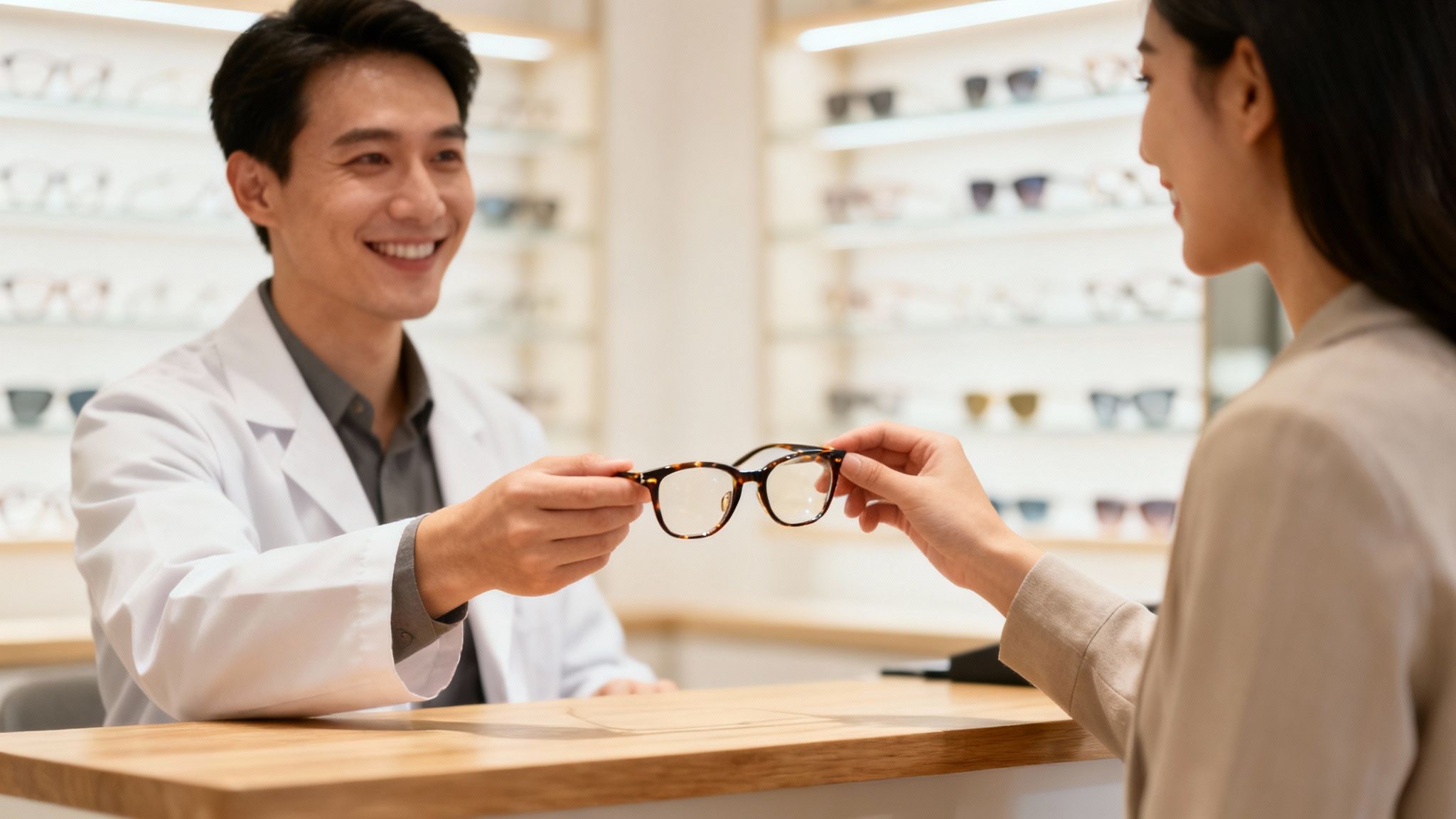
Think of our expert opticians as your personal style guides. We're here to help you put all that newfound knowledge into practice, from matching frames to your features to making sure the fit is comfortable and totally secure. Our job is to navigate you through our carefully chosen collection and help you find a pair of glasses you’ll genuinely love wearing day in and day out.
A Curated Collection for Every Style
We firmly believe that great style should be for everyone. That’s why our Glendale Heights boutique features a hand-picked range of eyewear designed to fit every personality, lifestyle, and budget.
We've selected each collection for its quality, durability, and timeless appeal. You’ll find:
- Understated Luxury: Discover the refined elegance of brands like Fendi, Prada, and Saint Laurent—perfect for making a sophisticated statement.
- Accessible Designer Fashion: Explore iconic and stylish frames from Kate Spade, Coach, and Michael Kors that effortlessly blend trend-forward designs with everyday wearability.
We're proud to serve our neighbors from Glendale Heights, Bloomingdale, and Carol Stream. A professional fitting from a skilled optician is something an online tool simply can’t replicate. It's the final, crucial step to ensuring your new glasses not only improve your vision but also elevate your personal style.
Your Partners in Perfect Vision and Style
Choosing new eyewear is a big deal. Your glasses are often the first thing people notice, and more importantly, they shape how you see the world. At iDoctor, we take that responsibility to heart. Our goal is to make sure you walk out of our door feeling fantastic and seeing with absolute clarity.
The perfect pair of eyeglasses is a blend of science and art. It requires precise measurements and an expert understanding of optics, combined with a feel for personal style and comfort. That's the iDoctor difference.
Whether you need a durable pair that can keep up with your active life or a chic accessory for the office, we're here to guide you. We’ll double-check that your favorite frames can accommodate your specific prescription and any special lens requirements, like progressives.
So, stop by our boutique on your way home from work or while you're running errands near the Glendale Lakes Business Park. We’re ready to help you find that signature look. Your perfect pair is waiting for you right here in Glendale Heights.
Frequently Asked Questions
Where can I find designer eyeglasses in Glendale Heights?
Right here at iDoctor! As Glendale Heights' premier optometry boutique, we’ve carefully curated a collection that brings the best in designer eyewear directly to you. We're an authorized retailer for iconic luxury brands like Cartier, Gucci, and Tom Ford, and we also carry a fantastic selection from all-time favorites like Ray-Ban and Michael Kors.
Do I need an appointment to look at glasses?
You are always welcome to stop by our Glendale Heights boutique to browse our frame collection. However, if you'd like a personalized consultation with one of our expert opticians to help you select the perfect frames, we recommend scheduling a time so we can give you our undivided attention.
Can I use my vision insurance for high-end frames?
Yes, absolutely! At iDoctor, we accept all major vision insurance plans, and our staff are experts at helping you get the most out of your benefits. Most plans include a frame allowance, which is a set dollar amount you can put toward any pair of glasses you choose. We’ll apply your allowance directly to your purchase, which can make that pair of Prada or Fendi frames you’ve been eyeing much more affordable.
Ready to find your perfect pair? The expert team at iDoctor is here to guide you through our stunning collection and provide a personalized fitting. Visit us in Glendale Heights to experience the difference.