Learning how to put in contacts easily really comes down to just three things: clean hands, a calm approach, and the right technique. Once you get the hang of it, this simple routine becomes second nature—just another quick, easy part of your day. For residents in Glendale Heights and the surrounding Chicagoland suburbs, our team at iDoctor is here to guide you every step of the way.
Your Guide to Effortless Contact Lens Insertion
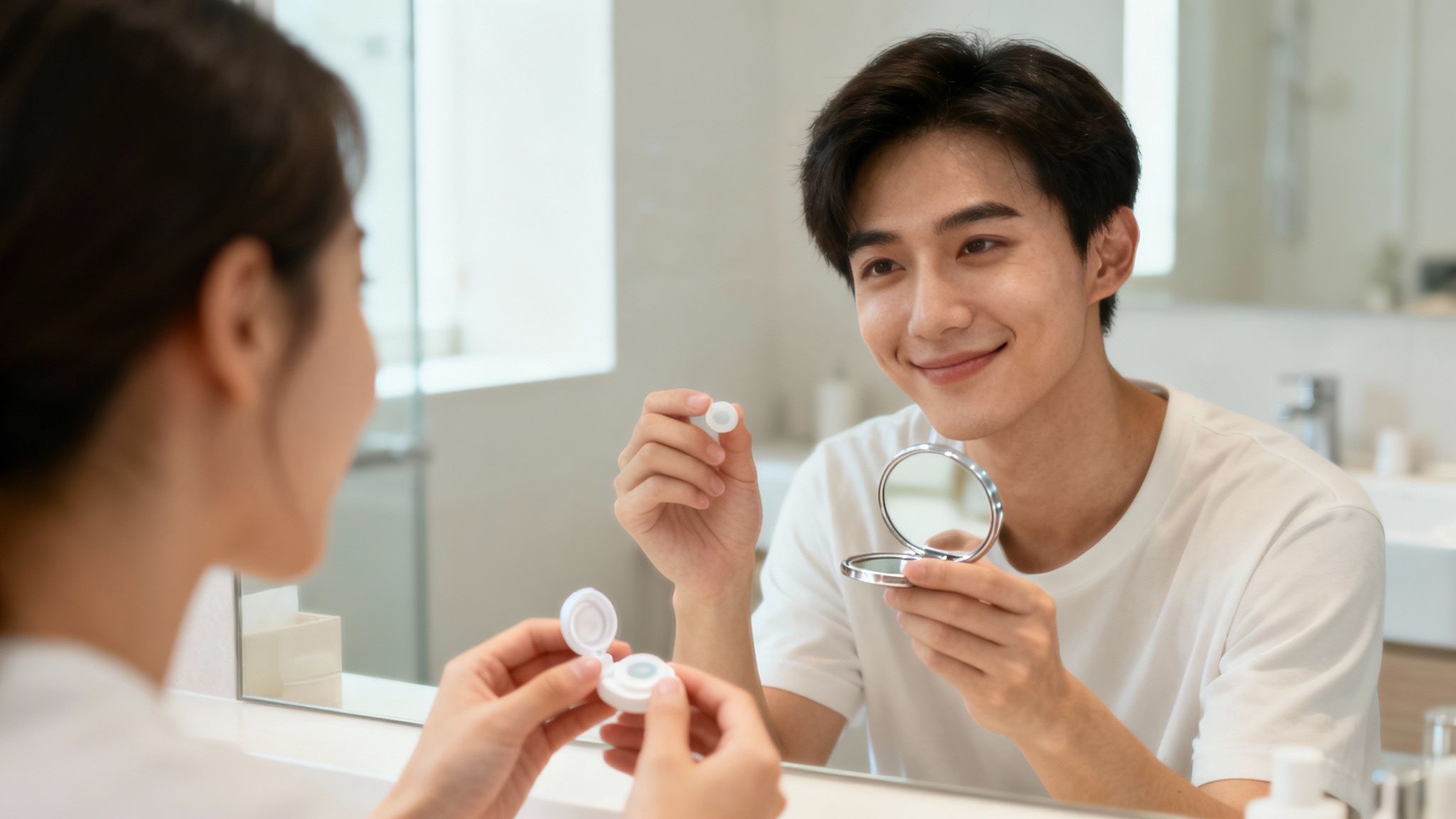
If you're new to contacts, the thought of putting a tiny lens in your eye can feel pretty strange. We get it. Many of our patients in Glendale Heights, from students at Glenbard West High School to professionals commuting down North Avenue, feel that same hesitation at first. But what if it could become as automatic as pouring your morning coffee?
This guide is designed to cut through that initial anxiety. It’s a calm, professional, and approachable method we’ve developed after years of helping people just like you get comfortable with their new lenses. Think of it as a personal coaching session from your iDoctor team, here to build your confidence right from the start.
Building Your Confidence
Feeling a little nervous is completely normal, so you're not alone. The great news is that modern lens designs and clear instructions have made the whole process much smoother for first-timers.
In fact, studies show that 78% of new users feel much more confident handling their lenses after just a bit of training from an eye care professional.
Our goal is to give you that same level of assurance. We'll walk through the essentials—like setting up a clean space and handling your lenses correctly—before diving into a simple, no-fuss insertion method.
Of course, the most important first step is getting a professional fitting to make sure the lenses are perfect for your unique eyes. You can learn more about what that involves in our guide to a contact lens fitting in Glendale Heights.
The 3 Cs of Contact Lens Success
To simplify things even further, I always tell my patients to remember the "3 Cs." Master these three principles, and you'll have a safe, easy, and successful contact lens experience every single time.
| Principle | Why It's Important | Quick Tip |
|---|---|---|
| Clean | Prevents eye infections and irritation by keeping bacteria and debris away from your lenses and eyes. | Always wash hands with a mild, non-oily soap and dry them with a lint-free towel before touching your lenses. |
| Calm | A steady hand and relaxed mind make insertion much easier. Rushing leads to dropped lenses and frustration. | Take a deep breath. If you feel tense, step away for a minute and come back. It's not a race! |
| Correct | Ensures the lens is properly oriented for clear vision and comfort. An inside-out lens will feel wrong. | Check the lens on your fingertip. If it looks like a perfect bowl, you’re good. If the edges flare out, it’s inside-out. |
Remembering to keep things Clean, stay Calm, and check for the Correct orientation will help you build a solid routine from day one.
Achieving clear, comfortable vision with contact lenses is absolutely within your reach. We're here to show you how, ensuring your journey to frame-free sight is a great one.
Setting Up for a Smooth Application
Getting your contacts in smoothly has less to do with the final moment of insertion and everything to do with what you do beforehand. Think of it as setting the stage—a few simple preparations can make the difference between a frustrating fumble and a quick, easy application.
First things first, find a clean, well-lit spot. Your bathroom counter is usually the perfect place, especially with a big mirror. Just be sure to clear away any clutter so you have plenty of elbow room and can focus without distractions.
Perfecting Your Hand Hygiene
This is the one step you can never, ever skip: impeccable hygiene. Your hands are the only tools you'll be using, and keeping them clean is your best defense against irritation and eye infections.
- Start by washing your hands thoroughly. Use a simple, mild soap that’s free of lotions, oils, or heavy perfumes. Those additives can leave a residue on your fingers that transfers right onto your lens, leading to blurry vision and discomfort.
- Rinse them well, making sure no soap is left behind.
- Dry your hands with a clean, lint-free towel. This is a small detail that makes a huge difference. Regular towels often shed tiny fibers that can get stuck to your lens and feel like an eyelash is in your eye all day.
With your hands clean and completely dry, you're ready to go. For a deeper dive into lens care, check out our guide on the best way to clean contacts.
Handling and Checking Your Lens
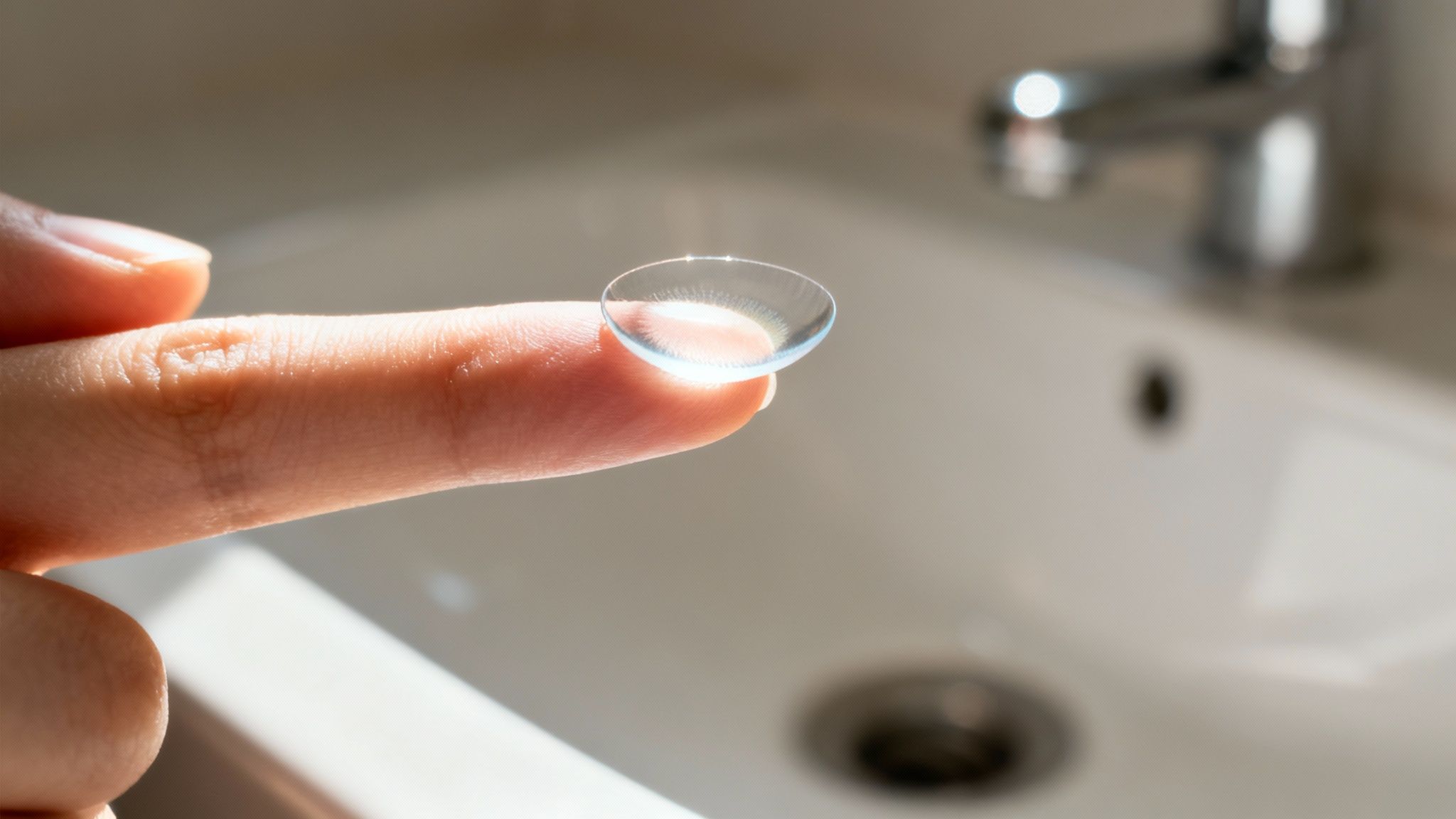
Time to get the lens out. Gently slide it from its case onto the pad of your index finger. Be careful not to use your fingernails, as they can easily tear the soft material.
Now, take a second for a crucial inspection. Is the lens inside-out? This is a super common mistake for new wearers, but it's easy to catch once you know the trick.
The "Taco Test": Gently pinch the edges of the lens between your thumb and forefinger, like you're folding it in half. If the edges point straight up to form a perfect "U" shape (like a taco shell), you're good to go. If the edges flare outward, it's inside-out and needs to be flipped.
Doing this quick check every single time saves you the hassle and discomfort of putting a lens in the wrong way. It’s a tiny habit that guarantees a comfortable fit from the start.
Mastering the Insertion Technique
Now that your lens is prepped and ready, it's time for the moment of truth. The key here is to stay relaxed and keep a steady hand. Forget about trying to jam it in quickly before you blink—a slow, controlled approach is what actually works.
First things first, you need to create a wide, clear space for the lens to land. Your eye's natural instinct is to shut the second something gets close, but we can gently work around that reflex.
With your non-dominant hand, use your middle finger to pull your upper eyelid straight up toward your eyebrow. Make sure you get a good grip on your lashes. Next, use the middle finger of your dominant hand (the one holding the lens) to pull your lower eyelid down.
This two-handed method is a favorite among our patients because it gives you maximum control and keeps your lashes from bumping the lens out of place.
The Gentle Placement
Okay, with your eye held open, look right into the mirror. Some people find it helps to look slightly upward, away from the incoming finger.
Slowly and steadily, bring your index finger—with the lens resting on it—toward your eye. Don't rush it.
Keep moving until the lens makes contact with the surface of your eye. You should feel a slight, cool sensation as it settles onto your tear film. It absolutely should not hurt. The moment it touches, the lens will sort of suction itself onto your eye.
Pro Tip: Looking up as the lens gets close is a great trick. It takes your focus off the finger moving toward you, which really cuts down on the urge to flinch or blink at the last second.
Once the lens is on your eye, slowly let go of your lower lid, then your upper lid. Blink a couple of times, nice and slow. This helps the lens center itself perfectly over your iris. Your vision should clear up almost instantly.
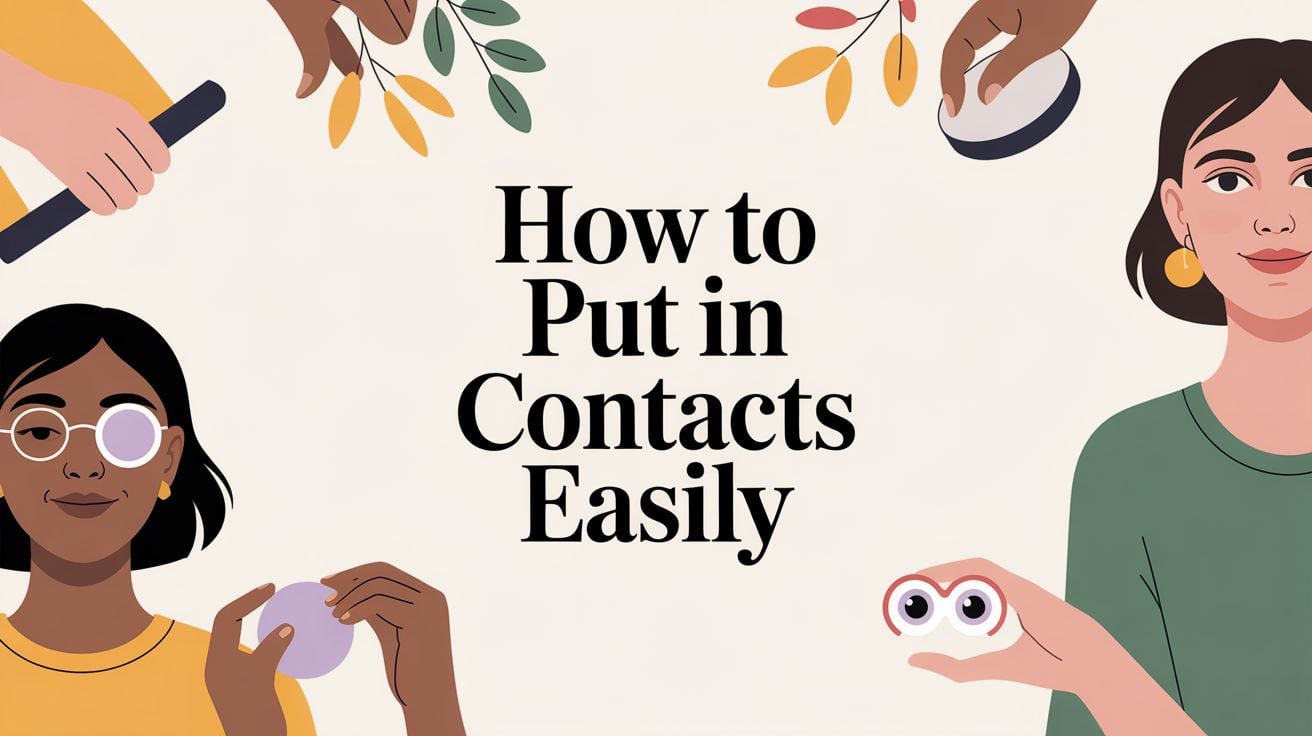
This infographic really simplifies the entire process into three core visual cues.
It’s a great reminder that the process always comes back to clean hands, a quick lens check, and then the placement.
What to Expect
When you're new to contacts, having one in your eye will feel a little odd for the first few days, but it should never be painful, sharp, or scratchy. If you feel any real discomfort, the lens is probably inside-out or has a tiny piece of lint on it. Don't try to tough it out. Just take it out, give it a good rinse with your solution, and try again.
The type of lens you wear can also make a big difference in comfort and how easy they are to handle. If you're curious about the options, we break down the most popular choices in our guide to daily disposable vs. monthly contact lenses for your Glendale Heights lifestyle.
Honestly, patience is everything. It’ll probably take you a few attempts to nail it, but I promise this will soon become such a normal part of your routine you won't even think about it.
Troubleshooting Common First-Time Issues
Even with a perfect technique, you're going to hit a few little snags at first. Honestly, it's a rite of passage for every new contact lens wearer. The key is knowing how to handle these moments calmly—it’ll boost your confidence and make the whole process feel much less intimidating.
One of the first things you might notice is a scratchy or uncomfortable feeling right after you pop the lens in. This almost always means one of two things: the lens is inside-out, or a tiny piece of debris (like lint or an eyelash) is trapped underneath. Whatever you do, don't try to power through the irritation.
The fix is simple. Just carefully take the lens out, give it a good rinse with fresh contact solution, and check its shape again. The "taco test" is your best friend here. Once you're sure it's oriented correctly, you can try inserting it again.
Navigating Minor Mishaps
Sometimes the lens itself seems to have a mind of its own, folding over on your finger or sticking stubbornly to the case. If it folds, don't panic. Just place it back in your palm with a drop of solution and gently coax it back into shape.
What if your vision is blurry right after putting a lens in? Try blinking gently a few times; it might just need a moment to settle onto your cornea. If the blurriness sticks around, you've likely either put the lens on the wrong eye or it's inside-out.
A huge fear for newcomers is that a contact lens can get "lost" behind the eye. Let's put that myth to rest: it is physically impossible. A thin membrane called the conjunctiva covers your eyeball and connects to your eyelids, forming a barrier. There's simply nowhere for the lens to go.
Most of the time, a so-called "lost" lens has just slid up under your upper eyelid. With clean hands, close your eye and gently massage the lid to help guide it back down into place. For a more detailed walkthrough, check out our guide on what to do when you have a contact lens stuck in your eye.
Think of these small troubleshooting moments as part of the learning curve. Each time you solve one, you become more of a pro.
The Right Lenses Can Make All the Difference
It's a common misconception that all contact lenses are basically the same. The truth is, the specific type of lens you wear can completely change your experience, especially when you're just starting out.
Think of it this way: trying to learn with a stiff, uncomfortable lens is like learning to ride a bike with flat tires. It’s just setting yourself up for a struggle. A professional fitting is the key to finding the right "bike" for your eyes, making the whole process feel much smoother from the get-go.
Why Soft Lenses Are Almost Always the Answer
There’s a good reason why soft contact lenses are the go-to for most people. They’re a massive market, generating USD 12.3 billion in revenue, which speaks volumes about how well they work for the vast majority of wearers.
Their popularity really boils down to two things: comfort and ease of use. They're made from incredibly flexible materials, like silicone hydrogel, that let plenty of oxygen flow to your eye. This makes them comfortable right out of the package. Learn more about the latest trends in contact lens materials to see how far the technology has come.
The goal is to find a lens that feels natural and is easy to manage. When you barely notice the lens on your finger or in your eye, you’ll feel much more relaxed during the insertion process.
The Beginner's Secret Weapon: Daily Disposables
If I had to recommend one thing to make life easier for a new wearer, it would be daily disposable lenses. Here in Glendale Heights, we find that most beginners who start with dailies have a much easier time adjusting.
Here’s a quick rundown of why they're such a great starting point:
- No Cleaning, Ever: You pop in a fresh, sterile pair every morning and toss them at night. This completely eliminates the hassle of cleaning solutions and storage cases, which also slashes the risk of infection.
- Built for Easy Handling: Dailies are often thinner and more pliable. For many people, this makes them feel less intimidating on their fingertip and more comfortable in the eye as they get used to the sensation.
- Peak Comfort, Every Day: A brand-new lens is always at its best. You won't have to deal with the gradual buildup of deposits that can sometimes make monthly lenses feel less comfortable toward the end of their cycle.
At the end of the day, nothing beats a professional contact lenses in Glendale Heights fitting at iDoctor. We take the guesswork out of it by matching you with the perfect lens for your prescription, the unique shape of your eye, and your daily life. It’s the single most important step to ensure you get started on the right foot.
Your Contact Lens Questions Answered
When you're new to contacts, a lot of questions pop up. It's totally normal! We see it all the time with new wearers at our Glendale Heights boutique. Here are a few of the things we get asked most often.
How do I know if the contact lens is inside out?
The easiest way to check is the "taco test." Place the lens on your dry fingertip. If it forms a perfect, upward-facing bowl (like a taco shell), it's correct. If the edges flare out, it's inside out. An inside-out lens will feel uncomfortable and may not provide clear vision.
What if I drop my contact lens?
First, find it! Then, pick it up carefully, avoiding your fingernails. You must thoroughly clean and disinfect it with your multi-purpose solution before attempting to put it back in your eye. Never use water or saliva. If it's a daily disposable lens, it's safest to just throw it away and use a fresh one.
Does iDoctor accept vision insurance for contact lens fittings?
Yes, we are proud to be the best optometrist in Glendale Heights that accepts all major vision insurance plans. This makes getting your detailed eye exams in Glendale Heights and contact lens fittings as seamless as possible. We want to ensure that premium eye care is accessible to our community.
Do I still need backup glasses if I wear contacts?
This is a non-negotiable—yes! Every single person who wears contact lenses needs a current, reliable pair of backup glasses. There will always be days your eyes feel tired and need a break. You might also get an irritation, lose a lens, or just not feel like putting them in. Having a stylish pair of designer eyeglasses in Glendale Heights—maybe a classic Ray-Ban or a bold Tom Ford from our collection—means your vision is always covered and you’re ready for anything. Knowing more about your prescription can also boost your confidence, which you can read all about in our guide to understanding your contact lens prescription.
Ready to start your journey to clear, comfortable vision with contact lenses? The team at iDoctor in Glendale Heights is here to provide a personalized fitting and find the perfect lenses for your lifestyle, whether you live near Camera Park or work off Bloomingdale Road. As your local eye doctor in Glendale Heights, we're committed to your vision and comfort. Schedule your appointment today at https://idoctoril.com.