It's one of the most common and frustrating habits for glasses-wearers: the constant, almost unconscious, push-up. If you're tired of shoving your frames back up your nose, you're not alone. Here in Glendale Heights, we see this all the time at iDoctor. It’s more than a minor annoyance; it's a clear signal that your glasses aren't fitting the way they should.
Most of the time, the culprit is a poor fit, natural oils on your skin, or simply the weight of the frames themselves. Pinpointing why your glasses slip is the first step toward a real, lasting fix.
Why Do My Glasses Keep Sliding Down?
Whether you're driving down North Avenue or just trying to read a book at the Glendale Heights Public Library, the constant slide is a distraction. This is a universal frustration for the roughly 4 billion people around the world who wear glasses.
The problem isn't just about convenience. A perfect fit is crucial for your vision because it keeps your lenses properly aligned with your eyes. When your glasses slide even a little, that alignment is lost.
This can lead to some real issues:
- Blurry or Distorted Vision: Peeking over the top of your lenses or looking through the wrong part of the prescription strains your eyes.
- Headaches and Eye Fatigue: Your eyes are forced to work overtime to compensate for the bad angle, which can easily trigger a headache.
- Frame Damage: Constantly pushing and prodding your glasses puts stress on the hinges and can eventually warp the frame.
The Most Common Culprits
So, what's really causing the slide? It's usually a mix of factors related to your face and the frames themselves. Let's break down the usual suspects.
A great starting point is to look at the frames. If they're too wide for your face, if the bridge doesn't sit snugly on your nose, or if the temple arms extend too far past your ears, gravity will always win. The material matters, too—heavy lenses or slick, smooth plastic frames don't offer much grip. You can learn more about choosing frames for your face shape in our article to get ahead of this problem with your next pair.
But it’s not always the glasses. Your own facial anatomy and daily habits play a huge role. Things like oily skin, sweat, and even some lotions or moisturizers can create a slippery slope for your frames, especially on a humid Illinois summer day.
Quick Fixes for Slipping Glasses
Before you rush out for a new pair, it helps to identify the specific cause. Here’s a quick rundown of common issues and the solutions you can try right away.
| Common Cause | Quick Solution | Effectiveness |
|---|---|---|
| Oily Skin or Sweat | Clean frames and nose pads with rubbing alcohol. | High, but needs to be done daily. |
| Loose Temple Arms | Gently bend the earpieces inward for a snugger fit. | Moderate, best for minor looseness. |
| Wide Frame Bridge | Apply adhesive silicone nose pads. | High for plastic frames. |
| Heavy Lenses | Use anti-slip ear grips or a glasses strap. | High, especially during physical activity. |
These quick fixes can make a huge difference in your daily comfort. If you find yourself constantly battling slippage, it's a sign that a more permanent adjustment or a better-fitting frame is what you really need.
Practical At-Home Solutions You Can Try Today
Before you head to an eye doctor in Glendale Heights for a professional adjustment, there are a handful of surprisingly effective fixes you can try right at home. These simple, non-damaging techniques can make an immediate difference and give you some quick relief from that constant, annoying nudge.
Often, the simplest solution is the most overlooked: a really good cleaning. Throughout the day, your skin’s natural oils, sweat, and even your daily moisturizer or makeup build up on your frames. This creates a slick, greasy film that gives your glasses zero grip, sending them on a slow slide down your nose.
Start with a Deep Clean
A quick wipe on your shirt just isn’t going to cut it here. To really restore that much-needed grip, you have to get rid of all that oil buildup.
- Grab the right tools: Your best friends for this job are a clean microfiber cloth and a proper lens cleaning solution. No cleaner? A tiny drop of gentle, lotion-free dish soap and some lukewarm water will do wonders.
- Focus on the contact points: Pay extra attention to the nose pads and the tips of the temple arms—basically, anywhere the frames touch your skin. That's where the gunk really accumulates.
- Dry them completely: Make sure every nook and cranny of the frame is totally dry before you put them back on.
Making this a daily habit can be a game-changer, especially if you have oily skin, are active, or just live somewhere warm.
Add Some Grip with Smart Accessories
If a good cleaning doesn't solve the problem, a few affordable accessories are designed specifically to keep your glasses exactly where you want them. These little add-ons are often discreet and remarkably effective.
One of the most popular tricks in the book is eyewear wax. It's usually a beeswax-based balm that you apply as a thin layer right on the bridge or nose pads of your frames. It creates a gentle, tacky friction that holds everything in place for hours, even if you start to sweat. You only need a tiny bit, and you can reapply it whenever you need to.
Another fantastic option is a set of silicone ear grips. These are small, soft attachments that you just slide onto the ends of the temple arms. They hook comfortably behind your ears, creating a secure anchor that stops your glasses from sliding forward. They’re perfect for people with heavier lenses or anyone who is always on the move.
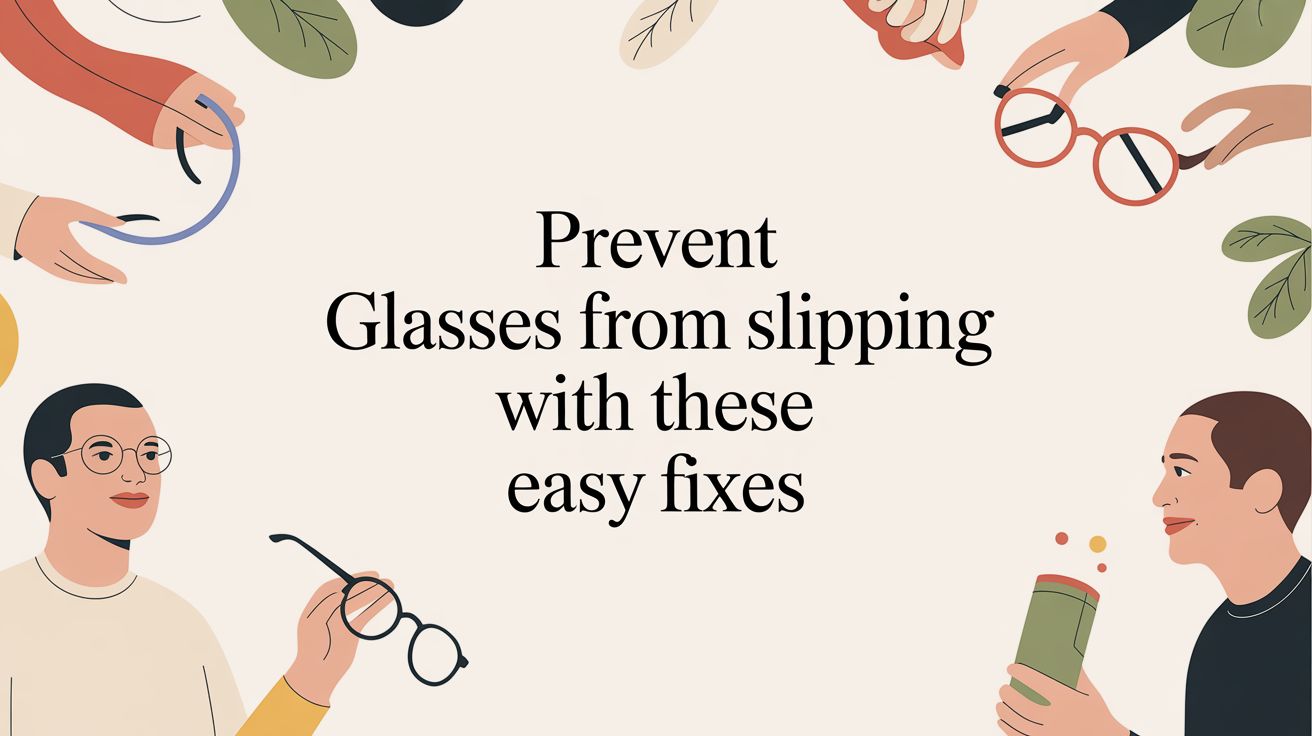
The image below breaks down the common culprits behind slipping glasses.
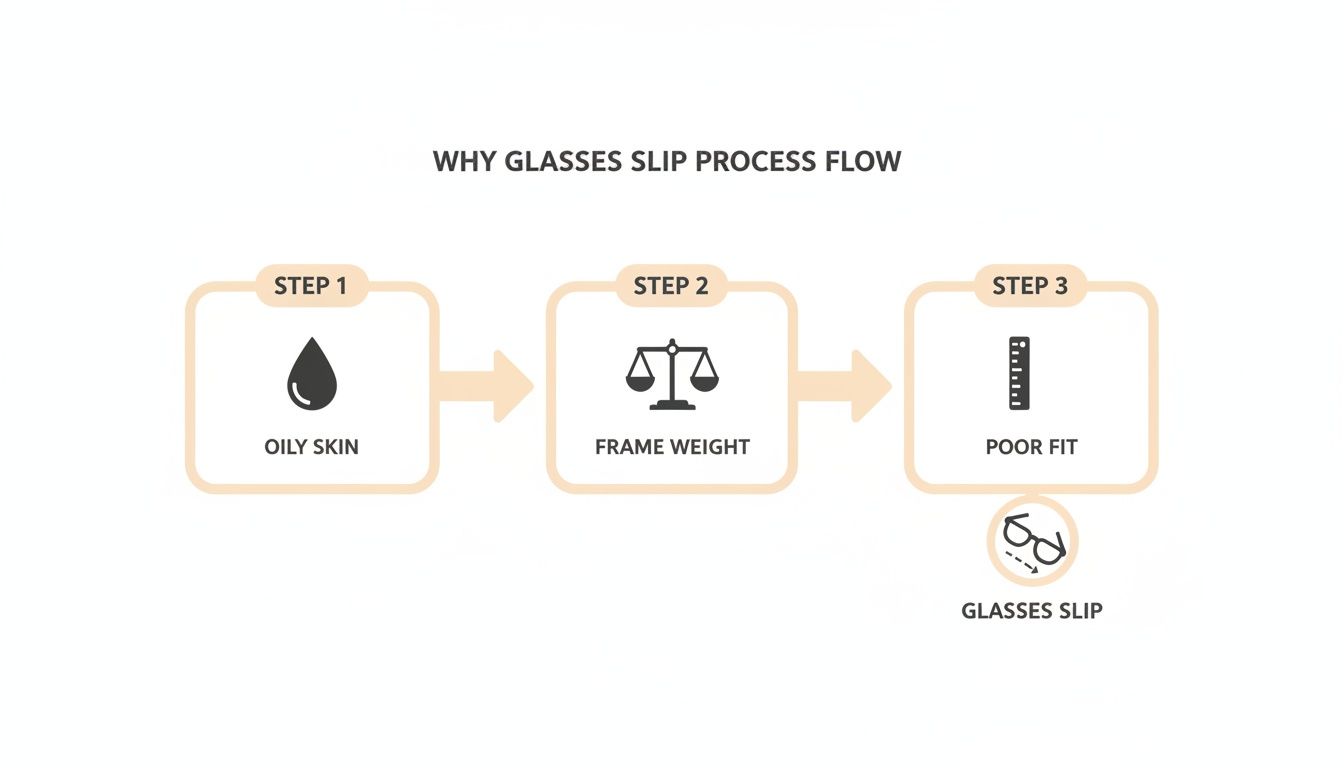
As you can see, things like oily skin, the weight of your frames, and an improper fit often team up to create the perfect storm for slippage.
Improve Comfort with Adhesive Nose Pads
If you wear plastic frames without those little adjustable nose pads, the slippage struggle can feel constant. A brilliant fix for this is a pair of adhesive silicone nose pads. These are small, cushioned pads with a sticky back that you place directly onto the frame's bridge.
They pull double duty: first, they add a soft cushion that gets rid of painful pressure points. Second, the silicone material provides a ton of extra grip against your skin. This simple addition is often all it takes to tame a pair of acetate frames that refuse to stay put. If your pads are worn out, you can learn more about a full glasses nose pads replacement in our guide.
How to Safely Make Minor Frame Adjustments
Feeling brave enough for a little DIY? Sometimes, a few small, careful tweaks to your frames can make a world of difference in how they fit. You can absolutely do this at home, but a word of caution: proceed gently. If you're working with high-end frames like Cartier or Fendi, a professional adjustment at our Glendale Heights boutique is always your safest bet.
Often, the reason your glasses feel loose is as simple as a wobbly hinge screw. Think about it—you open and close your frames multiple times a day. Over time, that constant motion can work the tiny screws loose. The good news is you don't need to be a technician to fix this.
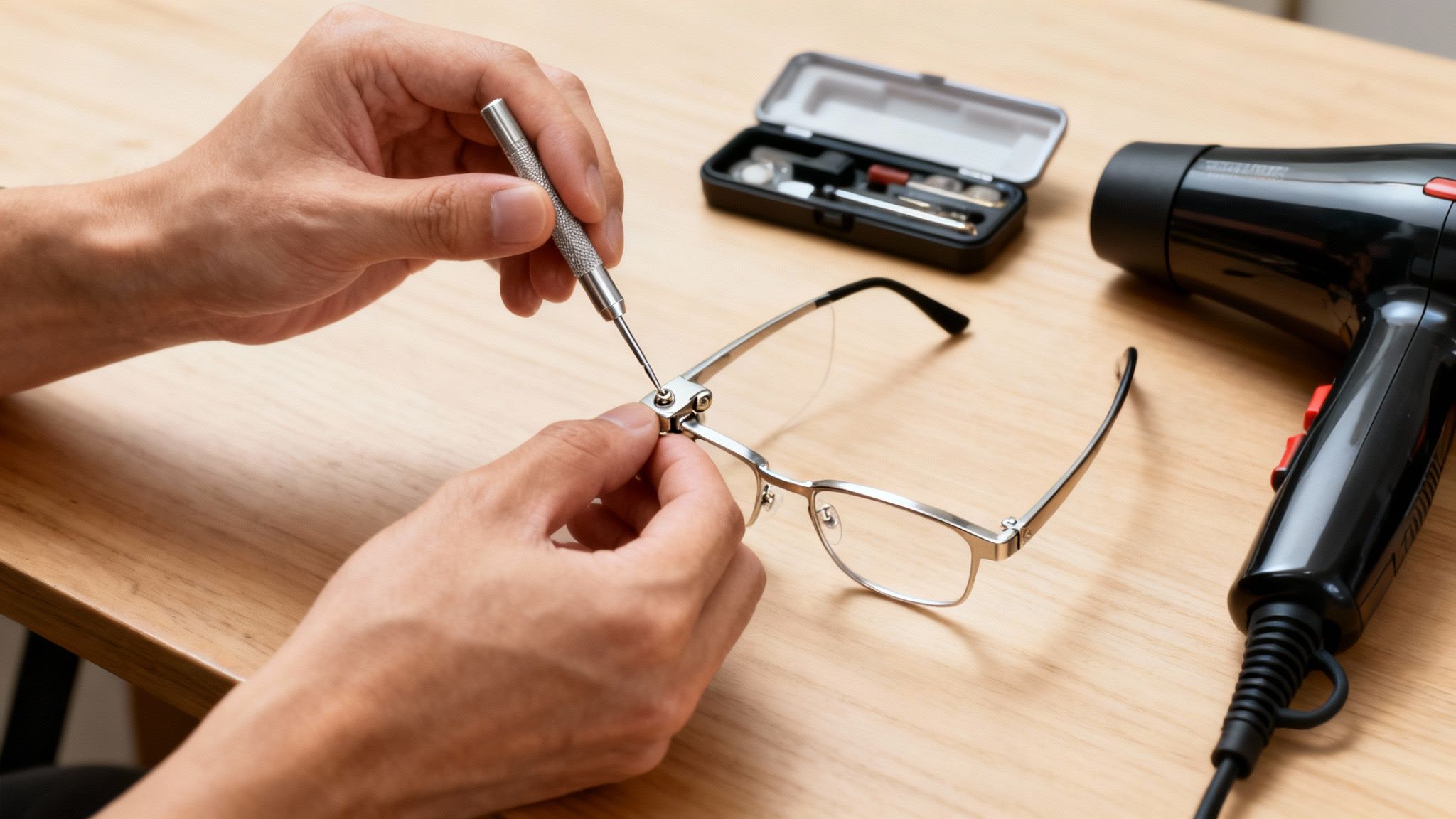
Tightening Hinge Screws
You can grab an inexpensive eyeglasses repair kit from almost any drugstore. Inside, you'll find the perfect tiny screwdriver for the job.
- Lay your glasses on a soft surface, like a microfiber cloth or towel, to keep the lenses from getting scratched.
- Find the small screw located right at the hinge where the arm connects to the frame front.
- Carefully turn the screw clockwise until you feel a bit of resistance. That's it. Don't force it or overtighten, or you risk stripping the screw.
This one simple fix can instantly bring back that secure, "new glasses" feel and stop them from sliding down your nose.
Adjusting the Temple Arms
Another highly effective trick is to adjust the temple arms—the "legs" that go over your ears. The goal here is to increase the curve so they hug your head more securely. The method, however, really depends on whether your frames are metal or plastic.
With metal frames, you can usually make small adjustments with just your hands. Hold the temple arm firmly and use your thumb to apply slow, steady pressure, bending the earpiece slightly downward and inward. Make a tiny adjustment, try them on, and repeat if needed. It’s all about small, incremental changes.
Crucial Safety Tip: Never, ever try to bend the frame at the hinge or near the lenses. The solder points are delicate and can snap. Always focus your adjustments on the part of the arm that curves behind your ear.
Plastic or acetate frames—think brands like Ray-Ban or Oliver Peoples—are a different story. They're much more rigid and will crack if you try to bend them cold. To adjust them, you need to introduce a bit of gentle heat to make the material pliable.
- Hold the temple arm under a stream of warm (not scalding!) water or use a hairdryer on a low setting for 20-30 seconds.
- Once the plastic feels warm and slightly flexible, you can carefully bend the arm inward or downward to create a snugger fit.
- Hold the arm in its new shape for about a minute while it cools down and sets.
This really requires a delicate touch. Rushing the process can cause permanent damage, so if you're feeling hesitant, it's always better to bring them into our Glendale Heights boutique. We'll handle the adjustment for you, completely risk-free.
When to See a Professional Optician
Sometimes, a quick home fix is all you need. But there are moments when tinkering with your glasses can go from a simple tweak to a costly mistake. Knowing when to put down the screwdriver and head to an optician is crucial for getting that perfect, comfortable fit without accidentally damaging your frames.
If your glasses are constantly crooked, pinching behind your ears, or leaving red marks on your nose, that’s your cue. These aren't minor slippage issues; they're signs of a fundamental fit problem. As the best optometrist in Glendale Heights, we can diagnose issues you might not even notice, like an improper pantoscopic tilt (the angle of the lenses) or a bridge that’s just not right for your face.
The Value of an Expert Touch
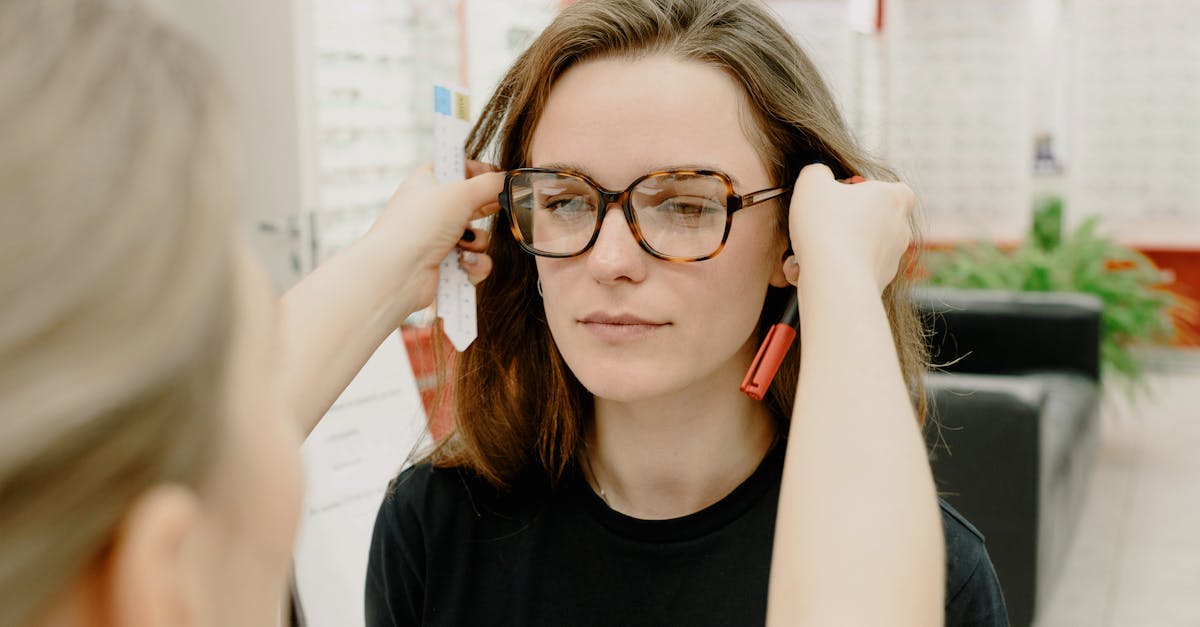
Bringing your frames to an optician is about so much more than just tightening a screw. Here at iDoctor, our team uses specialized tools to precisely mold your frames to your unique facial contours. This isn't something you can replicate at home with a hairdryer, especially when you've invested in premium eyewear from brands like Cartier, Tom Ford, or Prada. One wrong move on those materials can lead to permanent damage.
We know how different materials react to heat and pressure. A professional adjustment not only stops your glasses from sliding down your nose, but it also ensures your eyes are perfectly centered in the lenses. This is the key to clear, comfortable vision. You can learn more about this in our guide to the benefits of custom eyewear measurements.
A word of caution: Trying to bend a severely misaligned frame on your own can stress the material, creating weak points or causing it to snap. The best way to protect your investment is to trust a professional.
To help you decide on the best course of action, here’s a quick comparison of what you can tackle at home versus when it's time to see us.
DIY Fix vs Professional Adjustment
| Symptom | Recommended DIY Action | When to See an Optician |
|---|---|---|
| Minor Slippage | Apply anti-slip wax or add silicone nose pads. | If the problem persists after trying at-home solutions. |
| Loose Arm Screw | Use an eyeglass screwdriver to gently tighten it. | If the screw is stripped or the hinge is damaged. |
| Slightly Loose Temples | Gently warm plastic temples with a hairdryer to bend. | For metal frames or if you're unsure about the material. |
| Crooked on Face | A professional can evenly adjust both arms and the bridge. | Always. This indicates a complex imbalance. |
| Pain/Pressure Points | This is a sign of a poor fit needing expert adjustment. | Immediately. A proper fit should be comfortable. |
| New Glasses Feel Off | Give them a day, then see an optician for a custom fit. | If they still feel wrong after the initial break-in period. |
Ultimately, a professional adjustment is the safest and most reliable way to solve persistent slipping and discomfort.
Protecting Your Safety and Your Frames
Slipping glasses are more than just an annoyance—they can be a real problem. Think about workplaces where safety is paramount. In the U.S., OSHA regulations mandate protective eyewear in 70% of manufacturing jobs, yet many workers don't comply because their glasses are uncomfortable and keep slipping. It’s a perfect example of how a secure fit is essential for both daily life and on-the-job safety.
Bringing your frames to iDoctor for a professional adjustment is the best way to solve the problem for good. We'll make sure your designer eyeglasses in Glendale Heights not only look amazing but feel so comfortable and secure you’ll forget you’re even wearing them.
How to Choose Frames That Won't Slip
While all the at-home fixes can be lifesavers, the best long-term strategy is to stop slippage before it even starts. That means choosing the right pair of glasses from the get-go. When you know what to look for, you can save yourself years of frustration and endless pushing-up.
It’s easy to get caught up in the style when you’re trying on new frames, but a perfect fit comes down to just a few key details. The three most critical things to focus on are the bridge, the temple arms, and the overall weight of the frame. Nail these, and your glasses will feel like they were made for you.

Pay Attention to the Bridge Fit
The bridge is the main point of contact between your frames and your face—it does most of the heavy lifting. If the bridge is too wide, your glasses have nowhere to go but down your nose. Too narrow, and they'll pinch or sit uncomfortably high.
- For Plastic Frames: You're looking for a design that sits flush against your nose without any noticeable gaps. A "keyhole" bridge is often a great option, but the goal is to have even, comfortable contact.
- For Metal Frames: The gold standard here is adjustable silicone nose pads. An optician can easily bend and position these to create a truly custom fit that conforms perfectly to the unique shape of your nose.
Frame Materials Make a Difference
The material of your frames isn't just about looks; it directly impacts their weight and how well they can be adjusted. Both are huge factors in the slippage game. A heavy frame is always going to be battling gravity, making it that much harder to keep in place.
Lighter materials like titanium or some of the newer polymers are fantastic because they immediately reduce the downward pull. Acetate frames can be a bit heavier, but their secret weapon is adjustability—with a little professional heat, an optician can expertly mold the temple arms for a custom-contoured fit behind your ears. For a deeper dive, check out our Glendale Heights guide to designer frame materials to see what’s best for you.
This isn't just a minor annoyance; it's a global issue. With an estimated 4 billion people wearing glasses worldwide, slipping is a universal problem. In the U.S. alone, the eyewear market is expected to hit $323.77 billion by 2030, with innovations in comfort and anti-slip features being a major focus.
Check the Temple Arm Length and Curve
Think of the temple arms—the "legs" of your glasses—as the anchors. They’re what provide stability and security. For them to work, they have to be the right length and have the right curve behind your ear.
If the arms are too short, they can't hook properly, causing the whole frame to tilt and slide forward. On the other hand, if they're too long, the glasses will feel loose and won't have a solid anchor point. This is where a professional fitting is invaluable. An expert can find a frame with the perfect arm length for you and then fine-tune the curve so it hugs your head just right without pinching.
Frequently Asked Questions About Slipping Glasses
We hear these questions all the time at our Glendale Heights boutique, so if you're wondering about it, you're not alone. Let's tackle some of the most common concerns about keeping your eyewear right where it belongs.
It’s frustrating to constantly push your glasses back up, whether you're trying to read a menu or enjoying a day out at Camera Park. Here’s some advice straight from our team.
Where can I get my glasses adjusted in Glendale Heights?
Right here at iDoctor! Our experienced opticians specialize in frame adjustments. We use professional tools to carefully shape the bridge, nose pads, and temple arms to create a custom fit for your unique facial structure. Whether you bought your Gucci glasses from us or need an adjustment on an existing pair, we're here to help make them comfortable and secure. A professional fitting is always the safest option, especially for luxury frames.
Why do my new glasses slide down when my old ones didn't?
This is a very common issue. It usually comes down to small differences in frame design. Your new glasses might be a heavier material (like acetate instead of metal), have a wider bridge, or simply a different weight distribution. Even a slicker finish on the frame can reduce grip. If after a few days your new glasses still feel like they're on the move, bring them into our Glendale Heights boutique. A quick, precise adjustment is often all that's needed to get the fit just right.
Are some eyewear brands better at staying in place?
It’s less about the brand name and more about the frame's design and how well it fits your face. A perfectly fitted pair of Kate Spade glasses will outperform a poorly fitted pair from a sports brand every single time. That said, some brands do incorporate anti-slip features like rubberized nose pads or temple tips. At iDoctor, our priority is finding the right frame for your facial structure. Whether you're looking for Tom Ford glasses near me or an affordable option like Ray-Ban, we ensure a perfect fit from the start.
Ready to find a perfectly fitted, stylish pair of glasses that stay put all day? At iDoctor in Glendale Heights, we offer everything from detailed eye exams in Glendale Heights to a curated collection of designer eyewear from brands like Fendi, Prada, and Cartier. Visit our boutique on Bloomingdale Road to experience the difference a professional fitting can make.