Trying to pick the right contact lenses can feel overwhelming, but it really boils down to two simple things: what they're made of (soft or rigid) and how often you replace them (daily, bi-weekly, or monthly). From there, your specific vision needs—like astigmatism or presbyopia—help our team at iDoctor in Glendale Heights narrow down the perfect specialized lens for you.
Finding the Right Contact Lenses in Glendale Heights
Getting the right contact lenses is all about finding that sweet spot where clear vision, all-day comfort, and your daily routine meet. It doesn't matter if you're a student at Glenbard North High School needing lenses for sports or a professional who's tired of glasses fogging up on your commute down Army Trail Road—the right contacts can be a game-changer. Here at iDoctor, we make that process simple for everyone in our Glendale Heights community.
Think about it like picking the right shoes for an activity. You wouldn't wear hiking boots to a dinner party, and you wouldn't wear sandals for a run. Your eyes are no different. The best lens for you depends entirely on your eye health, your day-to-day activities, and what you find most comfortable. This is where an expert fitting with the best optometrist in Glendale Heights makes all the difference.
Matching Lenses to Your Lifestyle
A great contact lens fitting goes way beyond the numbers on your prescription. We need to talk about your life to figure out what will genuinely work for you.
- For the Active Individual: If you're always on the move or playing sports, the sheer convenience and hygiene of daily disposable lenses are tough to beat. No cleaning, no cases—just fresh lenses every day.
- For the Office Professional: Staring at a screen all day? Your eyes are probably begging for moisture. We'd look at lenses with advanced hydration technology specifically designed to fight dryness and digital eye strain.
- For Correcting Complex Vision: If you have astigmatism or find yourself needing reading glasses (presbyopia), you'll need specialty lenses. Toric or multifocal designs are engineered to give you that crisp, precise vision you're looking for.
At iDoctor, we focus on connecting your vision, your lifestyle, and the right lens technology into a single, seamless solution.
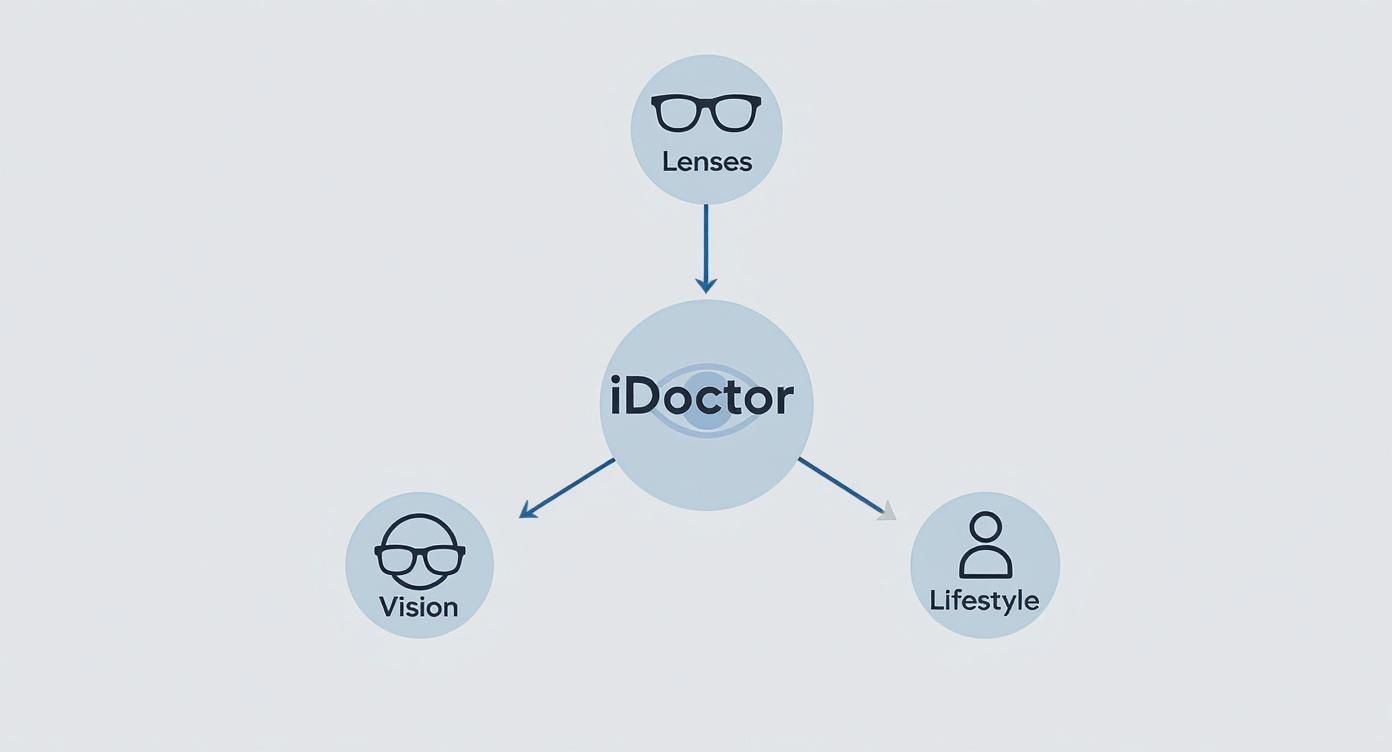
This really gets to the heart of what we do. The best contact lenses aren't just the ones with the right prescription; they're the ones that feel like they aren't even there. While knowing about the different types of contact lenses is a good first step, the professional fitting is where the magic happens. We go into more detail in our guide on understanding your prescription contact lenses.
Choosing the right contact lens is a partnership between you and your eye doctor. Your lifestyle provides the context, and our expertise provides the solution.
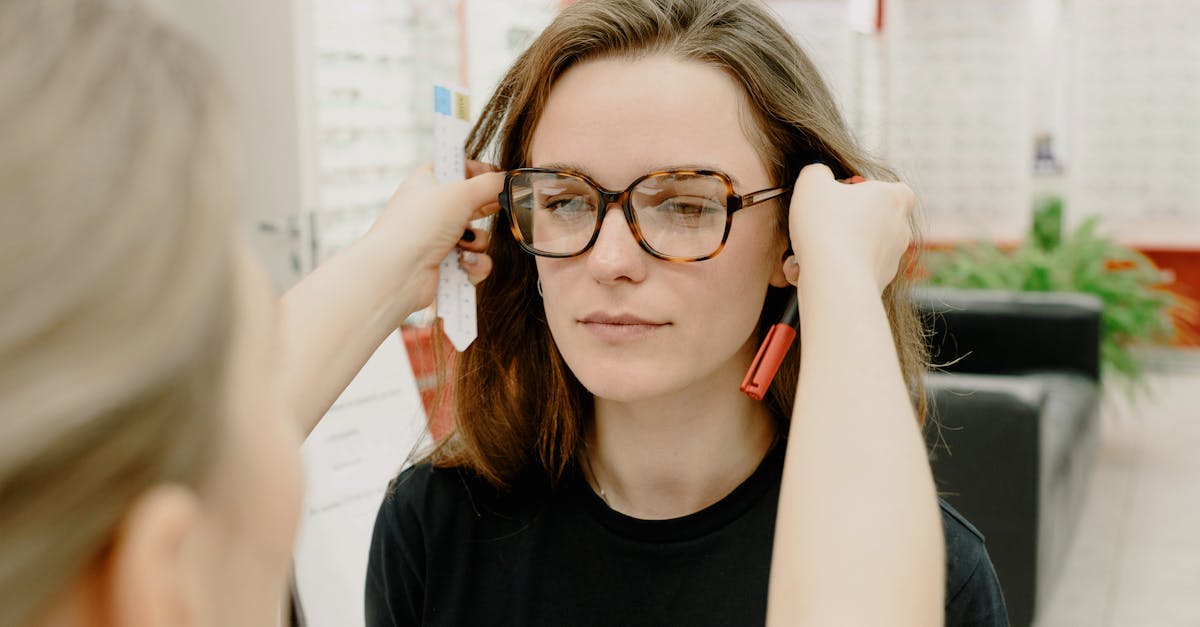
Our eye doctor in Glendale Heights is dedicated to building that partnership with you. We always start with a thorough eye exam to map out the unique shape and health of your eyes. Then, we'll chat about your work, hobbies, and daily habits. This conversation helps us pinpoint the ideal lens material, replacement schedule, and design, so you can walk out of our boutique feeling completely confident in your vision.
Soft Lenses The Standard for Comfort and Convenience
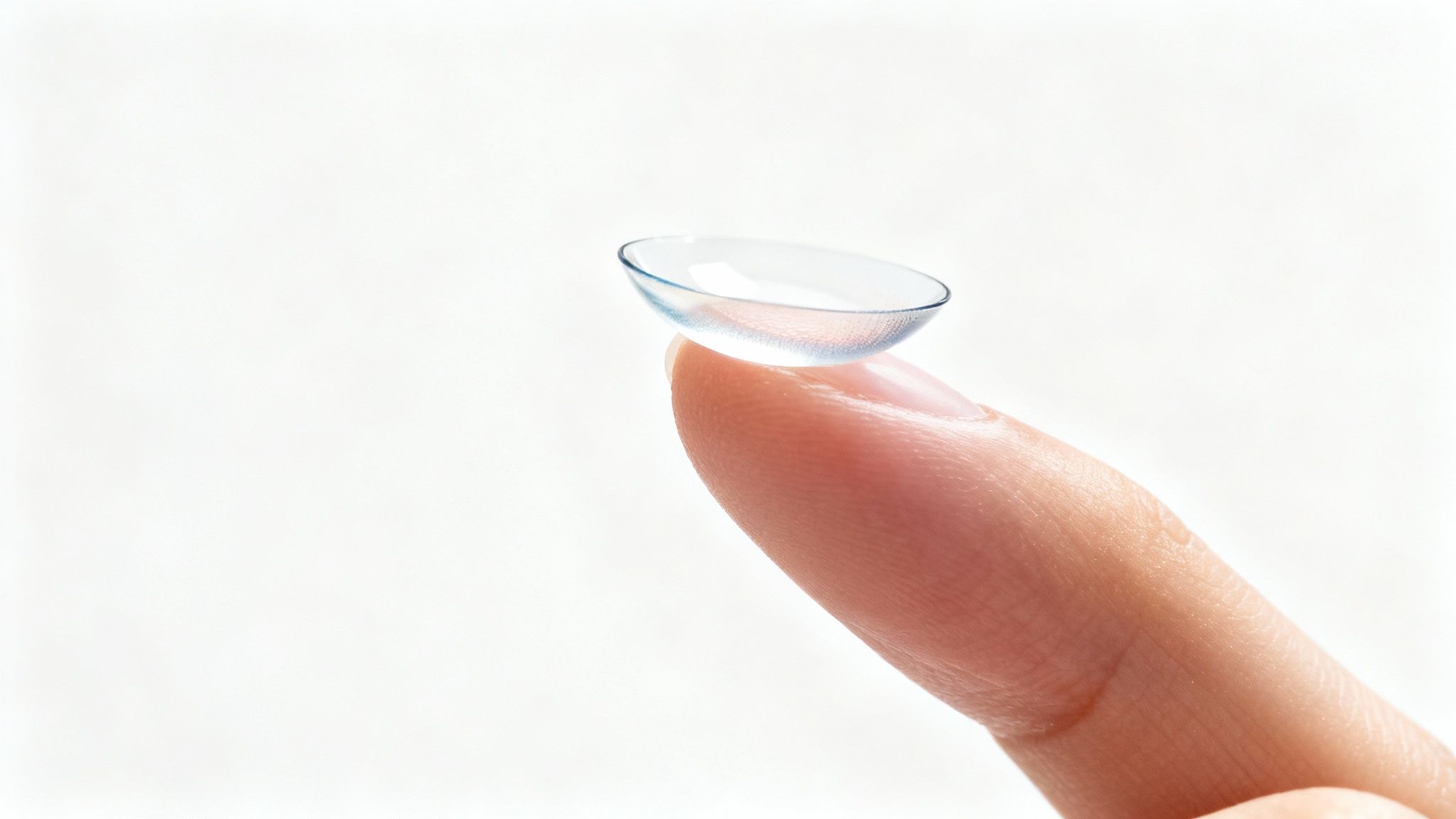
When you picture a contact lens, you’re almost certainly thinking of a soft lens. There's a good reason for that—these flexible, comfortable lenses are far and away the most popular choice for vision correction across the globe.
Their main draw? They offer a fantastic blend of clear sight, easy handling, and all-day comfort. For most new wearers, the soft, pliable material makes the adjustment period feel almost nonexistent. It’s just that comfortable from the start.
From Hydrogel to Silicone Hydrogel
Think of a soft lens as a tiny, high-tech sponge designed to sit perfectly on your eye. The original soft lenses were made from a material called hydrogel, which loved to soak up water. This made them comfortable, but it came with a catch.
The more water the hydrogel held, the less oxygen could pass through to the cornea. Your eye, just like any other part of your body, needs to "breathe" to stay healthy. This oxygen limitation was a real problem.
Enter silicone hydrogel. This advanced material completely changed the game. It creates microscopic channels that allow a ton more oxygen to flow directly through the lens to your eye, regardless of how much water it contains.
This breakthrough in breathability is why you can wear contacts comfortably for longer periods. It also drastically reduces the risk of eye health issues like hypoxia (oxygen deprivation), making today's soft lenses incredibly safe and reliable. It’s no surprise that silicone hydrogel lenses now account for over 55% of the market revenue—they've become the gold standard.
Finding Your Perfect Replacement Schedule
One of the most important decisions you'll make with your optometrist is how often you'll replace your lenses. This is known as the replacement schedule, and it's a balance of convenience, hygiene, and cost.
To help you understand the options, here’s a quick comparison of the most common soft lens schedules. This table lays out the trade-offs so you can start thinking about what might work best for your daily routine.
Comparing Soft Contact Lens Schedules
| Lens Type | Replacement Frequency | Ideal For | Key Benefit | Consideration |
|---|---|---|---|---|
| Daily Disposable | Every day | Busy people, allergy sufferers, occasional wearers | Ultimate convenience and hygiene; no cleaning needed. | Higher long-term cost than reusable lenses. |
| Bi-Weekly | Every 2 weeks | Consistent daily wearers who follow cleaning routines | A good balance between cost and convenience. | Requires diligent nightly cleaning and storing. |
| Monthly | Every 30 days | Budget-conscious wearers committed to lens care | Most cost-effective option upfront. | Demands strict cleaning to avoid deposit buildup. |
Ultimately, your ideal schedule comes down to what fits your life. If you're meticulous about cleaning, a monthly lens might be perfect. If the thought of one more daily chore is too much, the simplicity of a daily disposable can't be beaten.
The market has definitely shifted toward single-use options, with daily wear lenses now holding a global market share of around 54.2%. People simply value the convenience and health benefits of a fresh pair every day. If you want to dive deeper, we have a whole guide comparing daily disposable vs. monthly contact lenses in Glendale Heights.
Your ideal replacement schedule depends on your lifestyle, budget, and personal commitment to lens care. The best lens is the one you will wear correctly and consistently.
Choosing the right material and wear schedule is a big deal. That's why getting a professional fitting is non-negotiable. Here at iDoctor, we take the time to learn about your daily habits—from your work to your hobbies—to find the soft lens that gives you the best possible comfort, vision, and health for your eyes.
Rigid Gas Permeable Lenses: The Ultimate in Crisp, Clear Vision
When most people think of contacts, they picture soft lenses. But for those who refuse to compromise on visual clarity, there's another powerhouse option: Rigid Gas Permeable (RGP) lenses.
If you think of soft lenses as a comfortable pair of running shoes, RGP lenses are more like a custom-molded cycling shoe—they aren't built for general comfort right out of the box, but for peak performance.
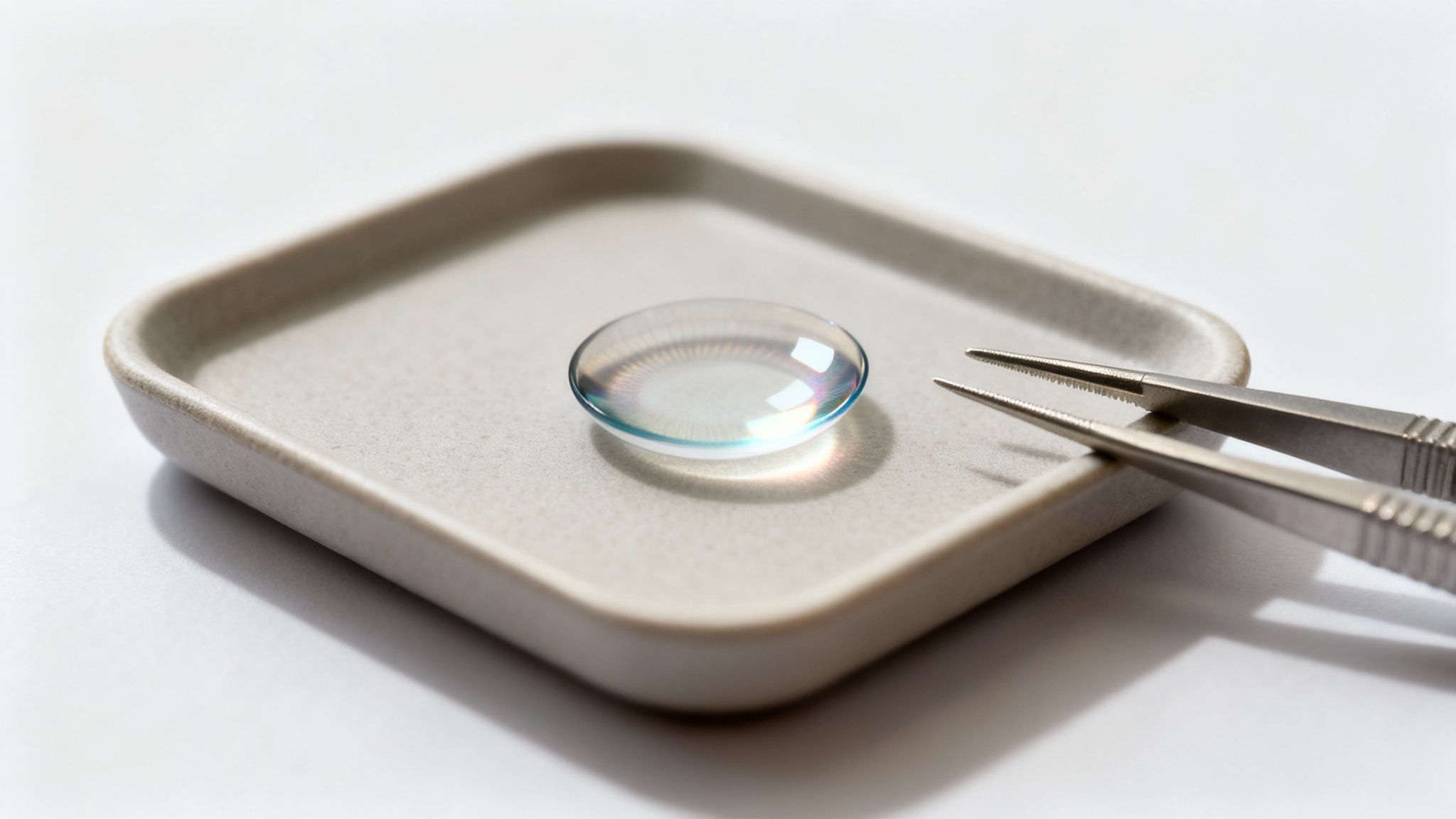
Don't let the word "rigid" fool you. These aren't the old-school "hard" lenses from your parents' generation. Modern RGPs are crafted from advanced, firm plastics that allow an impressive amount of oxygen to reach your cornea. This high-tech breathability is crucial for keeping your eyes healthy for the long haul. What truly sets them apart, though, is their structure. They hold their shape, creating a perfectly smooth optical surface over your eye.
Like a Precision Lens for Your Eye
Here’s a way to think about it. Imagine your eye is a high-end camera. If the camera’s main lens (your cornea) has even a minor imperfection, every photo will be a little soft or distorted. A soft contact lens is like a flexible film that drapes over that imperfection—it corrects the focus, but it still follows the cornea's slightly irregular shape.
An RGP lens, on the other hand, acts like a brand-new, perfectly polished lens placed in front of the camera. Its firm, custom shape doesn't conform; it creates a new, flawless surface for light to pass through. The result is an incredibly sharp and stable view that most soft lenses just can't replicate.
Rigid gas permeable lenses don't just correct your vision; they refine it. By creating a new, perfectly smooth refractive surface, they can deliver a level of clarity that is truly exceptional.
Who Are RGP Lenses For?
This level of precision makes RGPs an amazing solution for people with specific visual needs. While they might not be the go-to for everyone, they are a game-changer for those who put visual quality above all else.
- Significant Astigmatism: For people whose corneas are more football-shaped than round, RGPs are often the gold standard. The rigid lens completely masks that irregularity, providing consistently sharp vision.
- Keratoconus: For patients with conditions like keratoconus, where the cornea thins and bulges into a cone shape, RGPs are frequently the best—and sometimes only—way to achieve functional sight.
- Presbyopia: Bifocal and multifocal RGP designs are also available, offering a sharp solution for the age-related loss of close-up focus.
The Trade-Off: An Adjustment Period
Let's be real: RGPs feel different. Unlike the instant "aha!" comfort of a soft lens, RGPs require an adjustment period. Because the lens is firm and moves a bit with each blink, you’re going to be aware of it in your eye at first.
This initial awareness usually fades over a week or two as your eyelids get used to blinking smoothly over the lens edge. For those who stick it out, the payoff is huge: vision that's as crisp as it gets and durable lenses that can last for years with good care, making them incredibly cost-effective over time. Here at iDoctor, our Glendale Heights team has the expertise to guide you through the fitting process, ensuring your transition to RGP lenses is as smooth as possible.
Beyond the Basics: Specialty Lenses for Complex Vision
While standard soft and RGP lenses work wonders for many, some vision challenges need a more tailored solution. These aren't your run-of-the-mill contacts; think of them as precision-engineered tools, each designed to tackle a specific and often complex visual problem. For anyone wrestling with astigmatism or the frustrating need for both reading glasses and distance correction, these advanced lenses can be genuinely life-changing.
The world of contact lenses is always pushing forward, and for good reason. The global market, currently valued around USD 10.15 billion, is projected to hit USD 16.18 billion by 2033. This isn't just about numbers; it reflects real innovation that makes lenses like these possible, giving more people than ever a shot at crisp, comfortable vision. You can dig deeper into the contact lens market growth to see just how fast things are moving.
Here at iDoctor, fitting these highly specialized lenses is what we do best. Let's walk through some of the most common types.
Toric Lenses: Finally, a Fix for Astigmatism
If you have astigmatism, your eye isn't perfectly round like a basketball. Instead, it's shaped a bit more like a football. This irregular curve bends light unevenly, causing vision to be blurry or distorted whether you're looking at something near or far. A standard, one-size-fits-all contact lens just can't correct for that unique shape.
That’s where toric lenses come in. Picture a tiny, perfectly balanced gyroscope made just for your eye.
- Custom Curvature: Toric lenses are built with different prescription powers in different parts of the lens, directly counteracting the specific oblong shape of your cornea.
- Built-in Stability: They have a subtle weight at the bottom. This clever design feature uses gravity to make sure the lens settles in the exact right spot on your eye—and stays there, even when you blink.
This rock-solid orientation is the secret sauce. It ensures the corrective zones of the lens are always aligned properly, neutralizing the blur from astigmatism. For so many of our patients in Glendale Heights, toric lenses unlock the sharp, stable vision they thought was only possible with glasses.
Multifocal Lenses: Ditching the Readers
Find yourself holding your phone at arm's length just to read a text? That’s presbyopia, a completely normal, age-related change where the lens inside your eye loses some of its youthful flexibility. It used to mean a life sentence of fumbling for reading glasses.
Not anymore. Multifocal contact lenses are an incredibly clever solution, designed to give you clear vision at every distance—near, far, and everything in between—all in a single lens.
Think of multifocal contacts like progressive glasses, but without the frames. They blend different prescription powers seamlessly, letting your eyes and brain work together to naturally find the right focus for any situation.
These lenses are a marvel of optical engineering. Some use concentric rings of different powers, while others feature a smooth, gradual transition from the near-vision center to the distance-vision edge. Your brain quickly adapts, learning to automatically select the visual information it needs, whether you're reading a book, glancing at your dashboard, or driving down Schmale Road. It’s all about freedom from the hassle of readers.
Other Highly Specialized Lenses
Beyond toric and multifocal designs, we have even more advanced lenses for very specific needs. These absolutely require an expert fitting by an optometrist who knows them inside and out.
Scleral Lenses
For someone with an irregular cornea from a condition like keratoconus, or who suffers from severe dry eye, traditional contacts are often a non-starter. Scleral lenses are a game-changer. These are large-diameter lenses that don't even touch the sensitive cornea. Instead, they vault right over it, resting gently on the tough white part of your eye (the sclera). This creates a new, perfectly smooth surface for light to focus through and holds a reservoir of saline solution that keeps the cornea constantly hydrated. The result is incredible comfort and vision for people who had run out of other options.
Orthokeratology (Ortho-K)
How would you like to see clearly all day long without wearing glasses or contacts? It sounds like science fiction, but it’s real. It’s called Orthokeratology, or Ortho-K for short. These are custom-fit RGP lenses you wear only while you sleep. Overnight, they gently and safely reshape your cornea. In the morning, you take them out and enjoy clear vision all day long. Ortho-K is an amazing option for athletes, people who work in dusty jobs, or anyone who just wants total freedom from daytime correction. It has also been proven to help slow the progression of nearsightedness in kids.
Finding the perfect specialty lens isn't a guessing game. It takes the skill of an expert eye doctor. At iDoctor, our detailed fitting process is all about matching your unique eyes with the precise technology that will give you the best vision of your life.
How We Find Your Perfect Fit at iDoctor
With so many types of contact lenses out there, trying to choose the right one can feel like a shot in the dark. But finding your perfect pair isn't something you have to do alone. A great fit is about more than just your prescription—it’s about matching the right lens technology to the unique shape of your eye and the demands of your daily life.
That’s exactly why a contact lens prescription is completely different from a glasses prescription. It requires a much more detailed, specialized approach.
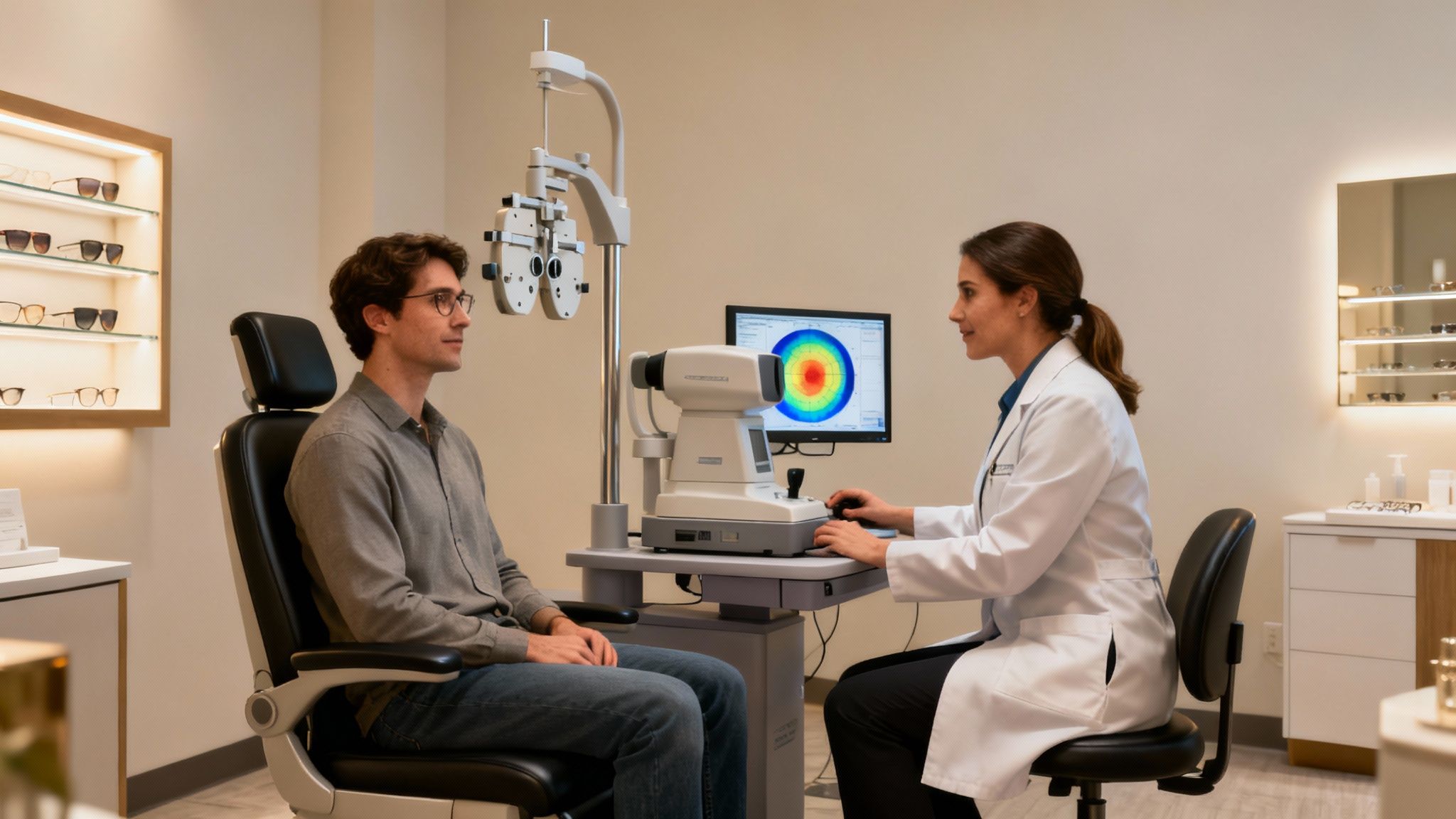
At iDoctor, we take what can be a confusing process and make it simple and personal. It all starts with our detailed eye exams in Glendale Heights. We don't just find your numbers; we create a precise, 3D map of your eyes to guide us.
More Than Just a Prescription
Think of it this way: your glasses prescription is like knowing your shoe size. It's a vital piece of information, but it doesn’t tell you whether you need a running shoe, a hiking boot, or a comfortable sandal. A contact lens fitting, on the other hand, finds the perfect shoe and makes sure it’s comfortable enough to wear all day long.
During your fitting, we take several crucial measurements that aren't included in a standard eye exam:
- Corneal Mapping: We use high-resolution imaging to measure the precise curve of your cornea. This is key to making sure the lens sits correctly on your eye for stable vision and comfort that lasts.
- Tear Film Evaluation: Dry eyes are a common complaint for contact lens wearers. We'll assess your tear quality to head off any issues, which helps us pick a lens material that will keep your eyes hydrated from morning until night.
- Pupil and Iris Measurement: We also measure the size of your pupil and iris. This ensures the part of the lens you actually look through is perfectly centered, giving you the sharpest vision possible.
This level of detail is what makes the difference between a lens you just tolerate and one that feels like it was made just for you.
A successful contact lens fitting isn't just about clear sight—it's about ensuring the long-term health and comfort of your eyes. The right fit protects your cornea, allows for proper oxygen flow, and feels completely natural.
Making Premium Care Accessible
We believe everyone in our community deserves the best vision care without worrying about the cost. That's why iDoctor proudly accepts all major vision insurance plans. Our team is fantastic at helping you understand your benefits and will work to make sure you get the most out of your coverage for your exam, fitting, and lenses.
Whether you're a family living near Glendale Lakes Golf Club or commuting from a nearby suburb, your journey to clear, comfortable vision starts right here. We've designed our process to give you total confidence in your choice of contact lenses in Glendale Heights.
Ready to see what a difference a truly perfect fit can make? Our team is excited to guide you through a personalized contact lens exam and find the ideal lenses for your eyes and your life. Schedule your appointment at our Glendale Heights boutique today and see your world with brand-new clarity.
Frequently Asked Questions About Contact Lenses
It's completely normal to have a few questions when you're thinking about switching to contact lenses. We hear them all the time from our patients here in Glendale Heights, so let's walk through some of the most common ones to give you the clarity you need.
Do I need a special appointment for a contact lens fitting?
Yes, a contact lens fitting is separate from a regular eye exam. The standard exam determines your prescription for glasses, but a contact lens fitting involves taking special measurements of your eye's surface to ensure the lens fits safely and comfortably. At our Glendale Heights office, we also provide one-on-one training to help you master inserting, removing, and caring for your lenses.
I need both contacts and new glasses. Can I use my insurance for both?
This is a great question. At iDoctor, we accept all major vision insurance plans, and our knowledgeable staff is here to help you maximize your benefits. Most plans offer an allowance that can be applied toward either eyeglasses or contact lenses. We can check your specific coverage to see what’s included and help you find the best solution, whether that means finding great value in our eyewear collections, including Gucci glasses near me, or applying your benefits to your contact lens supply.
Are daily disposable lenses more expensive?
While daily disposable lenses have a higher upfront cost per box, they can be more cost-effective in the long run for many people. With dailies, you don't need to buy cleaning solutions or storage cases, which adds up. They also offer unmatched convenience and hygiene, reducing the risk of costly eye infections. We can discuss all the options to find a lens that fits both your lifestyle and your budget.
Can I try different types of contact lenses before committing?
Absolutely. Finding the perfect lens is a process, and we want you to be completely happy. During your fitting, we'll often provide diagnostic (trial) lenses for you to wear for a short period. This allows you to experience how the lenses feel in your everyday environment, whether you're at the office or out for a walk at East Branch Forest Preserve, before finalizing your prescription.
Ready to explore the best types of contact lenses for your unique eyes? The expert team at iDoctor is here to guide you every step of the way, from a precise fitting to finding a lens that fits your lifestyle perfectly. As the premier eye doctor in Glendale Heights, we are committed to providing exceptional care to our community. Schedule your personalized contact lens consultation in Glendale Heights today.
https://idoctoril.com