Navigating how to reduce eye pressure naturally comes down to making mindful lifestyle choices, from what you eat to how you move. Simple adjustments like staying well-hydrated, managing stress, and eating eye-healthy nutrients can all work together to support healthy intraocular pressure (IOP). Of course, these strategies are most effective when guided by a professional. Here in Glendale Heights, the iDoctor team is dedicated to helping our neighbors protect their vision for the long haul.
Understanding Eye Pressure and Why It Matters
Here at iDoctor in Glendale Heights, we see a lot of people taking a proactive approach to their health, and that absolutely includes their vision. One of the most common questions we get is about eye pressure—what exactly is it, and why is it such a big deal?
Think of your eye like a tiny, self-regulating balloon. It's filled with a fluid called aqueous humor that helps it maintain its round shape. Intraocular pressure, or IOP, is simply the measurement of this internal fluid pressure. A healthy eye is a marvel of engineering, constantly producing and draining this fluid to maintain a perfect, stable balance.
But what happens if this delicate system gets thrown off? If your eye produces too much fluid or, more commonly, if the drainage channels get a bit clogged, the pressure can start to build. This is a condition known as ocular hypertension.
Why Healthy IOP is Crucial for Your Vision
The tricky thing about high eye pressure is that you usually can't feel it. That’s why it's often called a "silent" condition. But behind the scenes, persistent high IOP can quietly damage the optic nerve—the critical cable that sends everything you see from your eye to your brain. This damage is the number one risk factor for glaucoma, a serious eye disease that can lead to permanent vision loss.
Maintaining a healthy IOP is one of the most important things you can do to protect your vision for the long haul. Catching and managing any issues early is everything, because damage from conditions like glaucoma simply can't be undone.
Keeping an eye on your IOP is especially important for anyone over 40 or those with a family history of glaucoma. While natural methods are fantastic for supporting your overall eye health, they work best as part of a team approach with professional care. For a deeper dive, you can explore the importance of early detection for glaucoma in our detailed guide. It's a must-read for anyone in the Glendale Heights area who wants to safeguard their sight.
At iDoctor, we provide detailed eye exams in Glendale Heights using high-resolution imaging to get a precise reading of your eye pressure. This isn't just about getting a number; it's about establishing your unique baseline so we can monitor for even the slightest changes over time. It’s how we provide peace of mind and a clear path forward for your vision health.
Nourishing Your Eyes: The Impact of Diet and Hydration
It's no secret that what you eat and drink has a direct line to your overall health, but many people don't realize just how profoundly it affects their eyes—specifically, the pressure inside them. We can go beyond general advice and build a practical, evidence-based grocery list that can help you manage your intraocular pressure (IOP).
This isn't about starting a restrictive diet. Instead, think of it as making smart, nourishing additions to your daily meals. Simple choices can make a real difference, especially when you focus on foods that boost blood flow and calm inflammation, which helps support the delicate fluid balance in your eyes.
This infographic gives a great visual summary of eye pressure, how to keep it in a healthy range, and why regular monitoring is so important.
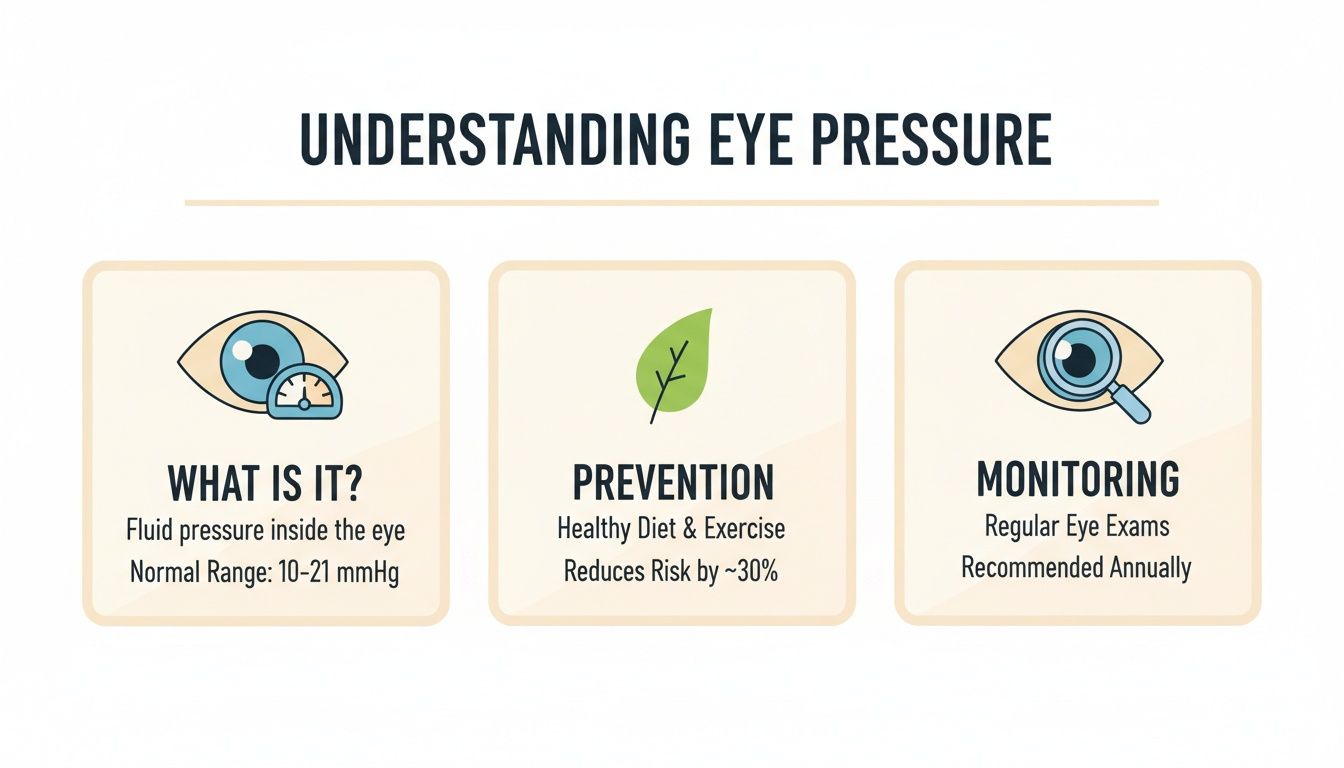
As you can see, the best strategy combines proactive steps, like a healthy diet, with consistent professional care. It’s a powerful one-two punch for long-term eye health.
What to Eat to Help Lower Eye Pressure
Some foods are just packed with the good stuff your eyes need. Building a diet around antioxidants, nitrates, and healthy fats is one of your best natural defenses for managing eye pressure.
Here are a few key players to add to your shopping cart:
- Dark Leafy Greens: We’re talking about spinach, kale, and collard greens. These are nutritional powerhouses loaded with nitrates, which your body converts into nitric oxide. This amazing molecule helps relax and widen blood vessels, improving blood flow right to the optic nerve.
- Colorful Fruits and Vegetables: Load up on berries, oranges, and bell peppers. They're brimming with Vitamin C and other antioxidants that combat oxidative stress, a known contributor to optic nerve damage.
- Fatty Fish: Salmon, mackerel, and sardines are fantastic sources of omega-3 fatty acids. These healthy fats have potent anti-inflammatory properties that benefit your entire body, especially your eyes.
The research here is compelling. A nutrient-rich diet can be a powerful way to naturally lower eye pressure. For example, some studies have shown that the nitrates in leafy greens can relax blood vessels in the eye and reduce pressure by 10-15%. Omega-3s from fatty fish like salmon have shown even more dramatic results, with one study noting a 22% drop in IOP in patients who ate it regularly.
A diet that supports your heart is almost always great for your eyes. The two are incredibly connected.
To get started, here's a quick-reference table to help you build your next grocery list.
Eye-Healthy Foods to Add to Your Grocery List
| Food Group | Examples | Key Nutrient | Benefit for Eye Pressure |
|---|---|---|---|
| Leafy Greens | Spinach, Kale, Collards | Nitrates | Improves blood flow to the optic nerve |
| Colorful Fruits | Berries, Oranges, Kiwi | Vitamin C, Antioxidants | Protects against oxidative stress |
| Fatty Fish | Salmon, Mackerel, Sardines | Omega-3 Fatty Acids | Reduces inflammation |
| Nuts & Seeds | Walnuts, Flaxseeds, Chia Seeds | Omega-3s, Vitamin E | Anti-inflammatory and protective |
| Bright Veggies | Bell Peppers, Carrots, Sweet Potatoes | Vitamin A, Carotenoids | Supports retinal health |
| Healthy Oils | Olive Oil | Monounsaturated Fats | Supports cardiovascular health |
Making even small, consistent additions from this list can contribute to better eye health over time. For more ideas on how to craft eye-healthy meals, you might find our guide on foods for eye health useful.
Foods and Drinks to Be Mindful Of
Just as important as what you add to your plate is what you might want to limit. Certain foods and drinks can work against your efforts to keep your eye pressure in a healthy range.
High-sodium foods, like many processed snacks and meals, can cause your body to retain water, which may increase pressure within the eyes. Excessive caffeine has also been linked to temporary spikes in IOP for some people. It's all about balance—you likely don't need to give up your morning coffee, but being mindful of how much you're consuming throughout the day is a smart move.
Speaking of smart moves, learning about the benefits of olive oil for blood pressure management can be a great step, as improving your overall cardiovascular health has a direct, positive impact on your eyes.
Don't Forget to Hydrate
Finally, never underestimate the power of plain old water. The fluid that fills the front part of your eye, the aqueous humor, is mostly water. Staying properly hydrated is absolutely essential for maintaining the eye's internal systems and ensuring that this fluid can drain as it should.
When you're dehydrated, this delicate balance can be thrown off. Make it a habit to drink plenty of water throughout the day. It’s a simple change, but swapping sugary drinks for water is an effective way to support not just your eye pressure, but your entire body.
Safe and Effective Exercise for Healthy Vision

Getting your body moving is one of the most effective, accessible ways to manage your intraocular pressure (IOP) naturally. When you're active, you improve blood flow everywhere—including to the tiny, delicate structures inside your eyes. This boost in circulation helps the eye’s internal fluid drain more efficiently, which in turn can lower the pressure.
You don't need to become a marathon runner to see these benefits. The real secret is consistency with moderate, enjoyable activities. Think a brisk walk around Camera Park, a bike ride, or anything that gets your heart rate up without pushing you to your absolute limit.
The Best Types of Exercise for Eye Health
When your goal is lowering eye pressure, aerobic exercise is your greatest ally. These are the activities that elevate your heart rate and improve how your body uses oxygen.
We recommend aiming for about 150 minutes of moderate-intensity activity per week. That might sound like a lot, but you can break it down easily.
Some of the best options include:
- Brisk Walking: A simple, low-impact choice you can do almost anywhere.
- Jogging or Running: A fantastic way to boost cardiovascular health and lower IOP.
- Cycling: Whether you're on a trail or a stationary bike, it’s great for your heart and eyes.
- Swimming: An ideal full-body workout that’s incredibly gentle on your joints.
Exercise really is a powerful tool. Some studies have shown it can lower IOP by as much as 20% in people with glaucoma. Even better, these positive effects can last for months as long as you stick with it. It’s a compelling reason to make moderate cardio a non-negotiable part of your routine.
Exercises to Approach with Caution
While most movement is good, not all exercises are created equal when we're talking about eye pressure. Certain activities can cause a temporary but significant spike in IOP, which is something you definitely want to avoid if your pressure is already a concern.
Safety First: The key is to avoid activities where you find yourself straining, holding your breath, or keeping your head below your heart for long periods.
This means you should be mindful of specific exercises that might seem harmless but could pose a risk:
- Heavy Weightlifting: The straining and breath-holding involved in lifting very heavy weights (known as the Valsalva maneuver) can dramatically increase pressure throughout your body, including inside your eyes.
- Inversion Yoga Poses: Positions like headstands, shoulder stands, and even downward-facing dog place your head below your heart, which can cause a sharp, temporary rise in IOP.
This doesn't mean you have to abandon strength training or yoga. It's all about making smart modifications. With weight training, try using lighter weights for more repetitions and focus on breathing steadily through each movement. In yoga, simply skip the inversion poses and stick with upright or seated alternatives. To build a well-rounded routine, you can explore various physical exercises that keep you strong without compromising your eye health.
Ultimately, you need to listen to your body and never push yourself to the point of strain. If you want to dive deeper into this topic, you can read more about how exercise benefits the eye on our blog.
The goal is to build a sustainable exercise plan that you actually enjoy. A consistent routine of moderate cardio will do far more for your long-term eye health than a few intense, sporadic workouts ever could.
Your Mind, Body, and Eyes: The Stress-Sleep Connection
It’s no secret that our mental and physical health are deeply intertwined, and this connection extends right to our eyes. The constant hum of daily life—whether it's work deadlines, family responsibilities, or just the non-stop pace of living in the Chicagoland suburbs—can set off a chain reaction in our bodies. When stress becomes chronic, it can contribute to a rise in eye pressure, which is why managing it is a cornerstone of any natural eye care plan.
This isn't about trying to live a completely stress-free life, which is frankly impossible. It's about developing simple, repeatable habits that help your body and mind reset. You don't need a week-long silent retreat to make a difference; small, consistent actions can have a massive impact on your well-being and, by extension, your intraocular pressure (IOP).
Simple Ways to Dial Down Daily Stress
So, where do you start? Often, it's with your breath. When you're feeling frazzled, your breathing instinctively gets short and shallow. Pausing for just a few moments to take slow, deliberate breaths sends a powerful signal to your nervous system to stand down.
Here are a couple of incredibly practical techniques you can try anywhere:
- Box Breathing: This one is simple and discreet. Inhale for a count of four, hold for four, exhale for four, and hold again for four. Run through that cycle a few times. You can do this at your desk, in your car waiting in traffic on Army Trail Road, or anywhere you need a quick reset.
- Mindful Breaks: Step away from your screen for five minutes. Don't scroll on your phone—just observe. What do you see? What can you hear? How does your body feel? This small act of mindfulness yanks you out of the hamster wheel of stressful thoughts.
These tiny interruptions are more than just a mental break. They can help lower stress hormones like cortisol, which researchers have connected to spikes in eye pressure. Carving out these quiet moments is a powerful tool for supporting your health.
How Your Sleep Habits Affect Eye Pressure
Getting enough quality sleep is just as critical as managing daytime stress. When you're asleep, your body is in full repair mode, and for your eyes, this is prime time for regulating internal fluids. But it turns out that how you sleep matters just as much as for how long.
Believe it or not, your sleeping position can directly influence your eye pressure overnight. If you're a stomach-sleeper or tend to bury your face in the pillow, you might be physically compressing your eye. This can interfere with the normal drainage of fluid and lead to higher IOP readings when you wake up.
Key Takeaway: A small tweak to your sleeping posture can make a big difference. Propping your head up with an extra pillow helps improve the natural drainage of aqueous humor from your eyes, keeping pressure more stable while you sleep.
Try to achieve a 20- to 30-degree incline. An extra pillow or a specialized wedge pillow can get you there easily. It’s a simple, passive adjustment that helps your body do its job more effectively. By tackling stress during the day and adopting smarter sleep habits at night, you're building a powerful, holistic strategy for managing your eye pressure.
A Balanced Look at Supplements for Eye Health
Diet and exercise are your cornerstones for managing eye pressure, but we often get asked, "What about supplements?" It's a great question. The supplement aisle can be a confusing place, but some natural compounds are getting a serious look from researchers for their potential to support healthy intraocular pressure (IOP).
Let's be clear: supplements are just that—supplementary. They support the bigger picture, but they don't replace professional medical care or a healthy lifestyle. Think of them as potential allies in your wellness plan, not a magic bullet. What works can vary wildly from person to person, and your safety always comes first.
Key Supplements Studied for Eye Pressure
A few herbs and nutrients pop up again and again in the research. Two of the most interesting are Ginkgo Biloba and Forskolin, both with long histories in traditional medicine that modern science is now starting to validate.
Let's break down what the evidence is telling us:
-
Ginkgo Biloba: You've probably heard of this one for improving circulation. That's exactly why it's relevant for eye health. Better blood flow to the optic nerve is crucial for keeping it strong and resilient against damage. While its direct impact on lowering IOP might be subtle, bolstering the optic nerve is a huge part of managing glaucoma risk.
-
Forskolin: This compound comes from a plant in the mint family and seems to have a more direct effect on eye pressure. The thinking is that it helps slow down the production of aqueous humor—the fluid inside your eye. Less fluid means less internal pressure. Simple as that.
These aren't just old tales. Some clinical studies on forskolin eye drops have shown impressive IOP reductions of 20-30%. Ginkgo biloba has shown more modest but still meaningful changes of 10-15%, along with that all-important boost in ocular blood flow. You can dig into the specifics of these natural findings here.
The Most Important Step Before Starting Any Supplement
Before you even think about adding a new supplement to your daily routine, there's one non-negotiable step: talk to your eye doctor. This is an absolute must for your safety.
Your Optometrist is Your Partner: Never start a new supplement for your eyes without getting professional guidance first. A supplement that's safe for one person could be risky for you. Only an expert who knows your specific health situation can help you make a smart, informed decision.
Here at iDoctor, we’ll look at your complete health profile, including any other medications you’re taking. Supplements can have surprising interactions with prescription drugs or might not be a good idea for people with certain health conditions. A quick chat can head off potential problems and ensure any supplement you take is actually helping, not hurting. Whether you're searching for the best optometrist in Glendale Heights or just need advice you can trust, we're here to guide you.
The Essential Role of Professional Eye Care in Glendale Heights
Adopting healthier habits is a fantastic way to support your long-term vision, but it's crucial to see these natural methods as a partner to professional care, not a replacement for it.
There's a reason high eye pressure is often called a "silent thief of sight"—it almost never has symptoms in the early stages. You simply can't feel it building up. Waiting until you notice a change in your vision is a risk you just can't afford to take.
The only truly reliable way to know what's happening inside your eye is through regular, comprehensive eye exams. This isn't just about updating your glasses; it's a critical health screening that can prevent irreversible damage.
Advanced Technology for Early Detection
Here at iDoctor, we don't guess when it comes to your eye health. Our 30-minute detailed eye exams use state-of-the-art diagnostic tools to get a precise and complete picture of what's going on with your intraocular pressure and optic nerve.
- Tonometry: This is the standard test for measuring your internal eye pressure (IOP). It's quick, totally painless, and gives us the exact reading we need to establish your personal baseline.
- High-Resolution Imaging: We take things a step further by capturing incredibly detailed images of your optic nerve. This technology lets us spot the most subtle, microscopic changes that could signal the very beginning of a problem—long before it would ever impact your vision.
By combining these tools, we can track your eye health with incredible accuracy. This proactive approach allows us to step in early and effectively if we notice any concerning trends, which is truly the best defense against conditions like glaucoma.
Your Local Partner in Proactive Vision Care
For our neighbors in Glendale Heights, Addison, and Carol Stream, making your vision health a priority has never been easier. Natural strategies are powerful, but their effectiveness is maximized when guided by professional expertise. An annual check-up lets us monitor your progress, confirm your efforts are paying off, and fine-tune your care plan as needed.
Your vision is far too precious to leave to chance. Regular professional monitoring is the only way to be certain that your eye pressure is in a safe range and that your optic nerve remains healthy.
We're committed to providing personalized, high-end care right here in our community. Understanding your unique risk factors and the current health of your eyes is the most important first step. If you have any concerns about your eye pressure, we encourage you to schedule an appointment for glaucoma testing in Glendale Heights. Let’s work together to protect your sight for years to come.
FAQs About Eye Pressure in Glendale Heights
How often should my eye pressure be checked?
This is a big one. For adults with no known risks, a comprehensive eye exam every one to two years is a good baseline. However, if you have a family history of glaucoma or other risk factors, we recommend a check-up every 6-12 months. This lets us catch any changes early. You can get a better sense of the process in our guide to the modern eye pressure test.
Where can I find designer eyeglasses in Glendale Heights?
Right here at iDoctor! We offer a curated collection of luxury eyewear from brands like Cartier, Gucci, Tom Ford, and Oliver Peoples, as well as affordable brands like Ray-Ban and Coach. A stylish pair of glasses with high-quality lenses can reduce eye strain, which is always beneficial for your overall eye health.
Does vision insurance cover eye pressure tests?
Yes, it usually does. The test for eye pressure, called tonometry, is a standard part of any comprehensive eye exam. Because it’s a fundamental diagnostic step, most vision insurance plans cover it. Here at iDoctor in Glendale Heights, we accept all major vision insurance plans to make your care accessible.
Are there natural remedies I should strictly avoid?
Absolutely. The most important rule is to never put anything directly into your eyes that isn't a sterile, approved product. Homemade eye drops can be very dangerous. Also, be mindful of exercises that involve straining or keeping your head below your heart for long periods. The best way forward is to have a conversation with your optometrist to build a safe, personalized plan.
Your vision is our priority. At iDoctor, we combine advanced technology with personalized care to protect your sight. From our boutique in Glendale Heights, we proudly serve the entire Chicagoland area with detailed eye exams and a stunning collection of luxury eyewear. Schedule your appointment with the best optometrist in Glendale Heights today.