Thinking about switching from contact lenses to glasses in Glendale Heights? Many people wonder if they can translate their contact lens prescription on their own, only to be disappointed with glasses that feel off or cause strain. The good news: with expertise, technology, and local experience, you can make the process not only accurate, but comfortable—and with our advanced diagnostics and fast service, it’s more seamless than ever for our neighbors in Glendale Heights, Bloomingdale, and Glen Ellyn. If you want a quick, expert solution, call iDoctor at (630) 454-6899 or book an appointment online.
What Does Contacts-to-Glasses Conversion Really Mean?
Translating your prescription from contact lenses to glasses means more than copying numbers. Contact lenses sit on your eye, while glasses rest roughly 12 millimeters away. That distance affects how light focuses, especially if you need a moderate or strong prescription. In our experience, this is the number one reason why converting your own prescription at home can result in fuzzy vision or fatigue.
When switching to prescription eyewear in Glendale Heights, your eye doctor at iDoctor compares critical details:
- Sphere (SPH): This is the main number correcting near- or farsightedness. If it’s below around -4.00 (or +4.00), the difference between contacts and glasses may be minimal. As the prescription gets stronger, however, adjustments are needed. For example, -6.00 in contacts usually becomes about -5.50 or -5.75 in glasses due to what’s called vertex distance.
- Cylinder (CYL) & Axis: For those with astigmatism, these values are often similar in both prescriptions, but fine-tuning, especially with digital tools, ensures clarity and comfort.
- Base Curve & Diameter: These are unique to contact lenses. Glasses don’t use these numbers, so skipping them is normal.
- Add Power for Multifocals: If you use multifocal contacts, your glasses often require a different lens design entirely—like progressives or bifocals—which means a direct translation by hand isn’t possible.

What Can You Convert Yourself—and Where Do Most People Get Stuck?
You can do a basic estimate if your correction is minor (say, between -2.00 and -3.50 diopters) and you’re comfortable accepting a bit of margin for error. Here’s how:
- Find your SPH, CYL, and AXIS on your contact lens box or packet.
- If your SPH value is below ±4.00, you can use the same numbers as a rough starting point. For each increase of -2.00 above this value, add +0.25 to the glasses prescription (example: -6.00 contacts usually equals -5.50 or -5.75 glasses).
- For astigmatism, carry over CYL and AXIS, but understand home measurements are not as precise as an optometrist’s diagnostic tools.
If your prescription is stronger than ±4.00, multifocal, or includes changes in CYL/AXIS, always see a professional. Mistakes here result in headaches, double vision, or blurry sight.
Most people get stuck on two areas:
- PD (Pupillary Distance): Measuring at home is tricky. A millimeter error can make new glasses uncomfortable.
- Multifocal & Progressive Needs: Converting between multifocal contacts and progressive glasses involves a different approach—typically requiring precise measurements for segment height and lens type. Direct conversion is unreliable.
What Makes iDoctor’s Comprehensive Approach Different?
In our Glendale Heights clinic, we use precise digital phoropters and Optikam digital measuring tools to capture every parameter needed for flawless glasses. That means your sphere, cylinder, axis, and pupillary distance are all pinpoint-accurate. We’re happy to explain the science behind every step, so you walk away knowing exactly what’s changed and why. For patients in Carol Stream, Addison, and beyond, this isn’t just about numbers. It’s about making your switch seamless and convenient, with access to stylish designer frames and advanced lens technology.

Why Local Expertise Matters for Prescription Eyewear in Glendale Heights
People in Glendale Heights lead busy lives and want their vision to be crisp whether commuting on Army Trail Road or relaxing in Glen Ellyn parks. That’s why precision matters. Here’s why choosing a boutique optical with advanced diagnostics is so valuable:
- Fast same-day and next-day appointments: You don’t have to wait weeks to make the switch. Our schedule fits yours, even for last-minute needs.
- Insurance Peace of Mind: We accept all major plans—VSP, Eyemed, Cigna Vision, Humana, Superior Vision, Davis Vision, NVA, Spectera, UnitedHealthcare Vision. If you’re uninsured, ask about our $125 Value Package with premium lenses and anti-reflective coating.
- Personalized Frame Styling: Select from Cartier, Gucci, Tom Ford, Prada, and other curated designer lines. We’ll recommend lenses that match your lifestyle, such as Eyezen for screens or premium Crizal coatings for glare reduction.
- Precision Digital Fitting: With advanced tools like Optikam and digital phoropters, your eyewear is made to your exact specifications—the kind of attention to detail that can’t be replicated online.
- Convenient Location: Located near Jewel-Osco and easily accessible from Carol Stream, Wheaton, Addison, Bloomingdale, and Lombard. Free parking is always available.
- Lifetime Adjustments: Return anytime for frame adjustments and cleaning—no charge, no hassle.
As a patient-focused practice led by Dr. Saher Sayed, who is known for explaining complex details clearly, we make the process easy and transparent. One of our recent patients said, “Dr. Sayed explained my prescription clearly and helped pick the perfect Tom Ford frames.” — iDoctor patient
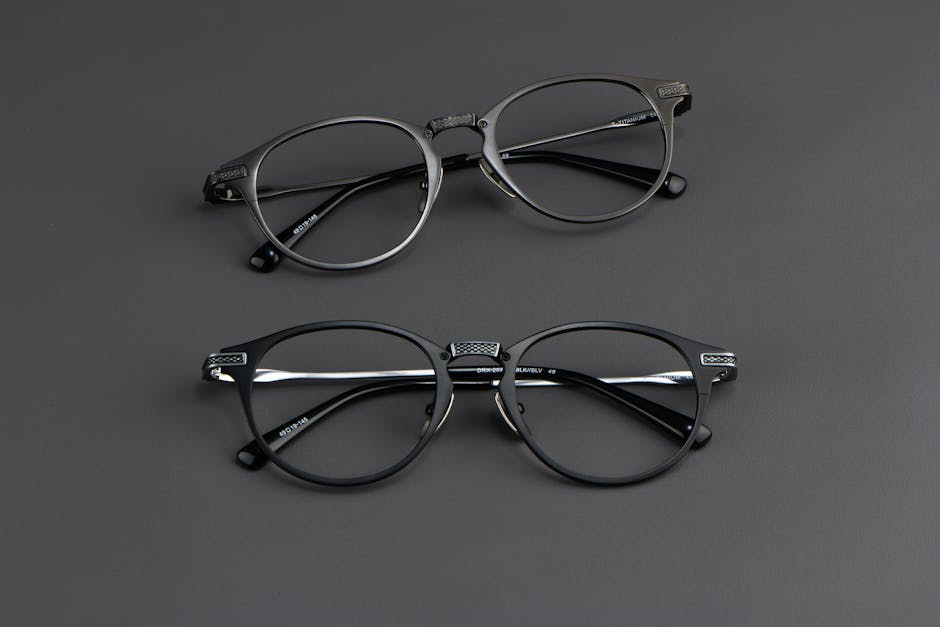
For more on lens selection and customizing your eyewear, see our post comparing premium anti-reflective and sun lens coatings.
Your Top Questions About Switching from Contacts to Glasses—Answered
Can I convert my contact lens prescription to glasses myself?
For mild prescriptions (under -3.50D), you can estimate by using the same SPH, CYL, and AXIS, but it’s just a starting point. For any prescription stronger, due to vertex distance, you need to increase the SPH by +0.25 for every -2.00 diopters above -4.00. Always ask your optometrist at iDoctor in Glendale Heights before ordering new glasses.
Why can’t I just use my contact numbers for glasses?
Contacts sit on your cornea. Glasses sit in front of your face. That difference, called vertex distance, changes the focusing power. Ignoring it leads to blurry, distorted vision—especially at higher strengths.
What is the best way to measure my Pupillary Distance (PD)?
PD is essential for aligning lenses. At iDoctor, we use Optikam digital measurements for accuracy. Self-measurement at home is possible with a ruler, but even a 1 mm error matters. If you need multifocals, segment height and fitting position are also critical.
How long does it take to get glasses after conversion at iDoctor?
Most glasses are ready within 7–10 days. We’ll call, text, or email when they arrive. You can walk in for adjustments any time afterward. For people in Wheaton or Lombard, we’re just a short drive away.
Does iDoctor accept my insurance?
We accept VSP, Eyemed, Cigna Vision, Humana, Superior Vision, Davis Vision, NVA, Spectera, UnitedHealthcare Vision, and more. We’ll check your benefits and clearly explain your out-of-pocket costs in advance.
Is there convenient parking?
Yes. Our office at 132 E. Army Trail Rd., near Jewel-Osco, has abundant free parking right outside our doors. We are easily found off Army Trail and Bloomingdale Roads.
Do you offer same-day or urgent appointments?
Often yes, especially for those needing urgent conversion or eye care help. Give us a call or book online for the fastest scheduling options.
How to Book Your Prescription Eyewear Conversion in Glendale Heights
Switching should be convenient and stress-free. Here’s how to get started:
- Call us at (630) 454-6899 or book an eye exam online.
- Bring your current contacts and glasses, a list of any medications, and your insurance card if you have one.
- Let us know if you’ve used contacts for astigmatism, multifocals, or specialty lenses—we’ll take extra care to ensure accuracy.
- If you have questions about lens options, boutique brands, or insurance coverage, just ask—we strive for transparent, one-on-one guidance.
Ready to See Comfortably in Your New Frames?
Call iDoctor today at (630) 454-6899 or book a Glendale Heights appointment online.
Immediate appointments are available—and we’re minutes from Addison, Lombard, and Bloomingdale!
Insurance accepted. Retinal imaging available for $39. Bring your contacts and glasses for seamless service.
Your comfort and vision matter, whether you’re a first-timer or an eyewear enthusiast. Join our Glen Ellyn, Carol Stream, and Glendale Heights neighbors who trust our expertise. To learn more about lens choices, read our guide to the latest progressives. For personalized optical care, discover what makes boutique opticals unique compared to big chains.
Visit us any time at our Glendale Heights location, just past Jewel-Osco, and experience the boutique difference in prescription eyewear.