If you’re frustrated by white spots or a filmy haze on your contact lenses—especially when you clean them daily—you’re not alone. This is a common issue for contact lens wearers in Glendale Heights and across nearby communities like Bloomingdale, Glen Ellyn, and Carol Stream. Persistent lens deposits not only make vision hazy but can cause discomfort, irritation, or put you at greater risk for eye infections. With the right routine and expert support, you can restore clarity and comfort to your vision. At iDoctor, your comprehensive resource for Glendale Heights contact lenses, we guide patients through every step to keep eyes healthy and contacts clear.
If you want to learn more about eye care differences in the area, see our recent blog on why some eye exams feel rushed and others feel personalized in Glendale Heights.
Immediate help available: Call iDoctor today at (630) 454-6899 or book a contact lens exam in Glendale Heights online.
What Are White Spots or Film on Contact Lenses?
Recurring white spots, cloudy film, or streaks almost always mean something is building up on your contact lenses. These are not defects in the lens material, but deposits “stuck” to the surface. These unwanted layers can come from your tears (proteins, lipids), cosmetics, hand lotions, or even mineral residue from solution or water. For Glendale Heights contact lens wearers, these deposits are a top reason patients visit our boutique optical for professional guidance.
- Protein buildup – Appears as a hazy, thin white film. Mostly from normal tear proteins like lysozyme. Builds up faster if you stretch lens life past the replacement schedule or wear them overnight.
- Lipid (oil) deposits – Look greasy or smudgy and are often harder to rinse away. More common if you have dry eye, use moisturizers, or have meibomian gland dysfunction.
- Mineral (calcium) spots – Chalky white spots that cling even after repeated cleaning. Often signal overwear or non-optimal cleaning system.
- Environmental and cosmetic debris – Mascara, powders, or dust can leave visible flecks, especially if contacts are handled before makeup fully dries.
If you have started a new medication or health routine and suddenly develop more lens deposits, tell your optometrist. Tear composition can change due to medical therapy, diet, or allergies.
Why Addressing Contact Lens Deposits in Glendale Heights Matters
Ignoring recurring lens film not only limits sharp vision but can lead to ongoing irritation and higher infection risk—especially when driving at night along Army Trail Road, biking through Glen Ellyn, or tackling long commutes to Wheaton or Lombard. Cloudy lenses lower contrast and clarity, creating subtle—even dangerous—vision issues in certain conditions.
- Safety: Clean contacts reduce the risk of accidents on busy suburban roads, especially after dark or in bad weather.
- Health: Deposits trap bacteria, making your eyes more likely to develop conjunctivitis or corneal infections if ignored.
- Comfort: Clean, well-fit lenses provide the all-day wear comfort busy professionals and families in Glendale Heights expect.
At iDoctor, Dr. Saher Sayed uses advanced diagnostic technology—such as high-resolution imaging, slit lamp evaluations, and digital measurements—to get to the root of your deposit pattern and advise on the safest personalized solution.
“Dr. Sayed took the time to explain everything clearly and that her approach made such a difference in your understanding of your vision. It’s our goal to provide both exceptional care and a comfortable, welcoming space.” – iDoctor patient
What To Do Right Now: Step-by-Step Local Action Plan
1. Remove the Affected Lenses Immediately
- Do not try to wear through discomfort. Take your contacts out as soon as you see white spots, film, or if your vision feels “foggy.”
- If your eye is red, painful, or sensitive to light, stop contacts completely and switch to glasses until seen by a professional.
2. Deep Clean Lenses (If Not Expired)
If the affected pair is still within its scheduled replacement period, you may try a thorough clean once:
- Wash hands with soap and water. Fully dry on lint-free towel.
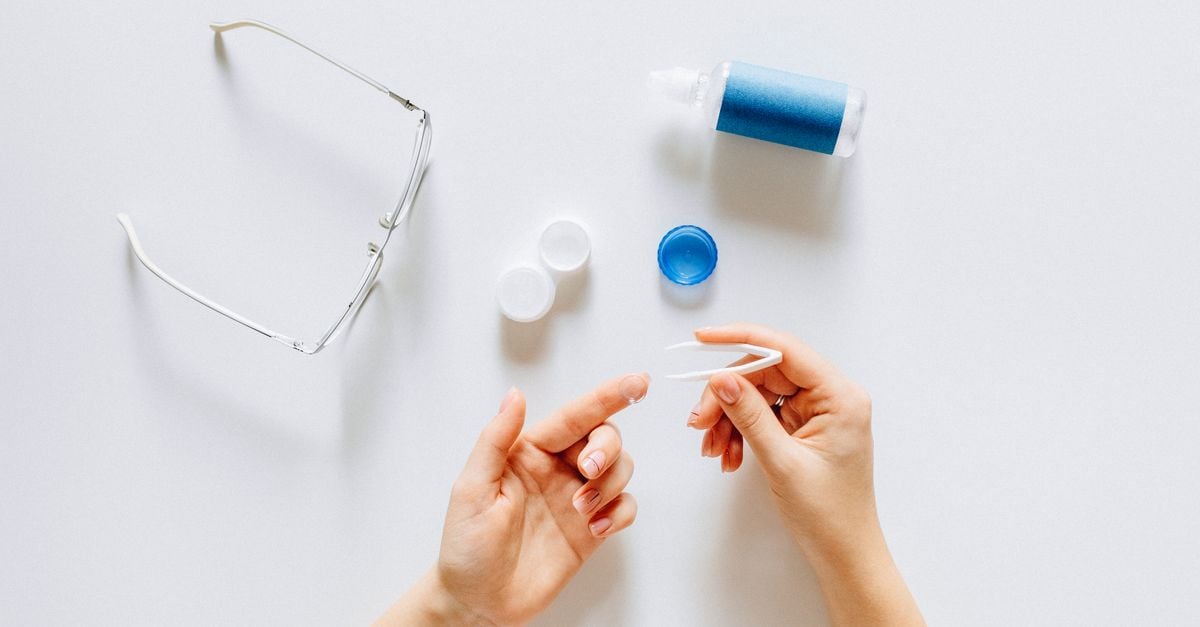
- Use the “rub and rinse” method: Add several drops of fresh solution, gently rub each lens in your palm for 20 seconds per side, then rinse thoroughly for at least 10 seconds per side.
- Soak in a clean case with fresh solution for at least 4-6 hours (see your solution’s label).
- Never use tap water or saliva on lenses or cases.
If deposits are still present, discard the lens and start a new pair.

3. Follow Your Lens Replacement Schedule Strictly
- Daily disposable: Do not reuse. Start fresh every morning.
- Two-week lenses: Discard two weeks from opening, regardless of days actually worn.
- Monthly lenses: Replace by the 30-day mark—never “when they feel bad.”
Frequent deposits on two-week or monthly lenses often disappear if you switch to daily disposable contacts, which is a frequent solution we recommend and fit at iDoctor for our patients.
4. Consider Upgrading Your Cleaning System
- Enzymatic Cleaners: Break down protein deposits. Use weekly as directed, then rinse and disinfect as usual.
- Hydrogen Peroxide Systems: Provide a deeper clean for stubborn deposits. Always wait for full neutralization (usually six hours or more) before inserting lenses. Never rinse directly with un-neutralized peroxide.
- Surfactant (Lipid) Cleaners: For oily spots, use these before disinfecting if conventional solution is not enough.
Our team matches your lens material and needs to the right option and shows you how to use new cleaners for best safety.
5. Fix Common Routine Mistakes
- Always wash and dry hands before handling contacts.
- Apply makeup after inserting lenses; remove contacts before cleaning makeup.
- Never “top off” old solution in your case—start fresh daily.
- Replace lens cases at least every 1–3 months and let them air dry upside-down.
- Only sleep in contacts if your eye doctor specifically prescribes overnight use.
When to Book a Contact Lens Exam at iDoctor
- You see white spots or a filmy haze again within days—even after opening a new pair and cleaning correctly.
- Your eyes feel red, painful, especially sensitive to light, or vision worsens suddenly.
- You see mucus, discharge, or crusting.
- You have dry eye, allergies, or ongoing eyelid issues, and contacts never feel quite right.
During your visit at iDoctor in Glendale Heights, expect:
- A detailed review of lens type, brand, hygiene, and every step of your cleaning routine.
- Advanced evaluation with slit lamp, measuring corneal health and ruling out inflammation or toxicity.
- Tear film and gland assessment to pinpoint if dry eye or allergies are accelerating deposit issues.
- Guidance for upgrading to daily disposables, better solutions, or lens materials if needed.
Many Glendale Heights patients—and others from Addison, Carol Stream, and Lombard—find these personalized adjustments completely resolve recurring “cloudy contact” frustrations.
Local Benefits of Choosing iDoctor for Your Contacts
- Convenience: Located on Army Trail Road near Bloomingdale Road, just minutes from Glen Ellyn and Wheaton.
- Immediate availability: Same- or next-day appointments for urgent lens issues are often open.
- Technology & skill: Boutique-level diagnostics, gentle eye pressure checks, digital corneal mapping, and expert contact lens fitting for every eye type.
- Full insurance support: Major vision plans (VSP, Eyemed, Cigna, Humana, Superior Vision, Davis Vision, NVA, Spectera, UnitedHealthcare) accepted. Value packages available for uninsured patients.
FAQs: White Spots and Film on Contact Lenses in Glendale Heights
Are white spots on contacts dangerous?
Most spots are harmless deposits (protein, oil, minerals) but can irritate and increase infection risk if ignored. If cleaning or starting a new lens does not fix the issue, schedule an eye exam to prevent further problems.
Is switching to daily disposable lenses the answer?
For many frequent deposit cases, yes. Daily disposables start fresh each day, minimizing buildup. We offer major daily lenses for patients who want the easiest routine and clearest vision.
How quickly can I get new contacts from iDoctor?
Most soft contacts arrive in 3–7 business days after your prescription is finalized. Specialty lenses (toric, multifocal) may take longer. We provide clear timelines at your fitting.
Are appointments and parking convenient?
Yes. We are easily accessible in Glendale Heights with plenty of on-site parking. Same or next-day visits are regularly available for urgent lens and eye health concerns.
What insurances does iDoctor accept?
We accept almost all major vision plans—VSP, Eyemed, Cigna Vision, Humana, Superior Vision, Davis Vision, NVA, Spectera, UnitedHealthcare Vision—and offer affordable value packages if you do not use insurance.
How to Book a Contact Lens Exam or Deposit Troubleshooting at iDoctor
Are you ready to see clearly again? Call (630) 454-6899 or book an exam today. We welcome new and returning patients from Glendale Heights, Bloomingdale, Glen Ellyn, Carol Stream, Addison, Lombard, Wheaton, and beyond.
During your appointment, Dr. Sayed will review your lenses, assess eye health with high-resolution imaging, and help design the most effective routine or lens upgrade. Patients interested in stylish backup glasses can also explore our carefully curated designer frames and advanced lens solutions.

To discover the difference that boutique, patient-focused care makes for Glendale Heights contact lenses, learn more at iDoctor—your trusted optometry partner for detailed eye exams, precise contact lens care, and high-style eyewear in Chicagoland.