Are you seeing more of those little specks in your vision lately? It’s a common question we hear at iDoctor in Glendale Heights, and yes, there's a definite link between eye floaters and dehydration. While not drinking enough water doesn't directly create new floaters, it can cause the ones you already have to become much more noticeable and annoying.
Think of it this way: when your body is low on fluids, the gel inside your eye can shrink just enough to make existing specks and strands stand out. Staying properly hydrated helps restore that gel to its normal state, often making those floaters seem to fade back into the background. For residents of Glendale Heights and surrounding suburbs, understanding this connection is a simple first step toward clearer, more comfortable vision.
The Surprising Link Between Dehydration and Eye Floaters
Ever had one of those days where you suddenly notice more of those little squiggles drifting across your vision? If you live in Glendale Heights or nearby towns like Carol Stream and Bloomingdale, you know how easy it is to get caught up and forget to drink enough water—especially on a hot summer day at Camera Park or during a long commute down North Avenue. This is exactly when the connection between eye floaters and dehydration often becomes most apparent.
The inside of your eye is filled with a clear, gel-like substance called the vitreous humor, which is made up of about 98% water. The best way to picture it is like a perfectly formed Jell-O mold. When you become dehydrated, that gel can lose a bit of its volume and pull away from the back of the eye.
This shrinking causes the tiny collagen fibers and proteins floating within it to clump together. As they become denser, they cast darker, more defined shadows on your retina. Those shadows are what you see as floaters.
Why Your Water Intake Matters
Eye floaters are incredibly common. In fact, studies show that around 76% of people experience them at some point in their lives, and for about a third of those individuals, the floaters are significant enough to interfere with their vision.
While most floaters are just a normal part of aging, a sudden increase in how much you see them can be unsettling. And dehydration doesn't just stop at the vitreous humor; it can impact your eye health in other ways, too.
- Reduced Tear Production: Not enough water means your body can't produce enough tears. This leads to dry, gritty, and irritated eyes, which only makes other visual disturbances like floaters feel worse.
- Eye Strain and Headaches: When your eyes are dry and uncomfortable, you’re more likely to experience strain, which can easily trigger fatigue and tension headaches.
Understanding that hydration plays a role in floaters is the first step toward managing them. For many people, simply making a conscious effort to drink more water is all it takes to make those pesky specks less prominent.
This is why staying on top of your water intake is such a simple but powerful tool for supporting your overall eye health. If you've been dealing with dry, uncomfortable eyes in addition to floaters, you might want to learn more about how dry eye can affect your vision in our detailed guide. Here at iDoctor, Glendale Heights' trusted eye care boutique, we’re committed to helping you understand and take control of your vision.
How Dehydration Affects Your Vision
When you don't drink enough water, it can set off a chain reaction that affects multiple parts of your eyes. This table breaks down how seemingly small issues can lead to noticeable discomfort and vision problems.
| Symptom | How Dehydration Contributes | What You Might Experience |
|---|---|---|
| Noticeable Floaters | The vitreous humor (eye gel) shrinks, causing collagen fibers to clump and cast shadows. | Seeing more squiggly lines, dots, or web-like shapes drifting in your vision. |
| Dry, Itchy Eyes | Tear production slows down because your body is conserving fluids. | A gritty, burning, or sandy feeling in your eyes; redness and irritation. |
| Blurred Vision | Lack of moisture on the eye's surface (the cornea) can disrupt the way light enters. | Vision that seems hazy or out of focus and may fluctuate with blinking. |
| Eye Strain & Fatigue | Your eye muscles have to work harder to focus through a dry, irritated surface. | Tired eyes, headaches (especially around the temples), and difficulty concentrating. |
Ultimately, keeping your body hydrated is foundational for clear, comfortable vision. A simple glass of water can do a world of good for your eyes.
What Exactly Are Those Specks You See Floating By?
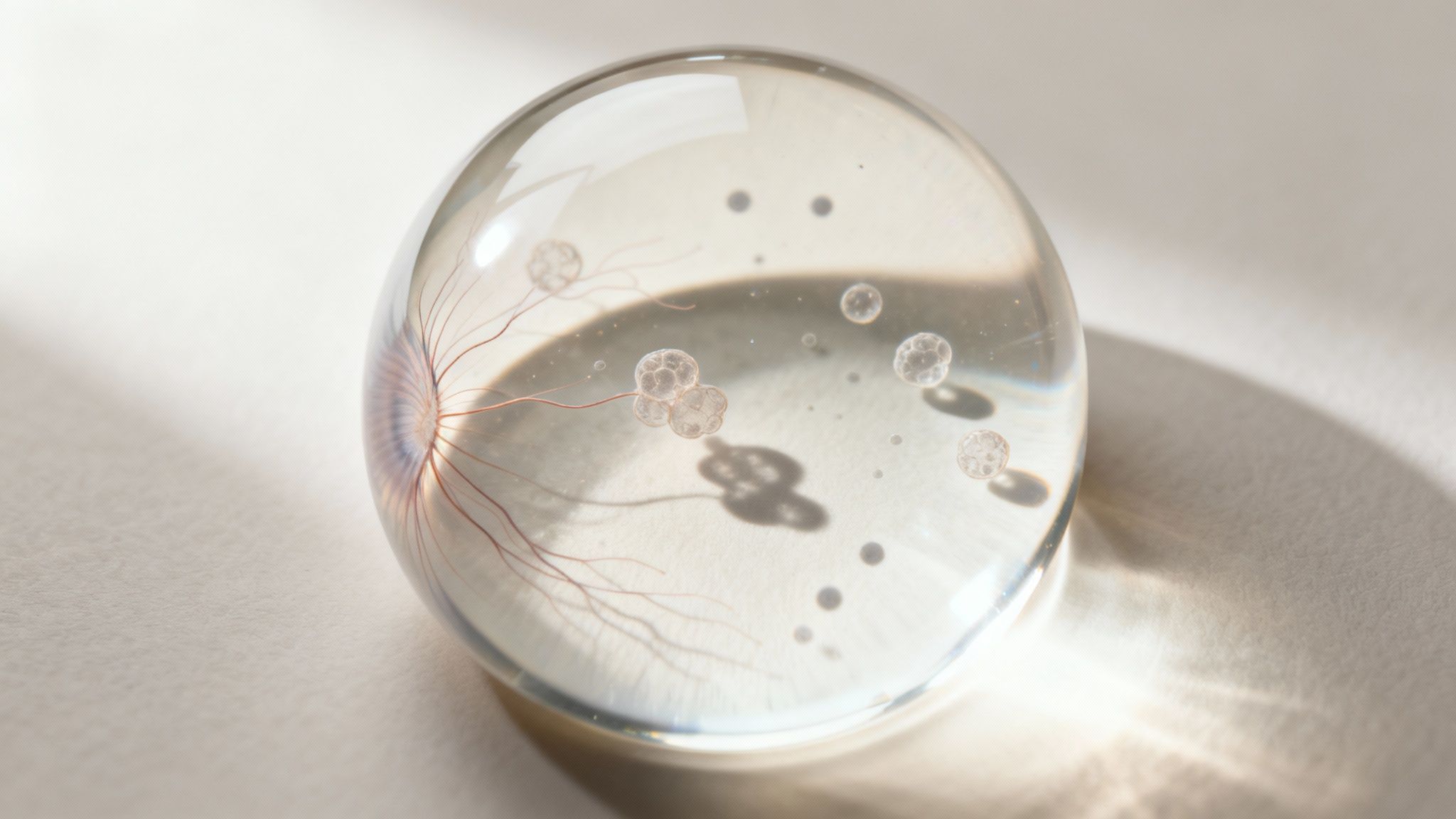
Let's talk about those strange squiggly lines, dots, or even cobweb-like shapes that drift across your field of vision. It’s a common experience. While they look like they’re on the surface of your eye, eye floaters are actually tiny clumps floating inside of it.
Think of your eyeball as being filled with a clear, jelly-like substance called the vitreous. This gel is mostly water, with a bit of a protein called collagen mixed in. When you notice a floater, what you're really seeing is the shadow these little collagen clumps cast onto your retina—the light-sensitive screen at the very back of your eye.
This is why they seem to pop out of nowhere when you look at a bright, uniform surface. A clear blue sky, a blank white wall, or your computer screen creates the perfect backdrop for these shadows to become noticeable.
The Main Causes of Eye Floaters
For most of us, floaters are just a normal, harmless part of getting older. As the years go by, the vitreous gel in our eyes naturally starts to thin out and become more liquid. As it does, the collagen fibers inside can clump together, creating the specks and strings that drift around.
This natural aging process is the primary reason floaters become more common as we age. To get a better sense of what's happening, check out our guide on how your eyes change with age.
While age is the number one cause, it's not the only one. Understanding the different risk factors can help you connect the dots between your lifestyle and your vision.
But age isn't the whole story. Several other factors can make you more likely to develop floaters, sometimes even when you're young. This is where the link between eye floaters and dehydration starts to make sense for so many people.
Common Risk Factors Include:
- Nearsightedness (Myopia): If you're nearsighted, your eyeball is often slightly elongated. This shape can sometimes speed up the process of the vitreous liquefying and pulling away from the retina.
- Previous Eye Injury: A significant blow or trauma to the eye can shake up the vitreous gel, causing new floaters to form.
- Eye Inflammation (Uveitis): Inflammation inside the eye can cause debris to be released into the vitreous, which then shows up as floaters.
- Diabetes: Uncontrolled blood sugar can damage the delicate blood vessels in the retina. Sometimes, these vessels can leak blood into the vitreous, appearing as a sudden shower of new spots.
Once you realize that floaters are real, physical objects inside your eye, it becomes much easier to understand how things like your daily water intake can affect how noticeable they are.
Why Your Water Bottle Might Be Your Best Friend
Ever notice those little squiggly floaters in your vision seem to show up more after a long run or a busy day out in the sun? It's not your imagination. The connection between eye floaters and dehydration is very real, and it all comes down to the basic makeup of your eye.
Think of the inside of your eye as being filled with a clear, jelly-like substance called the vitreous humor. This gel is about 98% water, which means its shape and consistency are directly tied to how hydrated you are. When you don't get enough fluids, this gel can actually shrink a little—much like a grape shrivels into a raisin.
That slight shrinkage is what causes the problem. As the vitreous gel loses volume, it can pull away from the retina. This makes the tiny collagen fibers already floating inside it bunch together, becoming denser and more clumped. These clumps cast darker, more defined shadows on your retina, which you see as more noticeable floaters.
The Science of Shrinkage and Shadows
For many people in Glendale Heights, this becomes obvious after any activity that causes fluid loss. Maybe it's a hot summer afternoon spent at Glendale Lakes Golf Club or just a hectic day of errands without stopping for a drink. The good news? This is often a temporary issue.
Getting properly rehydrated helps the vitreous gel plump back up to its normal volume. This allows those clumped-up collagen fibers to spread out again. As they disperse, their shadows become lighter and less distinct, and the floaters seem to fade away. While drinking water won't make the floaters disappear for good, it’s a simple and powerful way to manage how much they impact your vision.
Dehydration affects the eye primarily through its impact on the vitreous humor. When the body is dehydrated, the vitreous humor shrinks, and the proteins within it may solidify instead of remaining dissolved, which can exacerbate the presence of floaters.
More Than Just Floaters
Dehydration's impact doesn't end with the vitreous gel. It also messes with your tear production. When your body is trying to conserve water, one of the first things it cuts back on is making tears, leaving your eyes feeling dry, gritty, and uncomfortable.
This surface dryness can make any internal visual issue—including floaters—feel that much more annoying. The irritation from dry eyes simply makes you more aware of the floaters, creating a frustrating cycle. Staying hydrated is fundamental not just for managing floaters, but for keeping your eyes feeling comfortable and healthy.
Just as the right diet can support your vision, so can your daily water intake. For more tips on taking care of your eyes from the inside out, take a look at our guide to the best foods for eye health.
When to Stop Watching and Start Calling
Most of the time, those little specks and squiggles drifting in your vision are just a harmless, albeit annoying, part of life. But it's absolutely crucial to know when a change in your floaters is signaling something much more serious.
A typical floater might drift lazily across your vision, but certain symptoms demand immediate attention. These could be the first warning signs of a retinal tear or detachment—conditions that require urgent care to prevent permanent vision loss.
Think of it like this: a few familiar floaters are like gentle rain, but a sudden downpour is a thunderstorm. While gradual changes are often normal, an abrupt and dramatic shift in what you're seeing is a major red flag. Don’t just wait and hope it goes away on its own.
Red Flags That Need an Urgent Response
If you experience any of the following symptoms, it’s time to stop what you're doing and call an eye doctor immediately. These signs are not typical of benign floaters or the effects of simple dehydration.
- A sudden explosion of new floaters: If it looks like someone shook a snow globe inside your eye, that’s a major warning.
- Flashes of light: Seeing quick, bright flashes, like a camera going off in your peripheral vision, can mean the vitreous gel is tugging on your retina.
- A dark curtain or shadow: This is one of the most serious signs. It might look like a dark, curtain-like shadow is moving across your field of vision.
- Sudden loss of sight: Any abrupt decrease or loss of vision in one eye is an emergency.
To help you tell the difference, here’s a quick guide comparing normal floaters to the signs of a potential emergency.
Normal Floaters vs Potential Emergency
| Symptom | Usually Benign (Monitor) | Potential Emergency (Seek Immediate Care) |
|---|---|---|
| Appearance | A few small specks, strings, or cobwebs that have been there for a while. | A sudden, dramatic increase in the number of floaters, like a shower of black dots. |
| Movement | They drift slowly when you move your eyes and settle when you stop. | Accompanied by bright, recurring flashes of light (photopsia), especially in your peripheral vision. |
| Changes | Appear gradually over time, with little day-to-day change. | The appearance of a dark, veil-like shadow or "curtain" descending over your vision. |
| Vision Impact | Annoying, but they don't block out your vision. | Any sudden decrease or complete loss of vision in one eye. |
This table makes it clear: if your symptoms fall into that right-hand column, don't hesitate.
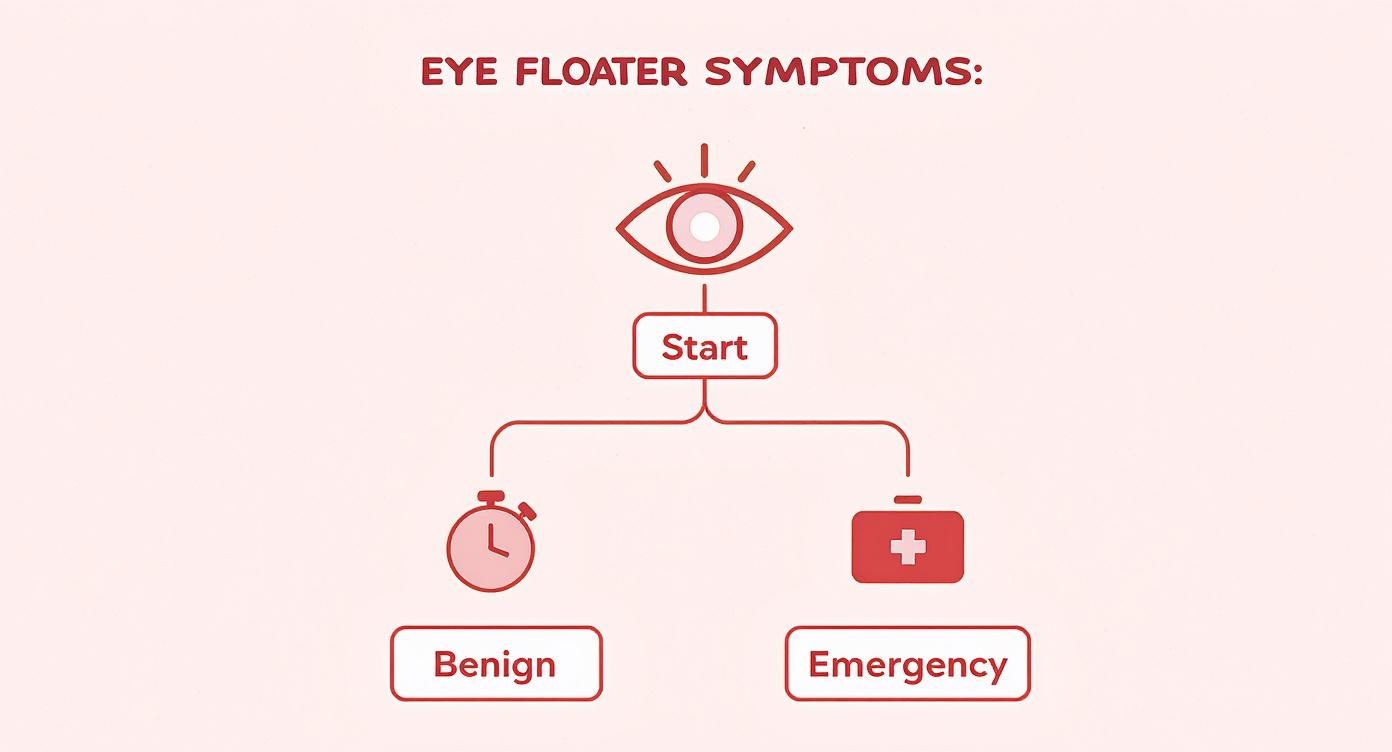
While gradual floaters can often be monitored, sudden, severe symptoms like flashes of light or a dark curtain demand an immediate call to your eye doctor.
If you are experiencing any of these serious signs, please contact us at iDoctor in Glendale Heights or visit an emergency room right away. We are equipped with advanced, high-resolution imaging to quickly diagnose what's going on inside your eye. For more information, you can learn about our approach to handling eye emergencies in Glendale Heights.
Practical Steps for Better Hydration and Eye Health
Knowing the "why" behind eye floaters and dehydration is one thing, but putting that knowledge into practice is what really counts. The good news is that taking control of your hydration and supporting your vision doesn't require a massive overhaul of your life. It's all about small, consistent habits you can start building today.
The most obvious first step? Drink more water. But it's not about chugging a gallon first thing in the morning. Think steady sips throughout the day. A reusable water bottle is your best friend here—it’s a simple visual cue that keeps hydration top of mind, even on the busiest days here in Glendale Heights.
Simple Lifestyle Tweaks for a Big Impact
Plain water is fantastic, but it's not the only way to stay hydrated. You can sneak more fluids into your system through your diet and daily routines, which supports everything from your energy levels to how comfortable your eyes feel.
- Eat Your Water: Add water-rich foods to your plate. Think crisp cucumbers, celery, juicy watermelon, and fresh strawberries. They all count!
- Set a Nudge: Use your phone or a smartwatch to set a simple hourly reminder. It's an easy way to build the habit of taking a few sips.
- Keep Your Balance: Hydration is more than just water; it's also about electrolytes. To get a better handle on how essential minerals help your body manage fluid balance and fight off dehydration, this guide on what electrolytes do is a great resource.
Staying hydrated is a huge piece of the puzzle, but it's not the only one. Proactive eye care also means managing the outside world, because eye strain and discomfort can make internal issues like floaters feel much more noticeable.
Protecting Your Eyes Throughout the Day
Many of us spend our days staring at screens, which can lead to serious digital eye strain. A game-changer for this is the 20-20-20 rule. It's simple: every 20 minutes, you look at something 20 feet away for at least 20 seconds. This little break gives your eye muscles a chance to relax, reducing the fatigue and dryness that come with screen time. If you’re dealing with persistent discomfort, we have more tips in our guide to dry eye treatment in Glendale Heights.
Don't forget about the sun, either. Protecting your eyes from UV damage is non-negotiable. A good pair of sunglasses—like the quality Ray-Ban or Gucci options we have here at iDoctor—is your first line of defense against harmful rays that contribute to bigger eye health problems down the road.
Your Partner for Clear Vision in Glendale Heights
This is where we come in. If you’ve started noticing floaters, or any other changes in your vision, getting a professional opinion is the single most important step you can take. At iDoctor, our entire focus is on providing the expertise and technology needed to get to the bottom of your concerns.
We believe a thorough examination shouldn’t be rushed. It’s about precision, but it’s also about giving you peace of mind.
Advanced Care Right in Your Neighborhood
That’s why our detailed eye exams in Glendale Heights are a full 30 minutes long. This gives us the time we need to truly listen to you and conduct a complete, unhurried assessment of your eye health.
Using high-resolution imaging, we get an incredibly sharp view of your vitreous and retina. This technology lets us see the internal structures of your eye in stunning detail, which is crucial for accurately diagnosing the cause of floaters and, more importantly, ruling out serious conditions like a retinal tear.
Our goal is simple: give you clear answers and a confident path forward. We're conveniently located for everyone in the community, with easy access from major local roads like Army Trail Road and Bloomingdale Road.
When it comes to vision changes, a comprehensive eye exam is the only way to know for sure what's going on. It’s what separates a minor annoyance from a potential problem that needs immediate attention.
We’re proud to serve our Glendale Heights community and the surrounding Chicagoland suburbs with a level of care that we believe sets a new standard. And once your exam is complete, you can browse our curated collection of eyewear to find frames that perfectly match your style. We feature stunning luxury eyewear from brands like Cartier, Gucci, and Tom Ford, alongside stylish and accessible options from Ray-Ban and Kate Spade.
If you're in the area and have any concerns about floaters, dehydration, or other vision changes, we warmly invite you to schedule an appointment. Come see the iDoctor difference for yourself and let us become your trusted partner in maintaining clear, healthy vision for years to come.
FAQs About Floaters in Glendale Heights
We get a lot of questions about eye floaters here in our Glendale Heights office. It's a common concern, so let's walk through some of the things our patients frequently ask.
Can drinking water get rid of my floaters for good?
This is the number one question we hear! While staying hydrated is fantastic for your overall eye health, it won't permanently eliminate the floaters you already have. Those are tiny collagen fibers, and water can't make them vanish. What drinking plenty of water can do is help the vitreous gel inside your eye stay plump and healthy. This often makes the floaters less noticeable because they don’t clump together as easily. Think of it as a great way to manage them, not a cure.
I live near Glendale Heights. Where can I find designer glasses?
Right here at iDoctor! We are an independent optometry boutique specializing in a curated collection of luxury and affordable eyewear. We proudly carry frames from top designers like Cartier, Gucci, Tom Ford, and Oliver Peoples, alongside popular brands such as Ray-Ban and Kate Spade. If you're looking for designer eyeglasses in Glendale Heights, our collection offers something for every style.
Why do I see more floaters after working out?
It’s completely normal to notice more floaters after a good workout, whether you're at the Glendale Lakes Golf Club or a local gym. Two things are happening: first, the intense movement is literally shaking up the vitreous gel in your eye, making those floaters more active. Second, you're likely a bit dehydrated from sweating. This combination of jostling and fluid loss can make your floaters seem much more prominent. The simple fix? Make sure you’re hydrating well before, during, and after you exercise. It can make a real difference.
Does my insurance cover an exam for floaters at iDoctor?
Yes, it almost always does. At iDoctor, we accept all major vision insurance plans, such as VSP, EyeMed, and Cigna Vision. Investigating new or changing floaters is considered a medical necessity, so a detailed eye exam is the perfect way to get to the bottom of it. These comprehensive evaluations are designed to check for underlying issues and are typically a covered benefit.
At iDoctor, we blend state-of-the-art diagnostic tools with a genuine passion for helping our Glendale Heights community understand and protect their vision. If floaters or any other eye health issue is on your mind, we're here to help. Schedule your appointment with the best optometrist in Glendale Heights today.