If you have astigmatism and want to switch from glasses to contact lenses in Glendale Heights, it may seem easy to plug your numbers into an online calculator. However, astigmatism contact lens prescriptions require far more than simple math. At iDoctor, we guide you through accurate prescription conversion, expert fitting, and on-eye assessment so your lenses are truly customized for your vision needs, comfort, and lifestyle. Whether you are coming from Bloomingdale, Carol Stream, Glen Ellyn, or a nearby suburb, careful toric lens fitting is the key to clear, stable vision—not a generic calculator.
Our advanced technology, detailed imaging, and extensive experience as a boutique optical make us a trusted resource for contact lenses in Glendale Heights, from detailed initial measurements to follow-up care. If you want peace of mind knowing your lenses fit perfectly and actually deliver sharp vision, especially with astigmatism, here’s what you should know—and why professional care is essential. (Learn more about our vertex distance and contact lens math in this detailed guide.)
What Astigmatism Contact Lens Conversion Involves
Astigmatism is caused by an irregular corneal shape, requiring correction for both sphere (myopia/hyperopia) and cylinder (amount of astigmatism) with an exact axis. Glasses prescriptions include all three numbers, but converting these to a contact lens prescription requires more steps:
- Sphere (SPH): Nearsighted or farsighted strength, such as -3.00 or +2.00.
- Cylinder (CYL): Astigmatism strength, often written as a negative number, such as -1.25.
- Axis: The direction of astigmatism, from 1 to 180 degrees.
Online calculators adjust for vertex distance (the gap between glasses and eye) for high prescriptions (about ±4.00 D or greater) and often calculate a “spherical equivalent” for mild astigmatism. For example, a -2.00 sphere with -0.50 cylinder becomes -2.25 after this calculation. While this is sometimes accurate for minimal astigmatism, most patients with more than -0.75 cylinder find that calculators miss critical fitting steps. Once your astigmatism reaches -1.00 to -2.00, a toric (astigmatism-correcting) soft contact lens offers much better clarity and comfort.

Why a Calculator Alone Is Not Enough
Calculators do not:
- Measure your corneal curvature or size, necessary for choosing the proper base curve and diameter.
- Account for the unique way toric lenses sit, rotate, or shift on your eye—small axis errors can reduce clarity fast.
- Check lens material comfort after hours of wear, dry eye tendencies, or the effect of blinking and eyelid anatomy.
- Select the right lens brand and stabilization design for your prescription and eye surface.
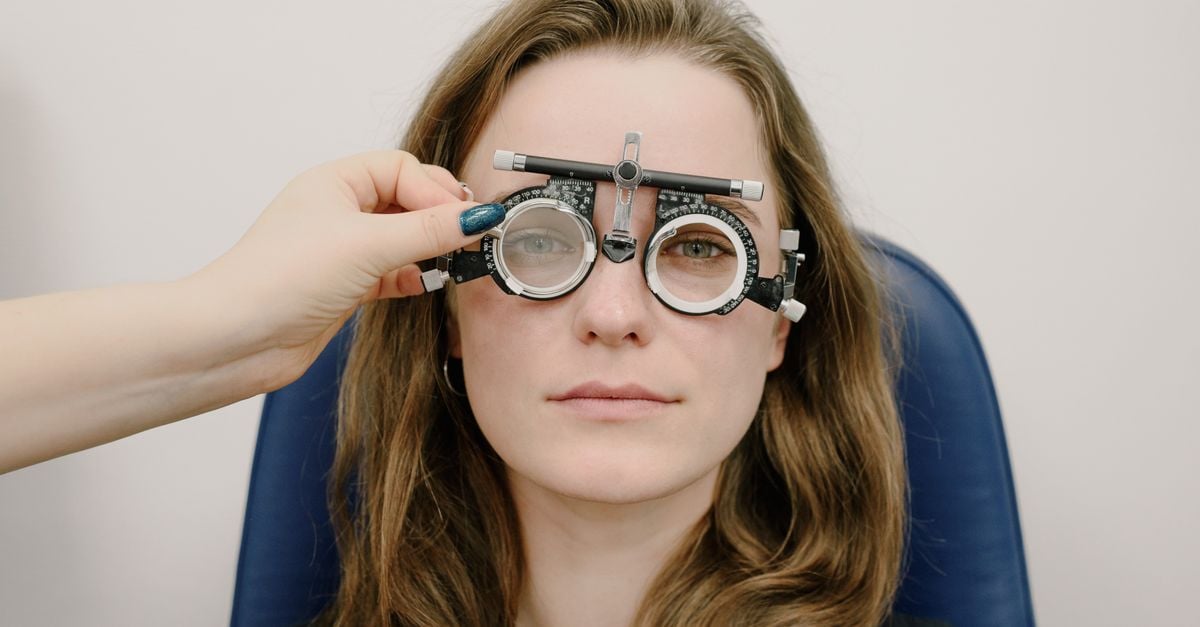
This is why actual trial lens fittings and professional assessments are a must for anyone with astigmatism. At iDoctor, we use high-resolution corneal mapping, digital phoropters, and widefield retinal imaging to not only ensure prescription accuracy, but also to check for eye health issues that can influence contact lens choice and safety. Our team always educates you on how each parameter affects your vision and comfort.
Benefits of Professional Astigmatism Contact Lens Fitting in Glendale Heights
Unlike online ordering, a professional astigmatism contact lens fitting with iDoctor in Glendale Heights offers:
- Personalized corneal measurements: Digital or manual keratometry ensures correct base curve and diameter, reducing lens movement and rotation.
- Trial lens fitting and observation: We insert lenses, allow them to settle, and measure exact cylinder/axis performance on your eyes—including any real-world rotation.
- On-eye over-refraction: Fine-tuning the prescription through the lens itself, as corneal shape and lens rotation will often require subtle adjustments for best clarity.
- Expert review for dryness or long-wear comfort: Some patients need special materials, brands, or lens care solutions—details calculators do not address.
- Book-and-go convenience: Our office is easy to reach from nearby communities including Bloomingdale, Carol Stream, Glen Ellyn, Addison, Wheaton, and Lombard, and located near Jewel-Osco and Army Trail/Bloomingdale Roads in Glendale Heights.
We accept all major vision insurances—VSP, Eyemed, Cigna Vision, Humana, Superior Vision, Davis Vision, NVA, Spectera, UnitedHealthcare Vision—and can verify your benefits in advance. Most appointments are available the same or next day, perfect if your current lenses are causing blur, discomfort, or instability.

—iDoctor patient (paraphrased review)
What Really Happens: Astigmatism Lens Conversion Step By Step
- Health & Vision Exam: We start with a detailed exam, checking eye health with advanced diagnostics including retinal imaging and eye pressure measurement, then confirm your glasses prescription accurately.
- Corneal Mapping: The shape, curvature, and health of your cornea are assessed. This determines base curve and diameter, crucial for contact lens stability—especially for astigmatism correction.
- Initial Lens Selection: Based on prescription and corneal data, we select trial lenses in several powers/brands. Patients with -0.75 or greater cylinder almost always see clearer with toric lenses, not a spherical equivalent.
- Trial Fitting On Eye: We place lenses on your eyes, allow them to settle, and precisely measure rotation and alignment. If the axis drifts by 10 or 15 degrees, we adjust accordingly to restore clarity.
- Over-Refraction and Adjustments: We check vision through the lenses and tweak sphere, cylinder, and axis live—impossible with online calculators alone. This is where professional guidance is non-negotiable.
- Comfort Review & Follow-Up: We evaluate comfort after several hours, address any dryness or red eye, and schedule a follow-up for additional adjustments if necessary.
Our typical fitting takes 45–60 minutes for the initial visit, with follow-ups around 10–20 minutes. You benefit from personalized care rather than the trial-and-error most people experience when ordering contacts online using just calculator estimates.
FAQs: Astigmatism Contact Lens Prescriptions in Glendale Heights
Can I use an online calculator to convert my glasses prescription for astigmatism contacts?
Online calculators can estimate a starting point using vertex distance and spherical equivalent (for minimal astigmatism). However, they cannot check corneal size, lens rotation, or axis alignment—all vital for clear and comfortable vision. For astigmatism, professional fitting with an optometrist is essential.
Why are my cylinder and axis different for contacts versus glasses?
Glasses sit about 12 mm in front of the eye, while contacts rest directly on your cornea. This difference—along with on-eye behavior—changes the effective lens powers, sometimes lowering both sphere and cylinder values and requiring axis adjustments. Lens rotation must be measured and factored into your final prescription.
Do I always need toric contact lenses if I have astigmatism?
Not always, but generally if you have -0.75 diopters of cylinder or more, vision is clearer and more stable with toric lenses. Some mild cases can wear spherical lenses, but the best solution is always determined by trial fitting and personal experience during your professional exam.
How long does an iDoctor astigmatism contact lens fitting take?
Expect 45–60 minutes for your initial fitting, including history, measurements, trial lens assessment, and vision fine-tuning. Follow-up visits (if necessary) are typically 10–20 minutes for comfort or prescription adjustments.
How long does it take to get astigmatism contacts after my exam?
Most standard toric lenses are ready for pickup or delivery within 3–7 business days after prescription finalization. Many common types can be delivered even sooner for patients in Glendale Heights, Lombard, and Addison.
Is parking easy at iDoctor in Glendale Heights?
Yes. We’re located at 132 E. Army Trail Rd. with on-site parking near Jewel-Osco. Our office is easily accessible for residents of Carol Stream, Wheaton, and Glen Ellyn.
How to Book Your Astigmatism Contact Lens Fitting in Glendale Heights
To get started, gather your recent glasses prescription, bring any current contacts (even if you’re not happy with them), and note what your daily lens habits look like. Then schedule an exam at iDoctor for a personalized assessment that gives you clear, comfortable sight—far beyond what a calculator can provide.
- Call (630) 454-6899 for immediate booking
- Book your contact lens exam online, available same or next day
- We’ll verify insurance, explain prices, and help with your paperwork, making the process simple.
Looking to pair your new contacts with stylish, properly fit glasses? Explore our prescription lens options for details on digital measurements and advanced lens choices at our boutique optical.