
Prescription lenses
Lenses for the way you see.
Your prescription is the starting point. Compare lens designs, materials and treatments, then let our optical team help you choose a combination for your frame and daily routine.

Start with the essentials
Three choices. One pair.
Lens design, material and treatments do different jobs. You can combine them rather than choosing just one.
Lens design
Single vision or progressive? The design determines how your prescription power is arranged across the lens.
Material & construction
Your prescription and frame help determine suitable lens materials, thickness and mounting options.
Lens treatments
Anti-reflective coatings, light-adaptive options, tint and polarization address different light and wear needs.
Understanding progressives
Three distances.
One continuous lens.
Progressive lenses combine distance, intermediate and near vision in one lens. The lens power changes gradually from top to bottom, without visible dividing lines.

- 01 Distance
- The upper viewing area.
- 02 Intermediate
- The middle area for in-between distances.
- 03 Near
- The lower area for close-up tasks.
Find your starting point
Compare your lens options.
Choose how you’ll use your glasses, then compare Personalized, Premium and Classic within each lens type. Our team will confirm the combinations available for your prescription and frame.
Anti-reflective coating included with every iDoctor lens.
What will you use this pair for?
Start with the distances you need to see.
Single-vision lenses are designed for one viewing distance. Progressives combine distance, intermediate and near zones in one pair. Your prescription and daily routine help our team decide which options to compare with you.
Start with your working distance.
Tell our optical team how far your screen sits from your eyes, whether you use more than one screen, and what else you need to see. We can discuss a single-distance pair or a progressive design for your routine.
Blue-light filtering is an optional feature to discuss separately from your prescription and working-distance needs.
Compare how the progressive designs differ.
Progressives combine distance, intermediate and near zones. Compare our three tiers below, then ask our team how your frame, measurements and daily routine affect the available options.
Compare tint and polarization.
Prescription sunglasses are available in single-vision and progressive designs. Tint adds darkness; polarization helps reduce reflected glare. Our team can explain the UV protection and available combinations for your prescription and frame.
Showing all lens types.
Single-vision lenses
One prescription power, selected for distance, reading or another viewing task.

Personalized
- Lens design
- Digital Single Vision EyezenOptimized single-vision design for everyday viewing.
- Included coating
- Crizal Rock — premium anti-reflective and scratch-resistant coating.
Premium
- Lens design
- Standard Single Vision
- Included coating
- Crizal Rock — premium anti-reflective and scratch-resistant coating.
- Optional upgrade
- EBS Blue Filter.
Classic
- Lens design
- Single Vision
- Included coating
- Crizal Easy — standard anti-reflective coating.
Other options: Ask about light-adaptive lenses, drillmount and high-index 1.67 or 1.74. Availability depends on the lens design, prescription and frame.
Progressive lenses
Distance, intermediate and near zones with a gradual change in prescription power. Frame fit and measurements help place those zones for you.

Personalized
- Lens design
- Varilux XR Design — digital progressive lensesDesigned for sharp vision in motion and smooth changes from near to far.
- Included coating
- Crizal Rock — scratch-resistant and anti-reflective coating.
Premium
- Lens design
- Varilux Comfort Max Fit — progressive lensesDesigned for comfortable viewing in varied head and body positions.
- Included coating
- Crizal Rock — scratch-resistant and anti-reflective coating.
Classic
- Lens design
- Varilux Comfort DRx — progressive lensesDesigned with a large reading area for close-up tasks.
- Included coating
- Crizal Easy — anti-reflective coating.
Optional upgrades: EBS Blue Filter is available for Personalized or Premium progressives. Light-adaptive lenses, drillmount and high-index 1.67 or 1.74 are options to discuss; availability depends on the design, prescription and frame.
Prescription sunglass lenses
Prescription sun lenses combine your vision correction with tint or polarization for outdoor use.

Personalized
- Lens design
- Single vision: Polarized with Xperio UV.Progressive: Varilux Comfort Max Fit Polarized with Xperio UV.Polarization helps reduce reflected glare from roads and water.
- Included coating
- Premium anti-reflective coating.
Premium
- Lens design
- Single vision: Tinted lenses.Progressive: Varilux Comfort DRx with tint.
- Included coating
- Crizal Easy — standard anti-reflective coating.
Classic
- Lens design
- Single vision: Basic lenses with tint.Progressive: Shoreview DS Advanced Fit with tint — self-pay only.
- Included coating
- Anti-reflective coating included.
Make the differences clearer
Different options. Different jobs.
Consider how each feature fits the way you wear your glasses.
All iDoctor lenses include an anti-reflective coating. It helps reduce reflections from the lens surface and is a different feature from polarization or sun tint.
Help reduce reflected glare from roads, water and similar surfaces. Check the UV rating for sun protection rather than judging by how dark the lens looks.

These lenses change darkness as light conditions change. Their response depends on the design and environment.
Polycarbonate is a base material we offer. High-index 1.67 and 1.74 describe materials that bend light more strongly and can allow thinner lenses. Drillmount means lenses attach directly to a rimless frame. Suitable combinations depend on the lens design, prescription and frame; not every option is available in every tier.

Questions about your lenses
Can I put new lenses in my existing frames?
Bring in the frames you’d like to keep so our optical team can assess them and discuss suitable lens options before you order.
If you supply your own frame, the risk of frame breakage during lens fabrication or fitting rests with you. Read our frame and ordering terms.
What if my new progressives don’t feel right?
Contact our team and bring your glasses in so we can review the fit and what you’re noticing. A recheck is free within 60 days of your exam or eyewear pickup at iDoctor, whichever is later.
Contact the optical team or read about rechecks and prescription remakes.
Is blue-light filtering right for me?
Blue-light-filtering lenses reduce a portion of blue-violet light. If you prefer that additional filtering, EBS Blue Filter is available as an optional upgrade for Premium single-vision lenses and for Personalized or Premium progressives.
Your prescription, screen distance and daily routine guide our lens recommendations. Research has not established that blue-light filtering itself relieves digital eye strain. Our team can explain the option, review its cost and help you decide whether it fits your preferences.
How do light-adaptive lenses work in the car?
Many photochromatic designs do not darken as much behind a car windshield. Some designs respond to visible light as well as UV and can darken in the car.
If driving is a priority, tell our team. We can discuss how the particular lens option behaves and whether separate prescription sunglasses would suit your needs.
Are scratch-resistant lenses scratch-proof?
No. Scratch-resistant coatings help protect lenses from everyday wear, but careful cleaning and storage still matter. Our team can explain how to care for your particular lenses.
How much will my lenses cost?
The quote depends on your prescription, lens design, material, treatments, frame and any insurance benefits. Our team will review the available combinations and your quote before you order.
Explore insurance and fees or text our team with a question.

Children’s myopia management
Stellest for growing eyes.
iDoctor now offers Essilor Stellest lenses to correct nearsightedness and help slow its progression in eligible children.
Is Stellest right for my child?
- Who they’re for
- Children ages 6–12 when treatment begins, with a qualifying prescription and healthy eyes.
- Our offering
- Clear, single-vision polycarbonate lenses with Crizal Easy Pro anti-reflective coating.
Our doctor will assess your child’s prescription, eye health and frame fit. We’ll explain the wearing instructions and regular follow-up care. Results vary, and your child’s prescription may still change.

Measured, fitted and cared for
Our team takes digital eyewear measurements and helps fine-tune the fit of your glasses. Complimentary lifetime aftercare is included for glasses purchased at iDoctor; replacement coverage follows the applicable prescription-guarantee, warranty or protection-plan terms.
Typically ready in 7–10 business days
Specialty or custom orders may take longer. Our team will confirm your order’s estimate.
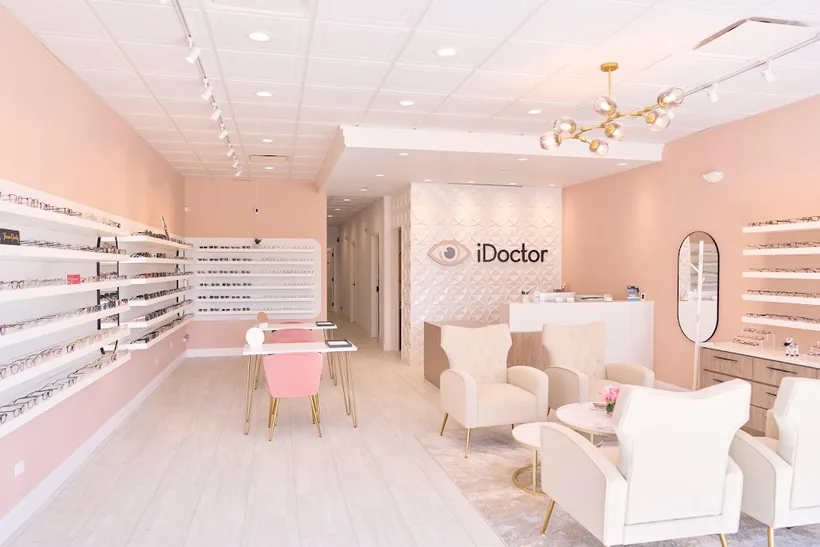
Your local optical team
Let’s find your next lenses.
Bring your prescription. We’ll help you compare the options and choose lenses for your everyday life.
Walk-ins and outside prescriptions are welcome. No eye exam is needed to explore eyewear.