
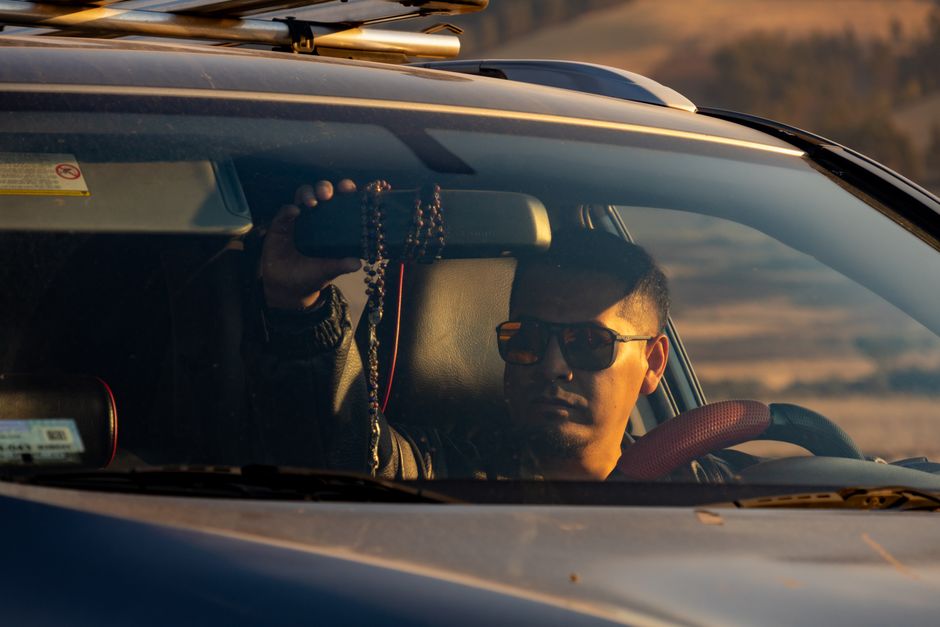
Low fall sun can turn a routine drive into a struggle to see traffic, especially when wet pavement, other cars, or a hazy windshield add reflections. For bright daytime glare, the best starting point is usually polarized prescription sunglasses with an appropriate driving tint. For dusk and after dark, switch to clear prescription lenses with anti-reflective coating. In Glendale Heights, iDoctor can help match both options to your prescription, vehicle displays, and actual commute.
Prescription Driving Lenses in Glendale Heights for Low Fall Sun
The distinction matters: polarization addresses certain reflected light outside the car, while anti-reflective coating reduces reflections on your eyeglass lenses. Neither clears a dirty windshield or corrects an outdated prescription. If you drive home as daylight fades, one dark pair is unlikely to cover the whole trip. An eye doctor in Glendale Heights can check your vision before you invest in new driving eyewear.
Finding it harder to see through fall glare? Call iDoctor at (630) 454-6899 or book an eye exam online. Same-day or next-day appointments are often available; please confirm the current schedule.
What Prescription Driving Lenses Are and How They Address Glare
Prescription driving lenses are eyeglass or sunglass lenses selected for the distances, lighting changes, and reflections encountered behind the wheel. There is no single lens that is ideal in full sun, deep shade, dusk, and darkness. The useful prescription comes first. The tint, polarization, coating, and lens design are then chosen for the conditions you face.
Consider a westbound fall commute. You need enough correction to read signs and judge traffic at a distance, but you may also glance at mirrors, the instrument cluster, and navigation. Sunlight can reach your eyes directly, bounce off a wet road or another vehicle, and reflect from the surfaces of your glasses. Each problem has a different solution. This is why we ask about the drive itself rather than recommending a product based only on the word ‘glare.’
Polarized prescription sunglasses for bright, reflected daytime glare
A polarized filter reduces certain reflected light, particularly the harsh reflections associated with relatively horizontal surfaces such as pavement, water, and vehicle hoods. The American Academy of Ophthalmology explains how polarized lenses work and notes that they may make some digital displays harder to see. For a driver bothered by bright sun and shiny road surfaces, a dedicated polarized prescription sunglass pair is generally the most dependable starting point because its tint works behind the windshield without waiting to activate.
Ask for a driving-appropriate tint that preserves your ability to identify traffic signals and read the road. Neutral gray generally changes perceived colors less than a warm tint. Brown can feel comfortable to some drivers in variable daylight, but personal preference should not override clear recognition of signs and signals. Choose a lens with verified UV protection as well: UV protection addresses exposure to ultraviolet light, while tint and polarization address visible brightness and reflections. One feature does not automatically provide the others.
Polarization has limits. It does not eliminate direct sunlight aimed into your eyes, remove every reflection from glass, or guarantee that you can see an LCD instrument panel or heads-up display comfortably. Before ordering, compare a polarized sample with the screens in your own parked vehicle, if practical. Do not assess visibility by putting on unfamiliar lenses while driving.
Clear lenses with anti-reflective coating for dim light and night
As daylight fades, the priority changes from reducing excessive sunlight to keeping useful light available. Clear prescription lenses are the appropriate foundation for evening or nighttime driving. An anti-reflective coating reduces reflections from the surfaces of the eyeglass lenses, which can otherwise add distracting images when you encounter headlights, dashboard illumination, or light arriving from behind.
Anti-reflective coating does not remove reflections already present on a windshield or wet roadway, and it cannot cure every halo around a light source. Its role is narrower and still valuable: limiting lens-surface reflections without darkening the view. iDoctor offers prescription lenses with coating options including Crizal Rock and Crizal Easy Pro. If you are comparing coatings, ask about cleaning, durability, and how the coating will be applied to the lenses you actually plan to wear.
Avoid using dark sunglasses after daylight has dropped enough that pedestrians, unlit obstacles, or lane edges are difficult to distinguish. Yellow or amber lenses marketed as night-driving solutions also reduce some incoming light. They should not be assumed safer or clearer than a current prescription in clean, clear lenses. If nighttime glare remains severe despite those basics, an eye exam matters more than another tint.
Photochromic lenses for convenience, with an in-car limitation
Photochromic lenses darken in response to light outdoors and become clearer when conditions change. They can be convenient if you move between buildings and daylight, but conventional versions often darken less inside a vehicle because windshields filter much of the UV light that activates them. The American Academy of Ophthalmology discusses this windshield limitation.
Some photochromic designs respond differently to light that reaches them inside a car. Their performance varies by product and conditions, so we would check the specifications of a particular lens instead of promising that all photochromic lenses solve a low-sun commute. iDoctor offers photochromic lens options, but a fixed-tint prescription sunglass pair remains the more predictable choice when strong daytime glare is your main complaint. A photochromic lens that retains a tint is not automatically appropriate for night driving.
Single-vision and progressive designs for road and dashboard distances
If your glasses prescription only needs to correct distance vision, single-vision lenses may be straightforward for driving. If you also need help seeing the dashboard or navigation screen, discuss the actual viewing distances with your optometrist. You may benefit from progressive lenses, but a progressive that feels excellent for reading at a desk is not necessarily the one you would choose first for frequent distance viewing and quick mirror checks.
With progressives, both the lens design and its position in your chosen frame matter. The distance portion should be comfortable when you look straight ahead, while you should be able to glance at instruments without an awkward head position. At iDoctor, we use Optikam digital eyewear measurements and personalized frame fitting to help position the lenses for the way you wear them. If a new progressive seems clear only when you tip your head, ask for a fitting and prescription check rather than accepting the discomfort as an unavoidable feature.
Local Benefits of a Driving Lens Assessment in Glendale Heights
A driver heading toward Bloomingdale in late afternoon may face a different lighting problem from someone leaving Glendale Heights for an evening trip to Glen Ellyn. What matters clinically is not the name of the route but whether your difficult moments happen in full sun, on wet pavement, at dusk, or after dark. Tell us which part of your trip causes you to lose sight of lane markings, cars, or signs, and whether the problem continues once the sun is gone.
iDoctor is at 132 E. Army Trail Rd. in Glendale Heights, near Army Trail and Bloomingdale Roads, just past Jewel-Osco. A local visit lets you bring your current glasses and explain what you see from your usual driving position. We can evaluate your prescription, look for eye-health concerns, and discuss practical lens choices in the boutique optical instead of treating every report of glare as a request for darker sunglasses.
Dr. Saher Sayed, O.D., leads our practice. Our detailed exams use digital phoropters and advanced diagnostics, with widefield retinal imaging available when appropriate. On the optical side, personalized fitting and Optikam measurements help us account for the frame as well as the prescription. These tools support a careful assessment, but no instrument or coating can make an unsafe, obscured roadway safe to navigate.
For a broader look at weather and lighting, see our fall driving vision guide on low sun, wet roads, and headlight glare. It complements the lens-specific decisions here.
How to Match Lenses to the Glare You Actually See
Step 1: Identify whether sunlight, reflection, or blur comes first
Notice when the problem begins. If the road looks washed out only when the sun is ahead of you, you are dealing with extreme brightness and veiling glare. If reflected patches off wet pavement or cars are the main distraction, polarization may be especially useful. If signs stay blurry on an overcast day, a tint is unlikely to solve the underlying issue. Write down the time of day, weather, and whether the difficulty affects one eye or both.
Pay attention to the windshield, too. A film on the inside can catch low sun and spread light across your view; dirt on the outside and worn wipers can do the same. A polarized lens may improve certain road reflections but will not clean the glass in front of you. AAA recommends keeping the windshield clean to limit driving glare.
Step 2: Confirm the prescription and assess eye health
Small amounts of uncorrected blur can become more noticeable when the scene has poor contrast. An outdated prescription, uncorrected astigmatism, scratched lenses, or an unstable tear film may make headlights streak or road signs hard to read. Cataracts and other eye-health changes can also increase sensitivity to glare. An examination can help separate a lens-selection problem from a vision or health problem. If you are due for an exam, start there rather than ordering a special tint using an old prescription.
If glare is new and marked, or you have sudden loss of vision, eye pain, flashes, or a new curtain or shadow in your sight, do not wait for a routine eyewear appointment. Seek prompt eye care. No sunglass treatment should be used to explain away sudden visual symptoms.
Step 3: Build around the light level at the hardest part of the trip
- Bright sun with strong road reflections: Begin by comparing polarized prescription sunglasses with a driving-suitable tint and verified UV protection.
- Bright sun followed by darkness: Plan for a safe switch to clear prescription glasses before light levels become too low for sunglasses. Make the change while parked.
- Dusk, rain, or nighttime headlights: Begin with clear lenses, a current prescription, and anti-reflective coating, then address remaining symptoms at an exam.
- Mostly indoor-outdoor convenience with occasional driving: Discuss photochromic lenses, but ask specifically how the selected product behaves behind your windshield.
Do not choose the darkest available sunglass tint simply because the sun is uncomfortable. Low sun often occurs close to dusk, when surrounding streets and shaded areas are already dim. A lens that helps on an open, sunlit stretch may leave you with too little visibility under trees, in a parking structure, or after sunset. Ask your optician to confirm that a proposed sun lens is suitable for road use and for recognizing signals.
Step 4: Check the frame and your car displays
Good optics can be undermined by a frame that slides down your nose or leaves you looking through the wrong part of a progressive. Check the fit in your normal seated posture. Make sure the frame does not unnecessarily block sideward glances toward mirrors, and assess how comfortably you can see your dashboard without looking away from the road longer than needed.
If you favor polarized lenses, inspect your vehicle screens while stationary. A display that looks normal without sunglasses may appear darker or patterned through a polarized filter, especially from a particular viewing angle. Bring notes about your vehicle and its instrument layout if you cannot test a sample in person. A nonpolarized prescription sunglass option may be worth discussing if an essential display is difficult to read.

Step 5: Keep the whole viewing path clear
Clean your glasses with products appropriate for their coatings and a clean microfiber cloth. Address scratched or persistently smeared lenses rather than compensating with a darker tint. Clean the windshield on both sides, maintain your wipers, and use the sun visor when it helps without hiding traffic signals. Reduce bright dashboard settings when they compete with your view after dark, while keeping instruments legible.
These are small steps, but they address different sources of scattered light. The aim is not to make sunlight disappear. It is to preserve enough usable detail to recognize a person crossing, see a lane edge, and judge the movement of surrounding cars. If you still cannot do that comfortably, slow down, increase following distance, and pull over safely when necessary.
Comparing the Main Prescription Lens Options for Fall Driving
| Lens option | Best fit | Important limitation |
|---|---|---|
| Polarized prescription sunglasses | Bright daytime travel with reflected glare from roads, water, or vehicles | Can obscure some digital displays; the tint is unsuitable once conditions become too dark |
| Clear prescription lenses with anti-reflective coating | Dusk, nighttime, and variable low-light conditions | Coating addresses reflections on eyeglass lenses, not intense sunlight or windshield haze |
| Conventional photochromic prescription lenses | Convenient changes between indoor and outdoor settings | May remain relatively light behind windshields |
| Progressive lenses in either a clear or sunglass pair | Drivers needing both road distance and closer instrument viewing | Require careful lens selection and accurate fitting |
For many people, the practical combination is a clear pair for lower light and a prescription sunglass pair for full daylight. That is a recommendation based on differing light conditions, not a claim that everyone needs two purchases. If you rarely drive in bright sun, a clear pair may cover your needs. If you only drive in daylight, you may place greater value on prescription sunglasses. Bring your driving schedule and budget into the discussion so the recommendation fits your life.
Lens material deserves a separate decision. iDoctor offers high-index lenses for prescriptions where reduced thickness may be useful, but high-index material is not inherently an anti-glare treatment. Similarly, a premium frame does not substitute for the correct prescription, well-chosen tint, and proper alignment. Prioritize what changes visibility from the driver’s seat before choosing upgrades for appearance.
Best Practices for Safer Visibility During Low Fall Sun
- Separate glare from a medical symptom. If one eye has become notably worse or glare is accompanied by other new visual changes, schedule an assessment rather than simply replacing your sunglasses.
- Keep clear prescription glasses within reach for changing light. Switch only after stopping safely, especially when a bright afternoon trip extends into evening.
- Ask what each feature does. Polarization reduces some reflected glare, UV protection limits UV exposure, anti-reflective coating treats eyeglass-surface reflections, and an accurate prescription addresses blur.
- Test useful tasks, not just comfort in a bright showroom. Check traffic-signal color, instrument visibility, mirrors, and your usual progressive viewing positions.
- Use vehicle controls and maintenance. A clean windshield, working wipers, appropriate visor use, and a sensible dashboard brightness setting can help alongside your lenses.
If you feel temporarily blinded by a low sun angle, no lens gives you permission to keep driving when you cannot reliably see traffic. Adjust your speed and following distance, and stop in a safe location if you cannot see well enough to proceed. This is especially relevant on damp fall roads, where bright reflected patches can hide useful detail.
FAQs About Driving Lenses in Glendale Heights
Are polarized prescription sunglasses the best choice for a sunset commute?
They are a strong choice while sunlight and reflected glare remain bright. Once the road and surrounding areas become dim, switch to clear prescription lenses while parked. Polarized sunglasses are not a substitute for nighttime glasses, and you should check whether they interfere with your vehicle displays.
Do I need anti-reflective coating if I already have polarized sunglasses?
The features address different reflections. Polarization filters certain reflected light from outside the car; anti-reflective coating reduces reflections on the eyeglass lenses themselves. Ask which coating options suit your chosen sunglass lens, particularly if light from behind you reflects on its inner surface. Clear lenses with anti-reflective coating remain important to consider for lower-light driving.
Can I get a same-day eye exam at iDoctor, and is the office open on weekends?
Same-day or next-day appointments are often available, but openings change, so call ahead. Our listed hours are Monday, Thursday, and Friday from 9 a.m. to 5 p.m., and Tuesday and Wednesday from 10 a.m. to 3 p.m. Weekend hours are not listed. Contact the office to confirm current availability.
Which vision insurance plans can I use for an exam and driving glasses?
iDoctor accepts major vision plans including VSP, EyeMed, Cigna Vision, Humana, Superior Vision, Davis Vision, NVA, Spectera, and UnitedHealthcare Vision. Benefits for the exam, frames, polarized lenses, or coatings depend on your particular plan. Our team can verify coverage and explain the applicable benefits before you choose eyewear.
How long will prescription driving glasses take, and what should I bring?
Turnaround depends on the prescription, frame, and selected lens design or coating, so ask for an estimate for your order rather than assuming same-day pickup. Bring your current glasses or contacts, insurance card, and notes about when glare occurs. If you use digital dashboard displays, tell the optical team before selecting polarized lenses.
How to Book a Driving Lens Assessment Today
Start with a detailed eye exam if your prescription is old, glare has changed, or signs no longer look sharp. Tell us whether the hardest part of your trip is direct low sun, reflected light off wet pavement, or driving after sunset. We can then compare the relevant prescription lens choices, discuss whether a clear and sunglass pair makes sense, and take measurements for the frame you select.
Plan your next drive with clearer options. Call (630) 454-6899 or book an appointment with iDoctor. Visit us at 132 E. Army Trail Rd., Glendale Heights, IL 60139, for an eye exam and personalized optical guidance.
The best driving lens is the one that addresses the light conditions you actually encounter while preserving a clear view of traffic. We are here to help Glendale Heights drivers make that choice carefully, from prescription assessment through the final eyewear fit.