If you have a strong prescription, you've probably learned the hard way that not all frames are created equal. The secret to avoiding that thick, heavy "coke-bottle" look lies in choosing the right frames—typically those that are a bit smaller, thicker, and crafted from materials like acetate or titanium. These choices are about more than just looks; they're crucial for managing lens thickness and ensuring your glasses are comfortable enough to wear all day. For residents of Glendale Heights and the surrounding Chicagoland suburbs, finding that perfect pair means combining optical science with high-end style.
Finding Your Perfect Fit in Glendale Heights
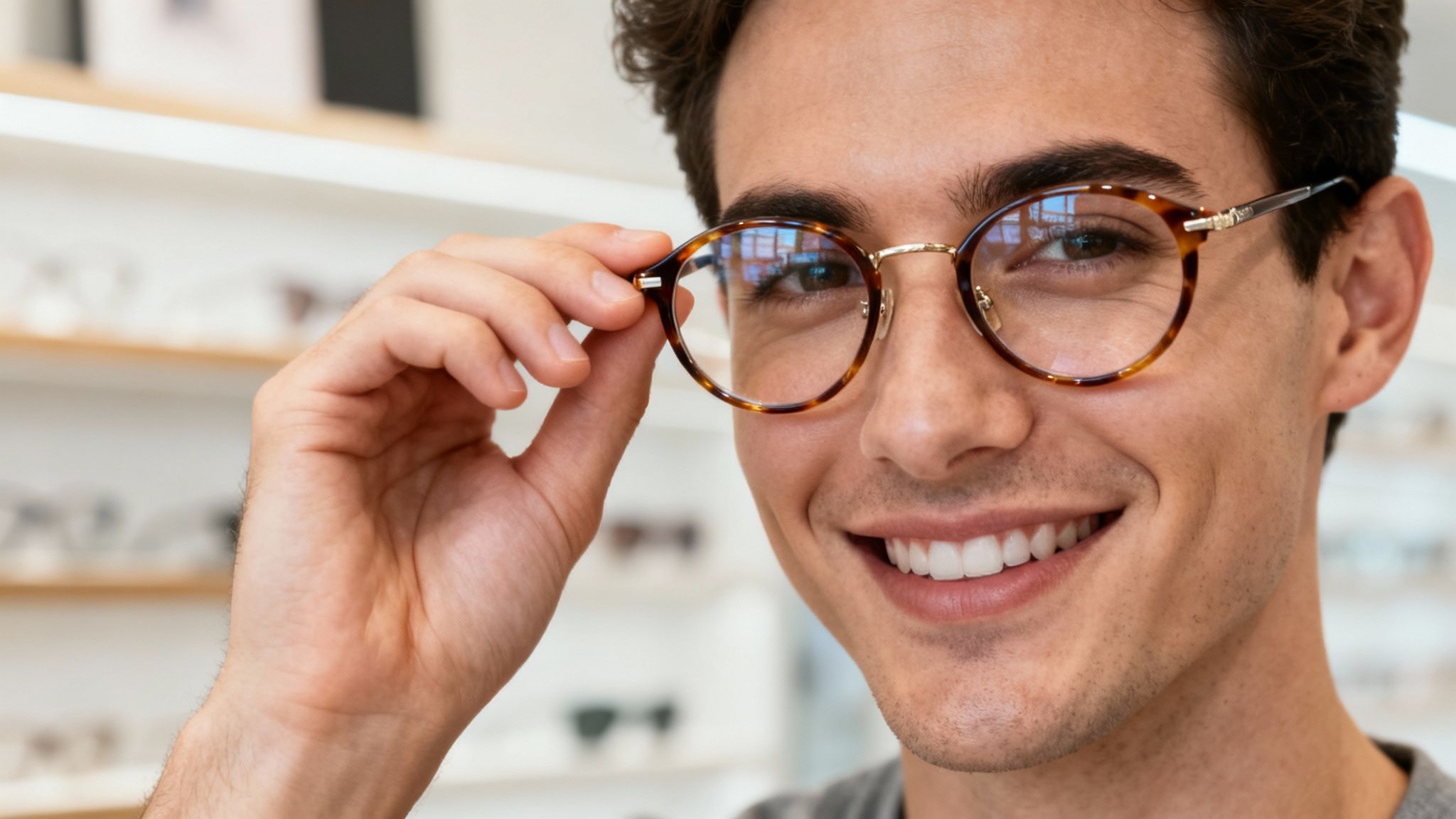
When you have a high prescription, picking new glasses is a science as much as an art. The wrong frame can turn a great style into a heavy, clunky accessory that’s constantly sliding down your face. But the right pair? That's a game-changer. It feels light, looks fantastic, and makes you forget you're even wearing glasses.
Welcome to your go-to guide for finding that perfect pair, right here in Glendale Heights. We get it. As the local eye doctor in Glendale Heights, we understand the unique challenges that come with stronger prescriptions—from the physics of thick lenses to finding a frame that’s both sturdy and stylish. Let's break down everything you need to know to make a confident choice.
What You Will Learn
This guide is built to give you the insider knowledge you need to pick the absolute best frames for your prescription. We'll walk through a few key areas that make all the difference:
- Frame Materials: We’ll look at why materials like acetate are fantastic for hiding the thicker edges of your lenses, and how options like titanium provide incredible durability without adding any bulk.
- Ideal Shapes and Sizes: You'll learn the optometrist's secret: smaller, more rounded frames are often the best choice for minimizing the thickness and distortion that can happen at the edges of a strong lens.
- Advanced Lens Technology: We'll demystify the jargon in simple, approachable language. Terms like "high-index" and "aspheric" simply refer to modern lens designs that can make your lenses dramatically thinner, lighter, and more comfortable.
The goal is to move beyond just function and find frames that enhance your personal style while providing crystal-clear vision. It's about finding that perfect balance between optical science and high fashion.
Here at iDoctor, we firmly believe everyone deserves to feel amazing in their glasses. Whether you're a neighbor near Glendale Lakes Golf Club or just driving down North Avenue, our team is ready to guide you. A critical part of our process is getting the fit just right, which is why we take meticulous measurements for every client. You can see exactly what that involves in our guide to custom eyewear measurements.
Let's work together to find a pair of glasses you'll truly love.
Why Your Frame Choice Is So Critical
When you have a strong prescription, picking out new frames is about so much more than just looks—it's a critical decision that impacts your vision and comfort every single day. Lenses with a lot of power are naturally thicker and heavier, especially out toward the edges.
Think of it like this: the right frame is like a high-quality hiking backpack that distributes a heavy load perfectly, making it feel almost weightless. The wrong frame is like a cheap tote bag with thin straps that dig into your shoulders. It just doesn't work.
A poorly matched frame will cause your glasses to constantly slip down your nose, create annoying visual distortions in your peripheral vision, and can even lead to that dreaded "coke-bottle" look. This happens because the frame simply isn't designed to support and hide the unique characteristics of a high-power lens.
It's All About Physics
High-prescription lenses have to bend light more dramatically to get it to focus correctly on your retina. For nearsighted folks (myopia), the lenses are thickest at the edges. For the farsighted (hyperopia), they're thickest right in the middle. This physical reality is precisely why your frame choice is a functional decision, not just a cosmetic one.
Here's a simple way to think about it: a bigger frame demands a bigger lens. And for a high prescription, a bigger lens means a lot more material, which directly translates to more thickness, more weight, and more potential for distortion.
Once you grasp this, it’s easy to see why our opticians almost always steer people toward smaller, sturdier frames. It's the first and most important step to making sure your next pair of glasses from our Glendale Heights boutique is the best you've ever owned—a perfect blend of function and style.
How Frames Affect How You Look and Feel
The right frame is a support system for your lenses. It needs to be strong enough to hold them securely without bending out of shape, and balanced enough to sit comfortably on your face from morning to night. A frame that doesn't fit right won't just slide around; it can also misalign the optical center of your lens, which messes with how well you see.
For anyone with a high prescription—typically ±4.00 diopters or more—the main goal is to make the lenses look and feel as thin and light as possible. About 25% of people who wear glasses globally fall into this category, and that number is on the rise. Because of this, around 60% of optometrists suggest smaller, rounder frames. These shapes are incredibly effective at cutting down on edge thickness for nearsighted prescriptions, which dramatically improves both the look and the performance of the glasses. You can read the full research about these eyewear trends to learn more.
Choosing the best frames for a high prescription is really a balancing act between a few key things:
- Weight Distribution: A great frame spreads the lens weight evenly across your nose and ears, preventing those painful pressure points and headaches.
- Lens Concealment: Thicker frame materials, like acetate, are brilliant at hiding the edge of the lens, creating a much sleeker profile.
- Optical Stability: A sturdy, well-fitting frame keeps your lenses locked in the exact position needed for crisp, clear vision.
Ultimately, your frame is the foundation that your vision is built on. Taking the time to get it right is a serious investment in your comfort and confidence, turning your glasses from a necessity into an accessory you genuinely love to wear.
The Best Materials and Shapes for Thick Lenses
Okay, so we've established why the frame is a huge deal for a strong prescription. Now, let's get into the fun part: what actually makes a frame the right frame for thicker lenses. Your choice here makes all the difference in how your glasses look, feel, and sit on your face all day.
Getting this right turns a medical necessity into a stylish accessory you’ll actually love to wear. It really boils down to two key things: the material the frame is made of and its overall shape. Each one plays a critical role in managing the unique challenges of a higher prescription.
Choosing the Right Frame Material
When you're dealing with thicker, heavier lenses, the frame material isn't just a style choice—it's about structural integrity and pure comfort. Two materials really shine when you need a little extra support.
-
Acetate Frames: Think of acetate as the ultimate camouflage for thick lenses. It’s a plant-based plastic known for its rich colors and durable, substantial feel. Because acetate frames are naturally bolder, they do an incredible job of hiding the lens edges, creating a clean, sleek profile. Brands like Oliver Peoples are masters at this, blending high fashion with this crucial function.
-
Titanium Frames: If your main concern is the weight of your glasses, titanium is your best friend. It’s an unbelievably strong yet feather-light metal. This means it can securely hold heavier lenses without adding extra bulk or creating those dreaded pressure points on your nose and ears. A well-made titanium frame from a designer like Scott Harris gives you a sharp, minimalist look while providing the robust support your prescription demands.
Each material brings something different to the table, and the best one for you really depends on what you prioritize. For a deeper dive, check out our Glendale Heights guide to designer frame materials to see which one truly fits your lifestyle.
This infographic really drives home how much the right frame can impact your comfort and vision.
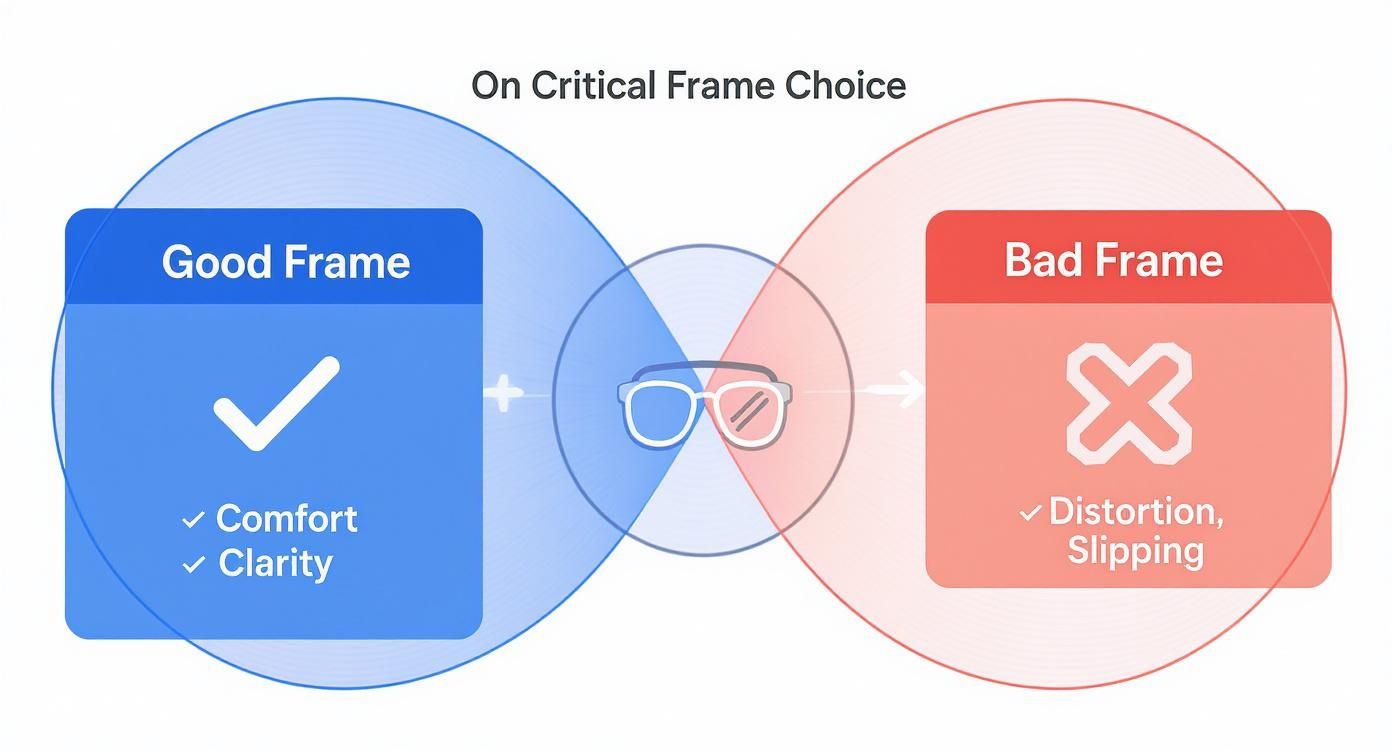
As you can see, a great frame choice leads directly to better comfort and clearer vision, while a poor one can lead to constant adjustments and annoying distortions.
Finding the Perfect Frame Shape
Just as critical as the material is the actual shape of your frames. When it comes to high prescriptions, here's a golden rule to live by: smaller is almost always better.
The reasoning is simple geometry. The farther a lens has to stretch from its optical center (the clearest part, right in front of your pupil), the thicker its edges become.
By choosing a frame that keeps the lens size compact, you're quite literally cutting away the thickest parts of the lens before they're even made. This trick reduces weight, cuts down on that "fishbowl" peripheral distortion, and frankly, just looks a lot better.
Smaller, rounder shapes are your secret weapon here. They are incredibly efficient because they keep the lens neatly centered over your eye, trimming away all that excess material where the thickness is most obvious.
Ideal Shapes to Look For
Here are the frame shapes that are a dream for high prescriptions, which should make shopping for designer eyeglasses in Glendale Heights a whole lot easier:
- Round Frames: The classic round shape is fantastic. It naturally follows the circular nature of a lens, which helps minimize edge thickness on all sides.
- Oval Frames: Much like round frames, ovals give you a balanced look that is incredibly effective at keeping the lens size—and thickness—under control.
- Panto Shapes: This vintage-inspired style, which is rounded on the bottom and a bit wider at the top, is both a stylish and an optically brilliant choice.
If you focus on these shapes, you can confidently browse our collections from Cartier, Gucci, and Tom Ford, knowing you're picking styles designed to handle your vision needs without sacrificing an ounce of style. Steer clear of oversized, wide rectangular, or delicate rimless frames to ensure you get the best possible result.
How Modern Lenses Transform Your Glasses
A great frame is only half the equation. The lenses sitting inside them are what actually bring your world into focus, and for anyone with a high prescription, modern lens technology has been nothing short of a miracle. The days of settling for thick, heavy "Coke bottle" lenses are long gone.
Today's advancements mean you don't have to choose between clear vision and a style you love. The right lenses work hand-in-hand with your frames to give you glasses that are lightweight, attractive, and optically incredible. Let's break down the options that make all the difference.
The Magic of High-Index Lenses
The secret to getting remarkably thin lenses, even with a strong prescription, is a material called high-index.
Think of it this way: standard plastic lenses are like a basic magnifying glass. To get more power, you need to make it thicker and more curved. High-index material, on the other hand, is like a high-tech camera lens—it’s made from a much denser, more efficient material that can bend light with less bulk.
Because it manipulates light so effectively, you need far less of it to correct your vision. The result? Lenses that are dramatically thinner and lighter than their old-school counterparts. You'll feel the difference on your face all day long.
Choosing a high-index lens is like upgrading from a bulky, old tube TV to a sleek, modern flat-screen. They both get the job done, but one is lighter, more stylish, and simply a better experience.
This leap in lens tech has also pushed frame designers to innovate. With top brands investing over $600 million each year in R&D, we're seeing more amazing styles than ever. It's no wonder that today, around 45% of adults prefer to shop at independent optical boutiques like ours to access this kind of expertise and selection. You can find more details on eyewear market trends from Fortune Business Insights.
Choosing Your Index Level
High-index isn't one-size-fits-all. It comes in different levels, or "indexes," and the right one for you depends entirely on your prescription. The higher the index number, the thinner the lens.
- 1.67 High-Index: This is a fantastic and very popular choice for many people. It delivers a significant reduction in lens thickness and weight, making it a perfect upgrade for those with moderate-to-strong prescriptions.
- 1.74 High-Index: For those with very powerful prescriptions, this is the top of the line. It's one of the thinnest and lightest materials available today, offering the absolute best in terms of comfort and cosmetics.
We can walk you through the options and even show you a comparison so you can see the difference for yourself. For a deeper dive, check out our guide on high-index vs standard lenses for your designer frames in Glendale Heights.
More Than Just Thickness: Aspheric Designs and Coatings
The material itself is a huge part of the story, but two other features truly elevate your glasses from good to great.
Aspheric Lens Designs
Traditional lenses are spherical—they have a simple, uniform curve like a section of a basketball. In strong prescriptions, this design can distort how your eyes look to others, creating that dreaded "bug-eye" (for farsightedness) or "tiny-eye" (for nearsightedness) effect.
Aspheric lenses are much smarter. They have a more complex, flatter curve that gradually changes from the center to the edge. This advanced design drastically reduces distortion, giving your eyes a more natural appearance while also providing sharper vision out to the edges.
Essential Lens Treatments
Think of these as the finishing touches that protect your investment and perfect your vision.
-
Anti-Reflective (AR) Coating: This is non-negotiable in our book. An AR coating eliminates those annoying reflections you see on the surface of your lenses. It makes your lenses look practically invisible, allows more light to reach your eyes for crisper vision (especially at night!), and lets people see your eyes without a distracting glare.
-
Edge Polishing: When a lens still has some thickness, its edge can have a frosty, unappealing look. We can polish that edge to a high shine, giving it a clear, glassy finish that helps it disappear into the frame. It's a small detail that makes a huge cosmetic difference.
By carefully selecting the right frame and pairing it with these advanced lens technologies, we can build a pair of glasses that you’ll truly love to wear.
Styling Your Designer Frames with Confidence
Having a strong prescription doesn't mean you have to compromise on style. Quite the opposite, actually. The right pair of designer frames can transform your glasses from a necessity into your favorite accessory, perfectly merging fashion with function. The secret is knowing how to style them with confidence by making color, shape, and proportion work for you.
Let's put that old myth to rest: high prescriptions do not equal bulky, unattractive glasses. Today’s designer collections are brimming with incredible options built for stronger lenses. It's all about knowing what to look for and how to let the frame be the star of the show.
Let Your Frames Do the Talking
One of the most effective ways to style high prescription glasses is to make the frame the main event. A bold, beautifully designed frame naturally draws the eye, causing the thickness of the lens to fade into the background.
- Embrace Bold Colors: Don't shy away from a pop of color! A vibrant acetate frame from a brand like Kate Spade or Fendi—think rich jewel tones or modern pastels—makes a serious style statement. People will notice the striking color, not the lens inside it.
- Play with Patterns: Tortoiseshell, marbled effects, and other complex patterns add a ton of visual interest. These dynamic designs help break up the frame's profile, which does a fantastic job of camouflaging the lens edge.
- Focus on Detail: Luxury brands are masters of detail. Think about a stunning pair of Cartier glasses near me with their signature gold accents, or Tom Ford’s iconic "T" at the hinge. These details immediately signal sophistication and elevate your glasses to the level of fine jewelry.
When you choose a frame that makes a statement, you're not hiding your prescription—you're celebrating your style. The frame becomes an expression of your personality, turning a necessity into a confident fashion choice.
Of course, finding a frame that complements your facial structure is just as crucial as the color or brand. When you understand how certain shapes can play up your best features, you'll feel much more confident picking the perfect pair. To get a head start, you can explore our guide on matching glasses shapes to your face.
Finding Your Signature Style
Whether your personal style is classic and low-key or bold and modern, there's a designer frame waiting for you at our Glendale Heights boutique. The goal is to match the frame's personality with your own.
For a timeless, professional vibe, you might look at a sophisticated frame from Oliver Peoples. Their classic Panto shapes in rich, dark acetates are both sharp and optically ideal for stronger prescriptions. If you're more into modern luxury, a sleek design from Prada or Saint Laurent could be a perfect match, offering clean lines and a minimalist feel that still provides the structure your lenses need.
For some extra help mastering your look, an AI fashion stylist can give you personalized ideas and even let you do virtual try-ons, making the whole process much easier. It's a great way to see how different styles might look before you even come into the store.
Designer Spotlight at iDoctor
Here in Glendale Heights, we've carefully curated a collection that proves you never have to choose between sight and style. Our luxury collection includes Cartier, Gucci, Tom Ford, and Fendi, while we also offer fantastic affordable brands like Ray-Ban and Coach.
- Tom Ford: Known for their bold, retro-inspired looks, many Tom Ford acetate frames are a fantastic choice for high prescriptions. Their solid construction provides great coverage for lens edges while making a powerful fashion statement.
- Fendi: Fendi often plays with unique geometric shapes and daring color palettes. These artistic frames are perfect if you're a fashion-forward person who wants your eyewear to start conversations.
- Cartier: For the height of luxury, Cartier frames offer craftsmanship that is second to none. Their designs frequently mix elegant metals and acetates, providing sturdy support for lenses while radiating timeless elegance.
At the end of the day, the best frames for your high prescription are the ones that make you feel amazing. Our team at iDoctor is here to walk you through our collection, helping you find a pair that not only serves your vision but also perfectly expresses who you are.
The Power of a Professional Fitting
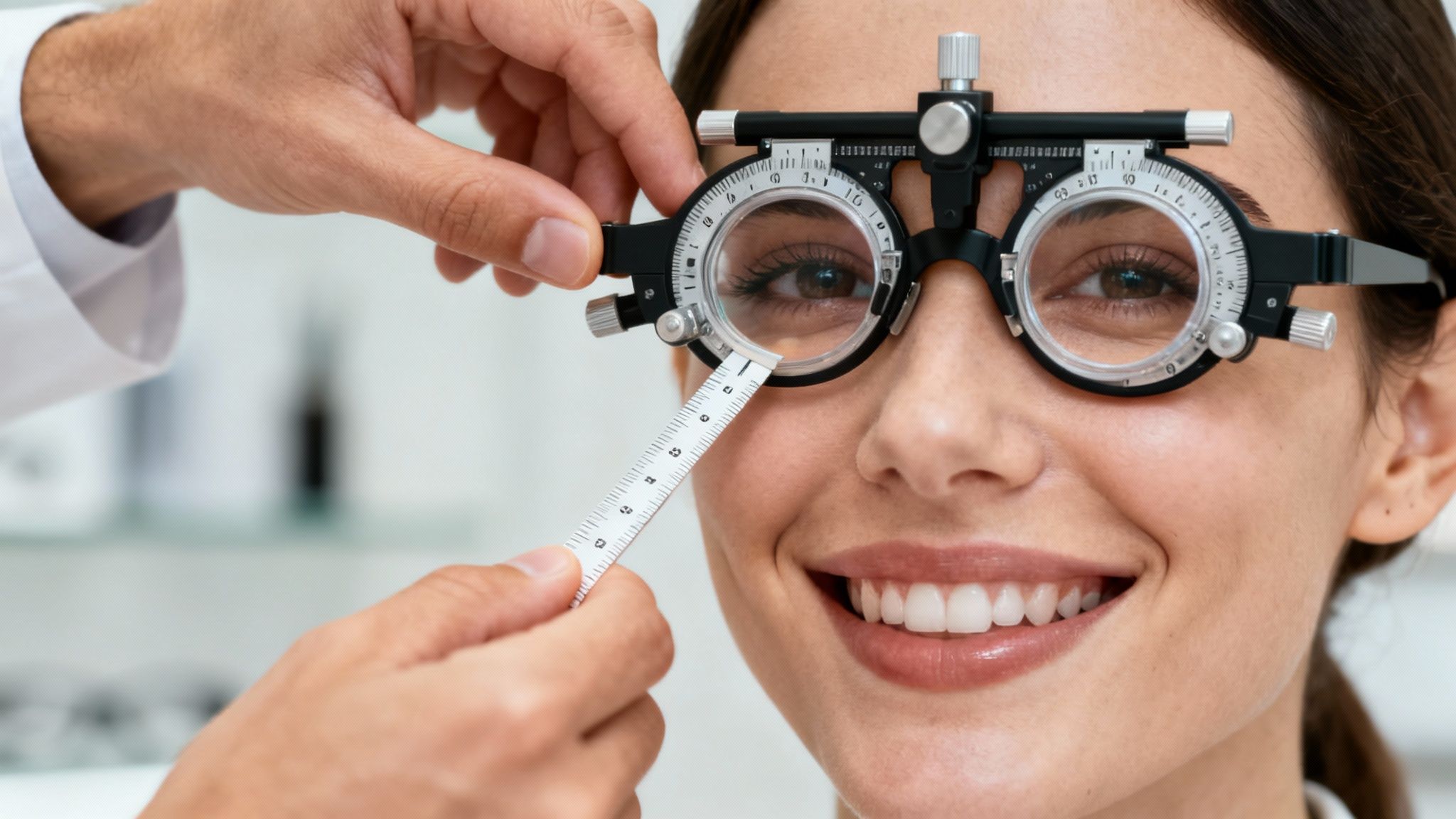
While picking the right materials and lenses gets you halfway there, the single most critical step is the professional fitting. This isn't just about comfort; it's about making your glasses actually work for you. You can have the best frames and the most advanced lenses in the world, but if they aren't positioned perfectly on your face, none of it matters.
For anyone with a high prescription, precision is non-negotiable. A skilled, hands-on fitting makes sure every measurement is spot-on, which is your best defense against eye strain, headaches, and that frustrating funhouse-mirror effect. This is where the best optometrist in Glendale Heights truly shines, turning a good pair of glasses into a great one.
Why Every Millimeter Matters
When you have a strong prescription, there’s zero wiggle room. Our opticians take a few key measurements that you just can't get right with an online tool or a selfie.
- Pupillary Distance (PD): This is the exact distance between the centers of your pupils. If it’s off, you'll constantly be looking through the wrong part of the lens, which leads to immediate eye strain.
- Optical Center (OC): We mark the one specific spot on each lens that needs to line up perfectly with your pupil. With high-power lenses, being off by even a millimeter can feel like you’ve put on someone else's glasses.
- Frame Adjustments: We physically bend and shape the temples and nose pads so the frames sit securely on your face. This distributes the weight evenly, getting rid of those annoying pressure points behind your ears and preventing your glasses from sliding down your nose.
A professional fitting guarantees your custom lenses are perfectly aligned with your unique line of sight. It’s the final, crucial step that unlocks the true clarity and comfort of your new eyewear.
The need for this level of precision is only growing. Vision problems already affect around 90 million people over 40 in the United States alone. Globally, myopia (nearsightedness) is expected to affect nearly 50% of the population by 2050. This means more and more people will need expertly fitted glasses to see their best.
The iDoctor Experience in Glendale Heights
Here at iDoctor, we treat the fitting process as the personalized, high-end experience it should be. We’ll help you understand your vision insurance benefits to make premium options, like those thin high-index lenses, more affordable. We accept all major plans, so our team is great at helping you get the most out of your coverage for the best frames for a high prescription.
We invite everyone in the Glendale Heights area—from Carol Stream to Lombard—to come feel the difference a professional fitting makes. Proper alignment is everything, and you can learn more about how digital optical measurements ensure the perfect fit on our blog. Stop by our boutique and let us show you how we blend precision, style, and genuine care.
FAQs: Your High Prescription Questions Answered
Shopping for glasses when you have a strong prescription can feel a little overwhelming, but it doesn't have to be. Here are some of the most common questions we hear from our clients right here in our Glendale Heights boutique.
What is considered a "high prescription" in Glendale Heights?
Generally, a prescription is considered "high" when the sphere (SPH) value is +/- 4.00 or more, or if the cylinder (CYL) value for astigmatism is over +/- 2.00. These numbers tell us how much power your lenses need to bend light for you to see clearly. The best way to get your exact numbers and discuss your options is with one of our detailed eye exams in Glendale Heights.
Can I get Tom Ford or Gucci glasses with my strong prescription?
Absolutely! That's one of the best parts about shopping at a boutique like iDoctor. Many designer brands, including Tom Ford and Gucci, offer beautiful acetate and sturdy metal frames that are perfect for high prescriptions. Our job is to help you find a style from our luxury collection that not only looks incredible but also provides the structural support your lenses need.
Does iDoctor accept vision insurance?
Yes, we do! We believe premium eyewear should be accessible. At our Glendale Heights location, we accept all major vision insurance plans. Our team is highly skilled at helping you understand and maximize your benefits, which can significantly reduce the out-of-pocket cost for high-index lenses and designer frames.
Why do my new glasses feel weird?
It's completely normal to have an adjustment period of a few days to a week, especially with a new, stronger prescription. Many people describe a "fishbowl" effect as their brain adapts to seeing the world more clearly. This is exactly why a professional, in-person fitting at our Glendale Heights office is so critical. We ensure the optical center of the lens is perfectly aligned, which makes the adaptation period much shorter and smoother.
Ready to find a pair of glasses that you'll absolutely love to wear? The expert team at iDoctor in Glendale Heights is here to guide you through our curated collection of designer frames and make sure your final choice is a perfect fit.