Myopia Management for Children in the Western Suburbs: Effective Lens Options & Tips for Parents

Contents
If you’re a parent in Glendale Heights and have heard your child complain about blurry distance vision—or perhaps you’ve just noticed them squinting at the board in school or holding tablets unusually close—you’re not alone. Myopia, or nearsightedness, has become an increasingly common concern for families across Chicagoland, especially with more screen time and less outdoor play. Fortunately, the latest optometric advances offer real hope for slowing myopia’s progression and preserving your child’s lifelong eye health.

Understanding Myopia: Why Early Management Matters
Myopia is more than just an inconvenience—it’s a progressive condition where the eye grows too long from front to back, causing distant objects to appear blurry. Without proper management, childhood myopia can progress every year, increasing the risk of serious eye conditions like retinal detachment, glaucoma, and early cataracts later in life.
What’s especially important for parents to know is that the earlier myopia develops, the more severe it can become. That’s why we recommend yearly eye exams for all children, even if they’re not complaining of symptoms yet. At iDoctor, we have the advanced diagnostic tools to spot myopia early and intervene before it escalates.
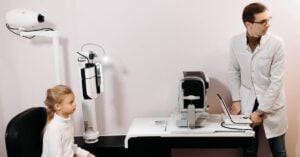
How We Diagnose and Monitor Myopia Progression
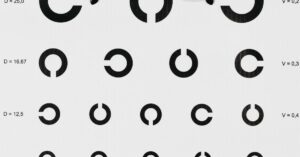
At iDoctor, we monitor myopia progression through eye exams and changes in your child’s prescription over time. We do not measure axial eye length. Bring earlier prescriptions when available so Dr. Sayed can review the pattern and discuss the next steps.
Lens-Based Solutions: Proven Options for Myopia Control
Ordinary prescription glasses and contact lenses help your child see clearly. Myopia-control lenses have an additional goal: to slow progression as the eyes grow. At iDoctor, we offer two lens-based approaches, with suitability assessed individually:
- Soft Myopia Control Contact Lenses: Specialized soft lens designs can correct distance vision while helping slow myopia progression. Your doctor considers your child’s prescription, eye health, activities and ability to follow the prescribed wearing and care routine. We provide fitting and hands-on training.
- Myopia Control Spectacle Lenses: Specialized glasses correct distance vision while using an optical design intended to slow progression. They offer an option for eligible children who prefer glasses or are not ready for contacts. Your doctor will discuss the appropriate design and wearing routine.
Myopia control aims to slow further change; it does not reverse existing myopia or guarantee that a prescription will stop increasing. Regular follow-up helps your doctor review progress and discuss the next steps.

How We Personalize Myopia Management at iDoctor
Our approach is never one-size-fits-all. Glendale Heights is a diverse and vibrant community—and every family’s needs are unique. Here’s what sets our process apart:
- Individualized Guidance: We take the time to get to know your child’s daily habits—sports, hobbies, screen use, reading posture—so we can recommend optical solutions and lifestyle tweaks that will truly work for your family.
- Eye Health & Eyewear Measurements: Optomap retinal imaging helps us assess retinal health. Optikam provides eyewear measurements for glasses purchased at iDoctor.
- Ongoing Education: We’ll empower parents with clear explanations and hands-on demonstrations, so you can confidently support your child’s care at home. Whether your child is starting with contact lenses or new to glasses, we ensure everyone leaves feeling knowledgeable and equipped.
What Parents Can Do: Proactive Home Strategies
While lenses are central to medical management, there’s a lot families can do day-to-day to help slow myopia naturally. Here are some practical, research-backed strategies we share with Glendale Heights parents:
- Encourage Outdoor Play: Studies consistently show 2+ hours per day outdoors helps delay the onset and slow progression of myopia. Even simple activities like backyard games, picnics, or walks in the park can help.
- Manage Screen Time: Children should take a 20-second break every 20 minutes when using screens (“The 20-20-20 Rule”). Remind them to keep digital devices at least 18–20 inches from their eyes.
- Promote Healthy Reading Habits: Teach kids to sit upright with books at a comfortable distance—and never read in dim light. If your child reads a lot for pleasure, encourage frequent stretch breaks.
- Schedule Consistent Eye Exams: Myopia can progress rapidly, especially in kids 6–14. Annual (or, in myopia cases, bi-annual) exams are crucial for monitoring vision and adjusting treatment as needed.

Demystifying Contact Lens Safety for Kids
Contact lenses can be an option for suitable children who can follow the prescribed wearing and care routine. All contact lenses carry a risk of eye infection, so fit, hygiene and follow-up matter. We teach your child how to insert, remove, and care for their lenses with hands-on demonstrations in our practice. Parents are always welcome to watch and participate.
Frequently Asked Questions from Glendale Heights Parents
- At what age should my child start myopia management?
Discuss it when myopia is diagnosed or the prescription is increasing. Suitability depends on the child’s age, prescription, eye health and the specific lens design. Your doctor can explain the available options and follow-up plan. - Do insurance plans cover specialty myopia lenses?
Most vision insurance plans cover annual exams and standard vision correction. While many plans do not fully cover specialty myopia control lenses, we work with every family to maximize insurance benefits and offer affordable care packages. Our staff will explain every detail up front—no surprises. - Will my child’s activities be restricted during treatment?
We consider school, sports and other activities when discussing lenses. Contact lens wearers should remove their lenses before swimming and keep lenses away from water. Your doctor will explain the wearing routine and when glasses are a useful alternative.
The iDoctor Difference: A Boutique Approach to Family Myopia Care
What makes our Glendale Heights practice uniquely suited to support your family’s journey?
- Personalized, unrushed consultations—we schedule each visit to ensure your questions are answered and no detail is overlooked.
- State-of-the-art technology for the most thorough and comfortable eye exams, minimizing the need for dilation and providing quick, accurate results.
- Family-friendly environment—we’re parents too, and know how to put kids at ease!

Ready to Take the First Step?
If you’re concerned about your child’s vision, or simply want to learn more about proactive myopia management, we invite you to schedule a personalized consultation at iDoctor in Glendale Heights. We’ll listen, assess, and develop a tailored care plan using the latest medical knowledge and technology. Investing in your child’s vision today gives them a clearer, brighter tomorrow.
Because your child’s eyes deserve the best—experience the iDoctor difference in premium eye care and compassionate, personalized attention right here in our community.
At iDoctor