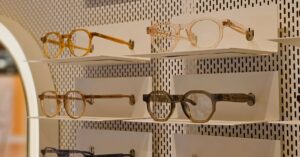
Where can I get glasses fitted in Glendale Heights so they stay comfortable under a hijab or head covering?

Contents
Glasses that feel fine on their own can press behind your ears, slip forward, or shift out of focus once you put on a hijab or another head covering. In Glendale Heights, you can bring your everyday covering to iDoctor for an in-person frame fitting. Our optical team can compare frames and check how they sit with the covering you actually wear, rather than judging comfort from an uncovered try-on.
Want help with the fit? Call or text (630) 454-6899 to discuss an optical visit, or book an eye exam online if your prescription also needs checking. Optical walk-ins are welcome.
Our boutique optical in Glendale Heights helps you assess the bridge, temples, frame weight, and lens position together. Bring the glasses that bother you and show us where the pressure starts. If you are choosing new eyewear, we can make adjustments before taking lens measurements, then check the fit again when the finished glasses arrive. The useful question is not simply whether a frame fits your face. It is whether it stays comfortable and keeps your vision aligned while you wear your covering in your usual way.
What is a glasses fitting for a hijab or head covering?
A glasses fitting is an in-person check of how a frame rests on your nose and ears, follows the sides of your head, and positions the lenses in front of your eyes. When you wear a hijab, scarf, turban, cap, or other covering, the fitting also needs to account for contact between the fabric and the frame. A frame can be well aligned without a covering and feel quite different when fabric rests over its temples.
There is no single frame shape that works for everyone who wears a hijab. Coverings vary in fabric, layers, placement, and how firmly they sit near the ears. Faces, prescriptions, and preferred frame styles vary too. The most useful approach is to try frames with your covering on, identify exactly where they move or press, and adjust or reconsider the frame accordingly.
Pressure at the sides
Notice whether the temples feel tight against the fabric, your ears, or the sides of your head. The issue may be the frame width, temple shape, or how the covering sits over the arms.
Slipping at the nose
If the glasses slide when you look down, check the bridge fit and balance before asking for tighter temples. Adding pressure behind the ears is not always the right fix.
Movement with fabric
See whether putting on or adjusting your covering lifts one side of the frame, tips it forward, or pulls it out of position.
Changes in vision
Blur that appears only when the frame moves may point to positioning. Blur that persists while the glasses sit steadily deserves a closer look at the lenses and prescription.
Our practical rule is to fit the frame as you will wear it. If a covering is part of your daily routine, it should be part of the try-on, the adjustment, and the final check at pickup. You should not have to rely on pinching a scarf tightly over an uncomfortable frame to keep your glasses in place.
Local benefits of an in-person fitting in Glendale Heights
The value of a local optical visit is that you can show the fitter the problem instead of trying to describe it from memory. We are at 132 E. Army Trail Rd., Glendale Heights, IL 60139, near Army Trail Road and Bloomingdale Road. If you travel west from I-355 exit 29, the office is just past Jewel-Osco. The location also serves people coming from Bloomingdale and Carol Stream.
You can walk into the optical with an outside glasses prescription, and you do not need an eye exam just to shop. Bring your usual covering, your current glasses, and any older pair that felt better. The comparison helps us see whether the newer frame has a different bridge, temple position, lens size, or worn angle. If you are ordering eyewear here, our team can guide frame and lens selection, fine-tune the fit at pickup, and provide lifetime in-store adjustments for that eyewear.
Dr. Saher Sayed, O.D., earned her Doctor of Optometry at the Illinois College of Optometry and leads our eye care. Our boutique optical combines her carefully selected frame collection with Optikam digital eyewear measurements for glasses purchased here. These measurements help position the lenses in the frame you choose; they do not replace trying it on and telling us how it feels.
A patient described the frame advice as honest, including being told when a frame was too narrow or did not look right from a distance.
iDoctor patient
That kind of feedback matters when you are balancing a frame’s appearance with comfort under fabric. A style you love is worth trying, but it should also stay stable when you turn your head, look down, and put your covering on or take it off.

How we check a frame with your covering on
Tell us how you normally wear your glasses and covering before we start changing the frame. If you wear different styles on different days, describe which one causes the most trouble. You can bring more than one covering if their fit differs noticeably. The goal is to select a frame that works with your routine, not to ask you to change a comfortable way of dressing to accommodate the glasses.
- Start with your current pair and name the problem. Show us whether the frame digs in behind an ear, slides down your nose, catches the fabric, or sits unevenly. Tell us when it begins: as soon as you dress, after several hours, or only when you look down. Pointing to the exact spot is more useful than saying the glasses feel generally tight.
- Compare frames while wearing your covering normally. We look at how the bridge supports the frame, whether its width puts pressure on your temples, and where the arms travel beneath or beside the fabric. A frame that feels loose without a covering might behave differently with one. Conversely, a narrow frame can become uncomfortable once fabric adds contact at the sides.
- Test ordinary movements before choosing. Look down as if reading a phone, turn your head, smile, and adjust your covering as you usually do. Notice whether the frame shifts, presses, or rubs. Spend enough time in a promising frame to detect a pressure point that was not obvious on first contact.
- Agree on the frame position before measuring lenses. If the frame is being purchased here, we adjust how it sits before using Optikam eyewear measurements. Recording lens positions while a frame is crooked or sitting in an artificial position would not reflect how you intend to wear it.
- Return to the same test at pickup. Put on your usual covering with the finished glasses and check the view at the distances you use every day. If the frame slips or presses, tell us then. A change in how a frame sits can also change how you look through its lenses, especially with progressives.
Small frame adjustments may improve alignment or reduce a pressure point. They cannot always make a frame that is fundamentally too narrow, too heavy, or poorly shaped for your bridge into the right choice. That is why it is worth addressing fit before the lenses are ordered, not just after you have worn the new glasses for a full day.
Which frame details matter most under a hijab?
Bridge fit and frame balance
The bridge determines how the glasses rest on your nose. If it does not support the frame well, the glasses may slide forward when you bend your head or when fabric changes their balance. A frame that sits too low can also put the lenses in a less useful position. If the bridge presses uncomfortably, tightening the sides may trade one problem for another. We check whether the frame stays centered without needing constant pushes back into place.
Temple width, length, and contact with fabric
The temples are the arms that extend toward and around your ears. Their path matters when they share space with fabric. Check whether the sides of the frame squeeze near your temples, whether the arms press behind your ears, and whether fabric pulls on them when you turn your head. The best location for the arms depends on your covering and preference; there is no universal rule that they must sit above or below a particular layer.
If you already have glasses that hurt, avoid bending the temples yourself to force a quick fix. An adjustment should account for both sides of the frame and for how it sits on your nose. Overcorrecting one side can leave the frame crooked or move the lenses away from the position that works for your prescription.
Weight, lens size, and your prescription
A light frame can be appealing when you already feel contact around your ears, but weight is not the only consideration. A large frame with a strong prescription may carry more lens weight than expected, even if the empty frame feels light in the shop. Frame size and shape can also affect lens thickness. Compare the finished eyewear plan, not just the frame by itself.
For some stronger prescriptions, a suitable smaller shape or high-index lens option may help with thickness, depending on the design and frame. High-index is not automatically the most comfortable choice for everyone. We look at the prescription, lens material, size, and where the frame will sit before recommending a combination.
Lens clearance and everyday movement
Check the frame when you smile and speak. If the lenses touch your eyelashes or the lower edge of the frame touches your cheeks, you may find yourself moving the glasses throughout the day. Also notice whether the top of the frame or its hinges catch on your covering. A smooth try-on matters more than a photograph of a frame sitting perfectly still.
If you enjoy designer eyewear, you can explore our in-person frame collection and compare styles for comfort as well as appearance. The collection includes Cartier, CHANEL, Dior, Tom Ford, Gucci, Prada, Saint Laurent, Fendi, Oliver Peoples, and Alain Mikli, alongside Ray-Ban, Tory Burch, Coach, Scott Harris, Adin Thomas, and Enhance. Stock and individual models change, so call if you want to try a particular frame.
Why lens measurements come after the frame feels right
Two pairs can have the same prescription and still feel different if the lenses sit in different places relative to your eyes. Pupillary distance helps place the optical centers horizontally. Fitting or segment height matters when a lens has different viewing areas, such as a progressive. Frame tilt, wrap, and the distance from the lens to the eye describe other aspects of the worn position. These are measurements of the selected frame on you, not a substitute for choosing a comfortable frame.
For eyewear bought at iDoctor, Optikam records those fitting details while our team considers the frame’s actual position. This is particularly useful when choosing progressives or working with a strong prescription. If you cover the temples differently after measurements are taken, tell us before ordering. We want the measured position to match ordinary wear, not a temporary position created for the appointment.
Optical comfort and visual comfort are related but not identical. A frame can press behind the ears while the prescription is correct. A frame can also feel physically comfortable yet slip enough to make a progressive lens harder to use. If your glasses are blurry, bring the pair so the team can check how it sits and review the lenses rather than assuming that you need a stronger prescription.
For another common fit concern, see our guide to choosing Glendale Heights glasses that do not touch your cheeks when you smile.

Best practices for keeping glasses comfortable through the day
- Bring what you actually wear. A different scarf or a loosely arranged version of your usual covering may hide the pressure you are trying to solve. Show the fitter your normal placement around the ears and forehead.
- Describe when discomfort starts. Immediate pinching suggests a different issue from a frame that slowly slips or becomes noticeable after extended wear. Mention whether it happens only with one covering.
- Try the fit seated and standing. Look at a phone or reading material, then look across the room. If you wear progressives, confirm that you can reach your usual viewing distances without repeatedly repositioning the frame.
- Do not choose solely by the empty frame’s weight. Ask how your prescription and lens choice will affect the finished pair. A style that feels balanced in the display can behave differently once lenses are fitted.
- Make adjustments before improvising at home. If pressure develops, have the alignment checked instead of repeatedly bending the frame or securing it with more fabric pressure.
- Recheck the fit when your routine changes. A different covering style, a new pair of glasses, or an adjustment to the frame can change where the temples sit. Bring the glasses back if they stop feeling right.
When should you ask for more than a frame adjustment? If blur remains when the frame sits steadily, or you develop headaches or difficulty using a new lens design, request a review of the prescription, lenses, and frame position. For eyewear purchased here, our eyewear care information explains ongoing adjustments and the terms for prescription rechecks. Sudden vision loss, severe eye pain, or a serious eye injury needs immediate medical care, not a routine fitting.
How do an optical fitting, an eye exam, and a contact lens fitting differ?
The right starting point depends on what is bothering you. If your vision is clear and the main issue is pressure or slipping, bring your glasses and covering for an optical fit discussion. If the lenses are no longer clear, an eye exam may be appropriate. If you want to wear contact lenses instead of glasses for some activities, that requires its own contact lens assessment and fitting.
| What you need | What it addresses | What to bring or expect |
|---|---|---|
| Frame selection or adjustment | Pressure, slipping, uneven position, or choosing eyewear for your usual covering | Bring your current glasses and covering. Optical walk-ins and outside prescriptions are welcome. |
| Comprehensive eye exam | Questions about your glasses prescription, changing vision, or eye health | Bring your current glasses, prescription if available, and insurance information. Exam slots are scheduled for 30 minutes; allow extra time to shop. |
| Contact lens exam and fitting | Exploring contacts as an alternative to glasses for some or all of your routine | A contact lens prescription is different from a glasses prescription. A fitting considers eye health, lens fit, vision, and comfort. |
Contacts can be a useful option for someone who sometimes prefers not to fit glasses beneath a covering, but they are not necessary to solve every frame problem. You may prefer glasses every day, contacts for selected activities, or a combination. If you are interested, ask about contact lens exams and fittings rather than trying to order contacts using a glasses prescription.
FAQs about glasses fittings in Glendale Heights
Can I visit just to shop for frames if I already have a prescription?
Yes. Optical walk-ins and outside prescriptions are welcome. You do not need an eye exam simply to shop. Bring your prescription, your usual head covering, and your current pair so we can compare how different frames sit.
Are same-day appointments available, and is the optical open on weekends?
Same-day or next-day exam appointments may be available. Call or text (630) 454-6899 to ask about current openings. Regular hours are Monday through Friday, 9 am to 5 pm; the office is closed Saturday and Sunday. Holiday hours may vary.
Which vision insurance plans do you accept?
We accept VSP, EyeMed, Cigna Vision, Humana, Superior Vision, Davis Vision, NVA, Spectera, and UnitedHealthcare Vision. Coverage for an exam, frames, lenses, and enhancements depends on your specific plan. The team can help check benefits and expected costs before you order.
How long do prescription eyeglasses take?
Glasses typically take 7 to 10 business days. Specialty or custom orders may take longer. We call or text when your order is ready. At pickup, wear your usual covering so the finished frame can be checked in its everyday position.
Can I get an adjustment later if my new glasses press under my hijab?
Yes, eyewear purchased here includes lifetime in-store fit adjustments. Bring the glasses and the covering that causes the pressure. Tell us if the problem appeared immediately or developed over time, and whether your vision changes when the frame shifts.
How to book or visit for a comfortable fit
For an optical visit, call or text and say that you want to try or check glasses while wearing a hijab or another head covering. You can also walk in during regular hours. Bring your everyday covering, your present glasses, and an outside prescription if you have one. If your prescription needs updating, select an eye exam time online and allow extra time afterward to choose frames.
When you try on a pair, tell us what happens as you look down, turn your head, and adjust the fabric. We can help you compare fit and style before ordering, then revisit the fit when your finished eyewear is ready. That sequence gives you a better basis for choosing glasses than a quick try-on without your covering.
Find a fit that works with your routine
Visit us at 132 E. Army Trail Rd., Glendale Heights, IL 60139, near Army Trail Road and Bloomingdale Road. Call or text (630) 454-6899 about glasses fitting, or book an eye exam online if you also need your vision checked.
The best glasses for a head covering are the ones that fit your face, your prescription, and the way you dress each day. At iDoctor, we can help you test all three together before you settle on a frame.
At iDoctor