Holiday 2026 Designer Eyewear Guide for Glendale Heights
Contents
Holiday gatherings can make you want a new pair of glasses, but a frame that looks striking in a photo still needs to fit comfortably and work with your prescription. For holiday 2026, the best approach is to choose the lens purpose first, then compare frames for fit and style. At iDoctor, our boutique optical in Glendale Heights brings designer frames, prescription guidance and personalized fitting together in one place.
Planning a holiday eyewear visit? Call or text (630) 454-6899 to ask about frames or visit the optical during regular hours. If your vision has changed, book an eye exam online. Optical walk-ins and outside prescriptions are welcome.
The short answer: Choose designer eyewear for the person who will wear it, not just the occasion. Check bridge and temple comfort, confirm that the frame can accommodate the prescribed lenses, and allow time for the glasses to be made. Eyeglasses typically take 7 to 10 business days after an order is placed; specialty or custom orders may take longer. If the pair is a gift, involving the recipient in the fitting is the safest way to get the choice right.
What designer eyewear means for a holiday purchase
Designer eyewear is a frame chosen for its look and construction, then paired with lenses suited to the wearer’s vision. The brand can express personal style, but the finished glasses depend just as much on prescription, lens design, measurements and adjustments. An attractive frame is not automatically a good match for every prescription, and a comfortable display pair can feel different once prescription lenses are installed.
That distinction matters during holiday shopping. You may be choosing a pair for parties, family photographs and winter travel, yet the wearer will probably also use it at a desk, while reading or on an ordinary commute. We recommend deciding whether the glasses are intended as an everyday primary pair, a second pair for a particular task or prescription sunglasses. That decision narrows the choices more usefully than starting with a brand name alone.
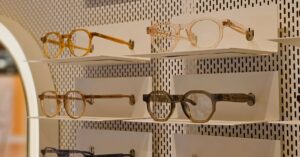
Our designer frame collection includes Cartier, CHANEL, Dior, Tom Ford, Gucci, Prada, Saint Laurent, Fendi, Oliver Peoples and Alain Mikli. Ray-Ban, Tory Burch, Coach, Scott Harris, Adin Thomas and Enhance offer additional designer choices, while Ray-Ban Junior and DB4K are available to explore for children. The in-store selection changes, so call about a particular brand or model before making a special trip.
Start with the wearer’s routine, not a holiday trend
A seasonal color can be fun, but consider the clothes and settings the wearer returns to in January. A dark frame may give a polished contrast in photographs; a warmer tortoiseshell or translucent finish may feel less stark for everyday use. These are styling choices, not rules. Try frames in the lighting of the optical, then step back from the mirror. The pair should look balanced from a normal conversational distance, not just in a close-up selfie.
For inspiration without letting a seasonal palette dictate the purchase, see our Glendale Heights guide to fall 2026 eyewear colors. If a color catches your eye, compare it with a neutral alternative and ask which one you would actually reach for on a weekday morning.
Why shop for designer eyewear locally in Glendale Heights?
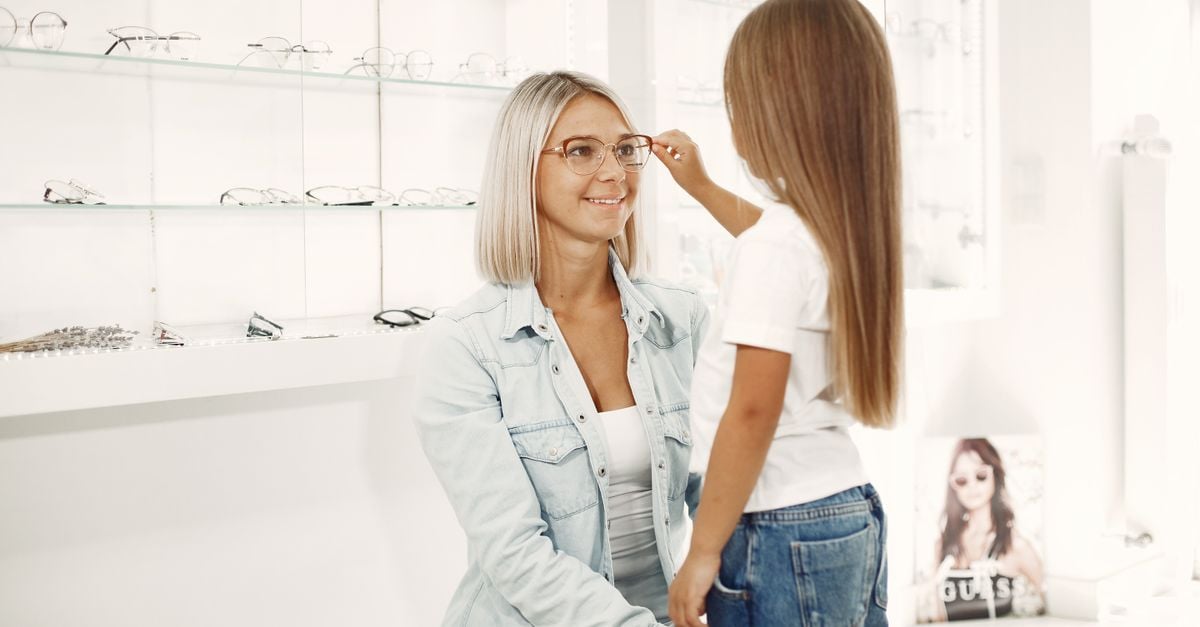
Trying on a frame in person answers questions that a product photo cannot: Does it slide when you look down? Does the bridge leave too much pressure? Are the temples comfortable? Does the lower edge touch your cheeks when you smile? At our Glendale Heights optical, we can consider those details alongside the prescription and explain what a lens choice may mean for the finished pair.
Find us at 132 E. Army Trail Rd., Glendale Heights, IL 60139, near Army Trail Road and Bloomingdale Road. If you are heading west on Army Trail Road, we are just past Jewel-Osco. From I-355, take Exit 29 for Army Trail Road and continue approximately 2.5 miles west. The location also makes an in-person fitting practical for shoppers coming from Bloomingdale or Carol Stream.
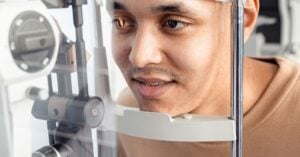
Dr. Saher Sayed, O.D., founded the practice and personally selects its frames. She earned her Doctor of Optometry at Illinois College of Optometry. For patients who need an exam, our scheduled exam slots are 30 minutes, allowing time to discuss concerns and viewing needs. Prescription assessment can include a Topcon CV-5000 digital phoropter, while optional Optos Daytona ultra-widefield retinal imaging can support an eye-health assessment. These tools inform care; they do not replace the doctor’s evaluation or the wearer’s feedback.
Optical guidance continues after frame selection. Styling and fitting are complimentary with an eyewear purchase. When glasses purchased here are ready, we adjust the fit at pickup, and those glasses include complimentary lifetime in-store fit adjustments. If a frame loosens after months of daily wear, you can bring it back for fit support rather than accepting a slipping pair as normal.
How to choose a holiday pair, step by step
1. Decide whether an eye exam comes first
If your current glasses still work well and you have a current outside glasses prescription, you can come in to shop without booking an exam. Bring the prescription and the pair you wear most often. If vision has changed, an older pair feels uncomfortable or you are struggling at a particular distance, an exam is a better starting point than choosing frames and hoping the old prescription will still work.
A comprehensive eye exam evaluates prescription and eye health, rather than simply asking whether you can read letters on a chart. Bring your current distance, reading and computer glasses, including any pair that never felt quite right. Tell us what happens during actual tasks: whether signs blur while driving, screens seem tiring, or reading requires you to move the page farther away. We can read the power in existing glasses with a lensometer and compare that information with your concerns and examination findings.
2. Identify what the lenses need to do
A frame search gets easier when you can say, “This will be my everyday pair,” or “I mainly need these at a computer.” Single-vision lenses provide one power for a selected viewing distance. Progressives combine distance, intermediate and near zones without a visible dividing line. Prescription sunglasses are another option for outdoor use. The best choice depends on the prescription and the distances that matter most to the wearer.
Consider a familiar holiday scenario: you use a laptop during the day, read a dinner menu in the evening and drive home afterward. A fashionable frame alone does not address all three tasks. Bring that routine to the lens discussion. If progressives are appropriate, we can consider the frame’s position and fitting heights before ordering. If a task-specific second pair would make more sense, we can discuss what that pair needs to cover rather than assuming one design must do everything.
3. Try frames for balance and comfort
Start with styles you like, then test the fit. A good candidate should stay reasonably secure without excessive pressure at the nose or behind the ears. Compare frame width with your face, look at where your eyes sit within the lens openings, and check whether the frame remains comfortable when you turn your head or look down. A frame that is beautiful but persistently slides or pinches is unlikely to become a favorite.
We suggest trying a familiar shape and at least one different silhouette, then comparing them side by side. You might discover that a quieter frame has more personality once it is on your face, or that a dramatic frame feels better suited to a second pair. If you wear winter hats or frequently move glasses on and off, mention it during the fitting. Those habits are more useful to discuss than a rigid face-shape rule.
When choosing for someone else, treat their current glasses as a clue, not a template. Note what they like about the pair and what they complain about. Frame size markings do not tell the whole fit story, and a surprise purchase is particularly difficult when the recipient has not tried the frame. A shared visit can still feel like a thoughtful holiday gift while allowing the wearer to make the final fit decision.
4. Check frame and prescription compatibility before committing
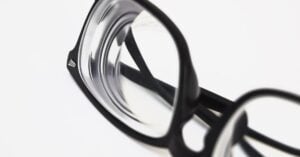
Lens thickness and appearance are affected by prescription strength, frame dimensions, material and how the frame sits on the face. With a stronger minus prescription, a very large lens opening can make thick outer edges more noticeable. With a stronger plus prescription, the center of the lens may be more prominent. Choosing the smallest frame is not always the answer, but size should be discussed before ordering.
Rimless and drill-mounted designs need particular attention because the lenses form part of the frame’s structure. Progressives need suitable space and accurate placement for their distance, intermediate and near zones. High-index materials may reduce thickness for some strong prescriptions, but the thinnest material is not automatically the best choice for every frame or wearer. A careful frame-and-lens conversation prevents the design from being decided in isolation.
For eyewear purchased here, Optikam digital fitting measurements record how the selected frame sits on the wearer. They include pupillary distances, fitting heights, pantoscopic tilt, frame wrap and vertex distance. We use those details with the prescription, lens design and frame adjustments, particularly when fitting progressives or strong prescriptions. Optikam is part of fitting eyewear purchased at our optical, not a standalone measurement service.
5. Compare lens options by problem solved
Every lens purchased from our optical includes an anti-reflective coating. That treatment can reduce reflections on the lenses, including those you notice under indoor lighting or during evening wear, but it does not remove every source of glare. Named options include Eyezen single-vision designs, Varilux progressives and Crizal coatings. We help match a design to the wearer’s prescription and daily tasks instead of treating a premium name as a substitute for a fitting.
- For one main distance: Ask whether single-vision lenses suit the way you will wear the pair. Reading glasses and distance glasses serve different tasks.
- For several distances: Discuss progressives if you need distance, screen and near vision in one pair. Frame position and personal measurements matter to the fitting.
- For stronger prescriptions: Compare frame dimensions and appropriate lens materials together. A high-index option may help with thickness, subject to the prescription and design.
- For winter daylight: Consider prescription sunglasses with confirmed UV400 or 100% UVA/UVB protection. A dark tint by itself does not establish UV protection.
- For reflected outdoor glare: Polarization can reduce reflections from roads and similar surfaces. It is different from tint and does not replace UV protection.
If you drive in changing light, ask whether a dedicated sunglass pair suits the whole trip. A permanently tinted pair may be helpful in daylight but unsuitable after dark. Some light-adaptive lenses darken less behind a windshield, with behavior depending on the specific design, light and temperature. Describe the drive you actually make rather than relying on a product label alone.
Compare holiday eyewear choices by wearer and purpose
There is no single best designer frame for everyone. These starting points help narrow a visit while leaving room for what looks and feels right in person:
- Everyday primary pair: Prioritize a secure, comfortable fit and lenses suited to the wearer’s most frequent tasks. A distinctive frame can still be practical enough for daily wear.
- Expressive second pair: If the wearer already has reliable everyday glasses, a bolder shape or color may be easier to enjoy as a second option. Confirm that its lenses will still be useful for the occasions when it is worn.
- Prescription sunglasses: Think about daylight driving, winter walks and reflected glare. Check UV protection separately from tint darkness and discuss whether polarization suits the wearer.
- Children’s glasses: Begin with fit, comfort and how securely the frame stays in place. Ray-Ban Junior and DB4K are among the frame choices available to explore, but the right pair is the one that fits the child and works with the prescribed lenses.
For a holiday gift, the safest decision is often the experience of choosing together. The recipient can compare frames on their own face, describe their visual needs and take part in the measurements. If you are considering a complete pair before they visit, contact us first about what information and fitting will be needed. We would rather help you plan a workable gift than have you commit to a frame whose fit or lens compatibility has not been checked.
Best practices for cost, insurance and holiday timing
Ask for a complete eyewear estimate
A frame price is only one part of a prescription-eyewear decision. The final quote depends on the frame, prescription, lens design, material, treatments and any applicable vision benefits. Ask which elements are included and what would change the cost. If you are comparing a single-vision pair with progressives, make sure you are comparing complete options rather than a frame alone with a finished pair.
For shoppers seeking a defined self-pay option, our $199 Value Package includes a frame, premium single-vision lenses and anti-reflective coating. It does not include an eye exam, all designer frames, progressives or every lens upgrade. A self-pay comprehensive eye exam is $99. Discuss the pair you want before assuming a package applies to a selected designer frame.
Check benefits before you order
We accept major vision insurance plans including VSP, EyeMed, Cigna Vision, Humana, Superior Vision, Davis Vision, NVA, Spectera and UnitedHealthcare Vision. What an individual plan pays toward an exam, frame, lenses or enhancements depends on eligibility, allowances, copays and plan terms. Bring your insurance details or call ahead so our team can help verify the relevant benefits and explain expected out-of-pocket costs.
Most vision benefits reset annually, and unused benefits generally do not roll over. If you are shopping near year-end, check your particular benefit dates before placing an order. An FSA or HSA is a separate consideration from vision insurance. If you plan to use one for prescription eyewear, check your account rules and retain the purchase documentation your administrator requests. Do not assume non-prescription fashion eyewear has the same eligibility as prescription glasses.
Leave room for production and pickup
Eyeglasses typically take 7 to 10 business days. Specialty or custom orders can take longer, and we call or text when glasses are ready. That typical window is a planning guide, not a promise that a new pair will be ready for a particular party or travel date. Tell us your deadline before ordering so you can make an informed choice.
At least a 50% deposit is required for an eyewear order, with the balance due at pickup. Custom orders are final and cannot be canceled once sent to the lab. Before you commit, confirm the selected frame, lens design, expected timing and order terms. At pickup, take time for a final adjustment and look through the lenses at the distances you discussed when ordering.
Holiday 2026 designer eyewear FAQs
Can I shop for designer frames without an eye exam?
Yes. Optical walk-ins and outside glasses prescriptions are welcome. You do not need an exam appointment just to explore frames. If your vision has changed or your current glasses are not working well, book an exam before ordering new prescription lenses.
Are same-day eye exam appointments available during the holidays?
Same-day or next-day exam appointments may be available. Check the online scheduler or call (630) 454-6899 for current openings. An available exam does not mean prescription glasses will be finished the same day.
How long do eyeglasses take, and what if I need them for a holiday event?
Eyeglasses typically take 7 to 10 business days, and specialty or custom orders may take longer. Tell the team your event date before placing an order. We will call or text when the glasses are ready for pickup and fitting.
Is the Glendale Heights optical open on weekends, and where is it?
Regular hours are Monday through Friday, 9 am to 5 pm; Saturday and Sunday are closed. Holiday hours may vary. Visit 132 E. Army Trail Rd., Glendale Heights, IL 60139, near Army Trail Road and Bloomingdale Road. For directions or visit questions, contact our team before you travel.
Which vision insurance plans can I use for designer eyewear?
Accepted vision plans include VSP, EyeMed, Cigna Vision, Humana, Superior Vision, Davis Vision, NVA, Spectera and UnitedHealthcare Vision. Frame and lens benefits vary by plan. Call with your plan information so we can check eligibility, allowances and estimated costs for the eyewear you are considering.
How to plan your holiday eyewear visit today
First, decide whether you are shopping with a current glasses prescription or need an eye exam. Bring your existing glasses, prescription and insurance information, and tell us about your daily viewing needs and any holiday deadline. At the optical, compare frames for comfort as well as appearance, then review lens options and the complete estimate before placing an order.
Ready to choose a pair? Visit our optical during regular hours, call or text (630) 454-6899 with frame or insurance questions, or book an eye exam online if your prescription needs attention. Our Glendale Heights team can help you find designer eyewear that feels as considered in everyday life as it does at a holiday gathering.
At iDoctor