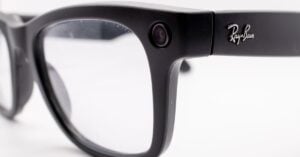
CHANEL Glasses for Petite Faces in Glendale Heights: Proportion, Bridge Fit, and Comfort
Contents
Finding CHANEL glasses for a petite face can be frustrating when a frame looks beautiful on display but slides down your nose, extends past your temples, or brushes your cheeks. The best choice is not automatically the smallest size. It is a frame whose width, bridge, lens depth, and temples work together on your face. At iDoctor, our boutique optical in Glendale Heights lets you compare CHANEL frames in person and check comfort before choosing prescription lenses.
Want to explore CHANEL frames? Call or text (630) 454-6899 about the current selection, or book an eye exam online if your prescription needs updating. You can also walk in to shop for eyewear without an exam.
What a Petite-Face CHANEL Glasses Fitting Involves
A petite-face fitting is an assessment of how an eyeglass frame sits on a narrower or shorter face. It considers the frame front, nose contact, cheek clearance, position of the eyes within the lenses, and the way the temples rest around the ears. Petite describes facial proportions, not one universal set of frame measurements.
That distinction matters with designer eyewear. A frame can look refined from the front while placing too much weight on a narrow bridge. Another can have a small lens width but a bridge or overall front that feels wide. At iDoctor, we recommend judging a CHANEL frame in this order: stable bridge, appropriate overall width, comfortable temples, enough lens space for your prescription, then styling details. A striking shape is worth considering only if the underlying fit works.
How to read the numbers inside a frame
CHANEL’s eyewear size guide explains the three familiar frame measurements. A marking such as 52-19-140 identifies a 52 mm lens width, a 19 mm bridge width, and a 140 mm temple length. The guide groups optical lens widths of 46 to 48 mm as small, 49 to 52 mm as medium, and 53 to 56 mm as large.
Those categories are useful when narrowing your search, not when declaring that a frame will fit. Lens width measures one lens opening. It does not by itself tell you how wide the entire frame front will feel, how the bridge will contact your nose, or where the temples will sit. A medium-labeled frame can sometimes fit a petite face better than a small-labeled frame with the wrong bridge or a shape that sits too low.
A useful starting point: Bring a pair you already wear comfortably and read its size marking. Compare it with CHANEL candidates, then try each candidate on. Matching numbers do not guarantee matching fit because frame shapes and bridge designs differ.
Why overall proportion matters more than a single size
Look straight ahead in a mirror. The frame should feel visually intentional, whether you prefer a restrained shape or a bolder one. Check whether the outer edges project well beyond the sides of your face and whether your eyes appear unusually close to the inner or outer edges of the lens openings. These are clues to discuss with an optician, not a reason to reject a frame based on a mirror glance alone.
Lens height is easy to overlook. A deeper shape may crowd the cheeks on a shorter face, even if its width looks balanced. A shallow shape may clear the cheeks beautifully but leave too little vertical room for the particular progressive lens design you need. We consider both appearance and the space your lenses require before settling on a frame.

Why an In-Person Fitting Helps in Glendale Heights
Product photos show shape and color, but they cannot show whether a bridge leaves a gap on your nose or whether a lower rim touches your cheeks when you smile. In our Glendale Heights optical, you can compare CHANEL styles side by side, look at them from more than one angle, and notice what happens when you move. That is particularly helpful when a frame initially looks right but starts slipping after a few minutes.
Our practice is at 132 E. Army Trail Rd., Glendale Heights, IL 60139, near Army Trail Road and Bloomingdale Road. If you are shopping for designer glasses from Bloomingdale or Glen Ellyn, you can visit during weekday hours and bring the pair you want us to use as a comfort reference. If you have a particular CHANEL model in mind, call first because the in-person selection changes.
Dr. Saher Sayed, O.D., founded the practice and personally selects its frames. Our boutique optical team helps compare face shape, fit, and prescription lens compatibility. When an updated prescription is needed, comprehensive exams are scheduled in 30-minute slots; digital prescription testing and eye-health assessment support the visit. The optical fitting then addresses a different question: how your selected frame and lenses will sit and work together.
Bridge fit: the first test for slipping and pressure
The bridge is the part of the frame that rests across the nose, either directly or through nose pads. If it does not make suitable contact, the glasses may slide, sit crooked, or concentrate pressure in a small area. The bridge number printed on the temple is helpful, but nose shape and the frame’s bridge construction determine the actual feel.
Try looking down naturally, as you would when reading a message. If the glasses slide immediately, ask the optician to check whether a suitable adjustment can help or whether another bridge shape would be a better starting point. If the frame presses uncomfortably at the nose when it is kept in place, simply tightening the temples may trade one problem for another.
Frames with adjustable nose pads may offer different fitting possibilities from frames with a fixed bridge. Neither design is universally better for petite faces. The right choice is the one that sits where you need it without persistent slipping or concentrated pressure. Do not try to reshape a designer frame at home; adjustments should respect its materials and construction.
Cheek clearance and the smile test
Put the frame on, face forward, then smile and speak naturally. Does the lower rim stay clear of your cheeks? Does the frame rise whenever your cheeks move? Cheek contact is not just a cosmetic concern. Repeated movement can make glasses feel unstable and change the position in which you look through the lenses.
If contact occurs, compare a different lens depth or a frame that sits at a more suitable height on your bridge. An adjustment may help in some cases, but a frame with the wrong overall proportions should not be chosen on the assumption that every problem can be adjusted away. For a closer look at this issue, see our article on finding designer glasses in Glendale Heights that do not touch your cheeks when you smile.
Temple fit without a squeeze
The temples should help keep the frame steady without pressing hard against the sides of your head or behind your ears. If the frame pinches at the sides, check whether the front itself is too narrow before focusing only on temple adjustments. If it feels loose, check the bridge as well as the temple fit: a loose bridge will not become a good bridge simply because the arms grip more tightly.
Wear a promising frame while you turn your head, look down, and walk a few steps. That movement reveals more than a still photograph. Tell us where pressure begins or which direction the frame shifts. Specific observations make it easier to decide whether a change in shape, size, or adjustment is worthwhile.
A Step-by-Step Way to Choose CHANEL Frames for a Petite Face
We use a practical sequence so you do not have to choose between a frame that looks good and one that feels good. The point is to eliminate fundamental fit problems before discussing lens upgrades or placing an order.
- Start with the glasses you already own. Bring a comfortable pair and, if you have one, a pair that never fit well. Show us where each rests on your nose, whether it slips, and where you feel pressure. The numbers inside the arms give us a starting reference; your experience supplies the more important context.
- Compare shape and front width together. Try different CHANEL silhouettes rather than judging by the labeled lens width alone. Look at the outer edges, where your eyes fall within the openings, and how much of your face the frame covers. A subtle cat-eye effect or a softly rounded shape can change the visual balance without requiring a dramatically different numerical size.
- Test the bridge before discussing adjustments. Check that the frame sits at a comfortable height and stays reasonably steady when you look down. Tell us if it touches the nose unevenly or starts to slide. We can distinguish a fit that needs fine-tuning from a bridge that is simply the wrong match.
- Smile, speak, and check the temples. Confirm that the lower rim does not repeatedly contact the cheeks and that the sides do not pinch. Pay attention to the ear area, especially if your current glasses become uncomfortable later in the day. A frame that only feels secure when squeezed tightly is not a comfortable solution.
- Review the prescription and take fitting measurements. Once the frame sits properly, choose an appropriate lens design. For eyewear purchased here, our team uses Optikam digital eyewear measurements to record how that selected frame sits on you, including pupillary distances, fitting heights, tilt, wrap, and the distance between the lenses and your eyes when relevant.
This sequence also makes the final styling decision easier. Instead of comparing every frame on the wall, you can focus on the CHANEL options that have already passed the comfort and lens-compatibility checks.
Match the Frame to Your Prescription, Not Just Your Face
For prescription glasses, a frame has two jobs. It must fit your face and hold the chosen lenses in a position that works for your vision. That is why the final decision comes after we have discussed what you use your glasses for: distance, reading, screens, or a mix of tasks.
Single-vision lenses
Single-vision lenses provide one prescribed power for a chosen task. With a petite frame, we check where your pupils sit in the lens openings and whether the frame is comfortable enough for the hours you plan to wear it. A frame selected mainly for occasional use may feel different from one you depend on throughout the workday.
Progressive lenses
Progressives combine distance, intermediate, and near viewing areas. They need an appropriate frame shape, adequate vertical room for the selected design, and accurate fitting heights. A shallow CHANEL frame is not automatically unsuitable, but it needs to be checked against the particular lens design before you commit. If you already have progressives that slip or feel difficult to use, bring them so we can examine the frame position along with the prescription and lens design.
Stronger prescriptions
Frame dimensions can influence the appearance and feel of stronger lenses. A large lens opening may create a different thickness or weight outcome from a smaller one, depending on the prescription and material. High-index options can reduce thickness in some stronger prescriptions, but material is only part of the decision. Frame size, lens shape, comfort, and how the finished glasses sit all deserve attention.
Our prescription lens choices include single-vision and Varilux progressive designs, with options such as Eyezen, Crizal Rock, and Crizal Easy. Every lens purchased here includes an anti-reflective coating. We recommend a lens based on your prescription and routine, not on the CHANEL name alone; available combinations depend on the selected frame and lens design.
Optikam measurements support this work for eyewear purchased at iDoctor, including eyewear made from an outside prescription. They record the worn position of the selected frame rather than replacing an eye exam or independently choosing a prescription. If your vision seems to have changed, an exam is the way to assess your current prescription before new lenses are ordered.
Fit Problems That Are Worth Catching Before You Order
Small discomforts during a try-on can become more noticeable with regular wear. The table below helps you describe what you feel and identify what to ask an optician to check. Each sign can have more than one cause, so treat it as a starting point rather than a diagnosis.
| What you notice | What may be happening | What to check next |
|---|---|---|
| The frame slides when you look down | The bridge may not support the frame well, or the temples may need attention. | Compare bridge shapes and ask whether the candidate frame can be adjusted appropriately. |
| The sides feel squeezed | The frame front may be too narrow, or the temples may press inward. | Try a different width and check the side profile before adjusting the arms. |
| The lower rim moves when you smile | The frame may sit too low or be too deep for your cheek clearance. | Try a different bridge position or a shallower lens shape. |
| The nose becomes sore | Contact may be concentrated in one spot, even if the frame does not slide. | Have the bridge or nose-pad contact assessed; do not rely on tighter temples to compensate. |
| New progressives feel difficult to use | Frame position, fitting heights, lens design, prescription, or eye health may need review. | Bring the finished glasses and an older successful pair for a professional check. |
Make your comfort decision with the frame sitting where you would actually wear it. Holding it up with a finger can make an unsuitable bridge appear to fit. Likewise, do not accept a frame that only stays put when the temples are uncomfortably tight.
Best Practices Before Buying Petite CHANEL Eyeglasses
- Use measurements as a filter, not a verdict. The lens, bridge, and temple numbers narrow the choices. Your face and the frame’s construction determine the fit.
- Choose in your normal posture. Look ahead and down while standing or sitting as you usually do. The frame should not require you to hold your head unnaturally to keep it in place.
- Consider your daily routine. Tell us if you spend long hours at a screen, need progressives, or often remove and replace your glasses. Those details affect which lens and frame combination deserves priority.
- Decide on the lenses before placing the order. A frame you love must accommodate the prescription and lens design you intend to wear.
- Ask for a fit check at pickup. Finished lenses can change how a frame feels. Our team fine-tunes the fit when your glasses arrive, and eyewear purchased here includes complimentary lifetime in-store adjustments.
It is also reasonable to compare more than one CHANEL shape. Our guide to choosing CHANEL glasses for everyday wear in Glendale Heights looks at style in the context of regular use. For a petite face, the strongest choice is the one that remains comfortable after the initial mirror impression wears off.
A patient appreciated that our team helped match glasses to their face and personality.
iDoctor patient
That balance between appearance and fit is what we aim for when helping you compare designer frames. Personal styling and fitting are complimentary with an eyewear purchase.
Frequently Asked Questions About CHANEL Glasses in Glendale Heights
What CHANEL frame size should I try first for a petite face?
Start by comparing the size of glasses that already fit you well. CHANEL’s guide calls 46 to 48 mm lens widths small, but bridge shape, total frame proportion, lens depth, and temple fit can make a different size the better choice. Try the frame on before deciding.
Can I shop for CHANEL glasses without booking an eye exam?
Yes. Optical walk-ins and outside prescriptions are welcome, and you do not need an exam simply to browse or buy eyewear. If you want updated prescription lenses because your vision has changed, schedule a comprehensive eye exam.
Do you have same-day appointments, and are you open on weekends?
Same-day or next-day eye exam appointments may be available. Check the online scheduler or call for the current openings. Regular hours are Monday through Friday, 9 am to 5 pm; the practice is closed Saturday and Sunday. Optical walk-ins are welcome during regular hours.
Which vision insurance plans can I use for designer glasses?
We accept VSP, EyeMed, Cigna Vision, Humana, Superior Vision, Davis Vision, NVA, Spectera, and UnitedHealthcare Vision. Frame allowances, lens benefits, copays, and eligibility vary by plan. Our team can review your vision insurance benefits before you order.
How long do prescription eyeglasses take?
Glasses typically take 7 to 10 business days. Specialty or custom orders can take longer. Our team calls or texts when your order is ready, then checks the fit at pickup.
How to Visit or Book Today
Bring your current glasses, an outside prescription if you have one, and your vision plan information. Tell us what bothers you about your present pair, especially slipping, cheek contact, or pressure behind the ears. We can help you compare CHANEL frames against those concerns and discuss suitable lenses before an order is placed.
Visit us near Army Trail Road and Bloomingdale Road at 132 E. Army Trail Rd., Glendale Heights, IL 60139. If you are seeking a specific CHANEL size or model, call before visiting so we can discuss the current selection.
Ready to find a more comfortable fit? Call or text (630) 454-6899 to ask about CHANEL eyewear, stop in for optical shopping during weekday hours, or book an eye exam online if you need a prescription update. Our Glendale Heights team will help you put fit first without losing the style you came for.
At iDoctor