Trivex or High-Index Lenses for Semi-Rimless Designer Glasses in Glendale Heights
Semi-rimless designer glasses leave part of each lens edge exposed, so choosing a lens involves more than finding the thinnest material. For many prescriptions, Trivex is the sensible starting point because it is light and well suited to the stresses of a grooved lens. High-index deserves consideration when a stronger prescription would make the edge conspicuous, provided the exact lens is compatible with the frame. In Glendale Heights, comparing the finished frame and prescription together is the way to decide.
At iDoctor, our boutique optical in Glendale Heights helps you weigh edge appearance, lens strength, visual comfort, and fit rather than choosing solely by an index number. The recommendation can change with the frame shape and how the lens will be held in place.
Want to compare materials with your frame in hand? Call iDoctor at (630) 454-6899 or book an eye exam online. Ask whether an optical consultation or updated prescription is the right first step.
What Semi-Rimless Lens Fitting Involves
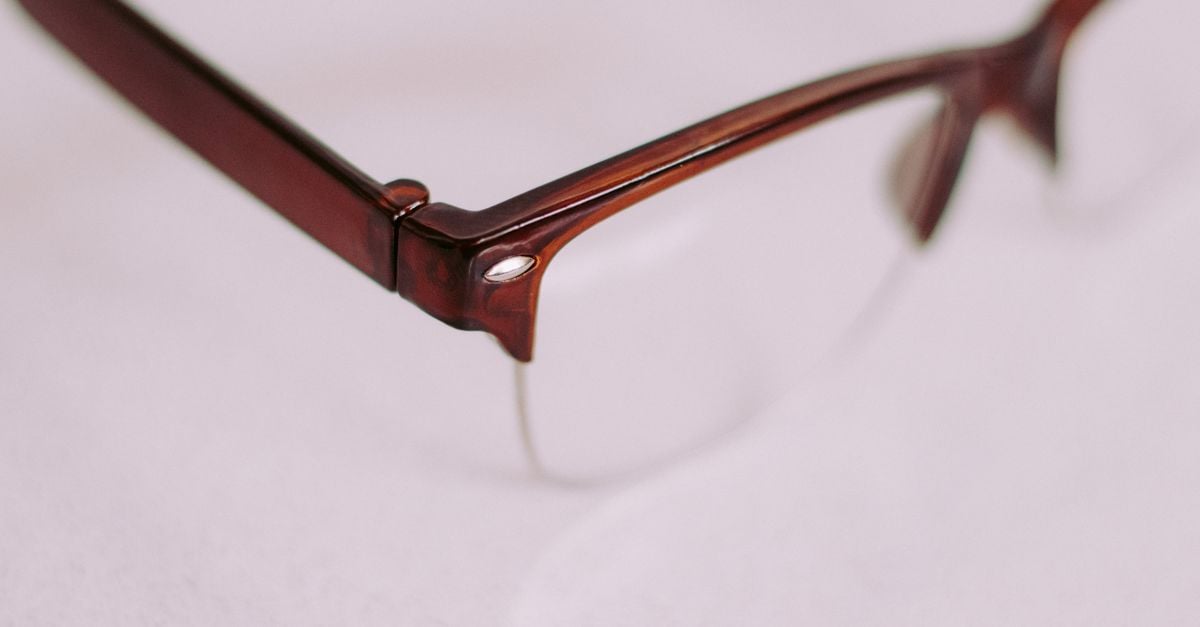
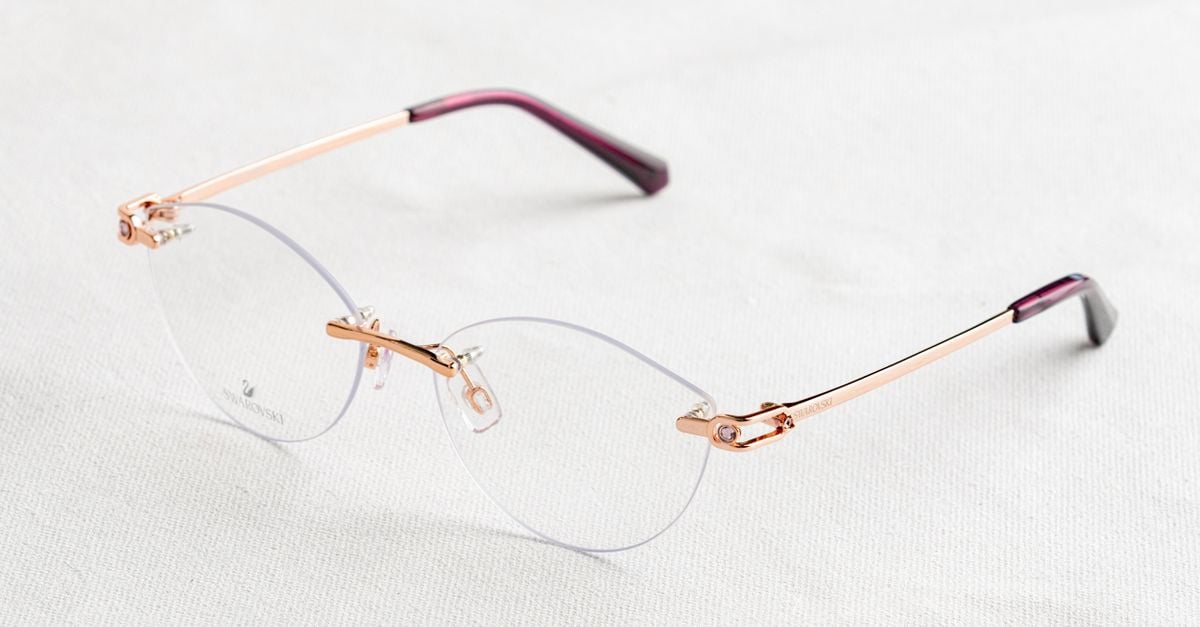
A semi-rimless frame supports the lens along only part of its perimeter. In a common design, a cord runs through a groove cut into the exposed lens edge. That groove has to be placed and finished correctly so the lens sits securely without leaving an unnecessarily fragile edge. Semi-rimless is not the same as a drill-mounted rimless frame, which attaches hardware through holes in the lens. Both put demands on the lens material, but their mounting requirements differ.
Trivex is a lightweight, impact-resistant optical material with a refractive index of about 1.53. Its combination of clarity and toughness makes it a frequent candidate for grooved and drilled designs. High-index describes a group of lens materials that bend light more strongly, allowing a lens to be made thinner for a given prescription and frame geometry. Options commonly discussed include 1.60, 1.67, and 1.74, but they are not interchangeable in strength or mounting suitability.
The practical question is not, “Which material is best in general?” It is, “Which finished lens will work in this particular frame, at this prescription, with this groove and edge thickness?” Our first check is structural compatibility. Only then does it make sense to compare thinness, appearance, weight, optical characteristics, and price.
Why the exposed edge changes the decision
In a full-rim frame, the surrounding eyewire conceals and supports much of the lens edge. In a semi-rimless frame, the exposed edge contributes directly to the look of the glasses, while the cord or mounting system must retain the lens. An attractive, very thin edge is not an improvement if the selected material cannot be processed reliably for that frame.
Groove position also matters. A lens with an edge that is too thin for the proposed groove may leave too little material on either side. A thick edge may be secure but more noticeable than the wearer expected. The optician and laboratory need to consider the actual finished lens, not just the material name on an order form.
Why Local Fitting Matters in Glendale Heights
Seeing a designer frame on your face tells us things a lens catalog cannot. Where it sits on your nose affects the pupil position within the lens. The size and shape determine how much of the prescription reaches the exposed edge. A careful in-person fitting also lets you decide whether the visible lens profile suits the frame you chose.
iDoctor is at 132 E. Army Trail Rd., near Army Trail Road and Bloomingdale Road, just past Jewel-Osco. That location gives Glendale Heights patients, and visitors from Bloomingdale or Carol Stream, a place to compare frames in person and return for an adjustment if needed. We offer a curated designer frame collection; call to ask which semi-rimless styles are currently available rather than assuming every brand has one in stock.
Dr. Saher Sayed leads our optometry practice, where detailed exams use digital phoropters and advanced diagnostic imaging. Our optical team uses Optikam digital eyewear measurements and personalized fittings to help position prescription lenses in the chosen frame. Retinal imaging supports an eye health exam, while measurements and frame assessment guide the glasses order. They serve different purposes.
“The exam was thorough, and the explanations were easy to understand.”
Appointments for eye exams are often available the same or next day, subject to availability. iDoctor accepts major vision insurance plans: VSP, EyeMed, Cigna Vision, Humana, Superior Vision, Davis Vision, NVA, Spectera, and UnitedHealthcare Vision. Accepted insurance does not guarantee a particular material upgrade is covered, so ask us to check your specific lens and frame benefits before you commit.
Trivex Versus High-Index: What Actually Changes?
| Decision factor | Trivex | High-index materials |
|---|---|---|
| Grooved-frame suitability | Often a strong starting choice because of its toughness. Confirm the frame’s specifications. | Depends on the exact material and mounting instructions. Do not assume every index is suitable. |
| Thickness | May show a thicker edge with a strong minus prescription. | Can reduce thickness, especially when prescription strength makes the edge prominent. |
| Weight | Lightweight material. | A thinner lens is not necessarily lighter in every finished frame; compare the actual options. |
| Clarity | Known for good optical clarity. | Clarity and possible color fringing vary by material, lens design, and how you look through the lens. |
| Best reason to choose it | Prioritizing a robust, light lens for a compatible semi-rimless mounting. | Prioritizing a slimmer profile when a compatible material and adequate edge can be specified. |
Neither column is a verdict for every wearer. Prescription, lens design, coatings, and processing affect the final result. Even within high-index, a 1.60 lens may be handled differently from a 1.67 or 1.74 lens. We would confirm the selected frame’s instructions and the laboratory’s material requirements rather than promise that a given index always works.

When Trivex is usually the more practical choice
Start the conversation with Trivex when you have a low or moderate prescription, want a light lens, and care most about a dependable grooved-edge construction. It can also be appealing if your glasses are handled frequently. “Impact-resistant” does not mean unbreakable, however. The groove, cord tension, frame fit, and the way you store or handle your glasses still matter.
Choosing Trivex is not settling for a lesser lens simply because its index is lower. With a well-sized frame and a prescription that does not create a prominent edge, moving to high-index may deliver little visible improvement. Ask to assess the entire pair rather than treating an index number as a quality rating.
When high-index is worth evaluating
Consider high-index if your prescription would produce a visibly thick edge in your preferred frame, particularly with stronger nearsighted correction. The thinner result can complement a delicate-looking designer style. The advantage must be weighed against material suitability at the groove and the finished thickness available to support it.
Be cautious about assuming the highest number is always best. If 1.74 is not appropriate for your chosen mounting, a different material or frame may make more sense. And if the improvement in appearance is small for your prescription, the additional expense may be difficult to justify. Ask for an individualized recommendation and a clear quote rather than a generic promise of “thin lenses.”
Why thickness and weight are not the same question
Index tells you how efficiently a material bends light. It does not, by itself, tell you how a finished pair will feel. Lens volume, material density, frame size, and where the frame rests on your nose all contribute to comfort. A high-index lens might be thinner without delivering a noticeably lighter pair. Trivex can feel pleasantly light even when its edge looks thicker.
For strong plus prescriptions, the center may be more prominent than the edge. That changes what an optician evaluates. A request for a “thin edge” should always be interpreted alongside whether your prescription is minus or plus and where its thickest area will be in the selected frame.
A Practical Framework for Choosing Your Lenses
1. Confirm the prescription before committing to the frame
Bring a current glasses prescription, or schedule an exam if you need one. Sphere, cylinder, and axis can all influence the lens profile. If the prescription is outdated or your vision has changed, comparing materials against the wrong numbers is not useful. At an exam, the vision assessment establishes the correction; the optical fitting then turns it into a wearable pair.
2. Try on the actual frame and check its size
A wider lens shape extends farther from the eye’s optical center. With a minus prescription, that can make the exposed edge thicker. A smaller, appropriately centered shape may improve appearance before you pay for a higher-index material. The right size must still fit your face comfortably and give the lens design enough room, especially if you need progressives.
Pay attention to how the bridge sits and whether the frame slips. A beautifully thin lens cannot rescue glasses that sit too low, press against your cheeks, or shift while you read. If your first-choice designer frame is very wide, try a second shape for comparison before deciding the material is the only way to improve its appearance.
3. Check how the lens attaches
Ask whether the frame uses a grooved cord, another semi-rimless retention method, or drilled mounting. Confirm that the exact lens material is approved for that construction. The manufacturer and processing laboratory may have requirements about minimum edge thickness and groove placement. Those requirements take precedence over a general claim that a lens is “suitable for semi-rimless glasses.”
If you are also considering a frame attached through drilled lenses, see our guide to lightweight lens materials for drill-mounted glasses. The distinction helps explain why advice for rimless designs should not automatically be applied to a grooved frame.
4. Compare the finished appearance, not just the index
Ask what edge will remain visible in your chosen shape. Centering, lens design, and frame dimensions all influence the outcome. For some prescriptions, moving to high-index makes a meaningful cosmetic difference; for others, the difference may be subtle. If an exact finished-thickness estimate is not available, ask the optician to explain the likely tradeoff without suggesting precision the order cannot yet support.
For a stronger prescription, it may be worth comparing a smaller semi-rimless shape with a larger full-rim option as well. The full rim can conceal an edge that would be visible in an open-bottom design. Changing the frame can sometimes serve the appearance goal better than changing the material.
5. Choose coatings and measurements for daily use
Exposed lenses are highly visible, so reflections and smudges may affect how the glasses look as well as how they feel to wear. Ask which compatible anti-reflective and scratch-resistant coatings are available for the material and your routine. Coatings improve day-to-day usability; they do not make an unsuitable grooved lens structurally suitable.
Accurate optical measurements are important for any prescription and particularly worth discussing if you choose progressives or a more complex lens design. iDoctor offers custom fitting and digital measurements. A correct material in a poorly positioned pair can still produce an unsatisfying result.
6. Review the quote, coverage, and aftercare
Have the total broken out by frame, lens design, material, and coatings. Ask about the order’s adjustment, remake, and warranty terms before purchasing. Vision plans may treat a high-index material or premium coating as an enhancement rather than a fully covered basic lens. Understanding the out-of-pocket difference lets you decide whether the visible and functional benefit matters to you.
When the glasses arrive, check that the frame sits evenly and the exposed lens edges look as expected. If the cord seems loose, the lens shifts, or the glasses feel crooked, return for a professional check. Do not try to tighten or reshape a delicate designer mounting yourself.
Best Practices for a Lasting Semi-Rimless Pair
- Protect the exposed edge. Put the glasses in a case when you are not wearing them, and avoid setting the lenses face down.
- Use both hands to remove them. This reduces uneven twisting of the frame and helps preserve its fit.
- Get a professional adjustment if the lens moves. A slipping lens or slack cord is a fitting issue, not something to fix by pulling on the lens.
- Keep expectations realistic about scratches. Trivex and high-index lenses benefit from appropriate care and compatible coatings; neither is scratchproof.
- Recheck comfort after collection. If you notice persistent blur, an uneven fit, or a distracting exposed edge, explain what you see and when it happens rather than trying to adapt indefinitely.
These habits matter whichever lens you select. A durable material cannot compensate for a frame that is repeatedly twisted, and a thinner lens offers little benefit if the glasses do not stay aligned. iDoctor provides personalized fitting and in-store lifetime eyewear adjustments, so you can have the fit checked as your glasses settle into daily wear.

Frequently Asked Questions About Semi-Rimless Glasses in Glendale Heights
Is Trivex better than high-index for semi-rimless glasses?
Trivex is often the better starting point when toughness at a grooved edge is the priority. High-index may be preferable for a stronger prescription when reducing visible thickness matters, but only if the particular lens material and finished edge meet the frame’s mounting requirements. There is no responsible answer based on the index number alone.
Can high-index lenses go into a semi-rimless designer frame?
Sometimes. “High-index” covers multiple materials, and suitability depends on the exact formulation, frame instructions, prescription, groove, and laboratory processing. Ask the optician to confirm compatibility for the actual frame before ordering. If it is not a sound match, consider Trivex or a different frame shape rather than forcing the thinnest possible lens into an unsuitable mounting.
Does iDoctor have same-day appointments or weekend hours?
Eye exam appointments are often available the same or next day, but call to confirm the schedule. Published hours are Monday, Thursday, and Friday from 9 a.m. to 5 p.m., and Tuesday and Wednesday from 10 a.m. to 3 p.m. No weekend hours are listed. For parking details or an optical visit without an exam, call (630) 454-6899 before traveling.
Does iDoctor accept vision insurance for designer glasses?
Yes. Accepted plans include VSP, EyeMed, Cigna Vision, Humana, Superior Vision, Davis Vision, NVA, Spectera, and UnitedHealthcare Vision. What you pay for a designer frame, Trivex, high-index, or coatings depends on your plan. Bring your insurance information so the team can verify benefits and explain the quote before your lens order is placed.
How long do semi-rimless prescription glasses take?
There is no single turnaround that applies to every order. Timing depends on the prescription, frame, material, coatings, and laboratory work. Ask for an estimate once those details are chosen. A same-day exam appointment does not mean your finished glasses will be ready the same day.
How to Book Your Lens Consultation Today
If you want a straightforward default, start by asking whether Trivex will give your chosen semi-rimless frame the durability and appearance you want. If your prescription makes the exposed edge too prominent, ask us to compare a compatible high-index option and a different frame size. That sequence keeps construction first and makes any added cost serve a clear purpose.
Bring your current glasses and prescription if you have them, plus your insurance card. If you need a new prescription, we can help you arrange an exam. You can also ask about a specific designer frame, but availability and the right lens material should be confirmed in person.
Choose the frame and lens as one pair. Visit iDoctor at 132 E. Army Trail Rd., Glendale Heights, IL 60139. Call or text (630) 454-6899, or book an appointment online to discuss your prescription and semi-rimless designer glasses.