What kind of eye exam do I need if glaucoma runs in my family but I have no symptoms?
Contents
If glaucoma runs in your family but your vision feels normal, book a comprehensive eye exam that addresses your family history, not just a prescription check or a single eye-pressure reading. Early glaucoma can develop without noticeable symptoms. At iDoctor, an eye doctor in Glendale Heights, we assess eye health and decide which glaucoma-related tests make sense for you. Tell us about your relative’s diagnosis when you schedule so the visit starts with the right question.
Ready to establish a baseline? Call or text (630) 454-6899 or book a comprehensive eye exam online. Same-day appointments may be available.
What is a comprehensive eye exam for someone with a family history of glaucoma?
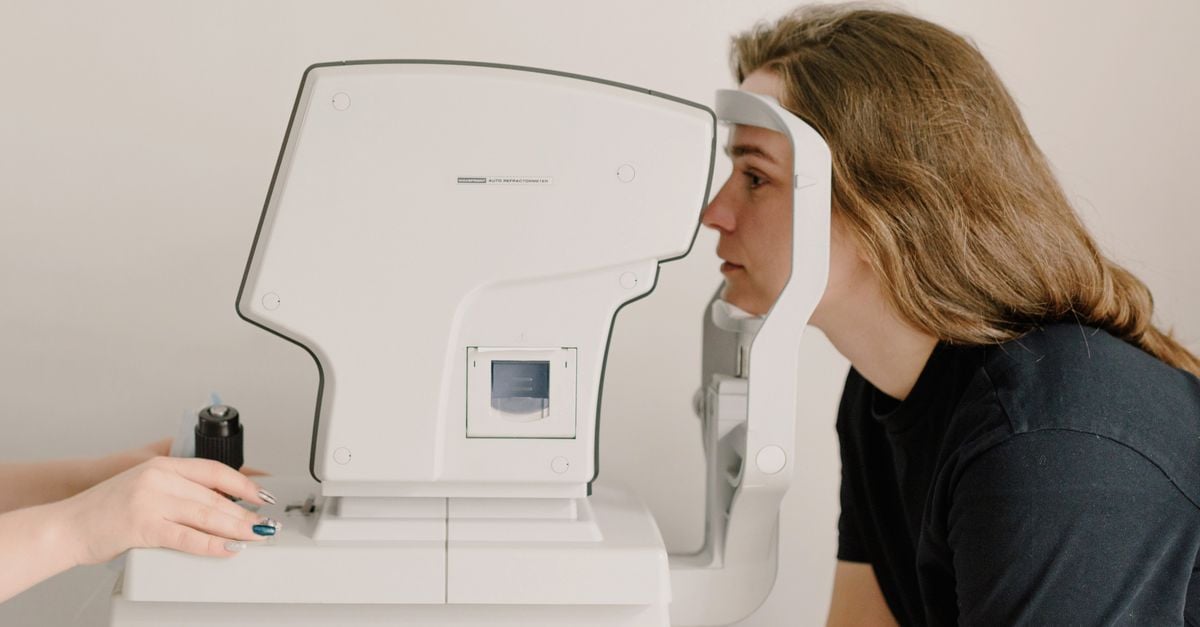
A comprehensive eye exam evaluates your vision and eye health. When glaucoma is in your family, the important distinction is that the optometrist knows about that risk before interpreting your findings. The visit can include a review of your history, a look at the optic nerves, an eye-pressure measurement and additional testing when your history or examination calls for it. It is not a single, identical glaucoma test given to every person.
Glaucoma refers to a group of conditions that damage the optic nerve. In the common open-angle form, early damage may cause no pain and no obvious change in day-to-day sight. A parent or sibling with glaucoma is particularly important to mention because close biological family history increases risk. Having a relative with glaucoma does not mean you have it, but feeling fine does not settle the question either. The National Eye Institute’s glaucoma overview explains why an eye exam matters before symptoms appear.
Our practical framework is history, pressure, structure, function and follow-up. History places your risk in context. Pressure is one measurement, not a diagnosis. Structure means the appearance of the optic nerve. Function concerns what you can see, including areas outside the center of your vision. Follow-up is the plan for comparing findings over time. No single reassuring result replaces the whole picture.
What to request when booking: Say, “I’d like a comprehensive eye exam because glaucoma runs in my family, even though I have no symptoms.” That is more informative than asking for an air-puff test or a new glasses prescription alone.
Why a normal eye-pressure reading is not the whole answer
Eye pressure, also called intraocular pressure or IOP, is relevant because higher pressure can increase glaucoma risk. But glaucoma can occur at a pressure reading considered normal, and a higher reading does not by itself prove that optic-nerve damage has occurred. Pressure can also vary between visits. That is why we interpret it alongside the optic-nerve examination, your history and any additional results rather than treating one number as a pass or fail.
At iDoctor, the handheld iCare IC100 measures pressure without an air puff. Staff use a fresh probe tip for each patient and obtain at least three reliable readings per eye. Those repeated readings help us assess the measurement at that visit, but they are not a substitute for examining the optic nerve or planning appropriate follow-up. Our related article on understanding eye-pressure numbers in Glendale Heights goes deeper into what a reading can and cannot tell you.
What may happen during the visit?
- Review the family history. Tell the doctor whether it was your parent, sibling or another relative who had glaucoma. If you know the type, age at diagnosis or whether treatment was needed, bring those details. It is fine not to know every answer.
- Review your own eyes and health. Mention previous eye injuries or surgery, earlier pressure readings, other eye conditions and all medications, especially current or past steroid use. Bring prior records or images if you have them. The aim is to interpret today’s findings in context, not to assume that family history is the only relevant factor.
- Check vision and examine the eyes. A comprehensive visit may include distance and near vision, prescription assessment and examination of eye structures. Clear central vision is useful information, but it cannot rule out early glaucoma.
- Measure eye pressure and assess the optic nerves. These answer different questions. Pressure helps characterize risk; the optic-nerve examination looks for findings that may call for closer investigation or comparison at future visits.
- Decide whether further testing is needed. Formal visual-field testing, retinal imaging, dilation or other assessment may be recommended based on what the doctor sees. Some tests may require additional time or a separate visit. Ask what each proposed test would add to the decision.
- Leave with a follow-up plan. Ask when to return, whether any result needs repeating and which changes should prompt an earlier call. An initial exam is most useful when you know the next step, even if everything looks reassuring.
Which tests answer which glaucoma questions?
A family-history exam can start with the comprehensive examination, then expand according to the findings. The table separates tools that are easy to confuse, particularly an eye-pressure check, a brief visual-field screening and formal diagnostic field testing.
| Assessment | What it contributes | What to keep in mind |
|---|---|---|
| Family history and eye examination | Places your personal risk and optic-nerve appearance in context. | A relative’s diagnosis is a reason to investigate, not a diagnosis for you. |
| Eye-pressure test | Measures IOP at the time of testing. | Normal pressure does not exclude glaucoma; elevated pressure alone does not establish it. |
| Formal visual-field test | Maps sensitivity at tested points while you look at a central target. | An unexpected result may need repeating or further evaluation. |
| Optional Optomap retinal imaging | Provides a wide view of the retina that can help document or compare findings. | It does not replace a complete glaucoma evaluation or every need for dilation. |
| Dilated examination when indicated | Allows a more detailed view of the back of the eye. | The doctor decides whether it is needed from your history and findings. |
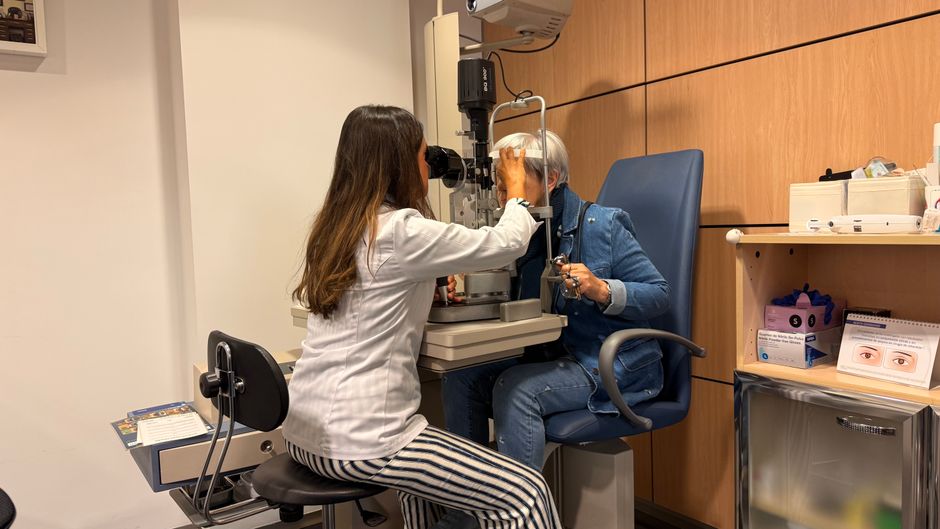
Formal visual-field testing at our practice uses the Haag-Streit Octopus 600. You look toward a central target and respond when you see lights at different points. Some lights are intentionally too dim to see, so the task is not to catch every flash. The doctor interprets the pattern and may recommend a repeat test if a result needs clarification. A brief screening included with an imaging package is not the same as a formal diagnostic visual-field test.
Our optional Optomap Daytona imaging captures an ultra-widefield view of the retina. It may help the doctor assess and compare eye-health findings, but a wide retinal photograph is not a stand-alone glaucoma diagnosis. The optional $39 package includes imaging of both eyes and an Octopus visual-field screening. Formal diagnostic visual-field testing is separate. Imaging often does not require dilation, although the doctor may still recommend dilation or additional tests.
If findings suggest a more detailed glaucoma workup, ask what question remains unanswered. Depending on the clinical situation, that discussion may include evaluation of the eye’s drainage angle, corneal thickness or more detailed optic-nerve assessment. The American Academy of Ophthalmology’s explanation of gonioscopy describes why assessing the drainage angle can matter. The appropriate next step depends on your actual examination, not on a checklist that assumes everyone needs every test.
Why Glendale Heights patients benefit from a baseline eye-health visit
For someone without symptoms, the value of an initial exam is having findings interpreted now and a plan for what to compare later. A pressure reading from one day, an optic-nerve observation and any indicated field results become more meaningful when your doctor knows your family history and can review them together at subsequent visits. If a result is unusual, you can discuss whether it needs confirmation rather than guessing what it means from a number alone.
Our comprehensive eye exams are scheduled in 30-minute slots to allow time for questions and explanation of findings. Dr. Saher Sayed earned her Doctor of Optometry at the Illinois College of Optometry and leads our individualized care. We use air-puff-free pressure checks and, when appropriate, visual-field testing or optional ultra-widefield retinal imaging. The equipment supplies information; the clinical assessment determines what it means for you.
We are at 132 E. Army Trail Rd., Glendale Heights, IL 60139, near Army Trail Road and Bloomingdale Road. Traveling west from I-355 exit 29, the office is just past Jewel-Osco. That makes a scheduled baseline eye exam practical for people coming from Bloomingdale or Carol Stream as well as Glendale Heights. Same-day or next-day appointment times may be available; call to check the current schedule.
Eye health comes first in this conversation. If you also need prescription glasses, our boutique optical team can help with frame and lens choices after the exam, and you should allow additional time for that. Shopping for eyewear is optional and is not part of glaucoma assessment.
“They took time with the exam and helped make the visit comfortable.”
iDoctor patient, paraphrased from a patient review
How often should you return if your exam is normal?
The National Eye Institute advises comprehensive dilated eye exams every one to two years for people at higher risk of glaucoma, including those with a family history. That is a useful starting point for a conversation, not a fixed schedule for every person. Your age, which relative is affected, previous results and what the doctor finds may change the recommended interval.
If an optic nerve looks concerning, pressure needs another look or a visual-field result is unclear, a clinician may recommend further assessment sooner. Conversely, a reassuring visit gives you a chance to agree on routine follow-up before you leave. Ask for a specific return interval rather than relying on “come back if you notice a problem,” since early glaucoma may not announce itself.
For adults without symptoms, the U.S. Preventive Services Task Force says evidence is insufficient to determine the balance of benefits and harms of routine primary-care screening for primary open-angle glaucoma. That statement is about broad screening, not a reason to ignore a known family risk or to replace an individualized comprehensive eye exam with no evaluation at all.
Best practices before and after your appointment
- Find out which relative was diagnosed. A parent or sibling’s diagnosis is particularly relevant. If you can learn the type of glaucoma and approximate age at diagnosis, share it, but do not postpone your own exam while collecting details.
- Bring what you already use. Current glasses or contacts, medication information, insurance details and previous eye records can help make the conversation more productive.
- Ask whether dilation is planned or might be recommended. If drops are needed, allow extra time. They generally take 20 to 30 minutes to widen the pupils, and temporary near blur and light sensitivity can last for hours. Bring sunglasses and arrange a driver if you may not feel safe driving afterward.
- Separate a screening result from a diagnosis. Ask whether a field test is a brief screening or a formal diagnostic examination, and whether a finding needs to be repeated or compared with earlier records.
- Confirm the cost and the plan for the visit. Tell our team about both vision and medical insurance, if you have them, and ask which benefits may apply to the examination and any additional testing. Coverage and out-of-pocket costs depend on the individual plan.
- Know when a routine appointment is not appropriate. Sudden vision loss or severe eye pain, especially with redness, blurred vision or nausea, needs immediate medical assessment. Do not wait for a routine glaucoma-risk appointment; if our office is closed, seek emergency care.

Frequently asked questions about glaucoma-risk eye exams
Can I have glaucoma if I see 20/20 and have no pain?
Yes. Clear central vision and a lack of pain do not rule out early glaucoma. That is why the visit should consider your optic nerves and risk history, not just how well you read a vision chart.
Is an eye-pressure test enough if glaucoma runs in my family?
No. It is one useful measurement, but glaucoma can occur with normal pressure, and high pressure does not automatically mean glaucoma. An eye doctor interprets pressure together with the optic-nerve examination and any indicated additional testing.
Can I get a same-day exam, and are you open on weekends?
Same-day appointments may be available, depending on the schedule. Call or text (630) 454-6899 to ask. Regular hours are Monday through Friday, 9 am to 5 pm; the office is closed Saturday and Sunday. Holiday hours may vary.
Which insurance plans can I use for an exam in Glendale Heights?
We accept major vision plans including VSP, EyeMed, Cigna Vision, Humana, Superior Vision, Davis Vision, NVA, Spectera and UnitedHealthcare Vision. We also list some medical plans, including Aetna, BlueCross BlueShield of Illinois, Cigna, Humana and Medicare. Tell us about both plans if you have them; eligibility and coverage for your specific visit and tests need to be checked individually.
Do I need to buy glasses, and how long do they take if I do?
No. A glaucoma-risk eye exam does not require an eyewear purchase. If you decide to order glasses, they typically take 7 to 10 business days; specialty or custom orders may take longer. Our team calls or texts when they are ready.
How to book a comprehensive eye exam in Glendale Heights
Choose a comprehensive exam and mention your family history when scheduling. Bring the name of the affected relative if you know it, any earlier eye-test records, current glasses or contacts, a medication list and your insurance information. Before you leave, ask what your results mean, whether additional testing is recommended and when your next exam should be.
If you do not see a suitable appointment online, try another date or call or text the team about available times. A general website message does not reserve an appointment. For an urgent change in vision, call during office hours rather than waiting for a routine booking; sudden vision loss or severe eye pain warrants immediate medical care.
Make your family history part of your eye-care plan. Call or text iDoctor at (630) 454-6899 or book your eye exam online. We are near Army Trail Road and Bloomingdale Road in Glendale Heights, ready to help you understand your findings and the right next step.
At iDoctor