Which eye exam should I book in Glendale Heights if a new medication may affect my eye pressure or vision?
Contents
If a new medication may affect your eye pressure or vision, the right eye exam in Glendale Heights depends on your symptoms. With no new symptoms, book a comprehensive eye exam and explain the medication-monitoring request. For new, persistent blur or eye discomfort, call about a medical eye exam instead. Sudden vision loss or severe eye pain needs immediate emergency care, not a routine appointment. Our eye doctor in Glendale Heights can help you choose the appropriate visit when you call.
Not sure which appointment to request? Call or text iDoctor at (630) 454-6899 and say that you have a medication-related eye concern. Same-day or next-day appointments may be available. If you have sudden vision loss or severe pain, seek immediate medical care rather than waiting for an appointment.
What a medication-related eye exam checks
A medication-related eye exam is not a single test or a special vision screening. It is an eye evaluation shaped by the medication you take, why you take it, your symptoms, your eye history and any monitoring instructions from your prescriber. The distinction matters because a request to monitor eye pressure is different from a new episode of painful blur. Both deserve attention, but they do not necessarily belong in the same appointment category.
Intraocular pressure is the pressure inside the eye, often shortened to IOP. Tonometry measures it. A pressure check can identify a finding that needs attention, but it cannot, by itself, diagnose glaucoma or establish that a medication caused a change. Glaucoma assessment can also involve an examination of the optic nerve and, when indicated, visual-field testing. Some people develop glaucoma despite a pressure reading in the normal range, while an elevated reading alone does not mean they have glaucoma. The National Eye Institute’s glaucoma guidance explains why a broader eye evaluation matters.
A vision change may also have nothing to do with pressure. Describing whether the problem is blur, discomfort, a change in focusing, loss of part of your vision or something else gives the doctor a more useful starting point than asking only for a pressure number. A temporal link between starting a medicine and noticing a symptom is important to report, but it does not prove cause and effect.
For example, corticosteroids can raise eye pressure in some patients, while topiramate has been associated with an uncommon but urgent form of medication-related angle closure. These are different clinical situations, not a reason to assume that every person taking either medicine needs the same tests. The clinical review of adverse ocular effects of systemic medications discusses why the drug, exposure and findings guide evaluation. Do not stop, skip or change a prescribed medication on your own. Contact the prescribing clinician about a possible side effect and seek urgent care promptly if warning signs appear.
How to choose between a comprehensive exam, a medical exam and emergency care
We use a simple sequence when helping someone describe a medication concern: symptom, timing, medication, then monitoring goal. Start with what you see or feel and how quickly it changed. Next, identify the medication, including its route and any recent dose change. Finally, tell us whether your prescriber requested a baseline exam, a pressure check or follow-up for a specific finding. This helps us discuss the right appointment without treating every medication mention as an emergency or every visual change as a glasses problem.
| Your situation | What to request | Why |
|---|---|---|
| No new symptoms, but your prescriber recommended eye monitoring | A comprehensive eye exam; mention the medication and monitoring request when booking | It gives the doctor a chance to review vision, eye health and whether further testing is indicated. |
| New or persistent blur, discomfort or another eye symptom without severe warning signs | Call during office hours to discuss a medical eye exam | A symptom-focused visit can address the change rather than treating it as a routine prescription update. |
| Sudden vision loss, severe eye pain, serious injury or a painful red eye with blur and nausea | Seek immediate emergency medical care | These symptoms need prompt assessment and should not wait for online scheduling or an office reply. |
Book a comprehensive eye exam when you need monitoring without new symptoms
If you feel well and another clinician has asked you to have your eyes checked after starting a medication, a comprehensive exam is a practical place to begin. Tell the scheduling team exactly what the clinician requested. If you have an earlier eye-pressure reading, eye report or written follow-up instructions, bring them. A comparison is more meaningful when the doctor knows what was measured previously, how it was measured and why a repeat was requested.
At our Glendale Heights practice, comprehensive exam slots are scheduled for 30 minutes so there is time to discuss concerns. Depending on your history and findings, an exam may include distance and near vision, refraction, an examination of the front of the eye, eye-pressure testing and other indicated assessments. Not every patient needs every test. If the monitoring request calls for a particular test or report, mention that before your visit so the appointment can be planned appropriately.
Call about a medical eye exam when a new symptom is the reason for the visit
If vision became blurry or an eye began to feel uncomfortable after a medication change, do not select a glasses-only appointment and assume the symptom will be assessed along the way. Call and describe what happened. We see patients for medical eye concerns, including sudden blur, red eye, flashes and new floaters, and can discuss same-day urgent appointments during office hours. How soon you should be assessed depends on the symptom, its severity and how it is changing.
It helps to be specific: Is the blur in one eye or both? Did it start suddenly or gradually? Does it clear when you blink, or is it continuous? Is there pain, redness, light sensitivity, nausea or a new blind area? If you already have glaucoma or a history of raised eye pressure, mention that too. These details are more useful than simply saying that a medicine might be affecting your eyes.
Do not wait for an appointment when symptoms are severe
Sudden vision loss, severe eye pain or serious eye injury calls for immediate emergency medical care. A severely painful, red eye with blurred vision, halos around lights or nausea also needs urgent assessment. New flashes or floaters with a curtain or shadow over vision should not be dismissed as a medication side effect. Even when a symptom begins soon after a new prescription, another urgent eye problem may be responsible.
If the office is closed, go to the nearest emergency department for sudden vision loss, severe pain or serious injury rather than leaving a message for the next business day. If your vision is impaired, do not drive yourself. For more detail on a related warning sign, see our guide to sudden blur or discomfort in one eye in Glendale Heights.
Which tests might matter for eye pressure or vision changes?
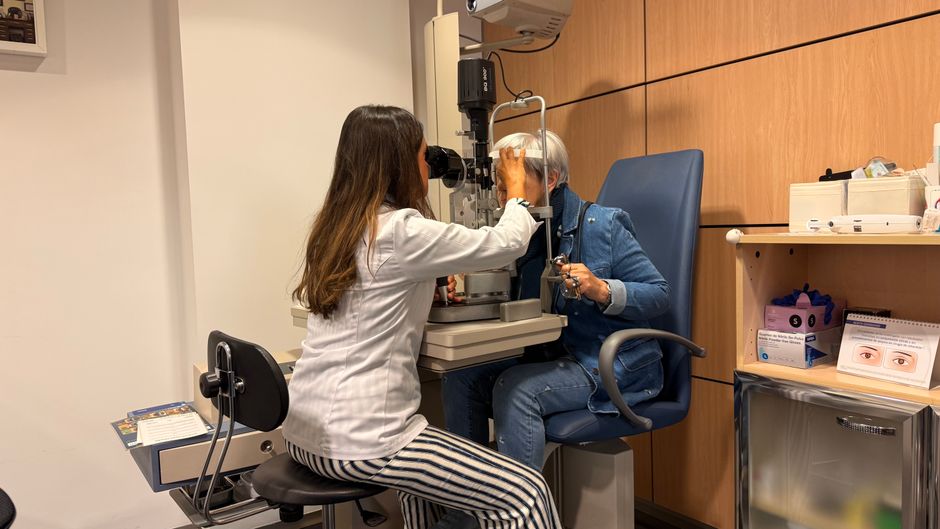
The right tests follow the clinical question. A request to monitor pressure does not automatically mean you need formal visual-field testing. Likewise, a new vision symptom may call for more than a pressure reading. Dr. Saher Sayed, our lead optometrist and a graduate of the Illinois College of Optometry, reviews history and findings before deciding what further assessment is useful. Our equipment supports that judgment; it does not replace it.
Eye-pressure measurement
Our handheld iCare IC100 tonometer measures eye pressure without an air puff. The team uses a fresh probe tip for each patient and obtains at least three reliable readings per eye. The result is interpreted with the rest of the examination, not treated as a stand-alone diagnosis.
Vision and prescription assessment
Distance and near vision testing can help describe how vision has changed. During refraction, Dr. Sayed uses a digital phoropter and your comparisons to refine a prescription when appropriate. A new prescription alone should not be assumed to explain an unexplained symptom.
Eye-health evaluation
The doctor may assess the front of the eye, lens, retina and optic nerve as appropriate to your concern. Additional testing or dilation may be recommended when symptoms or examination findings call for a closer look.
Retinal imaging and visual fields answer different questions
Optomap Daytona imaging captures a wide view of the retina, including central and peripheral areas. It is optional. Our $39 add-on covers images of both eyes and a brief Octopus visual-field screening. That screening is not formal diagnostic visual-field testing, and a retinal image does not measure eye pressure or replace every reason for dilation. Dr. Sayed may recommend dilation or other evaluation if the concern requires it.
Formal Octopus 600 visual-field testing maps sensitivity at tested points while you focus on a target and respond to lights. It may help assess or monitor glaucoma and certain other concerns when indicated. If a prescriber has specifically requested a visual-field test, tell us when calling rather than assuming that the optional imaging package meets that request.
Likewise, do not book the optional image simply because a medication name appears on a list of possible side effects. Start with the concern and any instructions from your prescriber. We can then discuss whether imaging, field testing, a pressure check or another part of the examination is relevant. This keeps the visit focused on a useful clinical question instead of collecting tests without a clear purpose.
How to prepare for a medication-related eye appointment
A short written timeline can make an appointment substantially more productive. You do not need to diagnose the cause yourself. Bring the details that allow the doctor to compare what changed with when it changed.
- Record the exact medication. Bring its name, strength, dose, how you take it and when you started it. Include a recent dose change, a new eye drop or a medication you stopped. A photo of the label or an up-to-date medication list can help prevent name mix-ups.
- Write down the symptom timeline. Note when the visual change or discomfort began, whether it affects one or both eyes, and whether it comes and goes. If a symptom is rapidly worsening or severe, seek urgent assessment rather than waiting to make a detailed list.
- Bring your eye-health history. Include previous pressure readings or reports if you have them, a history of glaucoma or eye surgery, and any specific monitoring instructions from the prescribing clinician.
- Bring what you use to see. Your current glasses and contacts help us understand your usual vision. If a pair has recently felt wrong, bring it too. A lensometer can read the optical power in glasses you bring, but that reading is not a new eye prescription.
- Bring both insurance cards if applicable. Medication-related symptoms may be considered differently from a routine vision visit under your particular benefits. We can review the information you bring and help check coverage before the appointment when possible.
Tell your prescribing clinician about a suspected side effect, especially if the medicine is new or its dose recently changed. You can ask whether they wanted a baseline assessment, a repeat pressure measurement or follow-up for a specific eye finding. Do not change a prescribed treatment without their guidance. If emergency symptoms develop, seek care immediately rather than waiting for a routine reply from either office.
If dilation is recommended: Drops generally take 20 to 30 minutes to widen the pupils, and near blur or light sensitivity can last for hours. Bring sunglasses and arrange a driver if needed. Do not drive while your vision is affected or driving feels unsafe.

Local benefits of an eye exam in Glendale Heights
When a medication concern comes up, it helps to have a nearby practice where you can explain the reason for your visit instead of guessing which online appointment category fits. Our office is at 132 E. Army Trail Rd., Glendale Heights, IL 60139, near Army Trail Road and Bloomingdale Road. Traveling west from I-355 exit 29, the office is just past Jewel-Osco. That route is useful to know if you are coming from Bloomingdale or Carol Stream.
We pair scheduled time for questions with eye-health instruments that address distinct parts of an exam: air-puff-free pressure checks, digital prescription testing and optional wide-view retinal imaging. Dr. Sayed explains findings and next steps in plain language. If your evaluation leads to a prescription discussion, our boutique optical team can help you consider glasses or contacts, but eyewear shopping is not a substitute for investigating a new symptom. Walk-ins and outside prescriptions are welcome for optical shopping without an eye exam.
“The team took time with the exam and made the visit comfortable.”
iDoctor patient, paraphrased from a Google review
We accept major vision plans, including VSP, EyeMed, Cigna Vision, Humana, Superior Vision, Davis Vision, NVA, Spectera and UnitedHealthcare Vision. We also list some medical plans, including Aetna, BlueCross BlueShield of Illinois, Cigna, Humana and Medicare. Whether a particular visit or test is covered, and your copay or out-of-pocket amount, depends on your individual plan. Mention both vision and medical coverage when you call about a medication-related concern.
For patients paying out of pocket, the listed comprehensive eye exam fee is $99. Optional Optomap imaging of both eyes with a brief Octopus visual-field screening adds $39. The imaging package does not include a formal diagnostic field test. If your prescriber requested something specific, describe the request before booking so we can discuss the visit and applicable fees rather than assuming an add-on is the same as the requested test.
Best practices for making the visit useful
- Lead with the symptom when calling. “My vision became blurry after a medication change” is more useful for scheduling than “I need a stronger prescription.” Mention sudden onset, pain or vision loss immediately.
- Ask what your prescriber wants monitored. Eye pressure, visual fields and retinal findings are not interchangeable. A clear request helps us discuss the right appointment.
- Keep earlier results. If you have previous eye reports, bring them. One pressure value without context cannot tell the whole story, and a comparison may help the doctor plan follow-up.
- Separate the medical concern from eyewear decisions. New blur does not automatically mean you need new glasses. Once the eye-health question is addressed, we can talk about prescription options if appropriate.
- Know the follow-up plan before leaving. Ask what the findings mean, whether further testing or a return visit is recommended, and what information should go back to your prescribing clinician.
These steps also help if you have no symptoms. A medication warning on a leaflet does not mean you have an eye problem. It is a reason to clarify what monitoring, if any, your prescriber recommends for you. An eye exam can then address that question rather than apply the same schedule to everyone taking a particular drug.
FAQs about medication-related eye exams in Glendale Heights
Should I book an eye-pressure check or a full eye exam?
If your clinician requested monitoring and you have no new symptoms, request a comprehensive eye exam and tell us what they asked to check. An isolated pressure number cannot assess all possible reasons for a vision change or, on its own, diagnose glaucoma. For a new symptom, call about a medical eye exam so we can discuss its urgency.
Can I get a same-day appointment?
Same-day and next-day appointments may be available. Call or text (630) 454-6899 during office hours, particularly if you have a new symptom. If you cannot find a suitable online time, contact us with your preferred days. A general website message does not reserve an appointment, and severe symptoms should not wait for a reply.
Is the Glendale Heights office open on weekends?
Regular hours are Monday through Friday, 9 am to 5 pm. The office is closed Saturday and Sunday, and holiday hours may vary. If sudden vision loss, severe pain or serious injury occurs when we are closed, go to the nearest emergency department rather than waiting for the office to reopen.
Which insurance should I bring for a medication-related visit?
Bring both your vision and medical insurance information if you have them. We accept the vision plans listed above and some medical plans, but individual eligibility and visit benefits need to be checked. Tell us whether the reason for your visit is monitoring, a new symptom or both, so we can discuss coverage questions before your appointment when possible.
Will I need new glasses if my vision changed after starting medication?
Not necessarily. The first step is to assess the symptom rather than assume an outdated prescription is responsible. If new glasses are appropriate after your exam, our optical team can help with frame and lens choices. Glasses typically take 7 to 10 business days once ordered; specialty or custom orders may take longer.
How to book your Glendale Heights eye exam today
Start by telling us what changed, when it changed and the name of the medication. If you feel well and need monitoring, ask about a comprehensive eye exam. If you have a new, persistent symptom, call about a medical eye exam. Do not use routine online booking for sudden vision loss, severe eye pain or another emergency warning sign.
Talk with our team before you choose an appointment: Call or text (630) 454-6899, or book an exam online if you already know the appropriate visit type. We are at 132 E. Army Trail Rd. in Glendale Heights, open Monday through Friday, 9 am to 5 pm.
Bring your medication list, symptom timeline, current eyewear, any monitoring instructions and insurance cards. At iDoctor, we will take the time to hear your concern, explain what the examination shows and help you understand what comes next.
At iDoctor